How To Become a Wind Turbine Technician
Does renewable energy interest you? UTI can help you train for a career in the field. Learn how to become a wind turbine technician by reading our post!

Robots play a big role in many important industries. They help build machinery, provide services and take on tasks like sorting and disassembly. Those who work in this field might be known as robotics technicians, electromechanical technicians or mechatronic technologists.
If you like working with your hands, problem-solving and have a passion for technology, you might be interested in a career as a robotics technician. Learn what the work entails and how to become one.
Robotics technicians install, fix, operate, test, maintain and upgrade computer-controlled and electronic mechanical systems and equipment, otherwise known as robots. They work in industries such as manufacturing, healthcare, military and exploration, and may even work alongside mechanical and electrical engineers.
Robotics technicians might work on teams with mechanical engineers and electrical engineers, both in offices and at production sites. Wherever robots and robotics technology are present, a robotics technician may be on call to install, maintain and fix that equipment.
Robot technician duties may include:
Robotics technicians can pursue opportunities in several industries. According to the Bureau of Labor Statistics (BLS), the largest employers of electromechanical technologists and technicians in 2024 were:
When it comes to salary, according to the BLS, the median annual salary for robotics and automation technicians in the United States was $73,900 in May 2025.59 This means half earned more and half earned less. Keep in mind that salary depends on several factors, including experience, employer, demand and cost of living in the area.
This career path can be a strong fit for people who enjoy working with their hands, solving problems and interacting with mechanical and electronic systems. Every day on the job can bring something new.
While earnings can vary based on factors like location, experience and employer, many robotics technicians have the potential to earn a competitive wage, especially as they build skills and certifications.
Technicians may be able to explore different areas within robotics, such as system integration, maintenance, programming or field service.77 Continued training can also open doors to new roles in automation.
The technical skills gained in robotics, like troubleshooting, system diagnostics and PLC programming, are valued across various sectors. This versatility can help create flexibility in your career path.
Earning a high school or GED diploma is typically the first step toward pursuing a career as a robotics technician. Foundational classes in math, science and shop can be helpful, but what matters most is your drive and willingness to learn.
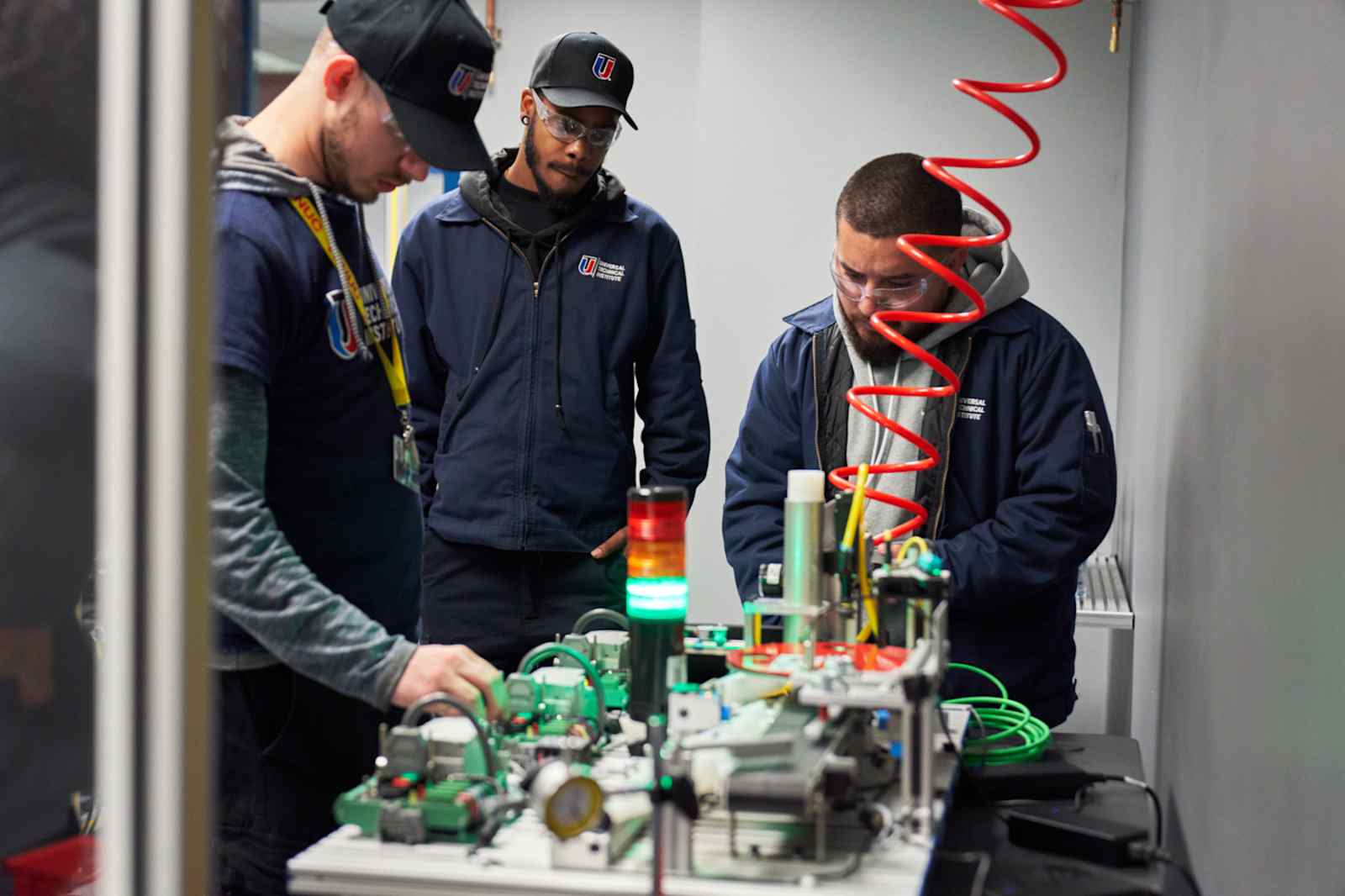
Training programs focused on robotics and automation can help you build the technical skills needed in today’s advanced manufacturing and technology fields. At UTI, the Robotics & Automation Technician program offers hands-on learning designed to prepare students for entry-level roles in this growing industry.1 The program includes the following robotics and automation courses:
To prepare for a career in robotics, consider building foundational knowledge in areas like electrical systems, hydraulics, sensors, PLCs (programmable logic controllers) and mechanical components. It’s also helpful to study safety procedures and learn how to read technical schematics. These skills can provide a strong base for future training or entry-level opportunities.
Whether through school labs, externships or entry-level roles, gaining hands-on experience is a valuable step. Exposure to real-world settings helps aspiring technicians get familiar with the tools, systems and pace of the job.
Opportunities to connect with employers — such as career fairs, job shadowing or workforce development programs — can also support your journey by offering insight into what companies look for in entry-level candidates.
After completing a robotics or automation training program, graduates can pursue entry-level roles in areas like automation, manufacturing or robotics support. These positions are a great way to build hands-on experience and grow technical confidence.
Specifically at UTI, students and grads also receive support from Career Services, including resume coaching, interview prep, job placement assistance and access to a network of employers. This support starts early in the program and continues after graduation, helping students take the next step toward pursuing a career.1
Robotics technology continues to evolve. Staying current through certifications, workshops and additional training can help expand your skill set and stay aligned with industry needs.
Many technicians choose to build on their foundational training by pursuing specialized credentials or manufacturer-specific certifications. These can demonstrate continued growth and adaptability, qualities valued by employers in high-tech, fast-changing environments.
The Robotics & Automation Technician program at UTI can be completed in less than a year!7 When students graduate from the program, they are ready to pursue entry-level positions in the field like: robotics and automation technician, control systems technician or maintenance technician.
When you’re picking up new skills and knowledge, there is a learning curve that could make some parts of the process a bit difficult. But if you enjoy robotics, problem-solving and technical work, have a strong attention to detail and have a love for learning, you can strive to become a robotics technician.
A typical day for a robotics technician is dynamic and hands-on, involves troubleshooting technical issues, performing routine maintenance and sometimes collaborating with engineers. Each day brings new challenges that require sharp problem-solving abilities, clear communication and technical knowledge.
No, you don't need a four-year college degree to become a robotics technician. Most technicians enter the field with an associate degree, certificate or postsecondary technical training. Many programs including UTI’s require only a high school diploma or GED certificate to enroll. While bachelor's degrees are common for engineers, technician roles often focus on hands-on skills and technical aptitude, which can be built through shorter, more practical credentials.
As technology evolves, so does the world’s reliance on it. Robotics technicians get to build and work on important machines like robots, which are increasingly responsible for various tasks in business operations and beyond.
Request info and an Admissions Representative will be in touch with resources. You can also take the first step and fill out an application today!
Universal Technical Institute of Illinois, Inc. is approved by the Division of Private Business and Vocational Schools of the Illinois Board of Higher Education.