
Robotics & Automation
What is a Control Systems Technician?
Learn how to become a control systems technician and gain hands-on skills through UTI’s 18-month Robotics & Automation Technology program.
In This Article
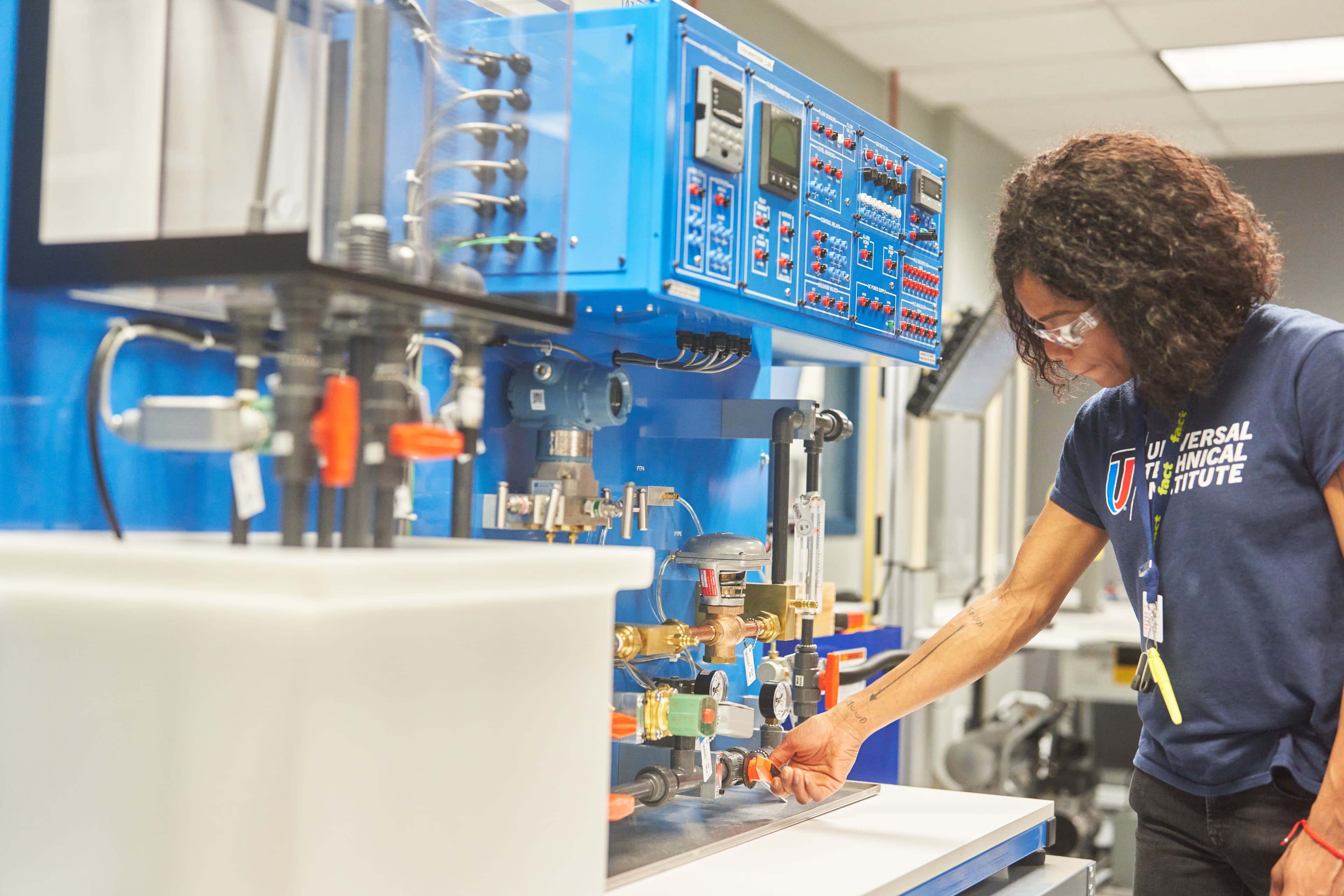
Robots may not be taking over the world, but they are a huge part of many industries.
Are you interested in robotics and automation? Consider starting your journey through Universal Technical Institute's (UTI) Robotics & Automation programs!1 While enrolled, students get to train on equipment used in the industry! The training takes about a year and a half or less to complete and is designed to teach students the fundamental skills they need to prepare for entry-level positions in robotics and automation.
Dive into this guide to see if the world of robotics is for you! We'll explore what you need to know about this career from job responsibilities to salary expectations.
Control Systems Technician, Explained
A control systems technician (CST) is a specialized professional responsible for the installation, maintenance and troubleshooting of automated control systems. These systems are used in various industries, including manufacturing, energy and transportation, to monitor and control physical processes.
A CST ensures that automated systems operate efficiently and safely, minimizing downtime and maximizing productivity.
Control systems technicians work with a variety of technologies, such as programmable logic controllers (PLCs), human-machine interfaces (HMIs) and various sensors and actuators. Their role is important for making sure that these systems run smoothly.
Control Systems Technician Job Description
What does a control system technician do? A CST’s daily tasks can vary depending on the industry and specific job. However, some common responsibilities include:
- System Installation: Installing and configuring automation systems, including PLCs, HMIs and related hardware.
- Maintenance and Upkeep: Conducting routine maintenance and inspections to ensure optimal system performance.
- Troubleshooting: Diagnosing and resolving issues that arise in the control systems, both remotely and on-site.
- Documentation: Keeping detailed records of all maintenance and repair activities for future reference.
- Collaboration: Working with engineers, operators and other technicians to implement new systems or upgrades.
Employers often look for candidates with a strong foundation in electronics, mechanical systems and computer programming. Experience with specific control systems software and hardware can also be a significant advantage.
Control Systems Technician Salary
According to the Bureau of Labor Statistics (BLS), the median annual salary for robotics and automation technicians in the United States was $73,900 in May 2025.59 This means half earned more and half earned less. Keep in mind that salary depends on several factors, including experience, employer, demand and cost of living in the area. Entry-level positions typically start at the lower end of the scale, but with experience and additional training, technicians can pursue specialized positions that typically offer higher pay.77
Read: ROBOTICS TECHNICIAN CAREER PATH
What Skills Are Necessary To Be a Control Systems Technician?
If you want to pursue becoming a CST, you'll need a mix of technical skills and soft skills. Here are some of the most important skills:
- Technical proficiency: A strong understanding of electrical systems, mechanical systems and computer programming.
- Problem-solving skills: The ability to diagnose and fix issues quickly and efficiently.
- Attention to detail: Precision is key in this role, as even small errors can lead to significant problems.
- Communication skills: Being able to communicate effectively with team members and other departments.
In addition to these skills, a willingness to stay updated with the latest advancements in technology is equally important. The field of automation is constantly evolving, and the learning process is part of it!
How To Become a Control Systems Technician
Earn a high school diploma or GED certificate
The first step toward becoming a control systems technician is completing your high school education or earning a GED certificate. This foundational requirement helps prepare you for technical training programs by ensuring you have basic math, science and communication skills.
Enroll in a trade school program
According to BLS, electro-mechanical and mechatronics technologists and technicians typically need either an associate degree or a postsecondary certificate to pursue a career in this field. Graduates of our Robotics & Automation Technology 18-month program offered at Canton receive an associate of applied science (AAS) degree. UTI’s trade school can help students gain hands-on skills through training led by instructors with real-world experience. The program was designed to teach students skills that are valued by the industry. Some of the robotics course topics include:
- Manufacturing Systems and Technology.
- Applied Physics and Precision Measuring.
- Basic Industrial Robotics.
- Industrial Networking.
- C Programming. Drafting and Computer Aided Design.
- Programmable Logic Controllers.
- DC and AC Basic Electricity.
- Digital Electronics and Circuits.
- Instrumentation, Controls, Basic Electro-Mechanical Devices.
- Advanced Troubleshooting and Control Systems.
Graduates of the program are well-prepared to pursue career opportunities in the robotics and automation field. 1
Gain hands-on training and industry-relevant skills
Training programs focused on industrial robotics often emphasize practical experience. Students work with real robotic systems, learning how to program, operate and maintain the equipment used in today’s manufacturing environments. This hands-on approach helps build confidence and prepares students for the demands of the field.
Pursue entry-level opportunities
After completing a robotics or automation training program, graduates can pursue entry-level roles such as robotics technician, automation technician or maintenance technician. These positions often serve as a starting point for a long-term career in advanced manufacturing, providing opportunities to grow as you gain more experience and certifications.
Stay current with technology and certifications
The field of industrial robotics evolves rapidly, with new technologies and software continuously emerging. Staying up to date through continuing education, certifications and on-the-job training is essential for long-term success. Many professionals pursue additional credentials to remain competitive and align with industry standards.
Control Systems Technician FAQs
Is a control systems technician the same as an automation technician?
While the roles are similar, they’re not exactly the same. A control systems technician focuses specifically on installing, maintaining and troubleshooting control systems that regulate machinery and equipment. An automation technician may work more broadly across various automated systems, including robotics and software. Both roles often overlap, especially in manufacturing environments.
Do I need a degree to become a control systems technician?
You don’t necessarily need a traditional degree to become a control systems technician. Many employers look for candidates who have completed a control systems technician training program or have certifications related to programmable logic controllers (PLCs), instrumentation and electrical systems. Hands-on training can be a strong alternative to a four-year degree.
How long does it take to become a control systems technician?
The time it takes can vary depending on your path. Many control systems technician training programs can be completed in under a year.7 Some professionals may also enter the field after completing an associate degree or through a combination of military experience and technical education.
What are the benefits of becoming a control systems technician?
There are several advantages to pursuing this career. A control systems technician often enjoys job stability, hands-on work and opportunities to specialize in areas like automation or instrumentation. This role also offers room for advancement, and depending on experience and location, control systems technician salary levels can be competitive in the skilled trades sector.
Where do control systems technicians work?
Control systems technicians are employed across various industries, including manufacturing, energy, food processing, pharmaceuticals and water treatment. They typically work in environments where automated systems play a critical role in operations, helping ensure that machinery runs safely and efficiently.
Start Control Systems Technician Training with UTI’s Robotics & Automation Technology Program
Ready to take the next step? Explore our Robotics & Automation training options in your area and start building the skills you need to succeed!
Completing a formal training program can provide you with the knowledge and skills needed to pursue a career in this field.1 Are you interested in learning more? Request more information and an Admissions Representative will reach out! You can also apply for robotics and automation technician training today!
Universal Technical Institute of Illinois, Inc. is approved by the Division of Private Business and Vocational Schools of the Illinois Board of Higher Education.
Train for the Future
Imagine waking up each day excited to work in a career you’re passionate about – one where your hands-on skills make a real impact. UTI’s vocational trade school can help you gain the skills and confidence to pursue what you love.
