

What Is Trade School?
A Guide for High School Students

Trade school is a hands-on educational path your teen can choose after high school.1, 18

Unlike a traditional college, trade schools skip many of the typical prerequisite courses that increase program length. Instead of sitting through courses like psychology and history or electives in humanities and fine arts, students get skills-based training. For example, a trade school student might learn to wire an electrical panel or troubleshoot an engine while their peers write essays.

Most programs take a year or less to complete. Students typically graduate with a certificate, diploma or associate degree, and depending on the school and program, they may earn industry-recognized certifications.

UTI trade school graduate wearing a black cap and gown with honor cords, smiling at commencement ceremony.

Why High School Students Should Consider Trade School

Trade school isn’t a backup choice. It can help you build real skills for real careers. With this path, comes these benefits:

UTI image Icon

Time and Cost: Trade school programs often require less time to complete than four-year universities. This means graduates can pursue careers in just two years or less.

UTI image Icon

Earning industry certifications: Get specialized knowledge, and in many programs, prep to test for credentials that employers respect.

UTI image Icon

Real career paths: Trade school is a legit first step toward rewarding and respected jobs that may be less likely to be automated.

UTI image Icon

Job-ready faster: Hands-on training specific to the job you want makes gaining skills a focused process and means you can start pursuing a career faster than the traditional route. Many programs can even be completed in less than a year.7

image

Who Is Trade School Right For?

Not everyone learns the same way. Trade school might be a good fit if you:

UTI image Icon

Like building or fixing things

UTI image Icon

Learn best by doing and not just reading

UTI image Icon

Want to pursue a career faster

UTI image Icon

Don’t picture yourself in a desk job

UTI image Icon

Are curious about tech, tools or engines

Not sure what kind of trade career you want? Click the link below to take a career quiz.

Help Me Find My Path

image

Trade School vs. College: How Can I Gain Skills Without a College Degree?

After high school, you have options. Both trade school and college can help you get on the path toward successful futures, but the way there looks different. College focuses on broad education and theory, while trade school zeroes in on specific skills for a specific job.

Trade School

College

Cost

Invest in training that takes 2 years or less and be prepared for a career sooner 1

Cost

Often requires 4+ years of tuition with 48% of grads saying they feel unprepared for entry-level jobs in their field.

Training time

2 years or less

Training time

4+ years

Learning Style

Blend of hands-on and classroom learning that connects theory with real-world application 18

Learning Style

Theory-focused, with hands-on application often delayed

Outcome

Specialized, career-ready skills

Outcome

Broader education enhances general knowledge

Careers You Can Train for at Trade School

Trade school isn’t just about learning a skill. It’s about preparing for a real career. Many roles are essential to industries like transportation, energy, aviation and manufacturing, which means your skills will be valuable.

Below are just a few of the career paths you could train for after high school:


Disclaimer: * Not entry-level salary and is dependent on factors like experience, location, certifications and employer compensation.

What Are the Fastest Trade Programs That Can Lead to a Job After Graduation?

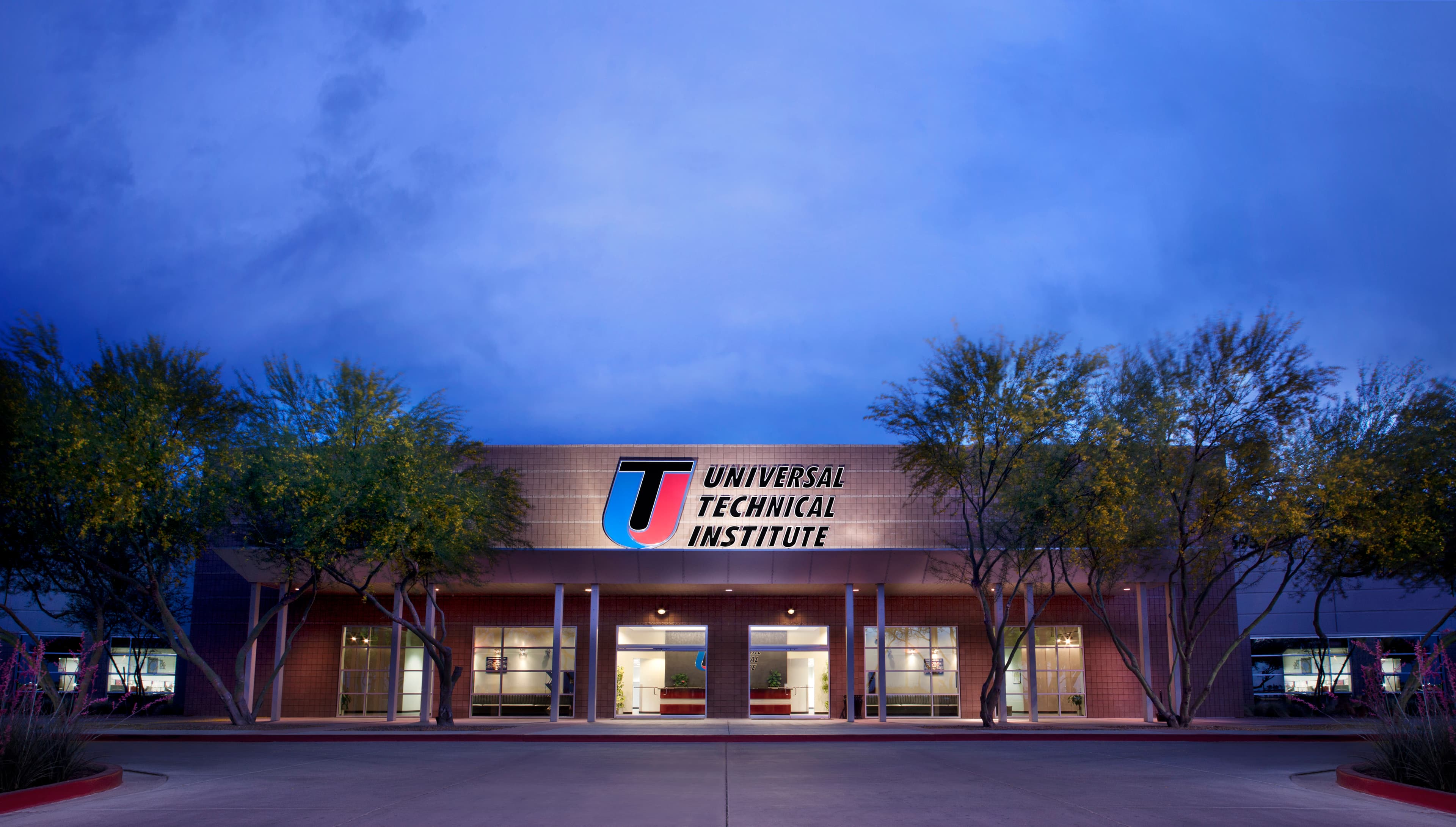
Many trade programs take less than two years to complete. For example, Universal Technical Institute (UTI) trade school programs last just 7-24 months depending on the program. That means it’s possible to get trained and job-ready in under a year.1

Explore trade programs that can get you on the path toward a career after graduation here: https://www.uti.edu/programs

image

How to Prepare for Trade School While in High School

Wondering what you can do now to get ready? Preparing early makes the transition smoother and helps you feel more confident about your decision. A lot of it is about exploring what you enjoy and gaining small experiences that can lead to bigger ones. Here are ways to prepare:

UTI image Icon

Take shop or tech classes

UTI image Icon

Shadow a skilled worker like a mechanic, electrician or welder

UTI image Icon

Get hands-on at makerspaces, robotics clubs or automotive classes

UTI image Icon

Talk to your school counselor about technical programs and pathways

UTI image Icon

Take a career quiz to find your fit

UTI image Icon

Tour a campus—virtually or in person—to see what hands-on training looks like

UTI image Icon

Try a summer internship or part-time job in a related field

Virtually Tour a Trade School

Questions to Ask When Choosing a Trade School

Choosing a trade school is a big step. Asking the right questions can help make sure you find a school that fits your learning style, career goals and financial situation. Here’s a list of questions to keep handy when talking to trade schools:  

image

Why Choose UTI?

With so many options, you want to pick a trade school that truly sets you up for success. UTI has spent decades building programs trusted by both students and employers, and it shows how we teach and support students just like you. 

Hands-on labs with real industry tools:

Train the same way techs do in the field.

Employer-trusted programs:

Companies like BMW and Ford trust UTI to train their technicians, which is why we offer advanced training opportunities with manufacturers like these.

Tutoring & Mentorship:

Instructors and staff are here to guide you through tough spots.

Community:

Find friends who share your goals and build connections that can last beyond graduation.

“You see so many different ads for trade schools and all these different places you can go, but I think UTI was definitely the biggest one that wanted me to succeed and had all the resources to help me succeed.”

Makenna Enga

UTI Grad

What To Expect at UTI

UTI image Icon

Program length (7–24 months): Get trained in two years or less so you can start moving toward your goals faster.

UTI image Icon

Class style: Forget endless lectures. Spend time in labs using real tools and technology to practice what you could do on the job.

UTI image Icon

Support: You’re never on your own. Get tutoring to keep you on track, talk to mentors who’ve worked in the field, and attend career fairs where you can connect with employers. Career services can help you with résumés, interviews and job searching.

image

Cost & Financial Support

You might be thinking, “how much will it cost?” Tuition is top of mind for most students, but there are many ways to make trade school possible. Here are a few ways to pay for trade school:

UTI image Icon

Federal Aid: Many students complete a FAFSA so they can apply for federal aid, like loans, which can help cover the cost of tuition.

UTI image Icon

Scholarships & Grants: UTI makes more than$15 million in grants and scholarships available every year to students who qualify.10 Some are only available to high school students like you! Explore opportunities here: https://www.uti.edu/financial-aid/scholarships-grants

UTI image Icon

Employer Support: Some employers looking for fresh talent team with UTI to offer early employment to select students. These may offer 20-30 paid hours per week while students train and could result in full-time employment after graduation!36

UTI image Icon

Payment Plans: Don’t pay it all at once—spread your tuition out over more manageable payments.

Best of all, you won't just be paying for courses. Your tuition includes:

UTI image Icon

Uniforms

UTI image Icon

Access to labs outfitted with tools and technology

UTI image Icon

Experienced instructors

UTI image Icon

Continued refresher courses as an alum39

UTI image Icon

Job search assistance as a student and alum

FAQs

Get Started Toward a Career Doing What You Love

Not sure exactly what you want yet? That’s okay. Trade school for high school students is about exploring and building your skills for real careers.


Download Our Guide For Students
svg icons
Take a Closer Look at UTI
svg icons

1) UTI is an educational institution and cannot guarantee employment or salary.
2) For program outcome information and other disclosures, visit www.uti.edu/disclosures.
10) Financial aid, scholarships and grants are available to those who qualify. Awards vary due to specific conditions, criteria and state.
14) Incentive programs and employee eligibility are at the discretion of the employer and available at select locations. Special conditions may apply. Talk to potential employers to learn more about the programs available in your area. UTI is an educational institution and cannot guarantee employment or salary.
18) UTI now offers all of its automotive, diesel, motorcycle and marine technician training in a blended-learning format consisting of online lecture courses along with in-person, hands-on lab training.
23) Prior to starting or re-enrolling, Tennessee residents attending the Orlando or Houston campus must provide official high school transcripts, GED scores or state-authorized equivalent exam scores. In addition, all students attending the Mooresville campus must provide official high school transcripts, GED scores or state-authorized equivalent exam scores prior to starting or re-enrolling. 
29) UTI’s Diesel Technology Program prepares graduates for entry-level positions using the provided training, primarily as diesel technicians. Estimated annual salary shown above is for Bus and Truck Mechanics and Diesel Engine Specialists as published in the U.S. Bureau of Labor Statistics’ May 2024 Occupational Employment and Wages. Entry-level salaries are lower for UTI graduates. UTI is an educational institution and cannot guarantee employment or salary. UTI graduates’ achievements may vary. Individual circumstances and wages depend on economic factors, personal credentials, work experience, industry certifications, the location of the employer, and their compensation programs. Some UTI graduates get jobs within their field of study in positions other than as diesel truck technicians, including in industries such as heavy equipment repair, power generation, and agriculture. Salary information for the Commonwealth of Massachusetts: The average annual entry-level salary range for persons employed as Bus and Truck Mechanics and Diesel Engine Specialists (49-3031) in the Commonwealth of Massachusetts is $52,770 (Massachusetts Labor and Workforce Development, May 2023 data https://lmi.dua.eol.mass.gov/lmi/OccupationalEmploymentAndWageAllIndustries/OEWResult?A=01&GA=000025&OG=493031&Dopt=TEXT). Salary information for North Carolina: The U.S. Department of Labor estimates the hourly median wage for skilled diesel technicians in North Carolina is $25.57 (Bureau of Labor Statistics, U.S. Department of Labor, May 2024 Occupational Employment and Wages, Bus and Truck Mechanics and Diesel Engine Specialists). The Bureau of Labor Statistics does not publish entry-level salary data. However, the 25th and 10th percentile of hourly earnings in North Carolina are $22.00 and $18.08, respectively.
36) Students enrolled in select UTI programs are eligible to apply for the Early Employment Program. Participating employers will contact selected applicants to conduct interviews. Hiring, employee retention and compensation decisions are made solely by the prospective employer. Employer participation and program details are subject to change. For additional information, please contact Career Services. UTI is an educational institution and cannot guarantee employment or salary.
39) Refresher training available to graduates only if the course is still available and space is available. Students are responsible for any other costs such as lab fees associated with the course. 
57) Estimated annual salary is for Aircraft Mechanics and Service Technicians as published in the U.S. Bureau of Labor Statistics’ May 2024 Occupational Employment and Wages. The Airframe & Powerplant and Aviation Maintenance Technology programs prepare graduates to pursue entry-level careers in the aviation industry or related fields. Graduates are eligible to apply and test for an FAA-issued mechanic certificate. Career options may be limited without an FAA-issued mechanic certificate, and salaries may be lower. Some graduates get jobs within their field of study in positions other than as aviation maintenance technicians, such as turbine technicians or field technicians. Entry-level salaries are lower for graduates. UTI is an educational institution and cannot guarantee employment or salary. Graduates’ achievements vary. Individual circumstances and wages depend on economic factors, personal credentials, work experience, industry certifications, the location of the employer, and their compensation programs. Salary information for the Commonwealth of Massachusetts: The average annual entry-level salary for persons employed as Aircraft Mechanics and Service Technicians (49-3011) in the Commonwealth of Massachusetts is $63,810 (Massachusetts Labor and Workforce Development, May 2023 data https://lmi.dua.eol.mass.gov/lmi/OccupationalEmploymentAndWageAllIndustries/OEWResult?A=01&GA=000025&OG=493011&Dopt=TEXT#). Salary information for North Carolina: The U.S. Department of Labor estimates the hourly median wage for skilled aviation technicians in North Carolina is $33.33 (Bureau of Labor Statistics, U.S. Department of Labor, May 2024 Occupational Employment and Wages, Aircraft Mechanics and Service Technicians). The Bureau of Labor Statistics does not publish entry-level salary data. However, the 25th and 10th percentile of hourly earnings in North Carolina are $29.39 and $22.98, respectively.
59) The Robotics & Automation program prepares graduates for entry-level positions using the provided training, primarily as robotics & automation technicians. Estimated annual salary is for Electro-Mechanical and Mechatronics Technologists and Technicians as published in the U.S. Bureau of Labor Statistics’ May 2024 Occupational Employment and Wages. Entry-level salaries are lower for graduates. UTI is an educational institution and cannot guarantee employment or salary. Graduates’ achievements vary. Individual circumstances and wages depend on economic factors, personal credentials, work experience, industry certifications, the location of the employer, and their compensation programs. Some graduates get jobs within their field of study in positions other than as robotics & automation technicians, such as control systems technicians and maintenance technicians. Salary information for the Commonwealth of Massachusetts: The average annual entry-level salary range for persons employed as Electro-Mechanical and Mechatronics Technologists and Technicians (17-3024) in the Commonwealth of Massachusetts is $49,020 (Massachusetts Labor and Workforce Development, May 2023 data https://lmi.dua.eol.mass.gov/lmi/OccupationalEmploymentAndWageAllIndustries/OEWResult?A=01&GA=000025&OG=173024&Dopt=TEXT). Salary information for North Carolina: The U.S. Department of Labor estimates the hourly median wage for skilled robotics & automation technicians in North Carolina is $27.73 (Bureau of Labor Statistics, U.S. Department of Labor, May 2024 Occupational Employment and Wages, Electro-Mechanical and Mechatronics Technologists and Technicians). The Bureau of Labor Statistics does not publish entry-level salary data. However, the 25th and 10th percentile of hourly earnings in North Carolina are $25.11 and $22.67, respectively.
60) The Energy Technology and Industrial Maintenance Technician programs prepare graduates for entry-level positions using the provided training, primarily as wind power technicians or industrial maintenance technicians. Estimated annual salary is for Industrial Machinery Mechanics as published in the U.S. Bureau of Labor Statistics’ May 2024 Occupational Employment and Wages. Entry-level salaries are lower for graduates. UTI is an educational institution and cannot guarantee employment or salary. Graduates’ achievements vary. Individual circumstances and wages depend on economic factors, personal credentials, work experience, industry certifications, the location of the employer, and their compensation programs. Some graduates get jobs within their field of study in positions other than as wind power technicians and industrial maintenance technicians, such as installation technicians, field service technicians, and plant technicians. Salary information for the Commonwealth of Massachusetts: The average annual entry-level salary for persons employed as Industrial Machinery Mechanics (49-9041) in the Commonwealth of Massachusetts is $52,020 (Massachusetts Labor and Workforce Development, May 2023 data https://lmi.dua.eol.mass.gov/lmi/OccupationalEmploymentAndWageAllIndustries/OEWResult?A=01&GA=000025&OG=499041&Dopt=TEXT). Salary information for North Carolina: The U.S. Department of Labor estimates the hourly median wage for skilled wind power technicians and industrial maintenance technicians in North Carolina is $29.26 (Bureau of Labor Statistics, U.S. Department of Labor, May 2024 Occupational Employment and Wages, Industrial Machinery Mechanics). The Bureau of Labor Statistics does not publish entry-level salary data. However, the 25th and 10th percentile of hourly earnings in North Carolina are $23.24 and $19.61, respectively.
61) The Wind Technician training program prepares graduates for entry-level positions using the provided training, primarily as wind power technicians. Estimated annual salary is for Wind Turbine Service Technicians as published in the U.S. Bureau of Labor Statistics’ May 2024 Occupational Employment and Wages. Entry-level salaries are lower for graduates. UTI is an educational institution and cannot guarantee employment or salary. Graduates’ achievements may vary. Individual circumstances and wages depend on economic factors, personal credentials, work experience, industry certifications, the location of the employer, and their compensation programs. Some graduates get jobs within their field of study in positions other than as wind power technicians, such as installation technicians and field service technicians. Salary information for the Commonwealth of Massachusetts is available at https://lmi.dua.eol.mass.gov/lmi/OccupationalEmploymentAndWageSpecificOccupations#. Salary information for North Carolina: The U.S. Department of Labor estimates the hourly median wage for skilled wind turbine technicians in North Carolina is $31.56 (Bureau of Labor Statistics, U.S. Department of Labor, May 2024 Occupational Employment and Wages, Wind Turbine Service Technicians). The Bureau of Labor Statistics does not publish entry-level salary data. However, the 25th and 10th percentile of hourly earnings in North Carolina are $28.64 and $25.23, respectively.
63) Bureau of Labor Statistics (BLS), U.S. Department of Labor, Occupational Outlook Handbook, Wind Turbine Technicians, https://www.bls.gov/ooh/installation-maintenance-and-repair/wind-turbine-technicians.htm. BLS projects total employment will increase from 11,400 in 2023 to 18,200 in 2033. UTI is an educational institution and cannot guarantee employment or salary. For program outcome information and other disclosures, visit www.uti.edu/disclosures.

Privacy PolicyLegal NoticeAccessibilityDisclosures

Do Not Sell My Personal Information