
Diesel
Important Diesel Mechanic Skills
Learn about important diesel mechanic skills as well as how UTI can help you develop them in less than a year. Click for more.
In This Article
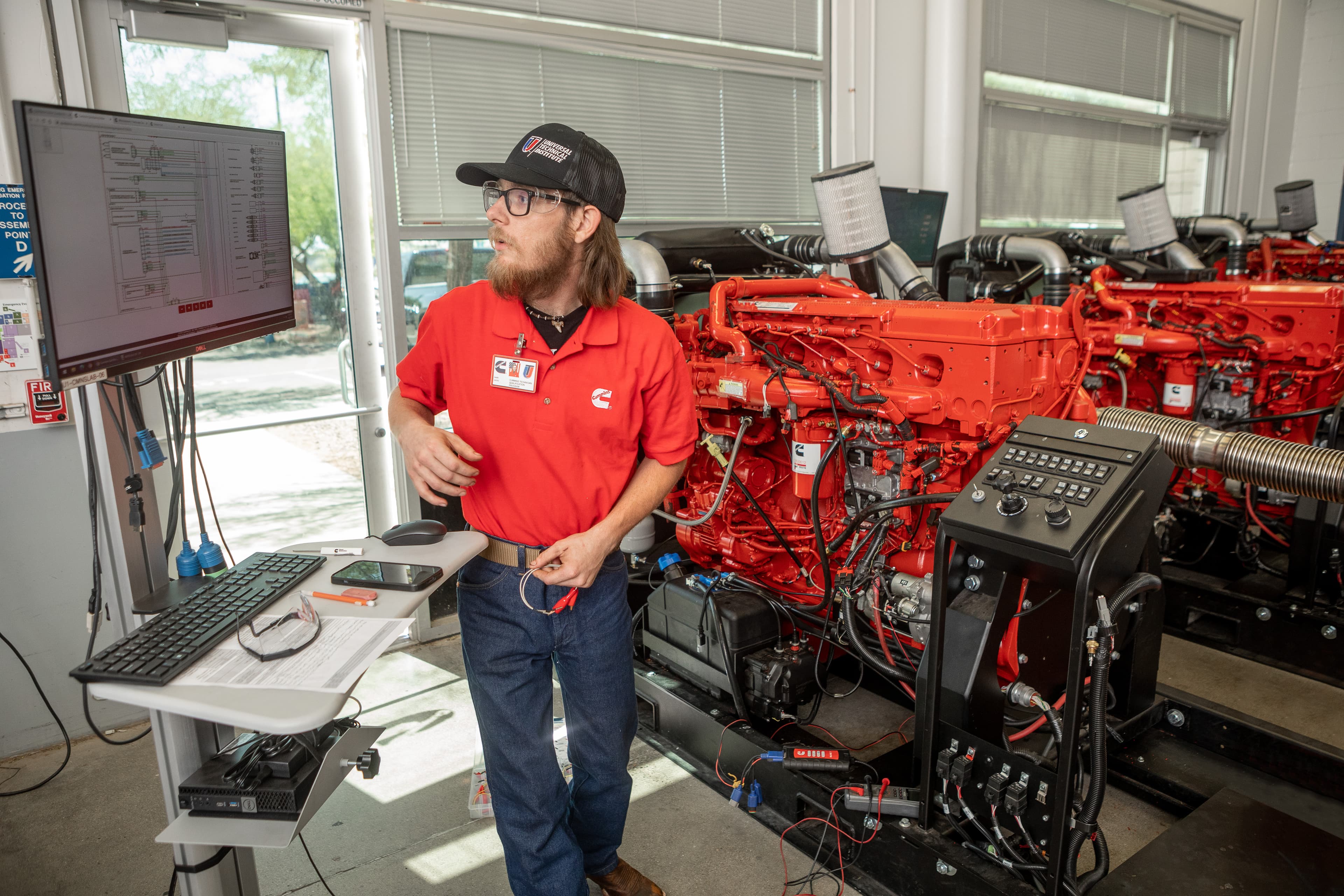
Learn Diesel Mechanic Skills: Train for a Career
Diesel mechanics, also known as diesel technicians, ensure trucks, buses and heavy machinery run safely and efficiently. Without diesel mechanics and their expertise, crucial industries such as the transportation and agriculture sectors would grind to a halt.
Becoming a diesel mechanic is not just a career choice, it’s a decision to become a valuable contributor to society. If you want to learn what it takes, keep reading! In this blog post, we’ll share the skills needed to be a diesel mechanic and how to develop them.
What Skills Do You Need to Be a Diesel Mechanic?
Diesel mechanic skills include specific technical knowledge and traits. We'll cover both.
Technical Knowledge Required
As diesel technology advances, so do diesel mechanics’ skills. Successful diesel workers are fluent in both the mechanics and technology of diesel engines. They're also comfortable using various tools, ranging from wrenches to computers that help them adjust engine functions.
Other important technical skills include:
- Troubleshooting electrical systems
- Quality control
- Engine repair
- Engine performance
- Vehicle maintenance
- Equipment calibration
- Interpreting work orders
Diesel mechanics who enter the field without a post-secondary education may take up to four years to develop these skills. But a Diesel Technology program, like the one at Universal Technical Institute (UTI), can provide students with the fundamentals in just 45 weeks.1,7
Already have these skills? Learn how to include them on your resume by checking out our diesel mechanic resume guide.
Diesel Technician Traits
Many diesel employers look for the following traits when hiring:
- Safety-oriented: Diesel technicians work with heavy machinery, complex tools and hazardous materials that are dangerous if not handled appropriately.
- Personable: Mechanics must listen to customers’ needs, problem-solve alongside other mechanics and interact with parts suppliers and vendors.
- Attention to detail: Diesel engines have complex, interdependent components and systems that require a close eye to diagnose and repair.
- Physical strength: Diesel engines power large equipment with heavy parts that mechanics are responsible for removing and installing.
- Analytical skills: Mechanics know how to get to the bottom of an issue and find the most effective way to solve it.
- Desire to learn: The most successful diesel technicians jump at opportunities to learn about diesel technology advancements.
Training for Diesel Mechanics
While some diesel mechanics enter the field immediately after high school, they require extensive on-the-job training and begin with basic duties until their employers feel they’re ready to progress. Tasks might include driving vehicles in and out of the garage, checking oil levels and cleaning parts.
However, the Bureau of Labor Statistics (BLS) reported that an increasing number of employers prefer applicants who’ve attended a diesel mechanic school. Entry-level mechanics with a post-secondary education still require on-the-job training but have a foundational understanding of diesel technology and safety standards. For this reason, they may begin with more complex tasks like assisting with routine maintenance and vehicle diagnostics.
When choosing a diesel mechanic school, ask about their curriculum. Does it include hands-on instruction? How was it they developed? This will help you gauge the type of diesel mechanic skills you'll gain.
The diesel mechanic courses at UTI are designed alongside industry leaders and include hands-on instruction in labs outfitted with the same tools and technology techs in the field use.18 Topics cover:
- Diesel Engines Service & Repair
- Diesel Truck Manual Transmission
- Diesel Truck Brake Systems & Chassis
- Diesel Truck Steering & Suspension Systems
- Automotive Climate Control Systems & Repair
- Diesel Hydraulic Systems
- Vehicle Electronic Systems & Technology
- Diesel Truck Transport Refrigeration
- Diesel Truck Preventative Maintenance
We offer diesel mechanic training at campuses across the nation. In some cases, students can earn associate degrees! Find a campus near you:
- Long Beach, California
- Rancho Cucamonga, California
- Sacramento, California
- Avondale, Arizona
- Austin, Texas
- Dallas/Fort Worth, Texas
- Houston, Texas
- Miramar, Florida
- Orlando, Florida
- Lisle, Illinois
- Exton, Pennsylvania
- Bloomfield, New Jersey
Developing Expertise in Diesel Mechanic Skills
When it comes to diesel technology, there’s always something new to learn.
UTI graduate Cristian Raymundo shared, “One of the things I love about the diesel and automotive industry is that it’s always changing. You can go ahead and think that you know everything then a whole new batch of technology is introduced. It’s amazing how it constantly changes.”
Developing expert diesel mechanic skills requires a dedication to learning. There are a few ways to ensure your opportunities to learn stay open.
1. Get ASE Certified
The National Institute for Automotive Service Excellence (ASE) is a nonprofit organization that tests and certifies technicians for knowledge and experience. While not required, many employers value the industry-standard credential because it displays dedication and trustworthiness to customers.
Our students take courses aligned with ASE’s standards and graduate with one of the two years of work experience required to test for certification. Simply preparing for the ASE certification exam broadens technicians’ knowledge because it requires a deep dive into diesel mechanics. Not to mention, technicians must retest every five years, ensuring they’ve maintained their skills.
Technicians considered experts at their craft obtain ASE Master Technician status. This prestigious credential requires two years of hands-on work experience and a passing grade on specified tests in a series.
2. Join Professional Organizations
Joining a professional organization like the Association of Diesel Specialists (ADS) can provide unique training and networking opportunities. For instance, ADS offers:
- A forum for diesel technicians to communicate and collaborate on
- Training courses on diesel technology
- An international convention with industry leaders
- Conferences with other diesel technicians
Involving yourself in a community passionate about the evolving field can help you stay in the know, and more importantly, establish you as a leader who teaches other technicians about diesel advancements.
3. Be Patient
Developing expert diesel mechanic skills takes time, so be patient with yourself. After graduating from diesel school, most mechanics start in entry-level roles and shadow senior technicians.
While being in an entry-level position can be intimidating, it’s a necessary step to advancing, so savor the time you spend there. Ask as many questions as possible and don’t be afraid to fail.
Over time, through hard work and experience, diesel technicians may find themselves advancing!77
Career Opportunities for Diesel Mechanics
Diesel mechanics aren't limited to one industry. They could be maintaining heavy machinery on construction sites, working on marine vessels or servicing air transport equipment. Wondering what the career path might look like? Most mechanics start in entry-level positions as:
- Diesel technicians maintain, diagnose and repair diesel-powered vehicles. They typically work in repair shops or dealerships.
- Heavy equipment repair techniciansmaintain, diagnose and repair large pieces of equipment, like bulldozers, cranes and excavators.
- Power generation techniciansservice the complex systems that use diesel to generate electricity.
- Agriculture technicians work on farm equipment, like plows, seeders and tractors.
Over time, they may advance into a more mature role, such as:
- Mobile diesel mechanics travel to customers to diagnose and repair diesel-powered equipment.
- Fleet managers oversee maintenance schedules and repairs to optimize the efficiency of a diesel vehicle fleet. They often work for trucking companies and local governments.
- Service managers oversee a team of diesel technicians to ensure proper operation. They typically work for repair shops and dealerships.
Those with a knack for entrepreneurship may even open their own repair shops. And if they’re keen on sharing their expertise, they can pursue consulting opportunities or begin educating aspiring mechanics.
FAQs
Are there any specific electrical skills required for working on diesel engines?
Yes, diesel mechanics should understand how electrical components operate within a diesel-powered vehicle. They should know how to read wiring diagrams, test circuits and troubleshoot electrical issues. A course on vehicle electronic systems and technology can equip you with these diesel mechanic skills.
Is it necessary to have good communication skills to work as a diesel mechanic?
Diesel mechanics need good communication skills because they’re often required to explain complex technical concepts to customers in layman’s terms. They also coordinate with other team members to solve problems. The instructors at UTI help students refine their communication skills to prepare them for careers.
Are there any specific certifications or licenses needed to work as a diesel mechanic?
Many diesel mechanics require a commercial driver's license to test drive large vehicles, like buses and semitrucks. Aside from this, employers may require their technicians to work toward professional credentials, like ASE certification.
How much does a diesel mechanic make?
The Bureau of Labor Statistics (BLS) reported the median annual salary for diesel mechanics in the U.S. was $61,770 in May 2025.29 This means half earned more and half earned less. It’s important to note that salary can depend on several factors, including experience, employer, demand and cost of living in the area.
Build Diesel Mechanic Skills at UTI
Becoming a mechanic requires hard work and dedication, but with the proper training, you can develop the right skills and feel prepared to step into the role.
UTI’s diesel mechanic school can help you build the knowledge needed for a career you can be proud of. Ready to get started?
Universal Technical Institute of Illinois, Inc. is approved by the Division of Private Business and Vocational Schools of the Illinois Board of Higher Education.
Train for the Future
Imagine waking up each day excited to work in a career you’re passionate about – one where your hands-on skills make a real impact. UTI’s vocational trade school can help you gain the skills and confidence to pursue what you love.
