
Automotive
How To Choose an Automotive Trade School Program
Know what to look for in an automotive trade school. Compare accreditation, hands-on training, course offerings, career support and overall program fit.
In This Article
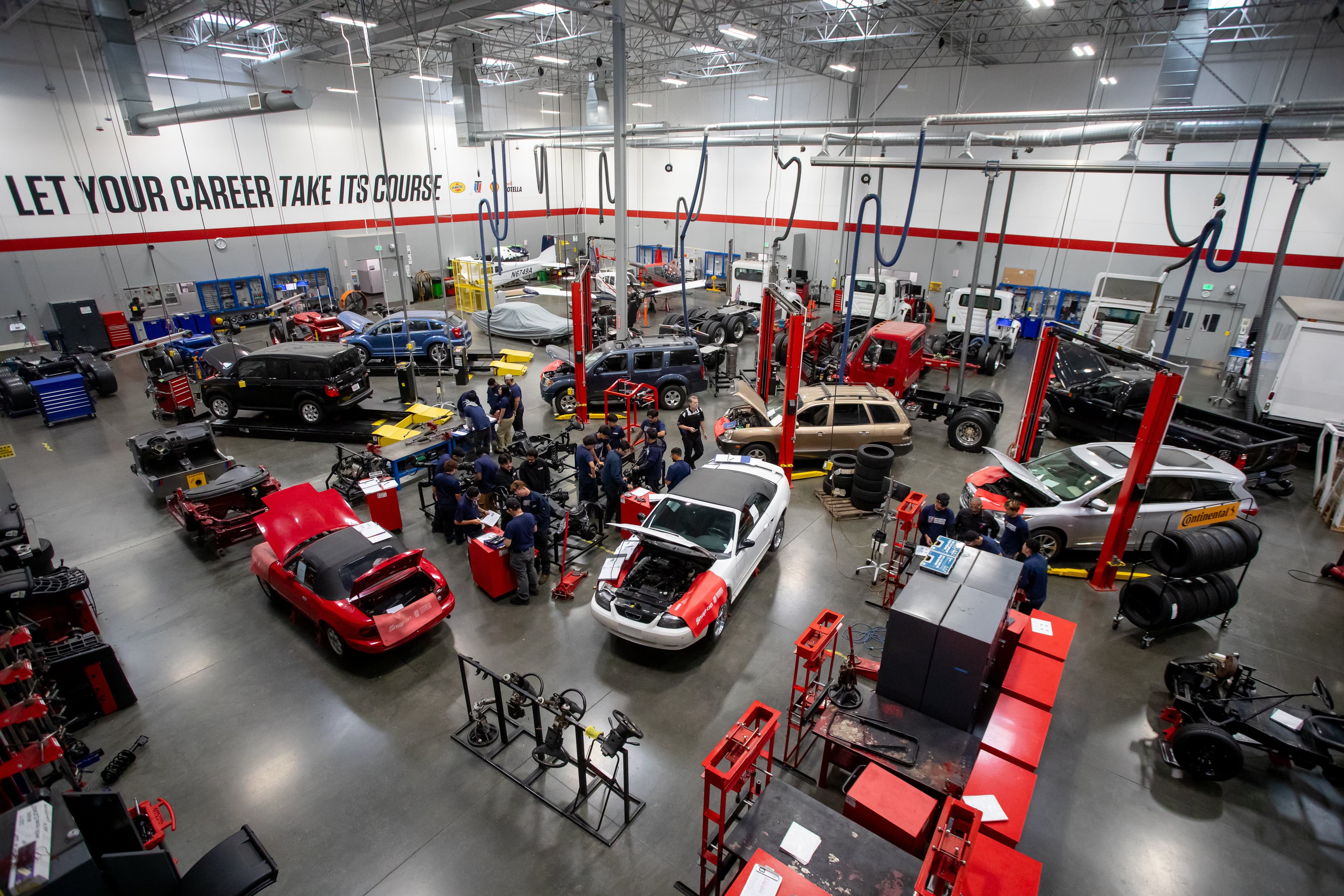
Choosing an automotive trade school takes more than finding a nearby campus and signing up for classes.
A useful comparison starts with the training itself. Look at accreditation, hands-on learning, curriculum, facilities, program length, certification preparation, industry relationships, student support and cost before deciding which automotive trade school program fits your goals.
Those factors can help you understand not just what a program promises, but what you can expect to learn, practice and access while you train, including how programs such as the Universal Technical Institute (UTI) Automotive & EV Technology program structure hands-on training and coursework.1,18
Keep reading to see what to compare and which questions to ask before enrolling.
What To Look for in an Automotive Trade School Program
A useful automotive trade school comparison should answer more than “Does the school offer automotive training?” Look for specific evidence of what students learn, how they practice it and what resources are available before and after graduation.
Factor | What To Verify | Why It Matters |
Accreditation | Institutional accreditation and any automotive program-level accreditation | Helps you understand which educational and industry standards apply |
Hands-on training | Lab frequency, automotive tasks practiced and tools used | Shows how classroom concepts are applied |
Curriculum | Vehicle systems, diagnostics and repair topics covered | Reveals the actual scope of training |
Technology | Scan tools, electrical testing and newer vehicle systems | Helps show whether training reflects current automotive service |
Program length | Training timeline and what is included | Helps you compare time commitment with training scope |
Schedule | Day, evening, online and lab requirements | Helps determine whether the format fits your life |
Certification preparation | Which credentials training supports and what outside requirements remain | Prevents confusing program completion with certification |
Industry relationships | Manufacturer-specific training, employer involvement and other industry opportunities | Can expand the types of training students may explore |
Student support | Academic, financial aid and career resources | Shows what help is available beyond the lab |
Cost | Tuition, fees, tools, materials and other expenses | Helps you compare the full financial picture |
The goal is not to find one impressive feature. It is to understand how the pieces work together as a training path.
1. Match Automotive Training to Your Career Goals
Before comparing course catalogs, think about the type of automotive work that interests you. Different career directions can make different program features more relevant.
For example:
- General automotive repair: Look for broad training across brakes, steering and suspension, electrical systems, engine performance, HVAC, maintenance and diagnostics.
- Dealership work: Manufacturer-specific training, brand relationships and dealership-oriented procedures may be worth investigating.
- Electrical and diagnostic work: Look closely at circuit fundamentals, digital-meter testing, scan-tool use, computerized diagnostics and troubleshooting.
- Hybrid and electric vehicle work: Check whether the curriculum includes high-voltage safety, EV components, battery systems, electrical diagnostics or related technology.
- Performance-focused work: Review whether advanced engine, power and performance training is available.
- Specialized repair: If you already know you are interested in a particular system, compare how deeply programs cover that area.
You do not need your entire career mapped out before enrolling. But knowing which automotive work interests you can help you recognize which training features actually matter to your goals.
2. Check the School’s Accreditation
Accreditation is one of the first quality indicators to verify when comparing automotive trade schools. It means an institution or program has been evaluated against established standards by an outside accrediting organization.
There are two different questions worth asking:
Who accredits the school?
Does the automotive program hold additional industry-specific accreditation?
Those are not necessarily the same thing.
Why institutional accreditation matters
Institutional accreditation applies to the school as a whole. Before enrolling, identify the school’s accrediting organization and verify its current accreditation status.
Do not stop at a logo on a website. Look for:
- The full name of the accrediting organization.
- Whether the accreditor is recognized by the U.S. Department of Education.
- Whether the specific institution or campus you are considering is covered.
- Current accreditation information rather than an old award or announcement.
Institutional accreditation can also be relevant to a school’s participation in federal student financial aid programs.
Automotive program-level accreditation
Program-level accreditation focuses specifically on the training provided within a field.
The American Service Excellence (ASE) Education Foundation, for example, evaluates automotive technician training programs using standards tied to areas such as curriculum, facilities, equipment, tools, safety practices and instructional quality.
That is separate from ASE technician certification.
School accreditation, automotive program accreditation and individual ASE certification are three different things:
- Institutional accreditation applies to the school.
- ASE Education Foundation accreditation applies to qualifying technician-training programs.
- ASE certification is earned by individual technicians who meet ASE testing and work-experience requirements.
When comparing schools, ask which of these applies rather than accepting a general statement that a program is “ASE-related.”
Read: ASE Certification: Improve Your Auto Career Opportunities
3. Compare Hands-On Automotive Training
“Hands-on” can mean very different things from one program to another.
A stronger comparison looks at what students actually do in the lab. Automotive training may involve vehicle inspections, maintenance procedures, component removal and installation, electrical testing, diagnostic work and step-by-step troubleshooting.automotive training may involve vehicle inspections, maintenance procedures, component removal and installation, electrical testing, diagnostic work and step-by-step troubleshooting.
Look at the lab tasks, not just the lab hours
Ask whether students practice tasks such as:
- Using hand tools and shop equipment.
- Safely raising and supporting vehicles.
- Inspecting vehicle systems and components.
- Measuring electrical values with a digital multimeter.
- Connecting and using scan tools.
- Following automotive service information.
- Diagnosing symptoms instead of immediately replacing parts.
- Performing maintenance or repair procedures.
- Checking work after service or repair.
A school does not need to recreate every dealership or independent repair shop exactly. But the training environment should help students build habits that transfer to automotive service work.
The useful question is not simply “Is this hands-on?” It is “What will I repeatedly practice with my own hands?”
Check how classroom learning connects to the lab
Hands-on training is more meaningful when students understand the concepts behind the task.
Ask how the program moves students through a process such as:
1. Learn how a system works.
2. Identify components and service information.
3. Inspect or test the system.
4. Diagnose a problem or condition.
5. Perform the required procedure.
6. Verify the work.
That progression can tell you more about the training model than a generic claim about lab time.
4. Review the automotive program curriculum
Two programs can both be called “Automotive Technology” while covering different courses, systems and technologies.
Read the actual course descriptions before enrolling. They should tell you what systems students study and what kinds of technical skills the coursework is designed to develop.
Core automotive systems and repair skills
A broad automotive curriculum may include training related to:
- Engine fundamentals: Internal engine operation, components, inspection, disassembly and reassembly.
- Braking systems: Brake components, hydraulic systems, inspection, service and diagnosis.
- Steering and suspension: Steering components, suspension systems, alignment-related concepts and undercar inspection.
- Electrical systems: Circuits, batteries, starting and charging systems, electrical testing and fault diagnosis.
- Powertrains and transmissions: Drivetrain operation, transmission systems and related service procedures.
- Automotive HVAC: Heating, ventilation and air-conditioning principles, system operation and diagnosis.
- Drivability and engine performance: How technicians evaluate vehicle performance concerns and work through diagnostic information.
- Maintenance and inspection: Routine service procedures and methods used to identify vehicle concerns.
Exact topics differ by school, program and campus.
Diagnostics should be more than a buzzword
Modern automotive diagnosis involves a process.
Students should build familiarity with gathering information, verifying a concern, inspecting systems, taking measurements, using service information and narrowing down possible causes.
Ask whether diagnostic training includes tools such as:
- Scan tools.
- Digital multimeters.
- Electrical testing equipment.
- Manufacturer or industry service information.
- Diagnostic procedures tied to real vehicle symptoms.
A program that teaches how to think through a vehicle problem can offer something different from one focused mainly on memorizing components or procedures.
Look for electrical, hybrid and EV training
Even gas-powered vehicles rely heavily on electrical and electronic systems. Students interested in newer automotive technology should look for a solid electrical foundation before moving into more specialized systems.
Depending on the program, advanced technology coursework may cover areas such as:
- Electronic controls.
- High- and low-voltage systems.
- Hybrid vehicle operation.
- Battery-electric vehicle components.
- High-voltage safety.
- Electrical diagnosis.
- Battery systems.
- Software- and scan-tool-based troubleshooting.
Do not assume that “automotive technology” automatically includes the same EV or hybrid coursework everywhere. Check the current course catalog for the campus and program you are considering.
5. Evaluate the Facilities, Tools and Training Vehicles
A polished shop floor is nice. What matters more is whether the facility supports the tasks students are supposed to learn.
When touring an automotive school, look for equipment that connects directly to the curriculum.
What to look for in an automotive training lab
Depending on the program, useful training resources may include:
Vehicle lifts.
- Automotive hand and specialty tools.
- Digital multimeters and electrical testing equipment.
- Scan tools and diagnostic equipment.
- Service-information resources.
- Training vehicles.
- Engine, brake, steering, suspension or drivetrain components.
- Hybrid or electric vehicle equipment where that curriculum is offered.
- Safety equipment and clearly organized work areas.
Then ask how students use those resources.
Seeing a scan tool sitting on a cart tells you less than knowing students use it to retrieve vehicle information, follow a diagnostic process and connect test results to a system concern.
Ask about access and practice
A facility only matters if students can use it meaningfully.
Ask:
- Which tools will I personally use?
- Which systems will I work on?
- Do students work on complete vehicles, components or both?
- How are lab groups structured?
- How often do students move from instructor demonstrations into performing procedures?
- Does the equipment differ by campus?
A campus tour is one of the easiest ways to turn broad training claims into concrete answers.
Auto Grad Testimonial: The Path Austin Adair Took From UTI Grad to Volkswagen Tech
6. Compare Program Length and Schedule Options
Training time is important, but program length should be evaluated alongside what the program covers and how that training is delivered.
How long does automotive trade school take?
Automotive trade school length varies by institution, curriculum, credential and schedule. Programs may be designed around roughly a year of focused training, while other options may take longer.
When comparing timelines, verify:
- Whether the listed duration assumes full-time attendance.
- How many courses or instructional hours are included.
- Whether hands-on labs are built into that timeline.
- Whether breaks or schedule changes can affect completion.
- Whether manufacturer-specific or other advanced training happens after the core program.
A shorter timeline can be appealing, but it should still provide the training scope you are looking for.
Read: A Fast Way to Become an Auto Mechanic: How Long Does It Really Take?
Compare day, evening and blended-learning options
Schedule format can affect whether you can realistically complete the program.
Depending on the school and campus, automotive training may include:
- Morning classes.
- Afternoon classes.
- Evening sessions.
- Instructor-led online coursework.
- In-person lab training.
- A blended combination of online and campus-based learning.
Ask for the actual schedule at the campus you are considering rather than assuming every location operates the same way.
Read: Attend Night Classes for Diesel Mechanic & Auto Mechanic Training
7. Research Industry Relationships and Specialized Training
Industry relationships become much more meaningful when you can identify what they actually provide to students.
A manufacturer logo by itself does not tell you whether the relationship affects curriculum, equipment, advanced training or recruiting opportunities.
Manufacturer-Specific Advanced Training
Manufacturer-Specific Advanced Training (MSAT) is separate from foundational automotive training. These programs focus more closely on a manufacturer’s vehicles, diagnostic platforms, service procedures, technology or dealership processes.
Depending on the program, manufacturer-specific training may include:
- Brand-specific diagnostic software.
- Service information and repair procedures.
- Electrical and electronic systems.
- Manufacturer tools and equipment.
- Hybrid or electric vehicle technology.
- Warranty and service documentation.
- Dealership-focused procedures.
Students interested in dealership or brand-specific work may want to compare which manufacturers work with a school and what those relationships provide.
UTI, for example, maintains manufacturer-specific training alliances that include automotive brands such as BMW, Ford, GM, Mercedes-Benz, Porsche, Stellantis (MOPAR) and Tesla.11,15
These advanced training opportunities are separate from core automotive training. Program availability, locations, eligibility and manufacturer acceptance requirements vary.
Read: Automotive Specialized Training Programs
Employer network
Industry relationships can also show up through:
- Career fairs.
- Campus recruiting.
- Employer interviews.
- Job-search resources.
- Industry input on training.
- Early-employment opportunities.
- Tuition reimbursement or other employer programs where available.
Ask the school for specific examples.
It is important to remember that an employer relationship can create access to resources or opportunities, but it does not guarantee employment, salary or advancement.
8. Ask About Certification Preparation
Certification language can get confusing quickly because schools, programs and technicians can all hold different credentials.
Before choosing an automotive trade school, determine what the school actually provides and what would remain to be completed after graduation.
ASE certification preparation
The National Institute for Automotive Service Excellence (ASE) tests professional technicians in specific automotive service and repair areas.
For passenger vehicles, ASE test areas include subjects such as:
- Engine Repair.
- Automatic Transmission/Transaxle.
- Manual Drive Train and Axles.
- Suspension and Steering.
- Brakes.
- Electrical/Electronic Systems.
- Heating and Air Conditioning.
- Engine Performance.
If a school says its training helps prepare students for ASE certification, ask which technical areas in the curriculum connect to ASE exam topics.
Also ask whether completing the program can count toward any portion of ASE’s 2-year work-experience requirement.
Preparing for ASE exams is not the same as becoming ASE certified. Testing and applicable work-experience requirements still apply.
Know exactly what a credential claim means
When a school mentions certifications or credentials, sort the claim into one of three categories:
1. Credential earned through the program: The student earns the credential by meeting program requirements.
2. Certification preparation: Training builds knowledge related to an outside exam or credential.
3. Post-program credential: The graduate must complete additional testing, experience or other requirements.
That distinction makes program comparisons much clearer.
Read: The Path Austin Adair Took From UTI Grad to Volkswagen Tech
9. Compare Student and Career Support
The technical curriculum matters most, but support outside the lab can affect how students navigate school and prepare for what comes next.
Support while you’re in automotive school
Ask whether students can access resources such as:
- Academic tutoring or study support.
- Admissions guidance.
- Financial aid advisors.
- Housing or relocation assistance.
- Career advising.
- Resume development.
- Interview preparation.
- Job leads or help identifying part-time work while training.
Pay attention to when those resources become available. Career support that begins before graduation can help students start preparing while they are still building technical skills.
Career services after graduation
Ask whether career support ends at graduation or remains available to alumni.
Useful graduate services may include:
- Job leads.
- Resume assistance.
- Interview guidance.
- Employer events.
- Job databases.
- Ongoing career-search support.
Keep in mind that career services cannot guarantee employment, but knowing what help remains available can make the support package easier to compare across schools.
Read: What to Expect From Auto Mechanic School
10. Understand Tuition and Financial Aid Options
Do not compare automotive trade schools using tuition alone.
Compare the total cost associated with completing the program, including expenses that may sit outside the advertised tuition figure.
Compare the full cost of training
Ask about:
- Tuition.
- Registration or program fees.
- Books and course materials.
- Required tools.
- Safety equipment or uniforms.
- Transportation.
- Housing or relocation.
- Costs associated with optional or advanced training.
Also ask which items are included in tuition and which students purchase separately.
This gives you a more useful comparison than looking at one advertised number.
Financial aid, scholarships and other funding options
Finding out what funding options are available can help you decide which school is best for you.
If you plan to use financial aid, ask:
- Which federal aid programs the school participates in.
- How to complete the Free Application for Federal Student Aid (FAFSA).
- Which school or outside scholarships may be available.
- Whether grants are available based on eligibility.
- Whether military or veteran education benefits apply to your campus and program.
- Whether participating employers offer tuition reimbursement or other incentives.
A financial aid advisor can help explain which options may apply to your circumstances.
Read: UTI Scholarships & Grants10
How To Compare Automotive Trade School Programs Before Enrolling
Once you have gathered information, compare schools using the same criteria instead of relying on whichever marketing point stands out first.
Compare programs side by side
Use a simple worksheet like this:
Factor | What To Compare | Evidence To Look For |
Accreditation | Institutional + automotive program accreditation | Accreditor names and current program status |
Hands-on training | Tasks and lab structure | Specific procedures students practice |
Curriculum | Systems and diagnostic topics | Detailed course descriptions |
Technology | Electrical, scan-tool, hybrid/EV or other current systems | Named courses, tools and lab exercises |
Training equipment | Tools, equipment and vehicles | What students use during labs |
Program length | Timeline + training scope | Weeks, courses, instructional format |
Schedule | Class and lab times | Campus-specific schedule information |
Certification preparation | ASE and other credentials | Exact preparation vs. certification distinction |
Industry relationships | OEM/MSAT and employer involvement | Named programs and eligibility details |
Career support | Student + graduate services | Resume, interview and job-search resources |
Cost | Total education expenses | Tuition plus required additional costs |
Financial aid | Available resources | Eligibility requirements and advisor guidance |
Know which claims deserve a follow-up question
A program does not necessarily have a problem because information is not obvious online. But vague claims should prompt more questions.
Ask for details if:
- Accreditation language does not identify the accrediting organization.
- “Hands-on training” is advertised without explaining lab tasks.
- The curriculum lists broad subjects but no actual course descriptions.
- Certification language does not distinguish preparation from certification.
- Manufacturer relationships are mentioned without explaining available training.
- Program length is listed without explaining the expected schedule.
- Tuition information does not address required tools, fees or materials.
- Career claims sound like guaranteed employment.
Specific answers make programs easier to compare.
Visit the campus and training labs
If possible, tour the campus before enrolling.
Use the visit to see the training environment and ask:
1. Which automotive systems will I work on?
2. What tools and diagnostic equipment will I personally use?
3. How often will I train in a lab?
4. What does a typical class and lab day look like?
5. Which automotive technologies are included in the current curriculum?
6. How long does the program take on my expected schedule?
7. What certification preparation is included?
8. Are manufacturer-specific training opportunities available?
9. What support can I use while enrolled and after graduation?
10. What costs should I plan for beyond tuition?
Write down the answers while they are fresh so you can compare programs using the same information.
What To Know About UTI’s Automotive & EV Technology Program
UTI’s Automotive & EV Technology program provides a concrete example of how the factors above can come together in one training path.
The core program is designed to be completed in 51 weeks.7 UTI uses a blended-learning format in which students typically spend part of the training day completing instructor-led online coursework and part applying concepts in hands-on labs.
Automotive systems and hands-on training at UTI18
Exact courses vary by campus, but UTI automotive training can include topics such as:
- Introduction to driveability.
- Undercar systems.
- Powertrains and transmissions.
- Manual and automatic transmissions.
- Braking systems.
- Electrical fundamentals.
- Automotive HVAC.
- Power & Performance.
- Hybrid vehicle & service advising.
- Battery electric vehicle technology.
Specific course activities can move beyond simply identifying parts. Depending on the course, students may use hand tools, train with vehicle components, perform electrical testing, use diagnostic equipment, follow repair information and practice troubleshooting procedures.
At campuses offering qualifying Automotive programs, Battery Electric Vehicle Technology coursework includes topics such as high-voltage vehicle operation, EV components, diagnosis and service, electronic principles and safety. Students can also train with electric vehicles, electric drive assemblies and high- and low-voltage diagnostic tools.
Accreditation and ASE preparation at UTI
UTI is institutionally accredited by the Accrediting Commission of Career Schools and Colleges (ACCSC).
The Automotive program is also accredited by the ASE Education Foundation, a division of the National Institute for Automotive Service Excellence (ASE), at qualifying campuses. New campuses or programs may need to graduate their first class before they can apply for ASE Education Foundation accreditation, so students should confirm the status of the specific campus they are considering.
The automotive curriculum is designed to help prepare graduates for ASE examinations. Graduates of ASE Education Foundation-accredited programs at UTI can also substitute their training for one year of the two years of work experience required for ASE certification.
Graduation itself does not award ASE technician certification. Graduates still need to meet ASE’s applicable testing and experience requirements.
Manufacturer-specific training after the core program
After completing core automotive training, eligible UTI graduates can apply for Manufacturer-Specific Advanced Training opportunities.11
UTI’s current industry alliances include automotive manufacturers such as BMW, Ford, GM, Mercedes-Benz, Porsche, Stellantis (MOPAR) and Tesla.15 Manufacturer-specific programs can focus on brand technologies, diagnostic systems, procedures and dealership environments.
These programs are separate from the core Automotive program and have their own availability, location, eligibility and acceptance requirements.
Student and career support at UTI
UTI students and graduates have access to Career Services.1
Support can include:
- Job leads.
- Resume assistance.
- Interview guidance.
- Local job-search help while students are in school.
- Nationwide job-search resources for graduates.
- Employer interviews and career events.
- Ongoing career assistance after graduation.
Financial Aid Advisors can also help students explore financial aid, scholarships and grants that may be available to those who qualify.10
These resources do not guarantee employment, salary, financial aid or acceptance into advanced training. They give students additional support while they work through training and career planning.
Automotive Trade School FAQs
What should I look for in an automotive trade school?
Look for verified accreditation, structured hands-on lab training, and a curriculum that reflects current automotive systems and diagnostics. At schools like Universal Technical Institute, this also includes access to industry-specific tools, scan equipment, and training aligned with industry standards through its Automotive & EV Technology program (which is UTI’s core automotive training pathway) and Automotive Service Excellence (ASE) Education Foundation accreditation.16
How can I tell whether an automotive program is really hands-on?
Ask what students actually do in the lab, how often they train on vehicles, and whether they use real diagnostic tools like scan tools and multimeters. UTI-style training emphasizes repeated practice on systems like brakes, electrical and engine performance rather than just classroom theory.18
Is accreditation important when choosing an automotive school?
Yes, institutional accreditation confirms the school meets established education standards, and programs like UTI’s may also carry ASE Education Foundation accreditation at select campuses. It’s important to verify both so you understand the quality and industry alignment of the training.
How long does automotive trade school take?
Program length depends on the school and format, but UTI’s Automotive program, for example, can be completed in 51 weeks.7 Always compare total training time alongside lab structure, curriculum depth and whether the schedule includes blended or hands-on learning.
Can automotive trade school help prepare students for ASE certification?
Yes, automotive training builds knowledge in ASE-related areas like brakes, electrical systems, HVAC and engine performance. At UTI, the curriculum is designed to help prepare students for ASE exams, though certification still requires passing tests and meeting work-experience requirements.
What questions should I ask an automotive trade school before enrolling?
Ask about accreditation, hands-on lab structure, tools and diagnostic equipment, program length, and whether manufacturer-specific training or career services are available. At UTI, for example, students can also explore manufacturer training pathways and career support resources after core training.1
Ready To Get Started? Explore Automotive Training at UTI
Forget guesswork — picking the right automotive trade school is really about getting clear on what you’ll actually do in training, how you’ll build those skills in real labs, and what kind of support and opportunities come with the program.
UTI’s 51-week Automotive & EV Technology program blends instructor-led online learning with hands-on lab training focused on real automotive systems, diagnostics, maintenance and repair.7 Students can also explore ASE exam preparation, Career Services support and manufacturer-specific advanced training opportunities, depending on eligibility and campus location.1
Wondering whether UTI’s automotive training fits your goals? Request information online or call 1-800-834-7308 to connect with Admissions.
Want to start training ASAP? Apply now.
Universal Technical Institute of Illinois, Inc. is approved by the Division of Private Business and Vocational Schools of the Illinois Board of Higher Education.
Train for the Future
Imagine waking up each day excited to work in a career you’re passionate about – one where your hands-on skills make a real impact. UTI’s vocational trade school can help you gain the skills and confidence to pursue what you love.
