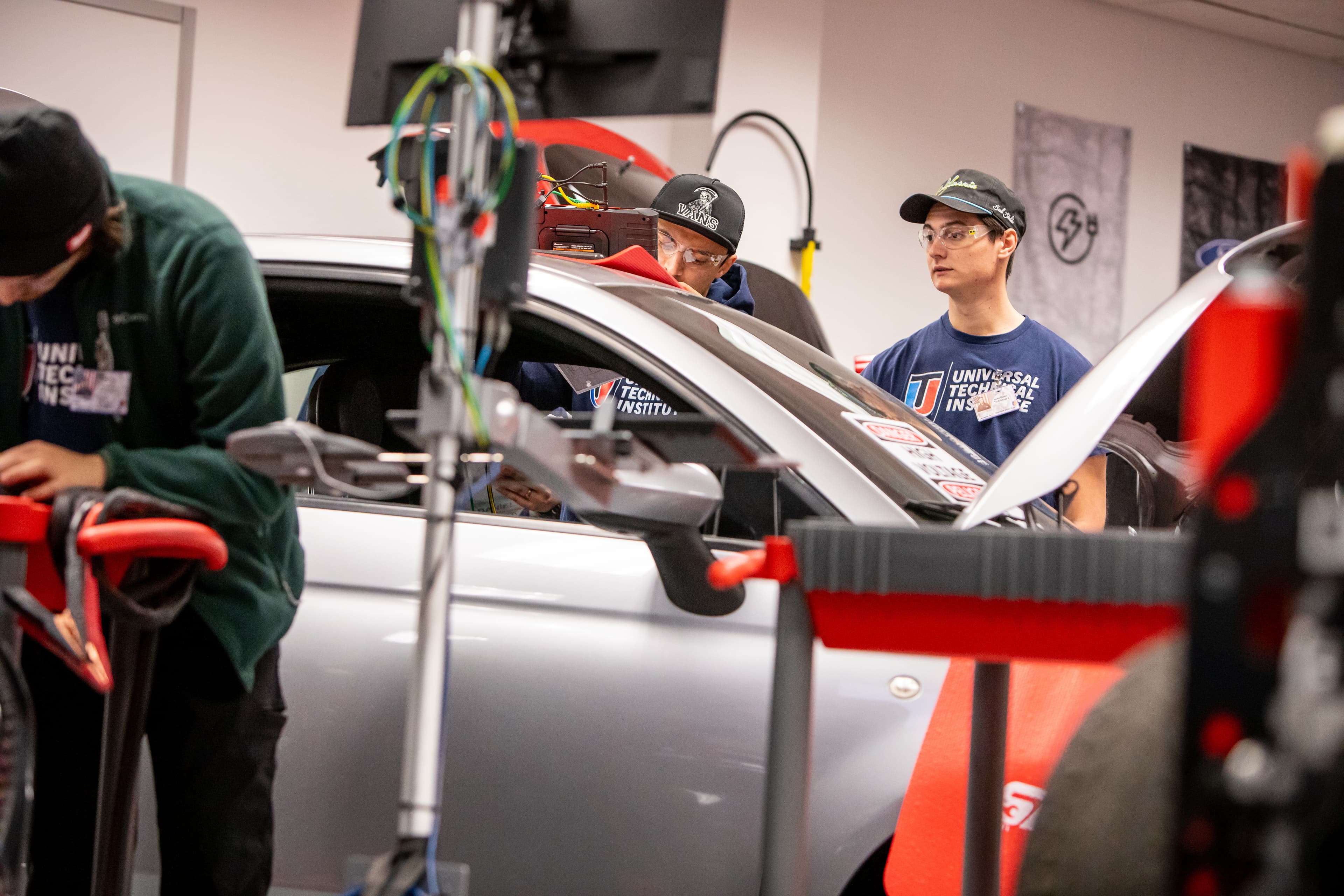
Cars are a lot smarter than they used to be.
Today’s vehicles use computers, sensors and warning lights to help spot trouble early. That matters because one small issue can grow fast if no one catches it.
That is where On-Board Diagnostics II (OBD-II) comes in. It helps technicians see what is affecting a vehicle, from a loose gas cap to a sensor problem to an engine misfire. If you have ever wondered what OBD-II is and how mechanics use it in real shops, this guide breaks it down in plain English.
At Universal Technical Institute (UTI), Automotive & EV Technology students can train for less than a year to develop in-demand skills needed today.1,7 The curriculum covers diagnostic technologies and advanced vehicle platforms and uses a blended model with instructor-led online learning plus hands-on lab training.
Keep reading to learn more.
What Is OBD-II?

OBD-II stands for On-Board Diagnostics II. It is the built-in system that helps a vehicle watch its own performance. It checks parts tied to the engine, transmission and emissions system and alerts the driver when something is wrong. In many vehicles, that warning shows up as the Check Engine light.
Using OBD-II in modern vehicles
This system became standard in 1996 for cars and light trucks in the United States. That gave technicians and repair shops a more consistent way to read vehicle data and begin finding problems.
OBD-II was introduced in large part to help monitor emissions-related systems. But its value goes beyond emissions testing. It also helps technicians work faster and more accurately because the vehicle stores information about faults it detects.
That’s why OBD-II matters so much in modern repair. Vehicles now depend on electronic systems to manage fuel, air, ignition timing and more. Without a system like this, diagnosing problems would take much longer.
Read: How Vehicle Diagnostics Technology Is Changing Auto Repair
How OBD-II Systems Monitor Vehicle Performance
At the center of the system is the engine control module, often called the ECM. You can think of it as the vehicle’s brain. It receives data from sensors, compares it to expected values and adjusts vehicle operation in real time.

Those sensors track what is happening across the vehicle. Common examples include oxygen sensors, mass air flow sensors and throttle or position sensors. Together, they help the ECM understand how the engine is running and whether something is outside the normal range.
The system keeps checking these parts while the vehicle runs. If it sees a fault often enough or finds a value that does not make sense, it stores a code and may turn on the Check Engine light. That stored information gives technicians a starting place for the repair process.
This is also why OBD-II is tied so closely to emissions and performance. When the system works right, it helps keep the engine efficient, cuts down waste and supports cleaner vehicle operation.
Read: How Automotive Diagnostic Scanners Work
How Technicians Use Diagnostic Trouble Codes
Understanding diagnostic trouble codes (DTCs)
When OBD-II finds a problem, it stores a Diagnostic Trouble Code (DTC). These are standard codes made up of five letters and numbers. They tell the technician which system has a problem and help narrow the search.
For example, the first letter points to the area of the vehicle involved. A “P” means powertrain. Other letters can point to body, chassis or network communication systems. The rest of the code adds more detail about what kind of fault the vehicle found.
Codes are only the starting point
OBD-II codes are helpful, but it’s not the full answer. It tells a technician where to begin, but not always which part to replace. A fault code can be caused by a bad sensor, damaged wiring, a loose connection or a different problem somewhere else in the system.
That is why strong automotive diagnostic skills matter. Good technicians read the code, study the symptoms, check live data and test parts before making a repair. The code saves time, but the testing confirms the true cause.
Read: Preparing for EV-Specific Diagnostics: Skills and Tools
Tools for OBD-II Diagnostics
Scan tools
The most common tool is the scan tool. A technician plugs it into the vehicle’s connector, usually under the dashboard, to read stored codes and other system data. This lets the shop quickly start a well-informed diagnosis.
Monitoring live vehicle data
Modern scan tools can do more than pull codes. They can also show live data while the engine is running. That means a technician can watch sensor readings, see how systems respond and compare numbers in real time.
This matters because some issues only show up under certain conditions. A vehicle may idle fine but struggle under load. Live data helps technicians catch that kind of problem instead of guessing.
Supporting diagnostic tools
Scan tools are only part of the job. Technicians also use multimeters, oscilloscopes and repair information systems to test circuits and confirm faults. UTI’s Automotive & EV Technology program includes auto mechanic courses that teach skills on diagnostic scanners, multimeters and oscilloscopes, along with instruction in electrical systems and fault diagnosis.
That selection of tools is important because today’s vehicles blend mechanical systems with electronics. A technician needs to know how to inspect parts, test circuits and read digital information together.
Read: How To Become an Auto Mechanic After High School in Less Than 1 Year
OBD-II FAQs
1. What is OBD-II in a car?
OBD-II stands for On-Board Diagnostics II. It is the system modern vehicles use to monitor engine, emissions and other key performance functions and alert drivers when something is wrong.
2. How does OBD-II help technicians diagnose vehicle problems?
OBD-II helps technicians by storing Diagnostic Trouble Codes and vehicle data when the system detects a fault. That gives them a starting point so they can test components, review live data and find the real cause of the issue.
3. What kinds of problems can OBD-II detect?
OBD-II can help detect problems related to the engine, emissions system, sensors and other electronic systems. Common issues may include misfires, sensor failures, loose connections or performance faults that trigger the Check Engine light.
4. Does an OBD-II code tell a technician exactly what part to replace?
No. An OBD-II code points technicians toward the system or area with a problem, but it does not always identify the exact failed part. That is why technicians still use diagnostic tools and testing methods to confirm the repair.
5. Why is learning OBD-II important for future automotive technicians?
Learning OBD-II is important because modern vehicles depend on computer systems and electronic diagnostics. Technicians who understand scan tools, live data and fault codes are better prepared to work on the vehicles found in today’s shops.

Build Diagnostic Skills for Modern Automotive Technology With UTI
OBD-II is where modern repair gets real. At UTI, Automotive & EV Technology students train to diagnose, maintain and repair domestic and import vehicles using tools like network-connected diagnostic scanners, multimeters and oscilloscopes while building skills in drivability, brakes, electrical systems and real-time fault detection. In less than a year, that hands-on training can help prepare graduates for entry-level automotive technician roles built for today’s tech-heavy shops.1,7,18
Want to talk through your options? Contact an Admissions Representative at 1-800-834-7308 or request information online. If you’re ready for the next step, enroll now.
Universal Technical Institute of Illinois, Inc. is approved by the Division of Private Business and Vocational Schools of the Illinois Board of Higher Education.