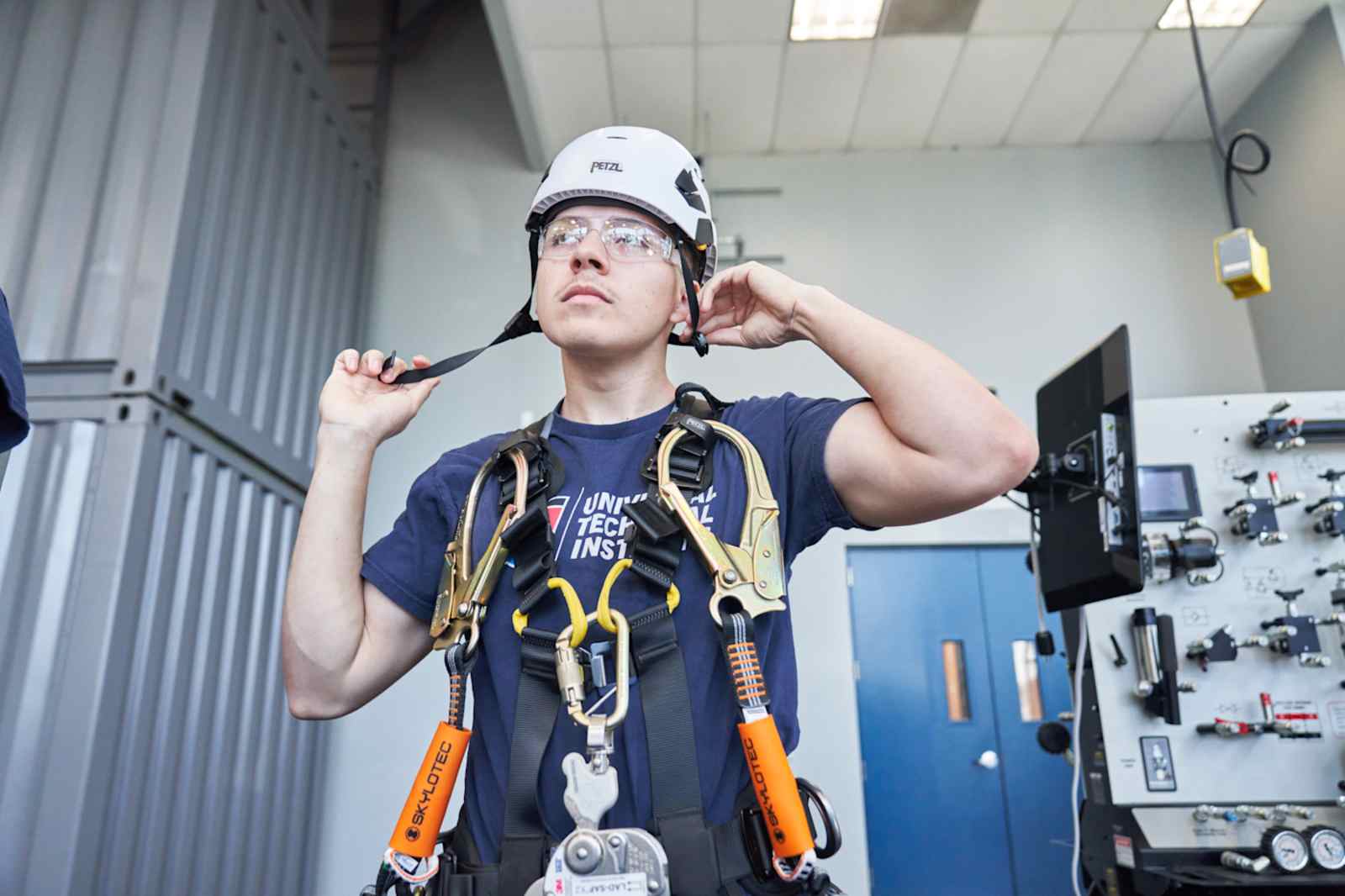
What Can You Go to Trade School for? Discover Top Trade School Programs

by UTI Editorial Team in Education
10 min read
NOV 26, 2020

Trade School Options

Have you been wondering what type of training trade schools can provide? From hands-on training to industry relationships, trade schools offer career-specific training to match your passion.1

Trade schools offer specialized programs that often provide hands-on training in specific fields.18 Trade school programs also can be completed in a shorter amount of time compared with a four-year college. This can be helpful for those wanting to be prepared for the workforce as soon as possible.

What do trade schools offer? There are a wide variety of trades that students can choose from, including welding, automotive technology, health care administration and culinary arts. No matter the program, the expectation is that their education will help them to be prepared for an entry-level role in that given field after graduation.

The transportation industry offers numerous career opportunities for trade school graduates, with programs available in aviation maintenance, automotive technology, diesel technology, collision repair, marine technology and motorcycle mechanics.

Knowing what trade school programs are available can help you have a plan of action when looking to enroll. Keep reading to learn about some of the many fields you can pursue after training at a trade school.

What Can You Learn at a Trade School?

Trade school courses are designed to offer students training to gain the skills needed when pursuing a profession once they graduate. Learning these skills can come from a combination of instructor lectures and hands-on training in a lab environment. Some schools also offer online training, which can be great for those who need the flexibility.18

So, what do trade schools teach? There are a variety of educational paths and opportunities out there for students to pursue if they decide a trade school is right for them. With thousands of different programs, there’s something for almost everyone.

Read: The Difference Between College, Trade School and Universal Technical Institute

What Trades Are There?

So what can you go to trade school for? Here are some examples of what is taught in trade school programs:

The programs offered at trade schools can vary from broad, generalized topics that can be applied to an industry to programs that can be specialized further to those seeking advancement in a given field.

Read: 7 Trade School Programs That Can Prep You To Get Hired

Different Types of Trade Schools

Trade schools come in various forms, each specializing in different areas to cater to a wide range of interests and career paths.

Some trade schools focus on technical trades like automotive repair, HVAC (heating, ventilation, and air conditioning) and welding. Others specialize in health care fields such as medical assisting, dental hygiene or nursing. There are also trade schools dedicated to culinary arts, cosmetology, graphic design, construction trades like carpentry and plumbing and even IT and computer technology.

These diverse types of trade schools offer tailored programs designed to provide training and hands-on instruction in specific industries, preparing students for careers in their chosen fields.

Read: Trade School Requirements: Ultimate Application Guide

What Trade School Certifications are Available?

Trade schools offer a range of certifications tailored to various industries and trades. These certifications validate the skills and knowledge acquired through specialized training programs.

Common certifications available at trade schools include automotive technology certifications for mechanics, electrical certifications for electricians, plumbing certifications for plumbers, culinary arts certifications for chefs, health care certifications for medical assistants or phlebotomists and many others.

These certifications not only demonstrate proficiency in a specific trade but also may enhance job prospects and credibility within the respective industry. Trade school certifications are often sought after by employers seeking skilled and qualified professionals in various fields.

Read: Top 10 Reasons To Choose Our Trade School Programs

Career Opportunities for Trade School Graduates

When thinking about pursuing higher education, it’s important for students to know what their options are going to be once they graduate. There are many different career opportunities that trade school program graduates can choose from within their respective fields.

Here are some examples of jobs commonly pursued by trade school grads:

  • Dental assistant
  • Massage therapist
  • Makeup artist
  • Hairdresser
  • Chef
  • Licensed practical nurse (LPN)
  • HVACR technician
  • Electrician130
  • Plumber
  • Elevator mechanic
  • Radiation therapist
  • IT technician

In addition to these occupations, some of the most popular career paths for trade school graduates are associated with the transportation industry.

Read: A Career Guide for the Kinesthetic (Hands-On) Learner

Transportation Careers & Trade School Programs

The transportation industry is going to remain important and offers a range of career opportunities for those who attend a trade school.

Our grads are prepared to pursue entry-level roles. As with any industry, over time, technicians may be able to advance in their careers with experience and hard work. Some potential entry-level jobs in this industry include the following:77

So, what trade school program should you take to train for these types of careers? Universal Technical Institute (UTI) has several program options that include:1

  • Aviation & Powerplant Technician: Students who want to prepare for a career in the aviation industry can enroll in the Airframe & Powerplant Technician program to explore topics such as aircraft troubleshooting, powerplant lubrication systems and turbine engine operation. In addition, students and graduates are prepared to test for FAA Airframe and Powerplant certification.79,128
  • Automotive & EV Technology: Students will be able to maintain and repair different kinds of vehicles once they’ve completed this 51-week program.7 Career opportunities for graduates include entry-level technician roles that can eventually lead to service management positions. Students can also enroll in a Manufacturer-Specific Advanced Training (MSAT) program that helps prepare them for jobs with specific manufacturers.11
  • Diesel Technology: If a student pursues training in Diesel Technology, they can gain the skills needed to become a diesel mechanic. Course topics offered include everything from diesel engine service and repair to preventative maintenance. Diesel techs can find themselves working in a range of settings, from trucking companies to road crews and  power generation.
  • Collision Repair & Refinish Technology: Those pursuing training in collision repair can learn the skills needed to restore and reshape a range of vehicles. Students will gain knowledge on the proper procedures and parts needed to repair vehicles.
  • Marine Technician Specialist: Students with a passion for the water can attend UTI and learn skills needed to pursue a marine technician role. The 51-week program provides hands-on training when it comes to marine product service, repairs and more.7,18 Roles graduates can pursue include marine technician, inspector or parts associate.
  • Motorcycle Technician Training: In just 48 weeks, students can train as a motorcycle technician and learn everything they need to enter the field.7 Course topics include everything from engines and transmissions to vehicle maintenance. Students are prepared to work in a range of settings, including dealerships, police departments and custom bike shops.

Skilled Trades, Energy Careers & Trade School Programs

Two other major sectors that UTI students can train for are skilled trades and energy. Both are important for maintaining infrastructure, manufacturing and electrical components that are valuable to businesses and individuals across the country.

Our grads are prepared to pursue entry-level roles. As with any industry, over time, technicians may be able to advance in their careers with experience and hard work. Some potential entry-level jobs in skilled trades and energy industries include the following:77


UTI has several trade school programs that can help students train for these types of careers. They include:

  • Industrial Maintenance Technician: Industrial maintenance technicians help keep machinery that powers many industries running – from gas and coal to nuclear and solar. UTI offers two program options for those interested in this career path, including the seven-month Industrial Maintenance Technician program and the 10-month Electrical & Industrial Maintenance Technology program that focuses on additional instruction in electrical.130 
  • Electrical, Electronics, & Industrial Technology: Students receive hands-on training with electrical systems, industrial manufacturing equipment and electronics.130 The 12-month trade school program covers topics like electrical wiring, mechanical systems, electrical theory and more.
  • Welding: Welding is a skill used in all types of industries, and in just 9-10 months students in our welding program can learn the four major welding processes used in the field today. They are trained to use GMAW, SMAW, FCAW and GTAW in hands-on labs and also with VRTEX® virtual welders.
  • CNC Machining Technology: CNC machinists craft different parts and components as needed from raw materials. In just 36 weeks, students train on how to interpret blueprints as well as how to program, set up and maintain CNC machines like lathes and mills. The program was designed in conjunction with industry leader Roush Yates.
  • HVACR Technician: HVACR technicians are essential workers that keep refrigeration, air conditioning, heating and ventilation systems functioning properly in both residential and commercial spaces. Our HVACR program runs 9-10 months and teaches the essential skills needed for the industry.
  • Non-Destructive Testing: Our Advanced-Non Destructive Testing Technician (NDT) program teaches students the main areas of NDT testing, which include eddy current testing (ET), ultrasonic testing (UT) and radiographic testing (RT). Non-destructive testing technicians have the crucial role of ensuring that products coming out of factories meet specific standards.
  • Wind Turbine Technician: Those interested in a trade school program focused on energy may be a great fit for our Wind Turbine Technician program, which helps prepare students for jobs as wind turbine technicians. They’ll learn how to inspect and service wind turbines. Some campuses also offer the Electrical & Wind Turbine Technology program, which has additional focus on construction, technical trades and electrical.130
  • Robotics & Automation: Automated processes and technology are becoming more common within businesses, which means there is a need for technicians to help maintain this equipment. Students in our Robotics & Automation Technician program learn electrical, mechanical and programming skills. We also offer the Electrical, Robotics & Automation Technology program at select campuses which has additional focus on construction/technical trades and electrical.130

FAQs

What kind of trade programs does UTI offer?

UTI offers trade school programs that train students for careers in transportation, skilled trades and energy. Some examples include Automotive & EV Technology, Welding Technology, Wind Turbine Technician, HVACR Technician, Diesel Technology and more.

Does UTI provide manufacturer-specific training?

Yes, UTI has relationships with leading manufacturers and offers specialized training options for diesel, auto, marine and motorcycle training.11

Where are UTI campuses located?

UTI has multiple campuses located across the United States which offer various training options.

What kind of training approach does UTI use?

UTI emphasizes hands-on lab training that utilizes the tools and technology used in the field, combined with instructor-led classroom learning and online learning components.

Prepare for a Career with Trade School Training

As you can see, there are a ton of opportunities out there for those who are interested in attending trade school and pursuing a career where they can work with their hands.

UTI is proud to offer a wide selection of trade school programs that cover skills and topics for transportation, skilled trades and energy.1

If you want to learn more about trade school options, don’t hesitate to reach out to our Admissions team. We’re happy to help answer any questions you may have!

Ready to get started? Apply now.

START PREPARING TO PURSUE AN EXCITING NEW CAREER AS A MECHANIC OR TECHNICIAN.
With classes starting frequently, there’s no need to wait to start your career path.
Hands-on training.*Get hands-on education with some of the industry's leading brands.
No Pressure to commit.Get answers to your questions without any obligations.
Or Call Now 800.834.7308
*UTI now offers all of its automotive, diesel, motorcycle and marine technician training in a blended learning format consisting of online lecture courses along with in-person, hands-on lab training.

1 ) UTI is an educational institution and cannot guarantee employment or salary.
2 ) For program outcome information and other disclosures, visit www.uti.edu/disclosures.
7 ) Some programs may require longer than one year to complete.
11 ) See program details for eligibility requirements and conditions that may apply.
18 ) UTI now offers all of its automotive, diesel, motorcycle and marine technician training in a blended-learning format consisting of online lecture courses along with in-person, hands-on lab training.
77 ) UTI is an educational institution and cannot guarantee employment or salary. UTI prepares graduates for entry-level careers using the provided training. UTI graduates’ achievements may vary. Some UTI graduates get jobs within their field of study in positions other than those listed.
79 ) UTI aviation maintenance programs prepare graduates to apply and test for FAA mechanic certification. Graduates who don’t obtain certification may have fewer career opportunities. Some graduates get jobs in aviation or related industries other than as aviation maintenance technicians. UTI is an educational institution and cannot guarantee employment, salary or FAA certification.
128 ) UTI will pay for certain third-party FAA certification exam fees for qualifying students. See catalog for details and requirements.
130 ) UTI’s electrical programs do not prepare graduates for employment as electricians, and graduates will not be eligible for certification as an electrician without additional training and meeting state licensing requirements. These programs prepare graduates for entry-level careers using the provided training. Possible career paths, by program, may include: Electrical, Electronics, & Industrial Technology – electrician’s assistant, security + access control systems technician; Electrical, Robotics + Automation Technology – control systems technician, robotics & automation technician; Electrical, Wind Turbine Technology – field service technician, wind turbine technician; Electrical, Industrial Maintenance Technology – maintenance technician, field service technician. UTI is an educational institution and cannot guarantee employment or salary.

Universal Technical Institute of Illinois, Inc. is approved by the Division of Private Business and Vocational Schools of the Illinois Board of Higher Education.