
Aviation
How Hard Is It To Become an Aircraft Mechanic? Learning Step by Step
How hard is it to become an aircraft mechanic? Learn what training is like, how long it takes to feel confident, and how beginners can start with no experience.
In This Article
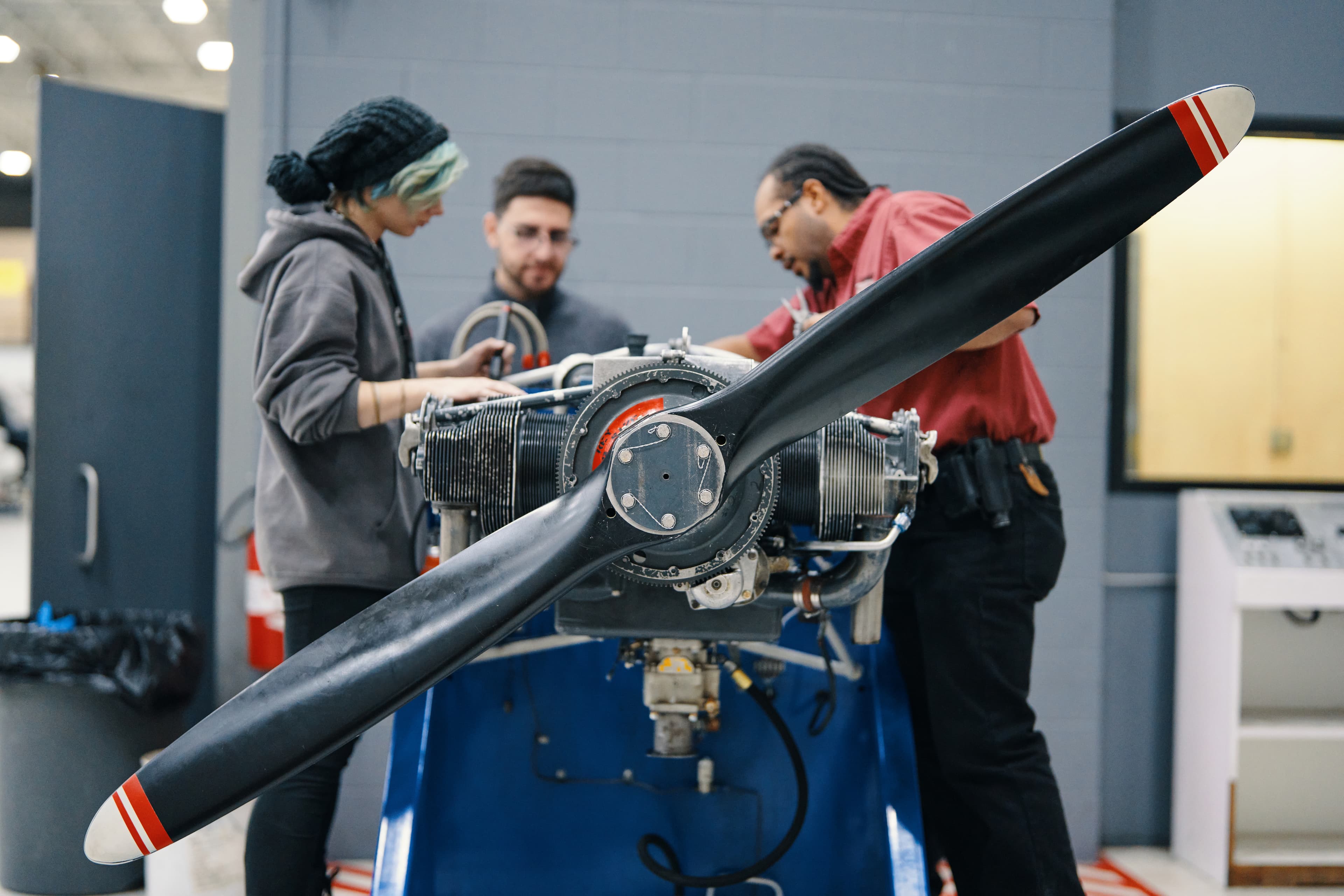
Working on aircraft sounds complex. In some ways, it is.
Aircraft systems are detailed, safety-driven and require precision, which is why many people ask: How hard is it to become an aircraft mechanic?
But “hard” isn’t the most useful way to think about it. Aircraft mechanic training is less about difficulty and more about learning how systems work through repetition, hands-on practice and structured training. Over time, what feels unfamiliar at first becomes more natural through consistent exposure and real-world application.
Here’s a breakdown of what learning aviation maintenance is actually like, and how long it takes to start feeling confident, including with hands-on aviation career training.
Is Aviation Maintenance Hard To Learn?
Yes, but in a specific way. It’s not about heavy math or abstract theory, but about learning how systems function and interact in real-world conditions.
Technical systems (engines, electrical, hydraulics)
Aircraft include multiple systems, such as engines, electrical components and hydraulics, that all work together. At first, understanding how these systems connect can feel overwhelming.
The difference is how you learn them. Classroom knowledge introduces concepts, but hands-on training helps you see how those systems actually function, which is why many hands-on learners adapt faster over time.
Precision + safety standards
Aircraft maintenance is built around strict safety standards, where precision is critical at every step. Even small details matter because each component must function correctly within a larger, interconnected system. Technicians are trained to follow established procedures to reduce risk and ensure consistent, reliable outcomes.
This means learning to approach every task with care, consistency and attention to detail. Repetition and hands-on practice help reinforce these habits over time. As a result, precision and safety become a routine part of how technicians perform inspections, maintenance and repairs.
Learning to troubleshoot, not just memorize
A big part of training is learning how to diagnose problems, not just recognize parts. Students are taught to understand how systems work together so they can identify the root cause of an issue. This approach builds deeper technical knowledge beyond simple memorization.
At first, this process can feel difficult because everything is unfamiliar. Students are learning new systems, tools and ways of thinking all at once. With repetition and hands-on practice, troubleshooting becomes more intuitive and structured over time.
Read: Aviation Technician Career Path & Outlook
How Long Does It Take To Feel Confident Working on Aircraft?
For many people, training is the first step toward pursuing a career in aviation maintenance.79 Learning how to work on aircraft systems safely and effectively requires structured instruction, hands-on application and time spent building real-world skills. That’s why understanding how long it takes to feel confident is an important part of evaluating this path.
Training timelines can vary, but many aviation maintenance programs are designed to be completed in two years or less, depending on the program and campus location. Universal Technical Institute’s aviation training follows a structured progression that helps students build skills over time through hands-on learning. As students move through each stage, they develop confidence by training with tools, systems and real-world maintenance scenarios.79
Typical training timeline breakdown
0–3 months
Early on in their aviation mechanic courses, students focus on foundational skills like safety procedures, tool usage and basic aircraft systems. This stage introduces core concepts such as aircraft structures, maintenance practices and general inspection methods.
Most training is guided and step-by-step, helping students build familiarity with tools, terminology and standard procedures. The goal is to create a strong base before moving into more complex systems.
3–6 months
As training progresses, students begin learning more directly with specific aircraft systems, including electrical, hydraulic and powerplant components. Concepts start to connect, and systems are understood in relation to one another rather than in isolation.
Students also begin guided troubleshooting, applying what they’ve learned to identify and resolve common issues. This is where technical understanding starts to translate into practical skills.
6–12+ months
In later stages, students gain more independence while training across integrated aircraft systems and real-world maintenance scenarios. The focus shifts from following steps to understanding why repairs and procedures are performed a certain way.
Repetition across different systems helps build consistency, efficiency and confidence. By this point, tasks feel more natural, and students are better prepared to transition into entry-level aviation maintenance roles after graduation.1
Read: 3 Airplane Mechanic Jobs to Explore After Career Training
What “confidence” actually means in aviation
Confidence in aviation doesn’t mean knowing everything. It means developing the ability to work through tasks reliably and safely. Over time, this confidence comes from experience, repetition and understanding how systems behave in real-world conditions.
Catching issues early
Technicians learn to spot small issues before they become larger problems. This comes from repeated exposure to systems, inspections and common failure points. Over time, they begin to recognize patterns that signal when something isn’t working as expected.
Trusting your inspections
Confidence also comes from knowing your work is accurate. Following procedures and verifying results help ensure that inspections are consistent and reliable. This builds trust in both the process and the technician’s own judgment.
Needing less oversight
As skills develop, technicians rely less on step-by-step guidance. They become more comfortable making decisions within established procedures and standards. This allows them to work more independently while still maintaining safety and accuracy.
Read: Aviation Maintenance Career Outlook: Salary Trends
Solving Aircraft Mechanic Problems in Training
Aircraft mechanic training focuses heavily on building problem-solving skills. Students learn how to approach issues logically, using both knowledge and hands-on application.
Technical systems
Aircraft systems include engines, avionics and hydraulics that must work together. Each system has its own function, but they are all connected within the aircraft. Understanding how each one operates individually is an important first step.
Real skills develop when students begin to see how these systems interact with one another. Problems are not always isolated to one component and can involve multiple systems. Students learn to think across systems when diagnosing issues, using a more complete understanding of how everything works together.
Attention to detail
Small mistakes can have larger consequences in aviation. Even minor oversights can affect how systems perform and impact overall safety. That’s why attention to detail is emphasized from the very beginning of training.
Students learn to follow procedures carefully and verify their work at each step. This includes double-checking measurements, inspections and completed tasks. Over time, these habits help support safe, consistent and accurate maintenance.
Diagnostics vs. memorization
Training focuses on understanding why something fails, not just what part needs replacing. Students learn to analyze symptoms and test possible causes using a structured approach. This helps them move beyond surface-level fixes and develop a deeper understanding of system behavior.
This approach builds stronger technical knowledge over time. Instead of relying on memorization, students learn how to think through problems logically. As a result, troubleshooting becomes more effective and repeatable.
Information volume early on
At the beginning, there’s a lot to learn in a short period of time. Students are introduced to new tools, systems and technical terminology all at once. This can feel overwhelming as they adjust to both the pace and the complexity of the material.
With repetition and structured training, that volume becomes more manageable. Concepts begin to connect as students gain more hands-on practice. Over time, learning becomes more efficient and tasks start to feel more familiar.
Read: Trade School vs. 4-Year College After High School: Which Path Makes Sense?
Can You Become an Aircraft Mechanic With No Experience?
Yes, many students start with little to no experience.
Beginner-friendly hands-on training
Most aviation maintenance programs are designed for beginners. Students start with foundational concepts and gradually build skills through structured, guided instruction. This progression helps them develop confidence while learning how different systems and tools are used.
Hands-on training plays a key role in connecting classroom concepts to real-world tasks. Students apply what they learn directly, which helps reinforce understanding. Over time, this makes the learning process more practical and easier to retain.
No experience ≠ disadvantage
Not having experience doesn’t hold students back. Many students begin with little to no background and build their skills from the ground up. Most training is structured to support that progression step by step.
Progress comes from consistency, hands-on exposure and repetition. As students work through tasks repeatedly, they become more comfortable with tools and systems. This repetition helps build both technical skill and confidence over time.
Read: Endeavor Air Mechanic Robert Nelson’s Two-Decade Journey After Graduation
What Helps You Learn Aviation Maintenance Faster?
The training environment plays a major role in how quickly students build skills. Hands-on learning, repetition and guidance all contribute to progress.
Hands-on training focus
Hands-on training helps students move beyond theory into real-world application. Practicing tasks directly allows them to see how systems function and respond in real time. This makes it easier to understand how different components work together.
UTI’s aviation training emphasizes this approach through structured lab-based learning. Students train with aircraft systems in controlled environments that mirror real maintenance settings. This helps build familiarity with tools, procedures and workflows used in the field.
Repetition with real tools in real shop environments
Repetition is key to building confidence and accuracy. Performing the same tasks multiple times helps reinforce proper techniques and reduce errors. Over time, this consistency improves both speed and reliability.
Training with real tools further strengthens these skills. Students get hands-on practice with equipment commonly used in aviation maintenance. This prepares them to transition more smoothly into real shop environments post-graduation.
Learning from experienced industry pros
Learning from experienced instructors helps students understand not just what to do, but why it matters. Instructors can share real-world examples that add context to technical concepts. This helps students connect classroom learning to actual job scenarios.
UTI’s training includes guidance from instructors with field experience. Their insights help students better understand industry expectations and best practices. This exposure supports both skill development and professional readiness.
Read: A&P School vs. On‑the‑Job Training
How Training Prepares Students for A&P Certification
Aircraft mechanics can pursue Federal Aviation Administration (FAA) Airframe & Powerplant (A&P) certification, which is a key credential in the industry. Structured training can help students build the knowledge and hands-on skills needed for this process.
Training programs prepare students for testing by covering core systems and maintenance procedures.128 This helps build familiarity with the types of questions and practical tasks involved.
FAA-certified training programs like UTI’s Aviation programs follow standards designed to prepare students for certification. This ensures that the training aligns with industry requirements.
FAA-approved training
UTI’s Aviation programs are FAA Part 147 schools, meaning that they’re approved by the FAA to help students build the skills needed for entry-level aviation maintenance roles after graduating.79 The programs include hands-on training with aircraft systems, tools and procedures used in the field.
Students learn how to inspect, maintain and repair aircraft components across different systems. This includes exposure to engines, electrical systems and other key areas of aviation maintenance.
With structured training and consistent practice, students can build the foundation needed to pursue A&P certification and continue developing their skills after graduating.
Read: 7 Tips for Choosing a Reputable Airplane Mechanic Training School
FAQs On How Hard Is It To Become an Aircraft Mechanic
How hard is it to become an aircraft mechanic?
Becoming an aircraft mechanic can feel challenging at first because you’re learning new systems, tools and procedures all at once. However, it’s less about difficulty and more about building skills through repetition and hands-on training. Over time, what feels unfamiliar becomes more manageable as you gain experience.
How long does it take to become an aircraft mechanic?
Training timelines can vary, but many aviation maintenance programs are designed to be completed in 12–24 months. During that time, students can build foundational knowledge and hands-on skills across different aircraft systems. Confidence continues to grow with practice, both during and after training.
Do you need experience to start aircraft mechanic training?
No, most aviation maintenance programs are designed for beginners with little to no prior experience. Students start with basic concepts and gradually build skills through guided instruction and hands-on application. Consistency and repetition are more important than prior knowledge.
What skills do aircraft mechanics need?
Aircraft mechanics need a combination of technical knowledge, attention to detail and problem-solving skills. They must be able to interpret diagrams, follow procedures and diagnose issues across multiple systems. Strong communication and a focus on safety are also important in this field.
What does an aircraft mechanic do on a daily basis?
Aircraft mechanics inspect, maintain and repair aircraft systems to ensure safe operation. Their daily tasks can include troubleshooting issues, performing routine maintenance and verifying that repairs meet safety standards. Much of their work involves following detailed procedures and working with specialized tools and equipment.
Start Training for an Aviation Career
If you’ve been asking how hard it is to become an aircraft mechanic, the answer comes down to learning step by step. With the right training and consistent practice, the process becomes more manageable over time.
UTI’s aviation training offers a structured path with hands-on learning designed to prepare students for entry-level roles after graduating. To learn more, you can speak with an Admissions Representative at 1-800-834-7308 and explore your options for getting started.
Universal Technical Institute of Illinois, Inc. is approved by the Division of Private Business and Vocational Schools of the Illinois Board of Higher Education.
Train for the Future
Imagine waking up each day excited to work in a career you’re passionate about – one where your hands-on skills make a real impact. UTI’s vocational trade school can help you gain the skills and confidence to pursue what you love.
