Aircraft keep people and cargo moving every day. Behind every safe flight is a trained technician who knows how aircraft systems work and how to fix them.
If you want a hands-on career with real responsibility, becoming a certified aviation mechanic can be your path forward.
But how can you get there? How can you get certified and break into the industry?
This guide breaks down the Federal Aviation Administration (FAA) Airframe and Powerplant certification requirements step by step so you can see what it takes and how 18-24 month Airframe & Powerplant training at Universal Technical Institute can help you build in-demand skills for a hands-on career.79
Understanding A&P Certification and Why It Matters
The FAA issues the Airframe and Powerplant certificate to qualified technicians. This certification allows mechanics to inspect, maintain and repair aircraft systems that fall under federal safety rules.
Often called an aircraft mechanic license, the A&P certificate is widely seen as a top standard for aviation maintenance in the U.S. It shows a technician meets strict FAA technician requirements and can work on both airframe and engine systems.
With this aviation maintenance certification, technicians may:
- Inspect aircraft structures and systems.
- Repair engines and related components.
- Perform maintenance that meets FAA safety standards.
Step 1: Double-Check Eligibility Requirements for A&P Certification
Before testing for certification, the FAA sets basic eligibility rules through the Federal Aviation Administration.
To qualify, you must:
- Be at least 18 years old.
- Read, write, speak and understand English.
- Meet experience or education requirements.
Step 2: Complete an FAA-Approved Aviation Maintenance Program
The Airframe & Powerplant Technician and Aviation Maintenance Technology programs at UTI last 18-24 months and are designed to prepare students for careers in aviation maintenance through hands-on training and FAA-aligned instruction.79 Students learn how aircraft systems work, how to inspect and repair them and how to follow federal safety standards used across the industry.
By completing this FAA-approved training, students can meet FAA Airframe and Powerplant certification requirements. The program helps build the knowledge and practical skills needed for the written, oral and practical exams required to become an FAA-certified Airframe and Powerplant technician.128 Training includes:
- Hands-on practice with industry-aligned equipment.
- Instruction from experienced aviation professionals.
- Preparation for written, oral and practical exams.
This type of education can help reduce guesswork and keep students on track.
Step 3: Apply for FAA A&P Testing Authorization
After meeting experience or education requirements, candidates must receive authorization to test. This involves working with an FAA representative who reviews training records or experience logs.
Once approved, you can schedule the required exams:
- Written exams
- Oral exam
- Practical exam
Passing these tests confirms that a candidate meets FAA technician requirements and is qualified to perform maintenance tasks.
Step 4: Pass the Written, Oral and Practical Exams
The A&P exams measure both knowledge and skill. Written tests focus on systems, tools and regulations. Oral and practical exams test how well you apply that knowledge in real situations.
Training programs that emphasize hands-on learning often help students feel more prepared for these steps. Practice, repetition and instructor guidance play a major role in success.
Step 5: Pursue an Airplane Mechanic Career
After passing all exams, you earn your A&P certification. With certification, graduates can pursue industry roles in:
- Commercial aviation.
- Business and private aviation.
- Maintenance and repair organizations.
Because aircraft must be maintained year-round, certified technicians are in demand across the industry.
FAA Airframe and Powerplant Certification Requirements FAQs
What are the FAA Airframe and Powerplant certification requirements?
The FAA Airframe and Powerplant certification requirements include meeting age and language standards, completing approved training or experience, and passing written, oral and practical exams. These steps confirm a technician can safely inspect, maintain and repair aircraft systems.
Is an A&P certificate the same as an aircraft mechanic license?
Yes. The A&P certificate is often referred to as an aircraft mechanic license because it authorizes technicians to work on both airframe and powerplant systems under FAA regulations. It is considered a top credential in U.S. aviation maintenance.
How long does it take to qualify for FAA A&P certification?
Timelines vary based on training path, but many students complete FAA-approved aviation maintenance programs in about 18–24 months. Completing an approved program helps meet FAA technician requirements needed to test for certification.
What exams are required for A&P certification?
Candidates must pass three exams: written, oral and practical. These tests measure technical knowledge, hands-on skill and the ability to apply aviation maintenance certification standards in real-world situations.
Can aviation maintenance training help prepare for FAA A&P exams?
Yes. FAA-approved aviation maintenance programs are designed to teach aircraft systems, inspection procedures and repair techniques aligned to certification testing. Hands-on training can help students build confidence and reduce uncertainty before exams.
Why Train with Universal Technical Institute?
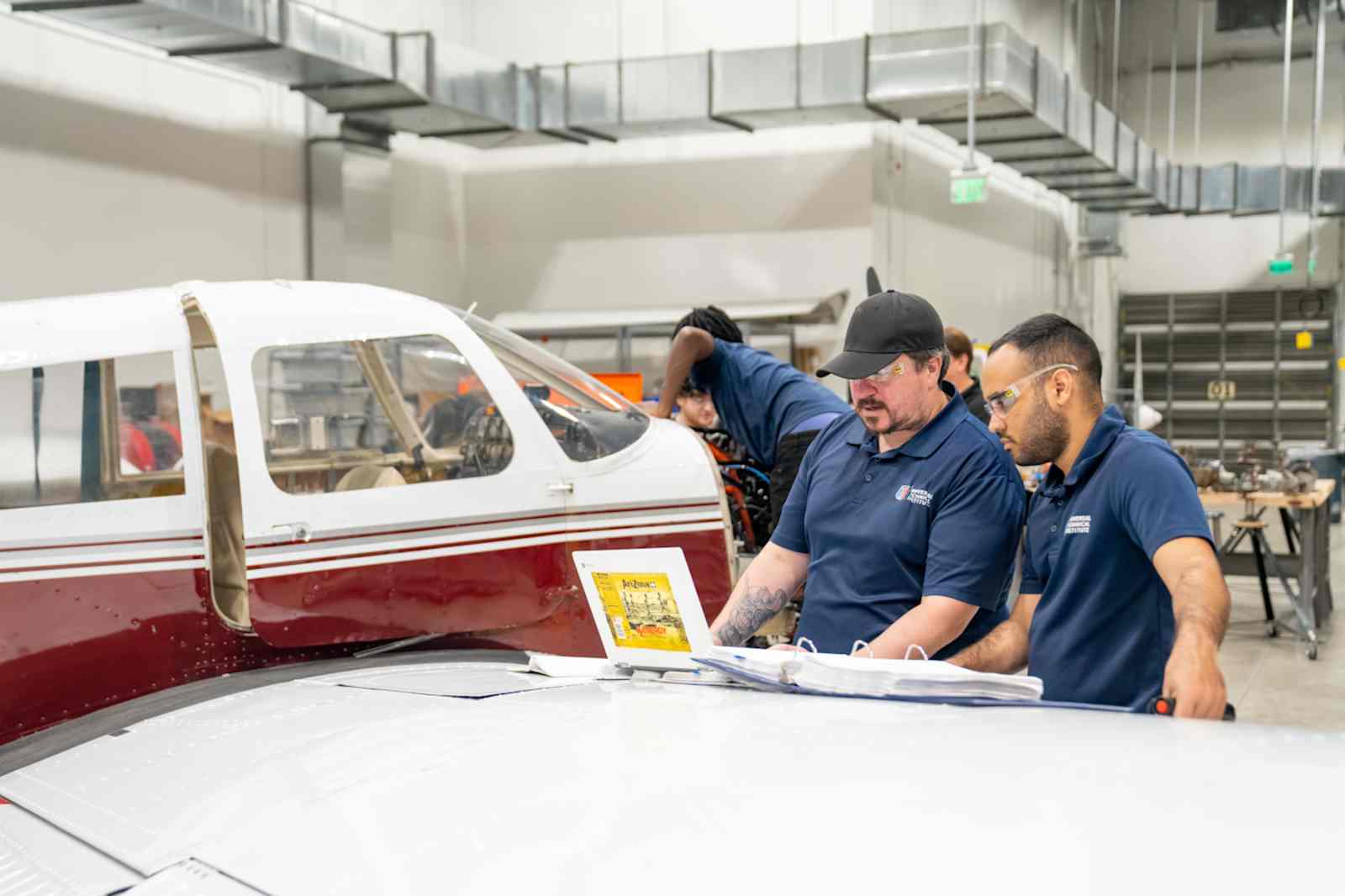
At UTI, aviation students learn by doing. The training emphasizes hands-on practice in labs designed to mirror real aviation maintenance environments, using industry-standard tools and equipment. This practical approach helps students build confidence working on aircraft systems before entering the field.
We also maintain strong relationships with aviation employers and industry leaders, such as the FAA. This network helps keep training aligned with current industry needs and exposes students to real-world expectations, technologies and career pathways. At UTI, hands-on training is designed to support long-term success as an aviation technician.
Take the Next Step
If working on aircraft sounds like the right move, learning the certification process is the first step. With the right training, the path to A&P certification becomes clearer and more manageable.
To learn more about aviation industry training, talk with an Admissions Representative today. Call 1-800-834-7308 or by requesting information online to get answers and explore your options.
Ready to get started? Apply now for hands-on training.
Universal Technical Institute of Illinois, Inc. is approved by the Division of Private Business and Vocational Schools of the Illinois Board of Higher Education.