
Automotive
Investing in an Automotive Trade School Education
Going to trade school is a great way to prepare for a career as an automotive tech. But is it worth the investment? See important factors to consider here.
In This Article

Trade school is a great way to prepare for a career as an automotive technician.
But is it worth the investment?
If the future you envision for yourself involves cars, dynamic hands-on work and opportunities with top industry employers, then yes, there’s a good chance enrolling in an automotive trade school is worth it. Training in a program like Universal Technical Institute’s Automotive & EV Technology program can help you prepare to pursue a career in the field after graduating.1
To help you decide for sure, we’ve detailed what a career as an automotive technician looks like. Plus the training, cost and time it takes to get there.
Read on to see how your investment can prepare you for an exciting future.
Key Summary Points:
- Career overview and training: Automotive technicians are skilled professionals specializing in inspecting, diagnosing, repairing and maintaining motor vehicles. Training at an automotive trade school, such as UTI, can prepare individuals for this career by offering courses on various automotive systems. Programs typically last less than two years and combine classroom instruction with hands-on learning.
- Job responsibilities and skills: Automotive technicians use computerized diagnostic equipment, perform preventative maintenance and explain mechanical issues to customers. They must be adept at working with both mechanical and electrical systems, showcasing a blend of traditional mechanic skills and modern technological expertise. Key qualities for success include a love of hands-on work, problem-solving drive, motivation to learn, adaptability and attention to detail.
- Career opportunities and salary: Trained automotive technicians can pursue various roles, including auto technician, service advisor, parts associate or even advance to managerial positions such as service manager over time with experience.77 Entrepreneurial paths are also an option. According to the Bureau of Labor Statistics (BLS), the median annual salary for automotive service technicians and mechanics was $50,620 in May 2025.25 This means half of automotive technicians earned more and half earned less. Keep in mind that salary depends on several factors, including experience, employer, demand and cost of living in the area.
- Certification and benefits: Certification from the National Institute for Automotive Service Excellence (ASE) prepares UTI auto tech graduates to complete ASE examinations.16 Benefits of a career as an automotive technician include solid demand due to the vast number of vehicles on the road, variety in daily tasks, transferable skills across industries, and personal fulfillment from solving complex problems and helping customers.
- UTI’s Automotive & EV Technology program: UTI offers an Automotive & EV Technology program designed to equip students with the necessary skills to gain an entry-level role in the industry in just 51 weeks.7 The curriculum covers a wide range of topics, from engine service and repair to automotive electronic systems. UTI’s industry-aligned program and relationships with manufacturers of top brands provide a solid foundation for pursuing an exciting career in automotive technology post-graduation, with multiple campuses across the United States offering this training.
Read: What to Expect From Auto Mechanic School
Why Invest in an Automotive Trade School Education?
Choosing to attend an automotive trade school isn’t just about acquiring skills. It’s also about advancing your path toward your dream career! With a blend of hands-on training and industry relationships, you can enjoy these benefits of investing in this educational path:
- Accelerated learning: Finish your training in less than two years (at UTI, in less than one year7), skipping the gen ed requirements so you can pursue employment sooner.
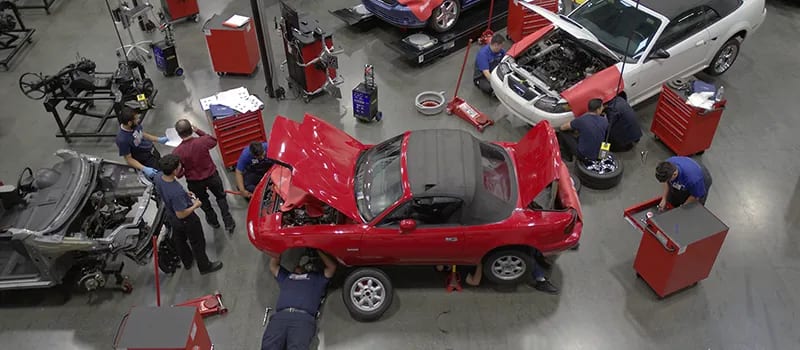
- Hands-on learning:18 Jump right into practical training that prepares graduates for real-world automotive challenges.
- Industry relationships: Build relationships with industry professionals and potential employers.
- Updated curriculum: Learn current tools, technologies and trends in the automotive world to stay relevant.
- Job readiness: Graduates of auto technology programs are often seen as more qualified by employers, giving them an edge in the job market.
- Supportive environment: Passionate instructors and a collaborative atmosphere can help students thrive both academically and personally.
- Career support: Many schools offer guidance for certifications and further education to help graduates as they navigate a career path.
Investing in an automotive trade school education can help put you in the driver’s seat as you embark toward a career!
Read: 8 Questions to Ask When Choosing an Automotive Mechanic School
Is trade school worth it?
That depends. Is your goal to earn a hands-on living working on cars? If so, then attending an automotive trade school could be the right choice for you!
For aspiring automotive technicians, enrolling in trade school means diving headfirst into the world of industry technology, all while acquiring practical skills that employers are looking for. At UTI, you only need 51 weeks to gain both theoretical knowledge and hands-on practice, which will put you on track to pursue a career without the lengthy commitment of a traditional four-year degree.
Plus, the skills you learn in trade school aren’t just about fixing cars. Trade school can equip you with problem-solving skills, the ability to adapt to new technologies, and a knack for communicating effectively with customers. You can also gain invaluable networking opportunities and credentials.
With tons of vehicles on the road and more popping up every day, the demand for skilled automotive technicians is steady. So, if you’re someone who loves working with their hands, enjoys challenges and wants to earn a living working on cars, trade school not only makes sense, it might just be your best pit stop.
Read: Make the Most Out of Your Automotive Mechanic School Experience
How to pick a good auto mechanic training school
Choosing the right auto mechanic training school starts with looking beyond the basics. Focus on programs that offer hands-on training in labs that mirror real shop environments, so you can build practical skills, not just theoretical knowledge.
Check whether the curriculum aligns with what employers are looking for, including exposure to modern vehicle systems and diagnostic tools. It’s also worth considering instructor experience, career services support and opportunities for industry-recognized certifications. It’s a bonus if an automotive trade school offers ways to further your education, like with manufacturer-specific training.
A strong program should help you feel confident stepping into an entry-level role with skills you can use on the job.
The Automotive & EV Technology program at UTI focuses on career-readiness, preparing students to pursue entry-level roles after graduation.
Read: The Ultimate Guide to Choosing the Best Automotive Mechanic School: 6 Essential Tips
What Do Automotive Technicians Do? The Definition of a Technician
Automotive technicians specialize in the technology needed to inspect, diagnose, repair and maintain motor vehicles. As an automotive tech, your day-to-day life revolves around cars and the components that make them run. You may find yourself:
- Using computerized diagnostic equipment to identify a problem.
- Performing preventative maintenance like oil changes and wheel alignments.
- Explaining mechanical issues to customers and keeping them in the loop on repairs.
- Installing systems that comply with emissions, safety and performance standards.
- Coordinating with suppliers to manage inventory.
You might be wondering, “Is an automotive tech the same as an auto mechanic?” It’s a commonly debated topic and, depending on whom you ask, you’ll hear different opinions.
Those who believe there’s a distinction tend to see a key difference: Mechanics specialize in more hands-on work, like changing oil and brake pads. Automotive technicians do this as well, but they also deal more with electrical diagnosis and identification of drivability complaints.
Read: 5 Tips to Succeed in Auto Mechanic School
Why Train To Become an Automotive Technician?
If you’re passionate about cars, love working with your hands and want industry-specific training that could help you start a career sooner than a traditional four-year education, attending automotive trade school to train to become an automotive tech could be a great option.
Training to become an automotive technician could lead to a variety of exciting jobs where you can earn a good salary and be valued for your skills. If you recognize any of these qualities in yourself, you might just find it to be a good path:
- Love of hands-on work.
- Drive to solve problems.
- Motivation to learn.
- Adaptability to ever-changing technology.
- Attention to detail.
Various Career Paths for Automotive Technicians
Whether you want to specialize in parts or work your way up to a service manager role, trained automotive technicians have the opportunity to work in a variety of industries.
Automotive technicians usually work in auto repair shops or dealerships. Here are some of the job titles your training could lead to:77
- Auto technician
- Quick service technician
- Service writer
- Smog inspector
- Parts associate
Automotive technicians aren’t limited to working under the hood, either. They may be able to advance to master technician or service manager positions over time, or even become an automotive instructor at a trade school like UTI. Some take the entrepreneurial path and start businesses of their own. Some have even ended up in the railroad industry.

Read: Automotive Industry Jobs and Career Outlook
Automotive technician salary
According to the BLS, the median annual salary for automotive service technicians and mechanics in the United States was $50,620 in May 2025.25 This means half of automotive technicians earned more and half earned less. Keep in mind that salary depends on several factors, including experience, employer, demand and cost of living in the area.
To get a better idea of what technicians are earning, check out our auto technician salary guide, ranked by state.
Read: From Zero Auto Experience to Lead Mercedes-Benz Tech: Michael Steinkrauss
Important Factors To Consider
The right automotive trade school could help open doors to an exciting future. Aspiring techs typically need formal automotive technician education to become fully qualified, according to the BLS. The best preparation is a trade school or postsecondary education program.
Length of schooling
Automotive technicians can typically complete trade school in less than a year. Programs provide intensive career preparation through classroom instruction and hands-on learning, according to the BLS.
By attending a school like UTI, you can get trained for the industry in less than a year. To learn more, check out this blog on how long it takes to become an auto technician.
Cost
Tuition varies from program to program. At UTI, there are grants and scholarships available to those who qualify, as well as other financial aid options, to help eligible students pay for automotive technician school.10
Certification for automotive technicians
Certification from the ASE is the standard credential for service technicians.
To become certified, technicians must have at least two years of experience (or relevant schooling and one year of experience) and pass exams. As a UTI graduate, you’ll be prepared to complete ASE examinations and can substitute your training for one of the two years of work experience required to become ASE certified.
Read: UTI Exton Grad Ryan White Finds a Lifelong Career as a Technician
Benefits of Training To Become an Automotive Technician
Here are some of the key benefits automotive technicians can expect in their careers:
- Techs are in demand: With about 297 million vehicles on the road in the United States, there’s a need for auto technicians. Every day, people drive their cars to work and wherever they need to go, and vehicles are used to transport essential goods that keep our economy moving. Auto techs play a critical role in keeping these vehicles on the road and, quite literally, in keeping our world moving.
- Variety in your workday: Rather than being stuck behind a desk all day, auto technicians are constantly on the move, meeting with customers and doing all kinds of maintenance and repair tasks. No two days are the same in this job!
- Gain transferable skills: The skills possessed by auto technicians are needed in a variety of industries. Whether you decide to relocate and need a new job or take a different avenue in the transportation industry, you’re likely to find a position available where you can apply your skills.
- Find fulfillment: Many auto technicians find a great sense of satisfaction in their work. Being able to complete challenging repairs can be fulfilling, and being able to please customers and get them safely back on the road is priceless.
Read: Automotive Instructor David Watkins Teaches UTI Students How to Succeed
Automotive Trade School Education FAQs
What kind of hands-on learning can I expect from an automotive trade school?
In an automotive trade school, you can expect a hands-on learning experience that bridges the gap between theory and practice. Programs usually include lab sessions where you’ll train directly on vehicles, allowing you to apply your knowledge to real-world problems and build confidence in your skills.
Are there any certifications or degrees I can earn through trade schools for automotive training?
Yes — depending on the UTI auto mechanic school location, you may be able to earn a degree, diploma or certificate. Our 51-week Automotive & EV Technology program is also ASE certified, which means that completing your trade school education counts toward one of the two years of work experience required to take the ASE automotive technician exam series!16
What are the job prospects for graduates of trade schools for automotive training?
Auto program graduates from UTI are prepared to enter the industry as entry-level automotive technicians. Other entry-level roles may include service writer, smog inspector or parts associate. With enough experience, time and local opportunities, they may be able to advance to other more advanced positions, such as service manager or fleet technician.
How do I choose the best trade schools for auto mechanics?
Choosing the best trade schools for auto mechanics involves researching course offerings, availability of scholarships and grants, and unique campus-exclusive networking opportunities that can help you find employers in the industry. Look for schools with strong industry relationships and high job placement rates, as these can significantly impact your career opportunities.
How does the curriculum in automotive trade schools keep up with the latest technology and trends in the auto industry?
At UTI, our Automotive & EV Technology curriculum was created with input from industry experts and manufacturers of top brands. That way, it’s a win-win for both our students and their prospective employers — our students learn modern industry techniques, and employers have a wider pool of qualified technicians to hire from!
Read: John Norlington Hires the Technicians of Tomorrow
Train To Become a Technician at Our Automotive Trade School!
UTI’s Automotive & EV Technology program is designed to give students the knowledge and skills needed for a career in the industry. In just 51 weeks, you can learn to diagnose, maintain and repair vehicles to gain professional automotive tech skills.
Courses at our automotive trade school cover a variety of topics, including:
- Automotive engine service and repair.
- Professional automotive service writing.
- Automotive powertrains and transmissions.
- Vehicle steering and suspension service and repair.
- Vehicle brake systems.
- Vehicle electronic systems and technology.
- Automotive climate control systems and repair.
- Hybrid vehicle system maintenance.
With UTI’s industry-aligned curriculum and relationships with top manufacturers, you can train for an exciting career. To learn more, visit our Automotive & EV Technology program page and request more information online or by calling an Admissions Representative at 1-800-834-7308 today. Enroll today to get started.
Universal Technical Institute of Illinois, Inc. is approved by the Division of Private Business and Vocational Schools of the Illinois Board of Higher Education.


Train for the Future
Imagine waking up each day excited to work in a career you’re passionate about – one where your hands-on skills make a real impact. UTI’s vocational trade school can help you gain the skills and confidence to pursue what you love.
