
Education
Top Trades in Demand for 2026: Your Path Toward an Exciting Career
Discover some in-demand trade jobs today. Explore career paths and training options in our helpful guide for skilled trades.
In This Article
When it comes to choosing a career, figuring out your next step can feel like a big decision. One thing that might be on the minds of some is what they want to be doing for work. Taking the next step toward an exciting career might mean going back to school, though this doesn’t have to mean enrolling in a traditional university.
Trade schools are a great option for those looking to build skills in a specific field. With programs that can often be completed in eight months to two years, trade school offers a faster path than a typical college degree. And for those ready to get started, the admissions teams at schools like Universal Technical Institute are designed to be straightforward, with representatives available to guide you through requirements, financial aid options and program selection.1,10
There are several trade programs available to choose from, catering to a range of interests and addressing predicted job needs. Keep reading to discover some of the skilled trades jobs that employers are looking to fill.
More Career Openings as Baby Boomers Retire
Baby Boomers, or people defined as being born between the years of 1946 to 1964, are reaching retirement age more and more. As this happens, it leaves gaps in employment that need to be filled. Many positions are opening in fields related to skilled trades.
A good majority of this generation are giving up their vocational careers that required specific training. This means there’s an opportunity for those interested in these industries to step in and take their place while there’s a demand.
Some positions that Baby Boomers occupy a large portion of include the following:
- Electricians
- Machinists
- Welders
- Construction occupations
- Mechanical engineers
- Heating and cooling
- Plumbers
- Civil engineers
- Industrial mechanics
Specific Skilled Trade Jobs in Demand
The U.S. Bureau of Labor Statistics (BLS) compiles job outlooks and data for various positions. There are several trades in demand that are projected to remain there steadily over the course of the next decade.
However, it’s important to note that job demand can vary by region, industry trends and economic conditions. While data can provide insight into potential opportunities, employment is never guaranteed.
Diesel technicians
Diesel engines are powerful, important machines that deliver power to a range of vehicles and are also used in a variety of other applications, such as power generation. Technicians who know how to maintain and repair these engines are sought after by employers. The Diesel Technology program at Universal Technical Institute can help prepare graduates to work in a range of settings, from repair shops to dealerships.1,20
Automotive technicians
Automotive technicians are essential workers who help keep vehicles running smoothly. Those who want to train to become automotive technicians can gain essential skills employers in the industry are looking for. In the Automotive & EV Technology program at UTI, industry-related training can help prepare students for entry-level positions in as few as 51 weeks.7,20
Welders
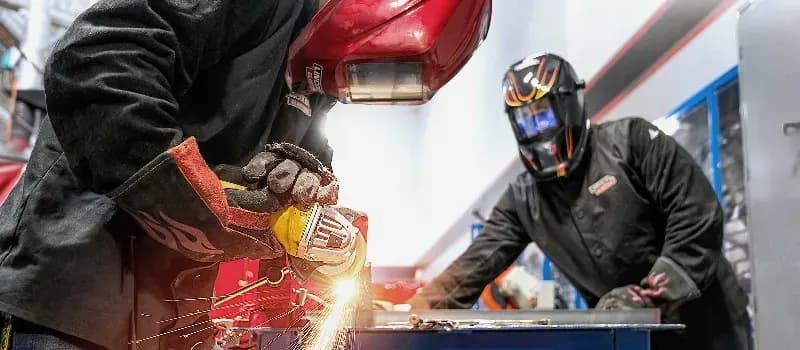
The process of welding involves uniting two or more parts together with heat, pressure or a combination of the two. It’s something used in a wide variety of industries, including transportation, which means job opportunities are available for those with the right training. Students attending the Welding Technology program at UTI will become familiar with four welding processes, including gas metal arc welding (GMAW), gas tungsten arc welding (GTAW), shielded metal arc welding (SMAW) and flux-cored arc welding (FCAW).20
Motorcycle mechanics
Students can train in UTI's Motorcycle Technician Training program in just 48 weeks to learn skills necessary to become a motorcycle technician.7 They’ll learn everything needed to repair and maintain two- and three-wheeled vehicles. Courses in the program include everything from electrical systems to engine troubleshooting. Graduates will be prepared to work in a range of settings, from custom bike shops to brand-specific dealerships.
Collision repair technicians
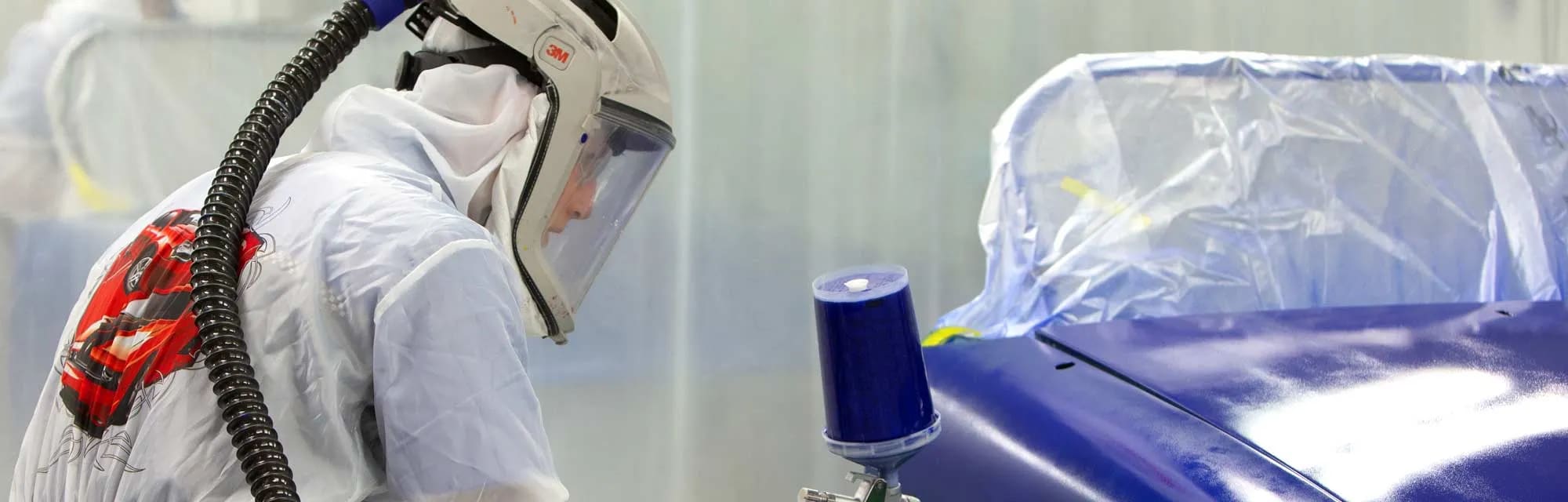
Automotive body and related repairers have the skills needed to reshape and restore vehicles. Created in collaboration with I-CAR, the Collision Repair and Refinish Technology (CRRT) program at UTI can provide students the repair skills they need as defined by the industry.20
Marine technicians
Those passionate about the water might consider pursuing a path as a marine technician. Students graduating from UTI’s Marine Technician Specialist program are prepared for hands-on jobs that range from marine technician to inspectors. Students will gain hands-on training on watercraft, learning how to maintain and make repairs.18
HVACR technicians
Heating, ventilation, air conditioning and refrigeration (HVACR) technicians install, maintain and repair systems that control temperature and air quality. From residential homes to commercial facilities, their skills are critical across industries. Students in UTI’s HVACR Technician program receive hands-on training in everything from basic electricity to refrigeration systems. The program can be completed in less than a year and helps prepare graduates for entry-level roles in the field.20
Aircraft mechanics
Aircraft mechanics inspect, maintain and repair airplanes to ensure they meet strict safety and performance standards. UTI’s Airframe & Powerplant Technician program helps students build the foundational skills needed to work on aircraft systems including engines, hydraulics, airframes and electrical components. Graduates can pursue roles at airports, hangars and maintenance facilities.20,79
*Aviation Maintenance Technology program coming to UTI Atlanta and UTI San Antonio pending FAA approval.
Electrical technicians
Electrical technicians help power homes, businesses and large industrial operations by installing, maintaining and troubleshooting electrical systems. UTI’s Electrical, Electronics, & Industrial Technology program teaches students to install, maintain and troubleshoot a wide range of electrical, electronics and industrial systems. Over the course of one year, students gain hands-on training with electrical wiring, DC and AC theory, troubleshooting, security and fire alarm systems, CCTV, cable/Wi-Fi technology, industrial robotics, instrumentation/control, and mechanical systems.20,130
Wind turbine technicians
Wind turbine technicians, also known as wind techs, install, inspect, maintain and repair wind turbines. As interest in renewable energy grows, the need for qualified wind turbine technicians has expanded. UTI offers a Wind Turbine Technology program focused training in electrical theory, mechanical systems and safety procedures needed to work in the wind energy field. Select campus locations offer the Electrical & Wind Turbine Technology program, which places more of an emphasis on construction/technical trades and electrical knowledge.20,130 Graduates from both programs are prepared to pursue entry-level roles in one of the fastest-growing career fields in the country.
Robotics and automation technicians
Robotics and automation technicians play a key role in modern manufacturing and industrial systems by installing, maintaining and troubleshooting robotic equipment. UTI’s Robotics & Automation program introduces students to smart manufacturing, control systems and programmable logic controllers (PLCs), giving them hands-on training with real-world tools and technologies. There are also select campus locations offering the Electrical, Robotics & Automation Technology program.20,130 This program focuses on electrical knowledge with construction/electrical based courses. In under a year, students from either program are prepared for entry-level opportunities in high-tech, automated environments.
Industrial maintenance technicians
Industrial maintenance technicians help maintain and repair a range of equipment that powers industries from solar to nuclear. UTI offers a 7-month Industrial Maintenance Technician training program that helps students learn how to troubleshoot this machinery and prepare for entry-level roles. There are also campus locations offering the Electrical & Industrial Maintenance Technology program, which is a 10-month long program that includes additional instruction in electrical and covers topics like power generation and mechatronics.130
Non-destructive testing technicians
Products that come out of factories have to be quality controlled and tested to ensure they meet specifications set by the manufacturer. Non-destructive testing technicians have the important role of ensuring these standards are met by maintaining existing equipment and inspecting products. UTI offers a 9-month Advanced Non-Destructive Testing Technician program that helps graduates prepare for entry-level jobs in the field.
H2: FAQ
Do I need a four-year degree to work in a skilled trade?
No. Most skilled trade careers don’t require a traditional four-year college degree. Instead, employers look for hands-on aptitude and technical skills. Trade school programs like those offered at Universal Technical Institute are designed to help students build job-ready abilities in a shorter timeframe.
How long does it take to complete a trade program?
Training timelines vary by program and school, but UTI programs can be completed in two years or less. This allows students to begin preparing for an entry-level role sooner than with a traditional college path.
Is financial aid available for trade school?
Yes. Students who qualify may be able to use federal financial aid like grants, scholarships or loans.10 UTI has a dedicated Financial Aid department available to help students navigate through paying for their schooling.
Train at UTI for In-Demand Skilled Trade Jobs
With many skilled trades jobs in demand and projected openings across many industries, it’s time to consider furthering your education to put yourself on the path toward success. At UTI, you can train and graduate in less than a year.1,7
If you’re interested in finding out more, visit our programs page for an overview of what we offer. You can also request more information from an Admissions Representative. Feeling ready to take the next step? Fill out an application today!
Universal Technical Institute of Illinois, Inc. is approved by the Division of Private Business and Vocational Schools of the Illinois Board of Higher Education.

Train for the Future
Imagine waking up each day excited to work in a career you’re passionate about – one where your hands-on skills make a real impact. UTI’s vocational trade school can help you gain the skills and confidence to pursue what you love.
