How To Start Diesel Mechanic Training With No Prior Experience
Wondering if you can train to become a diesel mechanic with no experience? Read how to get started here!

Choosing a diesel school is a real decision for your career path. Not just a campus search.
The right program should give you more than a classroom and a completion date. It should help you build real hands-on diesel career skills, understand the equipment you would use during the job and feel more prepared before stepping into the field.
Maybe you’re searching for diesel mechanic schools near me because you want a faster path than a four-year degree after high school. Maybe you’re changing careers and want something more hands-on. Or maybe you’re transitioning out of the military and looking for training that can turn mechanical experience into a civilian career path.
Before choosing a diesel school, it helps to know what actually separates one program from another. The right training should help students build foundational skills, understand the systems they’ll work on and get hands-on practice before entering the field.
Keep reading for eight things to look for in a diesel mechanic school, from accreditation and hands-on training to financial aid, career support and veteran-specific resources, with examples from focused programs like Universal Technical Institute’s (UTI) Diesel Technology program.1,18

Diesel training can be a focused investment in gaining hands-on career skills. Instead of spending years taking unrelated courses, students can look for programs built around diesel systems, shop skills and technician readiness. That focus can make a big difference when you’re trying to compare diesel mechanic programs near me and choose the option that fits your goals.
A quality diesel program should teach skills that connect directly to the type of work technicians may perform in the field. That can include diagnostics, maintenance, repairs, electrical systems, powertrains, hydraulics and more. The goal is not just to learn theory, but to understand how diesel systems work together.
Diesel vehicles and equipment can involve advanced systems that take practice to understand. A strong program should introduce students to the components, tools and diagnostic processes used in diesel repair environments. At UTI, Diesel Technology students can study diesel mechanic course topics like:
Exact courses vary by campus.

You do not want your first time working around major diesel systems to happen after training is already over. Hands-on lab experience gives students the chance to practice applying what they learn in a guided environment.18 It can also help students build confidence before pursuing entry-level diesel mechanic career opportunities.
Read: How To Start Diesel Mechanic Training With No Prior Experience
Accreditation can help students understand whether a school or program has been reviewed against established standards. When comparing diesel mechanic schools, it’s worth looking at both the institution’s accreditation and any program-specific recognition connected to the field. Together, they can give students a clearer picture of educational quality, oversight and industry alignment.
Trade school accreditation applies to the institution itself. It shows that a school has been reviewed by an accrediting agency based on factors like education quality, administrative standards and student support
UTI is accredited by the Accrediting Commission of Career Schools and Colleges (ACCSC), which is recognized by the U.S. Department of Education as an institutionally recognized accrediting agency.
Institutional accreditation can also connect to practical considerations, not just credibility. We are eligible to participate in federal student financial assistance programs administered by the Department of Education under Title IV of the Higher Education Act of 1965, as amended.10

Program-level accreditation looks more closely at a specific training area. For diesel and automotive training, the National Institute for Automotive Service Excellence (ASE) Education Foundation accreditation is an important industry-recognized standard. ASE stands for the National Institute for Automotive Service Excellence, an organization known for technician certification.
UTI’s diesel program is accredited by the ASE Education Foundation at most UTI campuses. Graduates of the program are prepared to take ASE examinations and can substitute their training for one of the two years of experience required to test for ASE diesel mechanic certification. For students who want to become ASE certified diesel mechanics, this can be an important step toward earning industry-recognized credentials.
Read: Benefits of Becoming an ASE-Certified Diesel Technician
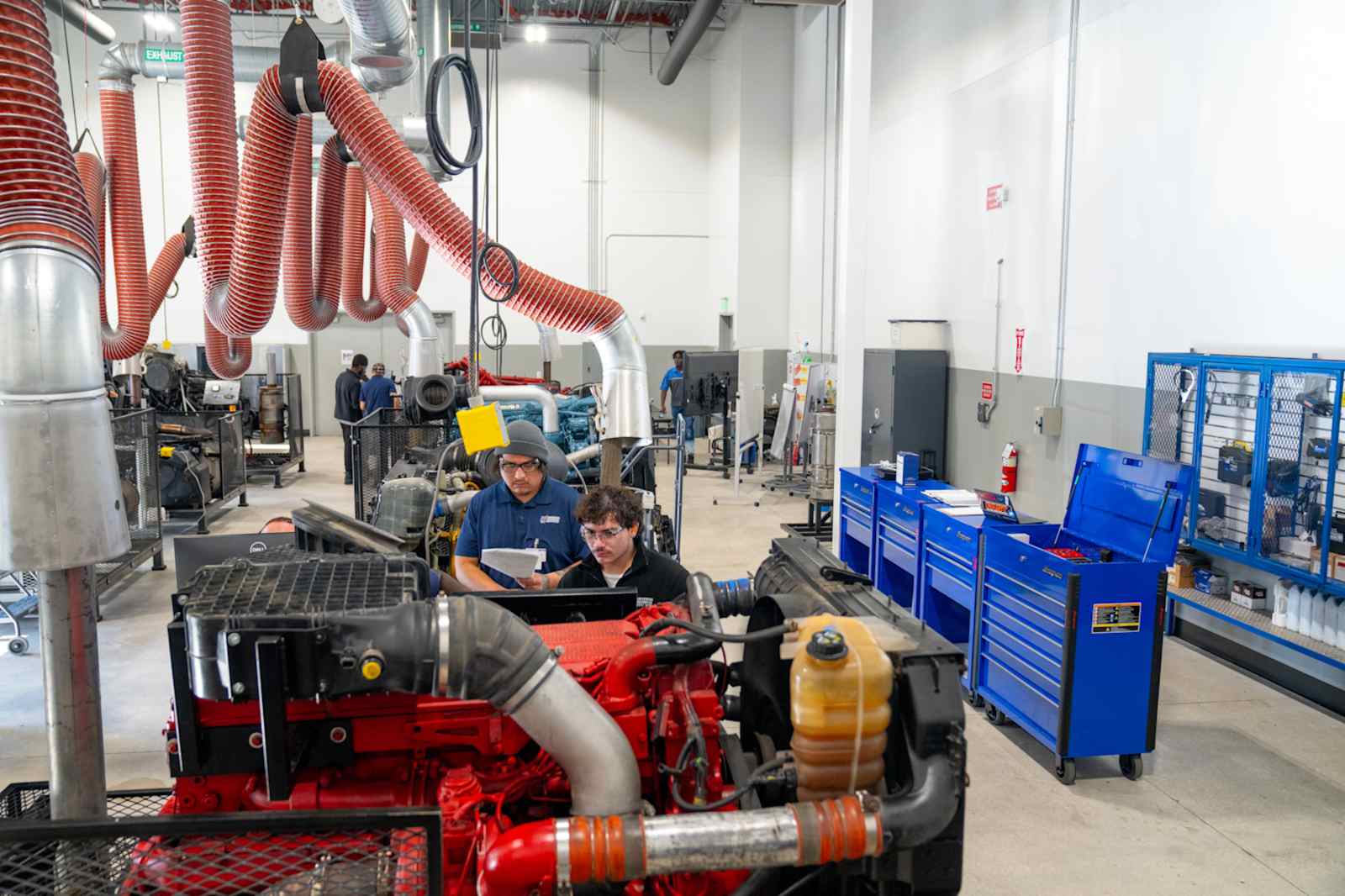
Diesel training should not feel like learning a hands-on trade from the sidelines. To help aspiring mechanics get career-ready, diesel mechanic courses should give students time around tools, parts, systems and shop-style environments. That practice can help students understand how classroom concepts show up in real repair scenarios.
UTI’s Diesel Technology program follows a blended learning model that combines instructor-led online coursework with hands-on application in the lab. Students can train on diesel systems like brakes, chassis, engines, electrical systems and more, depending on the campus and course sequence. This gives students a mix of concept learning and physical practice, instead of relying on one format alone.
A hands-on focus also helps students figure out how they learn best. Some concepts click faster when you can see the system in front of you. Others make more sense after you’ve taken a diagnostic process step by step.
Read: Future-Ready Diesel Technician Skills Employers Want in 2026

Manufacturer relationships can help connect diesel training to the equipment, expectations and procedures used in the industry. They may also give students the ability to pursue additional training paths after completing a core diesel program.1
At UTI, graduates of the core Diesel Technology program may be able to apply for Manufacturer-Specific Advanced Training (MSAT) programs that help them continue building diesel skills through brand-specific training.11 Instructors teach students to service and repair diesel-powered equipment from the chosen manufacturer, and courses vary by MSAT program. A few of the specialized diesel training courses included in UTI’s MSAT programs are:
Courses and credentials vary by MSAT program. These programs are separate from the core diesel training program and may have their own application or eligibility requirements.
Read: Entry-Level Diesel Mechanic Jobs You Can Pursue After Training
Some Manufacturer-Specific Advanced Training programs may be manufacturer-paid for eligible students who are accepted.15 These programs are separate from UTI’s core Diesel Technology program and may have their own acceptance criteria, conditions and location availability.
Graduates may also be able to explore post-training employer incentives through UTI’s Tuition Reimbursement Incentive Program (TRIP). These incentives are employer-dependent and may include options like student loan repayment assistance, tool purchase assistance, hiring incentive packages or sign-on bonuses for qualifying graduates who are hired by participating employers.14
Time matters when you’re trying to move forward.
For many students, the goal is not to stay in school as long as possible. It’s to build the right skills and start pursuing a career path sooner. That is why program length is one of the biggest comparison points when researching nearby diesel tech schools.
UTI’s core Diesel Technology program is designed to be completed in less than a year.7 Students who continue into Manufacturer-Specific Advanced Training may spend additional time building brand-specific skills after completing their core diesel training. Students should confirm the current timeline for their selected campus before enrolling.
Fast training does not mean rushing through the basics. It means looking for a program that is structured, focused and built around the skills students actually need. If a school can explain what you’ll learn, how long it takes and how the training supports your goals, that is a good sign.
Read: EJ Maltezo Learns the Confidence to be a Toyota Technician
"The instructors at UTI are who made me strive to be the person I am today."

A diesel training program also has to work with real life. Some students are coming straight from high school, while others are working, parenting, relocating or managing military transition plans. Having scheduling options can make training more realistic for students with different responsibilities.
UTI offers diesel mechanic classes at regular intervals, which can help students choose a start date that fits their timing. Depending on the campus and program, students may also be able to explore daytime or evening diesel training options. Availability can vary, so it’s worth asking an Admissions Representative what schedule options exist at the campus you’re considering.
This is especially useful for career changers. If you are trying to leave one path while preparing for another, schedule options can make the difference between “maybe later” and “I can actually do this.”
Read: What Is Trade School? A Parent’s Guide
Cost is usually one of the first questions people ask when comparing diesel mechanic programs near me.
That is not a small detail. It can shape where you apply, when you start and what kind of support you need. A strong school should be clear about tuition, financial aid options and the steps students can take to understand their own cost of attendance.
At UTI, cost of attendance can vary by program, campus, state and other factors. Students should review their specific options before making a plan. UTI’s Financial Aid team can help eligible students through the FAFSA process and explain potential options such as scholarships, grants and loans.10
UTI awarded over $27 million in scholarships and grants in 2025. Financial aid, scholarships and grants are available to those who qualify, and awards vary due to specific conditions, criteria and state. Students should review current requirements and deadlines before applying.
Read: Diesel Mechanic School Financing Guide: Scholarships, Loans and Grants

A trade school should help students build skills, but it should also help them understand how to move forward after training. Career support can include resume help, interview prep, job search guidance and job fairs where students can connect with potential employers. For students choosing a diesel mechanic school, that kind of support can matter.
UTI offers Career Services support for students and graduates. Students can get help building resumes, preparing for interviews and looking for roles. Current students may also get support finding industry-relevant part-time work while they train, and graduates can continue receiving career help as they look to start or advance their careers, even years after graduation.
The Early Employment Program is also offered for eligible enrolled automotive and diesel students at UTI.36 Participating employers may offer select students part-time employment opportunities, and program details can vary by employer and location. Hiring, employee retention and compensation decisions are made by the employer, and UTI cannot guarantee employment or salary.
Read: What is the UTI Early Employment Program (EEP)?
For veterans and service members, choosing a diesel school can come with extra questions. You may be thinking about benefits, paperwork, civilian career paths and how your military experience could translate into hands-on training.
A supportive school should understand that the transition is not just academic. It is personal, logistical and career-focused.
UTI provides military and veteran support resources for eligible students. Veterans, active-duty service members and dependents may be able to use education benefits such as the Post-9/11 GI Bill® if they qualify.20,21 Most UTI campuses are approved for VA education benefits, and UTI’s Military Admissions team can help students navigate eligibility requirements and paperwork.
Veteran-specific support can also help students feel more supported in the process. From understanding documentation to exploring program fit, the right support team can make the path easier to manage.
Read: From Military Service to a Career That Save Lives | Everett English’s Story

If you’re looking for diesel schools near me, location can shape your decision. Commute time, housing, start dates, campus resources, VA benefit availability and program options can all matter.
UTI offers Diesel Technology training at campus locations across the country. So, whether you live nearby or are open to relocating, you can compare campus options and decide what works for your goals.
VA benefits may not be available at all locations. Students should confirm campus-specific details, program availability and benefit eligibility before enrolling.
How long does diesel mechanic school take to complete?
Diesel mechanic school length depends on the program, campus and training path. UTI’s core Diesel Technology program is designed to be completed in less than a year, while students who continue into Manufacturer-Specific Advanced Training may spend additional time building brand-specific skills.7
How much does diesel mechanic school cost, and what financial aid is available?
Diesel mechanic school cost can vary by program, campus, state and other factors. At UTI, eligible students may be able to explore financial aid options such as scholarships, grants and loans, and the Financial Aid team can help students understand their options before making a plan.10
What should I look for when choosing a diesel mechanic school near me?
When comparing diesel mechanic schools near you, look for accreditation, hands-on training, diesel-focused coursework, flexible scheduling, financial aid support, career services and veteran-specific resources if applicable. It can also help to compare whether the school offers industry-aligned training, manufacturer relationships and clear program timelines.
Can diesel mechanic school help me become ASE certified?
Diesel mechanic school can help prepare students to pursue ASE certification, depending on the program. UTI’s diesel program is accredited by the ASE Education Foundation at most campuses, and graduates can substitute their training for one of the two years of experience required to test for ASE diesel mechanic certification.
Can I use GI Bill® benefits for diesel mechanic training?
Eligible veterans, service members and dependents may be able to use GI Bill® or other VA education benefits for approved diesel mechanic training programs.20,21 Most UTI campuses are approved for VA education benefits, but availability can vary by location, so students should confirm eligibility, campus details and required documentation before enrolling.
Choosing between diesel mechanic schools near me is easier when you know what to compare. Accreditation, hands-on training, scheduling, financial aid, career support and veteran resources can all help you decide whether a program fits your goals. UTI’s Diesel Technology program is designed to help students build foundational diesel skills through focused training and hands-on practice.
Have questions? Request information online or call 1-800-834-7308 to get connected with an Admissions Representative.
Ready to get started? Apply now.
Universal Technical Institute of Illinois, Inc. is approved by the Division of Private Business and Vocational Schools of the Illinois Board of Higher Education.