
Tips
Why Veterans and Military Service Members Consider Trade School
Is trade school a good option for veterans and military members? See how hands-on training, VA education benefits and military skills factor into the choice.
In This Article
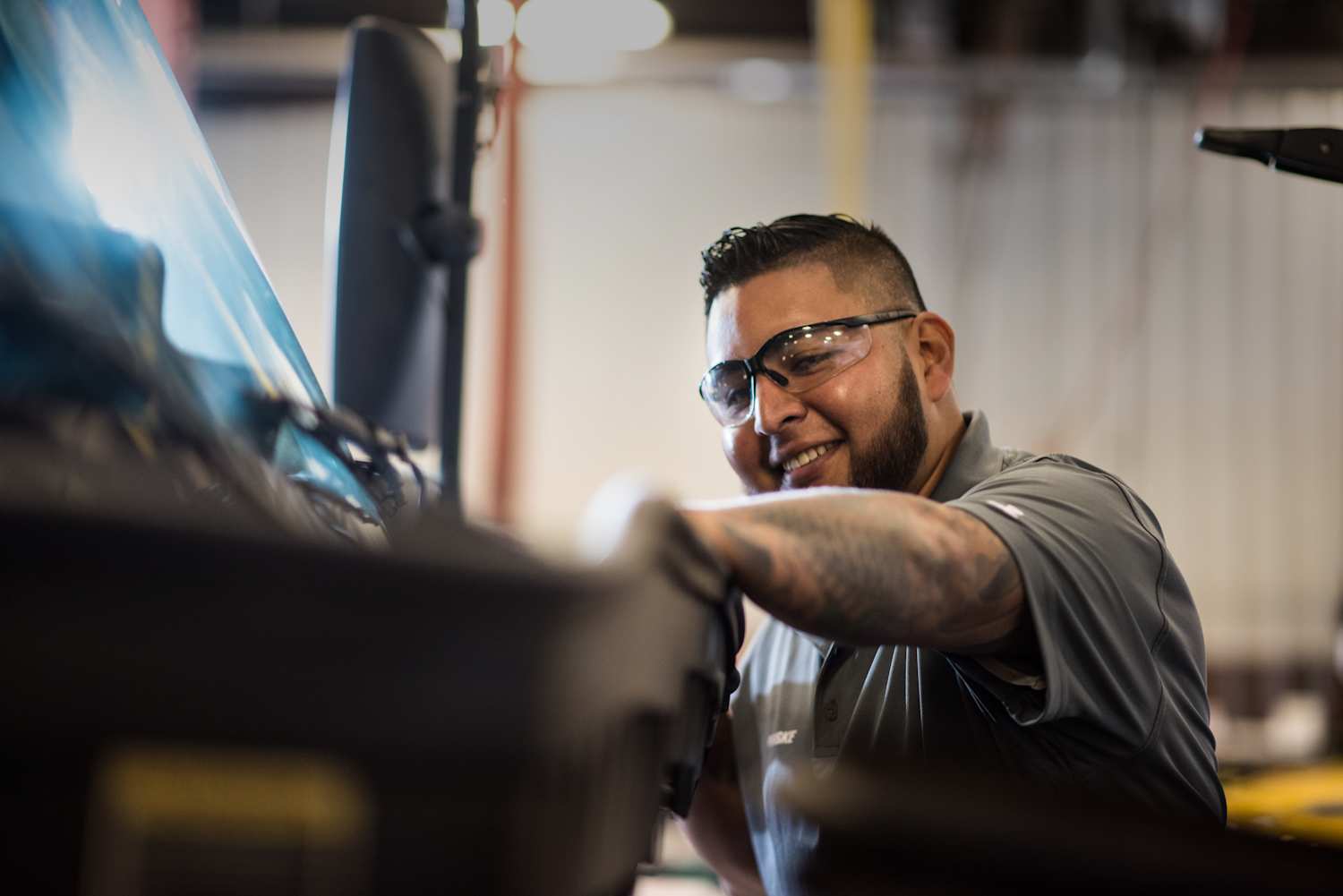
Trade school can be a good option if you're leaving the military, or planning to, and you want focused, hands-on training in a skilled trade, but the fit depends on the program and the school. If you're deciding what comes next after service, trade schools for veterans can start to look alike fast.
A trade school program centers on one skilled trade. It typically pairs classroom time with hands-on training and follows a schedule. That's the format behind most military trade schools you'll find in a search, and this article gives you the questions to judge fit for yourself.
Universal Technical Institute (UTI) is a trade school with programs open to veterans and military service members.1 If you're planning the move from service to training, in this blog we cover program lengths, SkillBridge (the program that lets eligible service members train before they separate) and benefits.
Along the way, you'll see how military backgrounds can line up with program areas, how SkillBridge works, how to check a school's approval for education benefits, and what to compare.
Key Takeaways
- Fit depends on the program and on the school's approval for your education benefits.
- Training centers on one trade, and length varies by school, program, and in some cases location.
- Military experience can overlap with some trades and serves as a good starting point for exploring programs.
- SkillBridge and education benefits have separate eligibility rules, so check SkillBridge with the trade school and the official SkillBridge site, and education benefits with the U.S. Department of Veterans Affairs (VA).
What Trade School Can Offer Veterans and Service Members
Trade school can be a good option for veterans after leaving the military and for service members planning to leave who want focused, hands-on training in a specific skilled trade. The fit depends on the program and on whether the school is approved for the veteran's education benefits.
A trade school is a postsecondary school, meaning one you attend after high school, that trains students for one specific skilled trade, such as automotive repair or welding. You'll also see it called a technical school or a vocational school, so a search for vocational schools for veterans pulls up the same kind of program.
Training focused on one trade
Each program trains you for one trade, so a welding program covers welding and an automotive program covers vehicles. Length depends on which trade you pick and, for some programs at UTI, which campus you attend.
Hands-on training in a lab setting
Hands-on training means you learn with real tools and equipment in a lab or shop while instructors coach you through the task. In UTI's Welding program, for example, students practice in an individual welding booth and get one-on-one guidance from instructors. Class format and schedules vary by program, so ask how a program splits its time between lectures and lab.
A familiar structure and a community of classmates
Training at a trade school happens in a scheduled, structured setting with classmates who are working toward the same goal. If you're used to set hours and a clear chain of instruction, a class led by instructors who guide your work may feel familiar. Learning alongside them makes teamwork part of the setting.
Which Military Backgrounds Match Which Trades?
Vehicle maintenance, welding and electrical work are three military backgrounds that can line up with UTI’s Automotive, Welding and Electrical programs, though jobs differ by role, branch and unit. If you worked as a military mechanic, the diagnostic and repair work may look familiar in automotive training. Work in military welding varies by branch, from field repairs in the Army to ship work in the Navy.
The table below shows where each background can overlap with its program area.
Military background | Related program area | Where the work overlaps |
Vehicle and equipment maintenance, such as Army mechanic roles | Automotive | Army mechanics maintain, diagnose and repair vehicle parts such as starter motors, fuel pumps, brake pads and drive shafts, using hand, torque measurement and diagnostic tools. |
Welding and fabrication roles in the Army, Navy, Air Force, Marine Corps and Coast Guard | Welding | Duties differ by branch. Army welders repair and fabricate in shops and in the field; Air Force welders do similar work and may also work on aircraft; and Coast Guard welders work on boats, ships, shore stations and aircraft. |
Electrical and technical roles with engines, power systems, vehicles, aircraft, comms gear or facility equipment | Electrical | Reading basic diagrams, following troubleshooting steps, working from checklists and employing safety steps are habits that can carry into electrical work. Your exact Military Occupational Specialty (MOS), rate (the Navy and Coast Guard term for a job specialty) or Air Force Specialty Code (AFSC) matters. |
A military job title is a good starting point for exploring programs, and the right fit depends on the role, the program and your own goals.
For a closer look at the electrical path, check out our blog on electrical training for veterans.
Which military skills can carry over to training
Five habits from military service can carry over to training: Work ethic, leadership, teamwork, problem-solving and discipline.
- Work ethic: Finishing a task to a standard is a habit that carries into a training lab.
- Leadership: Taking initiative and directing a team can help when you collaborate with classmates on a shared task.
- Teamwork: Clear communication keeps a shared lab safe and a project moving.
- Problem-solving: Adapting when something fails mid-task applies when you're diagnosing equipment that won't behave.
- Discipline: Checking your work and holding it to a standard is a habit behind any repeatable skill, from a weld bead to a circuit check.
Skills like these, matched to specific UTI programs, are covered in our blog about how military skills transfer to technical training.
Universal Technical Institute (UTI) Programs and Lengths at a Glance
UTI's program lengths run from 7 to 24 months depending on program and location. Exact program names may vary by campus, and program length may depend on location.
Program | Length |
Automotive | 12 months7 |
Diesel | 11 to 12 months7 |
Collision Repair | 9 to 13 months |
Motorcycle & Powersports | 11 to 14 months |
Marine | 12 to 14 months |
Welding | 9 to 10 months |
Electrical | 12 to 19 months |
HVACR | 9 to 10 months |
Industrial Maintenance | 7 to 10 months |
Robotics & Automation | 12 to 19 months |
Wind | 7 to 8 months |
Aviation | 18 to 24 months |
Non-Destructive Testing | 9 months |
Starting Before You Separate: SkillBridge
Service members can start training before they separate through SkillBridge, a U.S. Department of Defense (DoD) program that lets eligible active-duty service members train with industry partners during their last 180 days of service. UTI offers SkillBridge and Career Skills programs for this window, and eligible active-duty service members can train with the manufacturers listed on UTI's Military Services page.
SkillBridge eligibility and availability depend on the program and location.
How To Check Whether a Trade School Accepts VA Education Benefits
To check whether a trade school accepts VA education benefits, look up the specific school and program with the VA, then confirm with the school. GI Bill® benefits can also extend to trade schools.21 Whether yours do depends on the benefit, your eligibility and the school.
The VA's GI Bill Comparison Tool lets you search and compare schools and employers with programs approved for veterans benefits. Run each school you're considering through it before you talk to Admissions.
Most UTI campuses and programs are approved for VA education benefits, and our Military Admissions team can help with eligibility paperwork.20 Approval can differ by campus and program, so check the one you want to enroll in.
Read more: How the GI Bill can help veterans attend trade school
What To Check When Comparing Trade Schools as a Veteran
Comparing trade schools as a veteran gets simpler once you ask each school the same five questions:
- VA education benefit approval: Ask whether the campus and program you want to attend are approved.
- Program format and schedule: Ask how classes are delivered, when new classes start, and whether the schedule can work around a job or family.
- Hands-on training: Ask how much of the program happens in a lab or shop and what equipment you'll train on.
- Military-specific support: Ask if they have a team to answer military and veteran questions and help with benefit paperwork.
- Campus location and programs offered: Ask which programs each campus offers, as offerings can vary by campus.
Write the answers down for each school. The differences show up fast when you read them together.
Career Planning Resources for Veterans
Three government resources can help you narrow down a trade before you compare schools:
- O*NET Interest Profiler career assessment: Asks about your interests, then suggests possible options based on your answers. It takes about 30 minutes.
- My Next Move for Veterans: Lets you search occupations by keyword, browse them by industry or start from your military job.
- Bureau of Labor Statistics (BLS) Occupational Outlook Handbook: Groups occupations by type and has an occupation finder, so you can look up a trade by name.
The job search is a separate step, and these job search tips for veterans cover it.
FAQs About Trade School for Veterans
Do I need a technical background from the military to start trade school?
Entry requirements are set program by program, so ask Admissions what applies to the one you're considering. Military jobs vary widely, and the overlaps in the backgrounds table above are examples that don't cover every role. A job title alone doesn't settle whether a program fits you.
Can I go to trade school while working or caring for family?
Class format and schedules vary by program and campus, so the answer depends on which program you're looking at. Ask for the current format and class times before you choose, then check them against your work or family schedule.
What if the school I want is not approved for VA education benefits?
Approval for VA education benefits is specific to the school, the campus and the program, so one school's answer doesn't carry over to another. Look the school up in the VA's GI Bill Comparison Tool, then confirm with its admissions or financial aid office. If the program you want isn't approved, you can run other schools through the same comparison questions listed earlier in this article.
How do I choose which trade to train for?
Start from your interests, then match them against the program areas in the programs table above. The VA's O*NET Interest Profiler career assessment and My Next Move for Veterans can help you explore options. Then compare program length and training format for the ones that interest you, and ask Admissions about the specific program.
How do I find out whether a program is offered at a specific campus?
Programs can vary by campus, so confirm a program is offered at the campus you're considering before you plan around it. The location filter on UTI's programs page narrows the list by campus, and our Admissions team can confirm the details.
Training Options and Next Steps for Veterans and Service Members
Leaving service raises a lot of questions, and the next steps are practical ones: Check the program, the campus and the school's approval for your benefits. Some military backgrounds line up with certain trades, and a job title is only a starting point. SkillBridge and VA education benefits each have their own eligibility rules, so confirm both at the source.
Universal Technical Institute offers trade school programs that include hands-on training and are open to veterans and military service members.18 Program lengths run from 7 to 24 months, depending on program and location.
To learn more about UTI, request information online, call the Military Support Center at 1-(877) 802-2402 or apply now.
Universal Technical Institute of Illinois, Inc. is approved by the Division of Private Business and Vocational Schools of the Illinois Board of Higher Education.
Train for the Future
Imagine waking up each day excited to work in a career you’re passionate about – one where your hands-on skills make a real impact. UTI’s vocational trade school can help you gain the skills and confidence to pursue what you love.
