
You want airplane mechanic training, and you want it to fit your real life.
If your schedule is packed, choosing between day and evening aviation mechanic programs can feel like the decision that makes or breaks your plan.
Here’s the good news: You can compare the two options in a simple way. Once you see the tradeoffs side by side, the right fit usually gets a lot clearer.
This guide will help you choose a schedule for airplane mechanic training, like our Airframe & Powerplant program, that supports your timeline, goals and energy. Keep reading to learn more.
Note: Select UTI campuses may offer evening options for aviation training. Available class schedules vary and are subject to change. If you are interested in evening classes, contact the campus you are interested in attending for more info.
What the Different Schedules Look Like

Most schools offer at least two main schedules:
- Day classes: Often run in the morning through mid-afternoon.
- Night classes: Often start late afternoon and end around midnight.
In many programs, day classes run in the morning through mid-afternoon, while night classes start in the late afternoon and end later in the evening. Schedules can vary by school and campus, so always confirm times before you commit.
Who each schedule can fit best
Night classes may fit best if you:
- Work during the day.
- Have daytime family duties.
- Focus better later in the day.
Day classes may fit best if you:
- Want a steady daytime routine.
- Prefer training when you feel most alert.
- Want more daytime access to campus services.
Quick comparison table
What you’re comparing | Day programs | Night programs |
Typical class time | Morning to mid-afternoon | Late afternoon to midnight |
Work flexibility | Harder to work full-time days | Easier to keep a day job |
Energy needs | Early start | Late finish |
Best for | Students who can train in the day | Students balancing work or family |
Read: 7 Tips for Choosing a Reputable Airplane Mechanic Training School
Learning Environment: Day vs. Night

The time of day can change how the classroom feels.
Night classes can feel calmer. Fewer people on campus can mean fewer distractions. For some students, that helps focus.
Night classes can also feel harder. If you work all day, fatigue can stack up fast.
Day classes can feel more active. More students, more staff and more campus services are usually available during the day.
The best choice depends on when you learn best — early, mid-day or later.
Hands-on Training and Curriculum: What Stays the Same
Here’s the key point: A day schedule vs. an evening schedule should not change the core training you receive in an FAA-approved program.
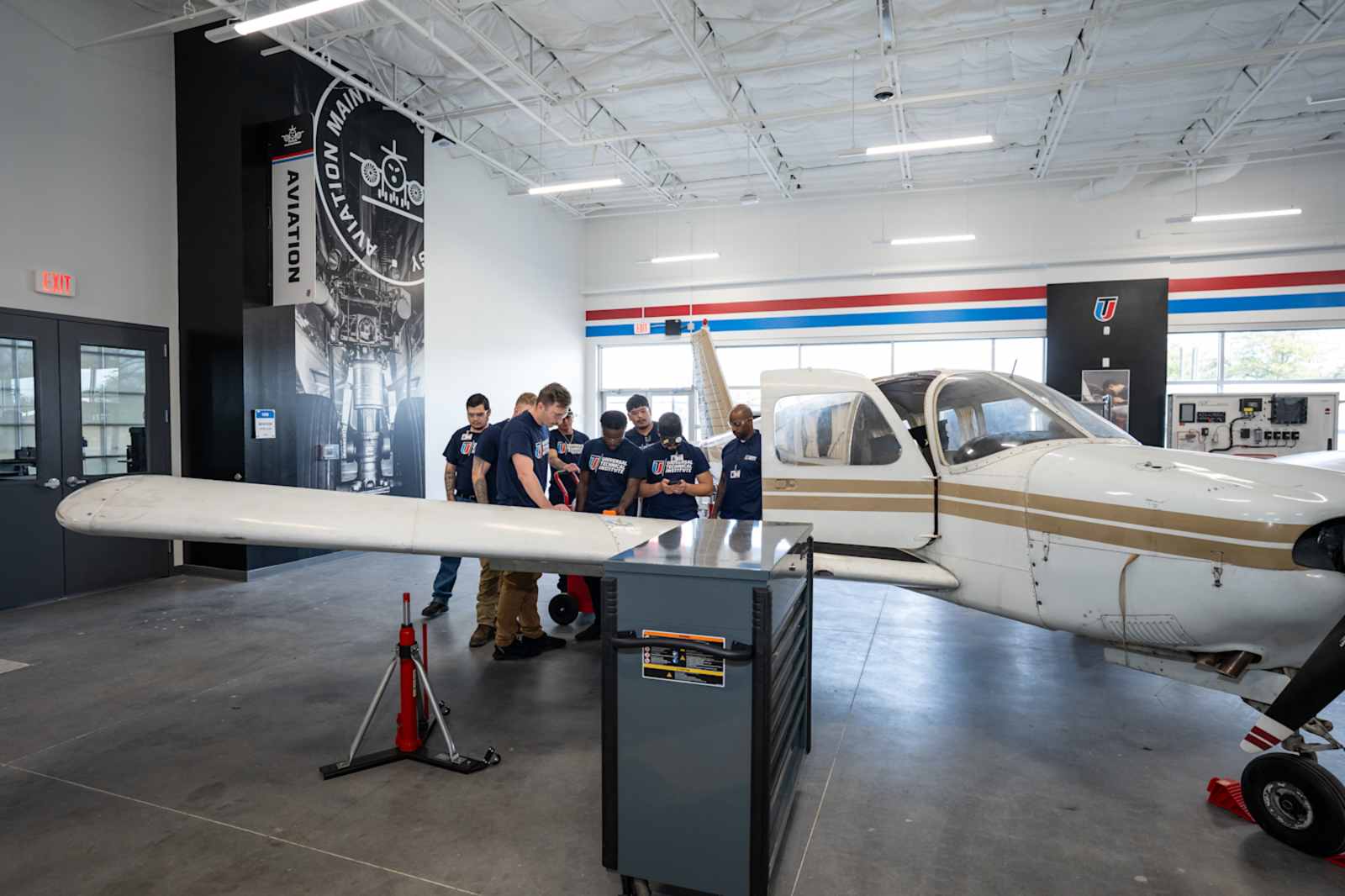
At Universal Technical Institute (UTI), the Airframe & Powerplant Technician program is built around hands-on aviation training that supports real aircraft maintenance skill-building. Students learn through guided practice in lab settings, using tools and equipment like they would see on the job as professionals.79 They also build a foundation in key aircraft systems so they can work step by step and safely.
What “hands-on” can include in A&P training

In aviation mechanic programs, hands-on timework can include training on aircraft components and maintenance tasks like these:
- Sheet metal
- Assembly and rigging
- Fuel systems
- Electrical systems
- Navigation and communication systems
UTI’s A&P courses cover these topics, and much more.
FAA-certified aviation programs and A&P outcomes
FAA-certified aviation programs, such as UTI’s A&P training, are designed to prepare students to apply and test for FAA A&P certification.79,128 Graduates can leave with training that aligns with what the FAA expects for airframe and powerplant work. If your goal is to work on aircraft systems and engines, this credential path is often the standard.
Read: Community College vs. Trade School: Which Is Faster for a Career Change?
Program Length and Time Commitment
This is where day vs. night can feel very different.
At UTI, A&P training can take 18 to 24 months, depending on the program and campus. Whether a UTI student chooses evening or daytime classes makes no difference to their length of training.
However, some schools also describe longer timelines for evening formats, especially when training hours are spread across more terms.
Cost and Financial Planning
Training tuition at UTI varies by campus and program, so it’s best to contact Admissions for the most accurate cost information. Our catalog shows program cost examples by campus.
UTI offers several ways to help eligible students pay for training, including scholarships and grants that don’t need to be repaid and student loans that can help cover costs now.10 Financial Aid advisors can also help you complete the Free Application for Federal Student Aid (FAFSA), understand what you may qualify for, and plan your next steps.
Our students can connect with Career Services for help finding job opportunities, including roles that can help you earn income while you train and help you plan for what comes after graduation. Availability can vary by campus and hours, so if you’re in night classes, ask what support is offered outside daytime business hours.
What to think about beyond tuition
- Working while in school: Evening programs may make it easier to keep income coming in.
- Time in school: A longer schedule can mean more months of commuting and education-related expenses.
- Aid options: At UTI, financial aid such as scholarships and grants are available to those who qualify.10
Read: A&P Certification Roadmap: Know Your Career Milestones
Pros and Cons: Evening (Night) Aviation Mechanic Programs
Pros | Cons |
Can fit around a day job | Can feel tiring after work. |
Can help with family schedules | Can take longer to finish. |
Can be quieter on campus | Fewer daytime campus services. |
Pros and Cons: Traditional Day Programs
Pros | Cons |
Can finish sooner when full-time. May make it easier to access daytime support services | Harder to work a day job. |
Daytime routine can feel easier | Requires bigger schedule changes. |
More daytime access to staff | May need more planning for income. |
Read: Trade School Myths Debunked: Facts for Prospective Students
How To Choose the Right Program for Your Goals

Use this checklist to make the decision clearer:
1. List your weekly non-negotiables. Work hours, childcare, commute time.
2. Pick your best brain hours. When do you learn best — morning or evening?
3. Map your “ready by” date. When do you want to finish training and start applying?
4. Run the money plan. Will you need to work during school?1
5. Confirm the details. Ask each school about schedule options, total training time and support.
This line of questioning matters since even small schedule differences can change your entire week.
Read: The Guide to Airframe and Powerplant (A&P) Licenses
Day vs. Evening Aviation Mechanic Programs FAQs
How long does it take to complete day vs. night aviation mechanic programs?
Program length depends on the school, the campus and how the schedule is set up. At UTI, aviation training can take 18 to 24 months, depending on the program and campus. Your exact timeline can also depend on course availability and start dates, so confirm details with Admissions.
Can I work while attending evening aviation mechanic programs?
Yes, many students choose evening aviation mechanic programs because they can keep working during the day. That can help cover living costs or supplement income while you train. If you plan to work, make sure your job schedule leaves time for studying and rest.
Are hands-on training and outcomes different between day and night schedules?
In FAA-approved programs, the core training should stay consistent across schedules. You should still spend time learning real skills in lab settings and building knowledge of aircraft systems. The biggest difference is usually when you train, not what you learn.
Do day or night programs cost more?
Total education-related cost can change based on how long you are in school and your personal budget. At UTI, tuition varies by campus and program, so the best next step is to ask for the most accurate cost details. You can also ask what financial aid options you may qualify for.10
What should I consider when choosing between day and night programs?
Start with your non-negotiables like work, family needs, commute time and when you learn best. Then compare how each schedule affects your timeline to graduation and your ability to earn income while you train. If you are unsure, talk with Admissions and ask what support is available for day vs. night students at your campus.
Final Take: Choose the Schedule You Can Actually Stick With
Day vs. evening aviation mechanic programs can both lead to the same goal: strong Airframe & Powerplant training that helps you build real skills. The schedule you choose should be the one you can stick with week after week. When your training plan fits your life, it’s easier to stay focused, finish strong and move toward your next step.
Want help comparing your options at Universal Technical Institute? Call an Admissions Representative at 1-800-834-7308 or request information online. If you’re ready to get started, apply now.
Universal Technical Institute of Illinois, Inc. is approved by the Division of Private Business and Vocational Schools of the Illinois Board of Higher Education.