
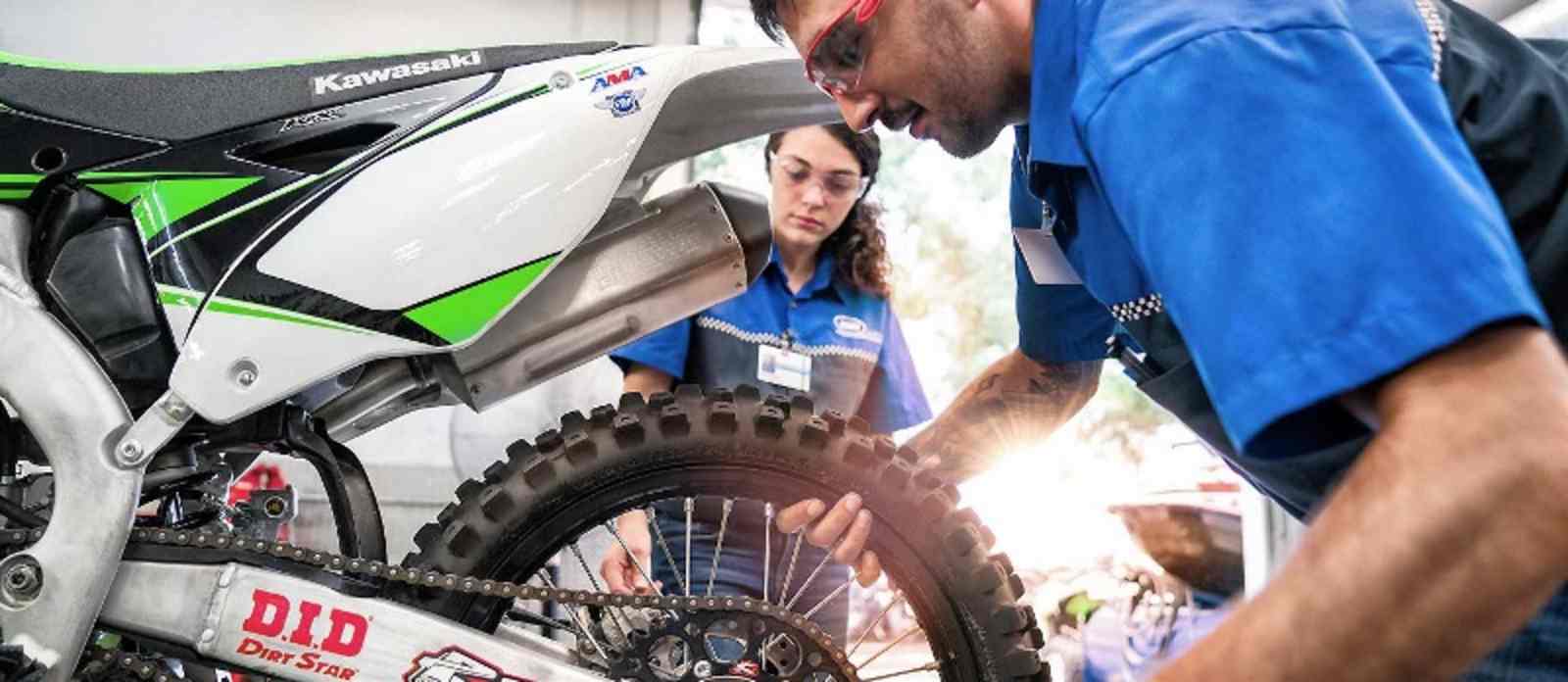
Few careers let you turn your passion for motorcycles into a profession quite like this one. As motorcycle ownership continues to climb, the Insurance Institute for Highway Safety notes registrations have grown from about 4.3 million in 2002 to 8.7 million in 2023. Trained motorcycle technicians help keep the growing number of riders on the road.
Motorcycle mechanics, also known as motorcycle technicians, inspect, diagnose, maintain and repair these machines. They’re the experts who ensure that every bike runs safely and efficiently, from cruisers and sport bikes to dirt bikes and scooters.
If you enjoy working with your hands, solving mechanical challenges and being part of a community that shares your excitement for motorcycles, learning how to become a motorcycle mechanic could be your next great move.
Learn more about the skills motorcycle mechanics need, what their job outlook and salary are, and how to become one in this motorcycle mechanic guide.
What is a Motorcycle Technician?
A motorcycle technician is a trained professional who inspects, services and repairs motorcycles and other small-engine vehicles. They understand how every system works, from the engine and transmission to electrical components and fuel delivery.
Because most motorcycle technicians receive small-engine mechanic training, they often have the skills to work on related vehicles such as all-terrain vehicles (ATVs), side-by-sides, scooters, mopeds and even personal watercraft.
Some technicians specialize in motorcycles exclusively, while others broaden their focus to other small engines. In short, if it runs on a small motor, a motorcycle mechanic has the knowledge and technical ability to keep it performing at its best.
Motorcycle Mechanic Job Description
A motorcycle mechanic’s daily work might include troubleshooting small-engine systems, tuning carburetors or fuel injectors, adjusting brakes and suspensions, and performing regular maintenance.
Most motorcycle mechanics work in dealerships or independent repair shops, but some open their own garages or specialize in mobile repairs, traveling directly to customers. Others take their skills to the next level by building or customizing bikes, which combines their technical expertise with creativity.
Whether it’s diagnosing engine issues, improving performance or crafting one-of-a-kind builds, motorcycle technicians play an essential role in keeping the growing community of riders on the road.
Typical Motorcycle Mechanic Duties
A day in the life of a motorcycle mechanic is hands-on and brings diverse challenges, depending on the bike and related issues. Motorcycle technicians use a variety of tools and hand-eye coordination skills to do repairs, replace parts, rebuild engines, and work on electrical, mechanical and fuel-system problems.
The daily duties of a motorcycle mechanic may include:
- Communicating with customers about problems and solutions.
- Maintaining engines with parts lubrication and spark plug replacement.
- Testing engines for malfunctioning parts.
- Reinstalling and reassembling engines and components.
- Maintaining repair records.
- Carrying out piston calibration and hand calibration.
- Tuning racing motorcycles.
- Servicing engines, brakes, transmissions and ignition systems.
- Making minor body repairs.
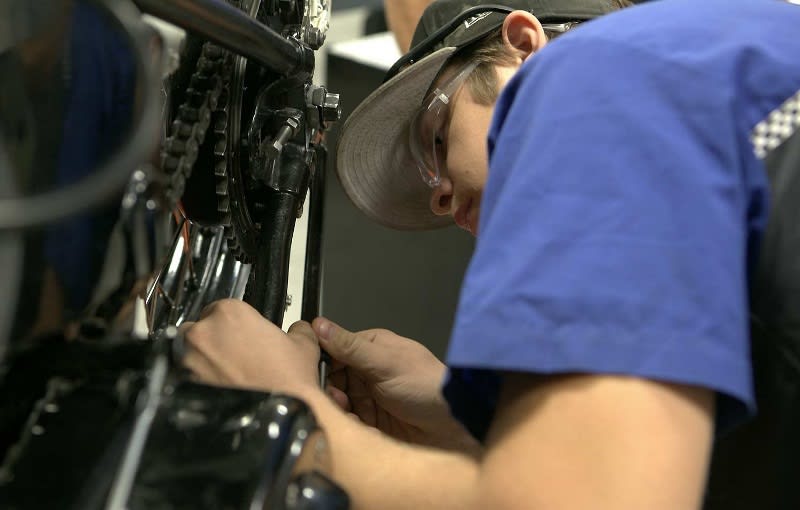
Motorcycle mechanics rely on precision tools like pliers, wrenches and screwdrivers, as well as advanced diagnostic and pneumatic equipment to service today’s bikes. Most motorcycle technicians work full-time, with the busiest months typically falling in spring and summer when more riders are on the road and events are in full swing. During slower months, mechanics often take on larger repair projects, rebuild engines or perform complete overhauls to prepare motorcycles for the next riding season.
Why Become a Motorcycle Mechanic?
Hands-on work
If you enjoy taking things apart and putting them back together, a career as a motorcycle mechanic offers a rewarding way to work with your hands every day. Instead of sitting behind a desk, you’ll be using real tools and diagnostic equipment to identify and fix problems. Each task builds your technical skillset and helps keep motorcycles safe and road-ready.
Work with your passion
For many, motorcycles aren’t just a hobby; they’re a way of life. Becoming a motorcycle technician lets you combine your passion for bikes with a career. You’ll get to work on the same machines you love to ride and meet others who share your enthusiasm for the open road.
Job variety
From classic cruisers to modern sport bikes, no two days are the same for a motorcycle mechanic. You might tune an engine one day, replace suspension components the next, and troubleshoot electrical systems later in the week. This variety keeps the job engaging and challenges you to expand your skills continually.
Growing demand
As motorcycle ownership continues to rise, so does the need for skilled motorcycle technicians. Enthusiasts rely on trained professionals to keep their bikes running smoothly, especially as modern systems become more complex and technology-driven. With formal training, you can enter a field that values precision and expertise.
Specialization opportunities
After completing core motorcycle mechanic training, many technicians specialize in specific brands or performance modifications. You can focus on Harley-Davidson® models, high-performance sport bikes or even custom builds. Specializing can help you stand out to employers or open doors to starting your own shop.
How To Become a Motorcycle Mechanic
If you’re interested in becoming a motorcycle mechanic, proper training is essential because the work can be dangerous if you don’t know what you’re doing. While some motorcycle mechanics have started their careers with on-the-job training, these days, most employers prefer to hire those with formal motorcycle mechanic training.
According to the U.S. Bureau of Labor Statistics (BLS), employers tend to hire mechanics with technical training and a postsecondary non-degree award from a school like Universal Technical Institute (UTI).1 That’s because formal education decreases the time required for on-the-job training, which saves employers money and enables motorcycle mechanics to get to work quickly. It also improves safety around the shop.
Get the right training
The first step in learning how to become a motorcycle mechanic is finding a program that combines hands-on learning with classroom instruction. A structured training environment helps you build foundational knowledge in engine systems, electrical work and diagnostics before you begin working in a professional shop.
At UTI, students start by developing core skills in small-engine mechanics — learning to disassemble, inspect, and reassemble components safely and accurately.18
Complete a motorcycle technician program
Completing a dedicated motorcycle technician program gives you both the technical and practical skills needed to pursue entry-level roles. The Motorcycle Technician Training program at UTI takes 48 weeks to complete,7 giving students less than a year of focused, hands-on training before entering the field.
The program covers key topics such as engine diagnostics, precision measurement, chassis and suspension systems, electrical fundamentals, and noise and vibration troubleshooting. By the time students graduate, they’ve gained the real-world skills that employers in dealerships and repair shops look for in new technicians.
Pursue manufacturer-specific training
Once you’ve built a foundation in motorcycle systems through the core Motorcycle Technician Prerequisite (MTP) program at UTI, you get the opportunity to take your education further by specializing in specific brands. Our manufacturer-specific training gives you the chance to learn directly with systems from leading motorcycle companies like Harley-Davidson, Honda, Yamaha, Suzuki*, Kawasaki and BMW, gaining in-depth knowledge of their technologies, parts and diagnostic procedures. Some dealerships require motorcycle MSAT training to be considered for employment.
*Only offered at our Phoenix campus in Arizona.
Manufacturer-specific curriculums offered at UTI include:
- Harley-Davidson
- Honda HonTech
- Yamaha YamaPro
- Factory Authorized Suzuki Training (FAST)*
- Kawasaki K-Tech
- BMW Motorrad
This type of training helps graduates stand out to employers and may open the door to brand-certified roles at dealerships or service centers.6
Expand your skills across multiple brands
Motorcycles vary widely in design and performance, so being able to work on more than one brand can make you more versatile as a motorcycle mechanic. Many technicians choose to cross-train on multiple brands to expand their job options and grow their careers.
At UTI, there’s no limit to the number of manufacturer curriculums you can take. Aspiring motorcycle mechanics who want to be well-rounded and work with all types of models may choose to complete as many as they like.
Motorcycle Mechanic Salary & Job Outlook
As long as there are riders on the road, the need for skilled motorcycle technicians remains. Motorcycle enthusiasts around the country and the world look to technicians to keep their bikes up and running.
When it comes to salary, the median annual salary for motorcycle mechanics in the U.S. was $48,580 in May 2025, according to the BLS.30 This means half of motorcycle technicians earned more and half earned less. Keep in mind that motorcycle technician salary depends on several factors, including experience, employer, demand and cost of living in the area.
Motorcycle Technician FAQs
Interested in Motorcycle Mechanic Jobs? Get Trained at UTI
UTI has campuses in Phoenix, Arizona, and Orlando, Florida. Classes start frequently, so there are many opportunities to jump-start your prep for a career in the motorcycle industry.
To learn more about the program, request information. If you’re ready to take the first step, apply today.