
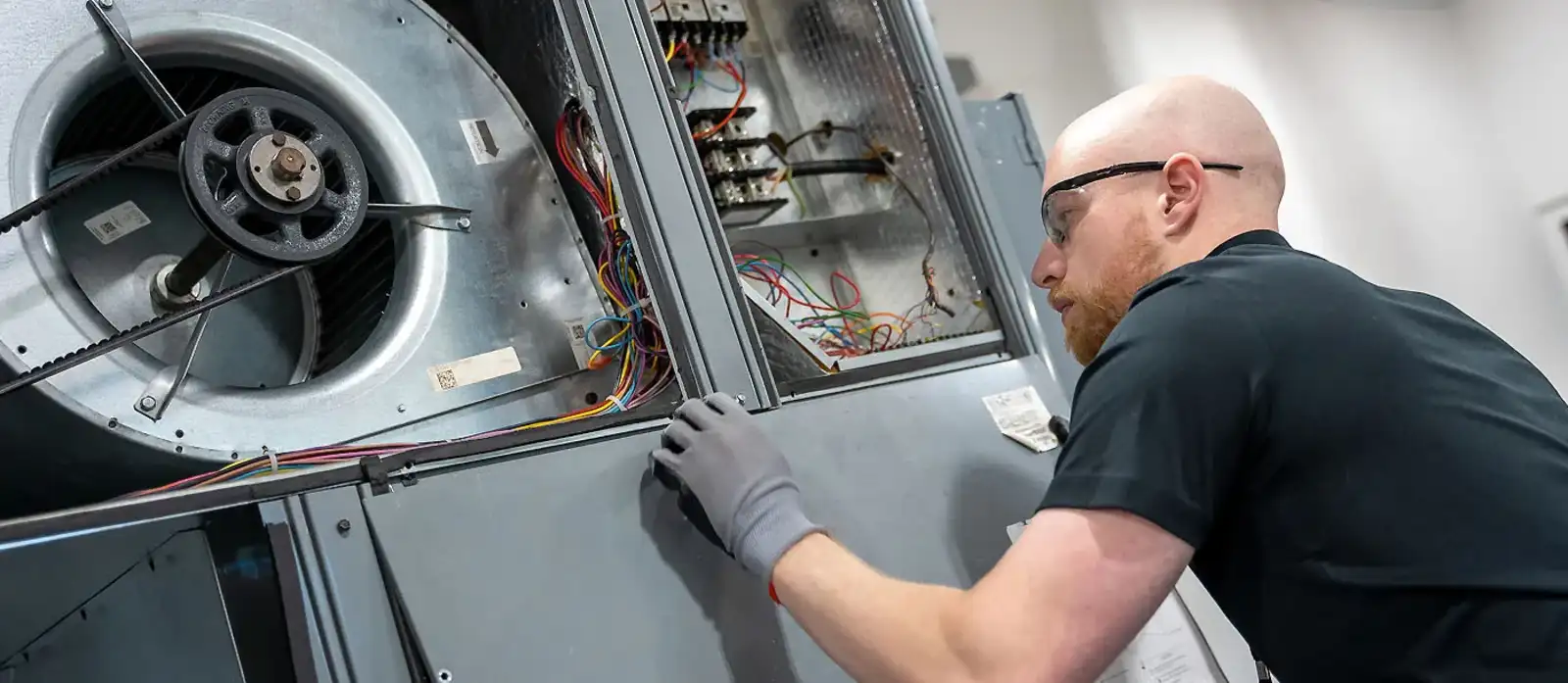
Wherever there’s air conditioning, ventilation, heating or refrigeration systems, there are technicians who install, maintain and repair them. HVAC and HVACR technicians work with their hands and use problem-solving skills to find HVACR solutions for their clients.
If you’re considering a new career path, consider a career as an HVACR technician. This industry consists of essential workers who are needed throughout the country to work on these important machines and systems. Continue reading to learn about potential HVACR technician career path opportunities to see if an HVAC career path might be for you.
UTI HVACR Training, Skills & Certifications
UTI’s HVACR Technician program provides hands-on technical training that introduces students to core skills used in heating, ventilation, air conditioning and refrigeration systems, along with opportunities to prepare for select industry-recognized certifications, depending on program and location.1
What Is HVACR? What Do HVACR Technicians Do?
HVAC stands for heating, ventilation and air conditioning. HVACR includes all of these systems, plus refrigeration systems.
HVACR technicians install, clean, maintain and repair HVACR systems that control the humidity, temperature and air quality in a building. They inspect and test various components of these systems, communicating any malfunctions to customers and replacing or repairing defective or worn parts.
HVACR techs provide maintenance recommendations to keep HVACR systems in top working condition. They also need to keep detailed records of the work they’ve performed.
Many professionals enjoy being in an HVAC technician career because they get to perform their duties on different worksites, solve problems hands-on and offer solutions to keep customers in their community happy.
Overview of HVACR Systems and Technologies
Heating, ventilation, air conditioning and refrigeration (HVACR) systems are essential technologies that provide climate control, air quality and refrigeration solutions for residential, commercial and industrial environments. HVACR technicians need a deep understanding of electrical systems, airflow dynamics and complex mechanical components. If you're wondering, "Is HVACR a good career?" it's good to note that it offers steady job opportunities, potential for career growth and the chance to work with cutting-edge technology in a field that is in demand.
Day-to-Day Responsibilities of HVACR Technicians
The day-to-day responsibilities of HVACR technicians involve installing, maintaining and repairing HVACR systems. An HVACR career involves diagnosing and troubleshooting system issues, replacing faulty components, cleaning and testing equipment, and making sure all safety regulations are followed. They may work in various settings, including homes, businesses, factories and hospitals, handling tasks that range from routine maintenance to complex repairs.
Why Consider a Career in HVACR?
Variety and flexibility
No two days are likely to be the same in the HVACR field. Whether you're servicing residential systems, working in commercial environments, or specializing in refrigeration, this career offers variety and flexibility. HVACR technicians often have the option to work for employers or eventually start their own business.
Opportunities without a four-year degree
A four-year degree isn’t the only way to a rewarding career. HVACR training programs like UTI’s give students the opportunity to learn industry-relevant skills and prepare for entry-level roles in less than a year.1 For those looking to enter the trades quickly, pursuing an HVAC career offers a direct and efficient route.
Competitive wages and advancement opportunities
HVACR careers often come with competitive starting wages, and there’s room to grow. With experience and additional certifications, technicians can move into roles with more responsibility, such as lead tech, supervisor or business owner.77 The HVAC technician job outlook shows steady demand.
Work that makes a difference
HVAC technicians play a vital role in keeping environments comfortable and safe. From schools and hospitals to homes and office buildings, HVACR professionals ensure systems run efficiently and reliably — making a real impact in the lives of others.
HVAC Technician Job Outlook
There are diverse HVACR career paths available, depending on the types of systems you’re interested in and how you’d like to shape your daily work schedule. Some HVACR technicians work their way up the ladder with a single employer, eventually pursuing leadership positions in management and other higher roles.6
The following are some of the typical aspects that can be expected from an HVACR career.
Necessary HVACR education & certifications
According to the United States Bureau of Labor Statistics (BLS), employers usually prefer that entry-level HVACR technicians have completed postsecondary education or an apprenticeship, since HVACR systems are becoming increasingly complex.
Fortunately, the HVACR Technician program at Universal Technical Institute (UTI) can be completed in less than a year, and includes the following courses:33
- HVACR Core & Basic Electricity
- Electric Motors, OSHA
- Heating Systems I and II
- Basic Refrigeration Systems
- Commercial Refrigeration I and II
- Indoor Air Fundamentals and Duct Fabrication
- Air Conditioning Systems I and II
- Construction Codes and EPA 608
- NATE Core & Building Management
Our instructors teach safety procedures, how to use industry tools, how to perform a variety of manual tasks, customer relations skills, mechanical and electronic controls, troubleshooting and more.
In addition to postsecondary education, some employers hire candidates based on their certifications. Any HVACR technician who services, repairs, maintains or disposes of equipment dealing with refrigerants must be certified with the Section 608 Technician Certification from the Environmental Protection Agency.
The R-410A Certification, which demonstrates a technician has passed the competency requirements to handle Refrigerant 410A, is also available to pursue.
The North American Technician Excellence (NATE) certification is another HVACR certification that confirms HVACR skills competency.*
Upon graduation, students in our program will have had the opportunity to test for all these certifications, as well as take the OSHA 10-Hour exam that focuses on general construction safety.
*Technicians seeking NATE certification take two exams: the Core exam and Specialty exam. UTI offers prep and testing for the Core exam only; once passed, technicians are enabled to take the Specialty exam through an employer.
Popular HVAC certifications and their importance
- EPA Section 608 Certification: Required for technicians who work with refrigerants, ensuring compliance with environmental regulations.
- North American Technician Excellence (NATE) Certification: Recognizes advanced knowledge in HVACR systems and increases job opportunities.
- OSHA Safety Certifications: Focuses on workplace safety standards, helping technicians prevent accidents and injuries.
HVAC career paths
There are different potential HVACR career paths available, depending on your interests, expertise, education and work skills. Our grads start out prepared to work as entry-level technicians or in other entry-level roles. As with any industry, over time, they may be able to advance in their careers with experience and hard work. Here are some common roles in the HVACR industry:77
Entry-level
- HVACR technician
- Installation technician
- Refrigeration technician
Advanced
- HVAC specialist
- Refrigeration operator
- Residential contractor
- Commercial service manager
- Facilities manager
- Code inspector
- Mechanical engineer
- Energy analyst
- Business owner
Career potential in the HVACR industry is diverse. Whichever area you may be interested in, there are paths to get there over time with focus, dedication and determination.
Specialized roles within the HVAC industry
An HVAC career path offers a variety of specialized roles, allowing technicians to focus on specific areas of interest and expertise. Some professionals work as installation technicians, focusing on setting up new heating, cooling and refrigeration systems in residential, commercial or industrial spaces. Others become service technicians, specializing in diagnosing and repairing existing systems to keep them running efficiently. System designers focus on creating custom HVAC solutions tailored to unique building needs, while energy efficiency specialists help optimize systems to reduce energy consumption and environmental impact. Additionally, roles like refrigeration specialists and building automation technicians focus on specific technologies, such as large-scale refrigeration units or advanced climate control systems. These specialized roles provide various career paths, offering opportunities for advancement and higher earning potential.
HVAC career salary
According to the BLS, the median annual salary for HVACR technicians in the U.S. was $61,010 in May 2025.58 This means half earned more and half earned less. Keep in mind that salary depends on several factors, including experience, employer, demand and cost of living in the area.
Also, according to the BLS, the top areas based on median annual salary for heating, air conditioning and refrigeration mechanics and installers in May 2024 were:
- District of Columbia: $84,390
- Alaska: $77,430
- Illinois: $77,410
- Massachusetts: $77,300
- Connecticut: $76,610
Factors that affect HVAC salaries
HVAC salaries can vary based on several key factors, including experience, certifications, location and the type of work performed. Technicians with more years of experience typically earn higher wages due to their advanced skills and expertise. Holding certifications like EPA Section 608 or NATE can also boost earning potential, as these credentials demonstrate specialized knowledge and make technicians more valuable to employers. Geographic location plays a significant role as well, with salaries often being higher in areas where demand for HVAC services is higher.