
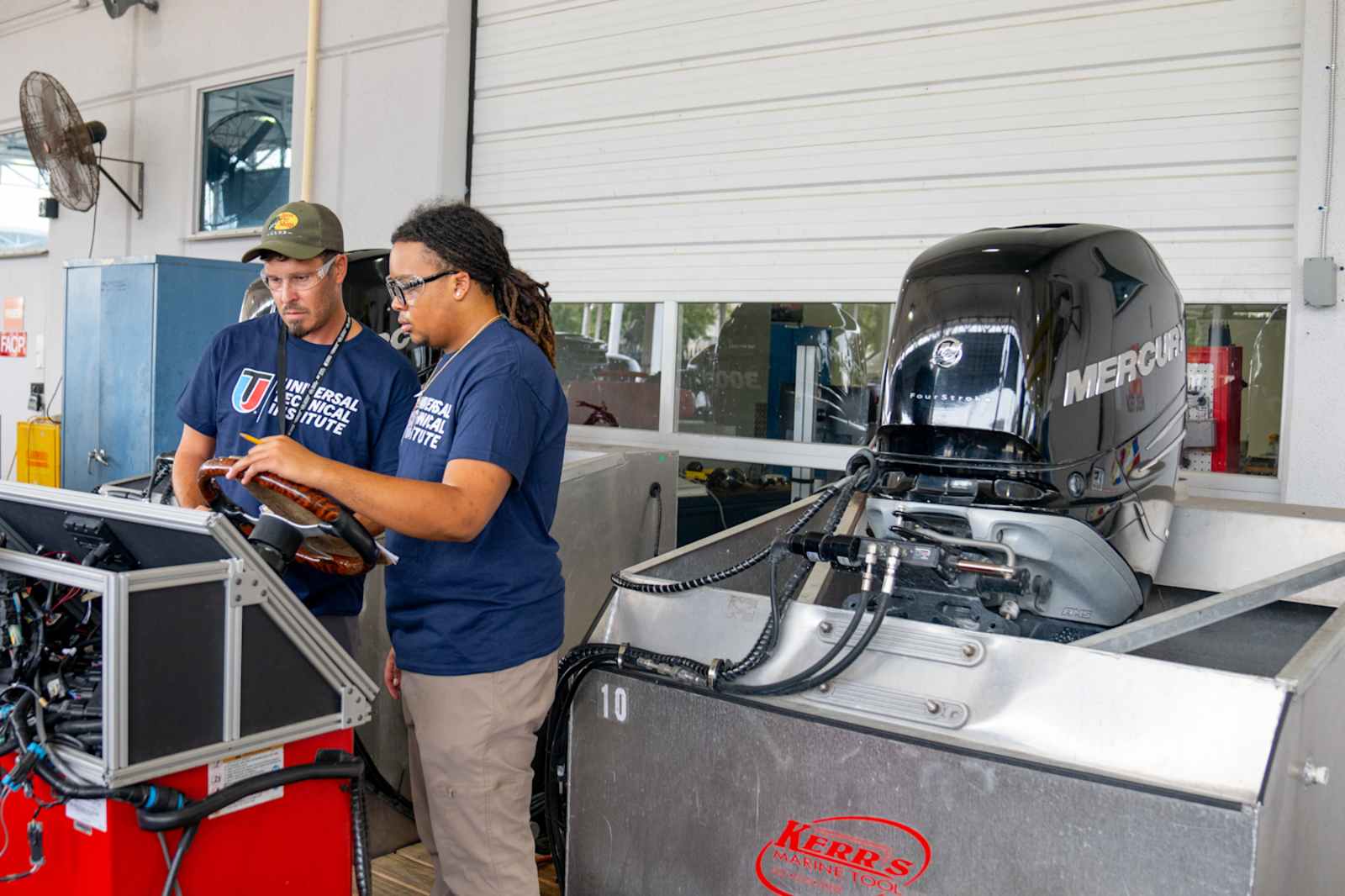
If you love being around boats and want a career that keeps you close to the water, marine technology could be a great fit. Many students wonder: how long does it take to become a marine mechanic? The answer depends on your education path, certifications and career goals — but with focused training, you can start working in this field in about a year.
In this guide, we’ll break down what to expect on your path to becoming a marine mechanic — from training and certifications to building real-world experience — and how UTI’s Marine Technician Specialist program can help you get there faster.1
Understanding the Path to Becoming a Marine Mechanic
Becoming a marine mechanic involves several key steps: completing a training program, earning relevant certifications and gaining hands-on experience. The time it takes to complete each phase varies depending on your background and the level of specialization you pursue.
The Typical Path
- Education and Training: Start by completing a postsecondary marine mechanic program.
- Certifications: Many technicians pursue brand-specific certifications or credentials that enhance employability.
- On-the-Job Experience: Real-world work helps you build efficiency and confidence in diagnosing and repairing marine engines and systems.
For students who want a structured and efficient path, our Marine Technician Specialist program offers a focused route designed to help you train and enter the field in under a year.7
How Long Marine Mechanic Training Takes
The time it takes to become a marine mechanic can vary depending on where you train and how in-depth the program is. Some trade schools and community colleges offer marine technology programs that take 18 months to two years to complete, especially if general education courses are included.
At UTI, the Marine Technician Specialist program takes approximately 51 weeks to complete.7 This full-time training blends online and classroom instruction with hands-on learning in labs designed to mirror real-world marine service environments.18
During the program, students learn to:
- Diagnose and repair inboard, outboard and sterndrive engines.
- Service propulsion systems, electrical and fuel systems and rigging components.
- Perform routine maintenance and troubleshoot performance issues.
- Use diagnostic tools and follow safety protocols used in the field.
You can explore the full list of marine technician courses to see how each course builds your knowledge — from basic engine theory to advanced diagnostics and system repair.
Additional Certifications and Specializations
After completing core marine mechanic training, some technicians choose to pursue additional certifications through manufacturer (OEM) programs. These brand-specific training opportunities allow trade school graduates to specialize in particular marine engine systems and technologies.
UTI collaborates with the following leading industry manufacturers to provide students brand-specific curriculum:
At UTI’s marine mechanic school, each manufacturer-specific course has its own structure. All courses are three weeks long except the Mercury Marine course, which runs for six weeks.
Students can start preparing for certifications while they train. The blended-learning model combines online instruction with hands-on training, so students can learn from manufacturer-specific modules and get practical training using brand-specific tools and technology. This familiarizes students with the systems used in the field, making it easier to build upon those skills after graduation.
Gaining Skills for the Field
Once you complete your training, gaining real-world experience is the next step. Entry-level technicians often start at:
- Marine technician.
- Equipment maintenance technician.
- Marine refrigeration and air conditioning technician.
As technicians continue to develop their skills and industry knowledge, they may advance into more specialized or leadership roles such as these77:
- Marine electrician
- Marine propulsion technician
- Outboard motor mechanic
- Marine refrigeration and air conditioning technician
- Marina service manager
- Rig shop manager
- Shop manager
- Shop owner
On-the-job training helps you refine your diagnostic skills, build speed and strengthen your customer service approach. With a few years of consistent hands-on training, many technicians become proficient in independently handling complex maintenance and repair projects. Technicians who demonstrate skill and reliability may advance into supervisory, service management or specialized repair roles over time.
Drive Your Marine Mechanic Career Forward With UTI Training
If you’re ready to turn your passion for the water into a career, start with the right foundation. UTI’s marine mechanic school is designed to help you train for a future in marine technology in less than a year.7
Learn how you can build the skills employers need and prepare for a career working on boats, engines and marine systems.1
Enroll now and start building your path toward becoming a marine mechanic today.
Sources
https://www.bls.gov/oes/2023/may/oes493051.htm
Universal Technical Institute of Illinois, Inc. is approved by the Division of Private Business and Vocational Schools of the Illinois Board of Higher Education.