
Electrical & Electronics
How To Use a Clamp Meter: Steps and Safety
Explore how to use a clamp meter the right way. Learn to test AC and DC current safely and prepare for the field through hands-on electrical training.
In This Article
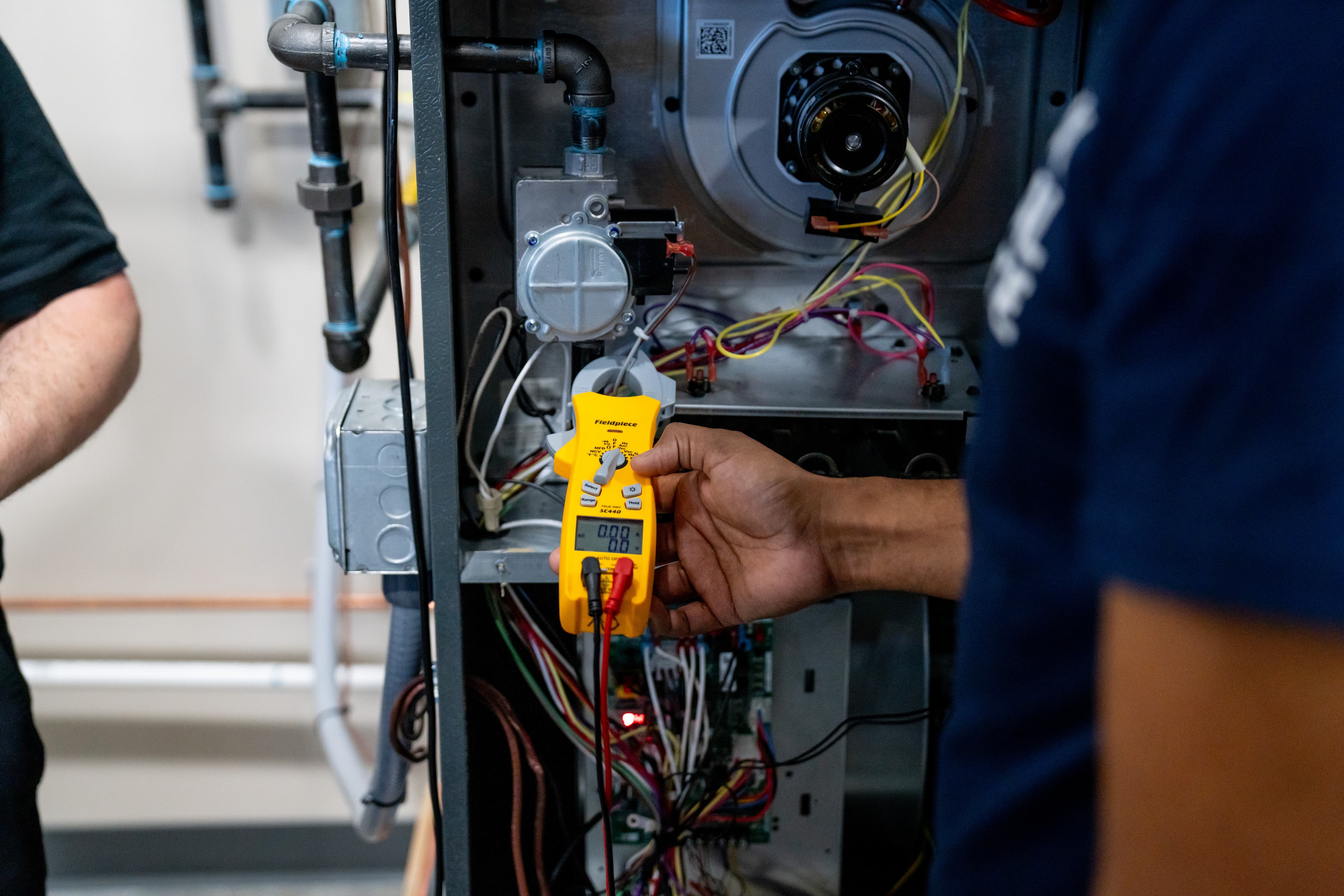
Ever seen electricians measure current without disconnecting wires?
They’re probably using a clamp meter. This handheld tool makes it easier and safer to check current flow in live circuits.
If you’re preparing for a career in the electrical field, knowing how to use a clamp meter is a must-have skill. Employers expect techs to test safely and efficiently. That’s why Universal Technical Institute (UTI) offers hands-on electrical and electronics training that teaches students skills to use professional tools like clamp meters and multimeters, helping them gain the confidence to perform real-world diagnostics.130
Keep reading to learn what clamp meters do, how to measure AC and DC current and how to work safely with this tool.
What Is a Clamp Meter and How It Works
Current transformers and jaws
A clamp meter uses jaws that open and close around a single conductor. Inside the jaws is a current transformer (CT) that senses the magnetic field created by the flow of current. That field is converted into a reading displayed on the screen.
AC vs. DC current capability
Most clamp meters easily read alternating current (AC). Some models also measure direct current (DC) using Hall effect sensors. Always confirm whether your meter supports DC if you plan to test batteries, solar systems or vehicle circuits.
Read: Series vs. Parallel Circuits: What Future Electrical Technicians Need to Know
Clamp Meter vs. Multimeter
When to clamp around conductors
Clamp meters are best for quick, non-contact current checks. You don’t have to disconnect wires, which makes them safer and faster in live systems.
When probes are better
Multimeters shine when checking voltage, resistance or continuity. If you’re not measuring current — or if you need precise readings in small circuits — multimeter probes are the right choice.
Read: Troubleshooting Electrical Systems: A Technician’s Guide
How To Measure AC Current With a Clamp Meter
Identify a single conductor
To measure AC current with clamp meter tools, you must isolate a single wire. Clamping around an entire cord with both hot and neutral wires cancels the magnetic field, giving you a false zero reading.
Set range, zero and read safely
Set the clamp meter to AC mode. Many meters include an auto-ranging feature, but if not, choose the correct current range. Close the jaws around the conductor, wait for the reading to stabilize and note the measurement.
How To Measure DC Current With a Clamp Meter
Hall effect clamps and zeroing
A DC current clamp meter uses Hall effect sensors to detect the steady magnetic field of direct current. Zero the meter before each measurement to reduce offset errors.
Avoiding noisy readings
DC measurements can be affected by nearby magnetic fields or poor zeroing. Hold the clamp steady, use shielded conductors if possible and avoid stacking wires.
Read: Types of Electrical Circuits Explained
Safety and Best Practices
PPE, lockout and rated tools
Even with a clamp meter, safety comes first. Always wear PPE, confirm the meter’s category rating (CAT III or CAT IV for industrial) and follow lockout/tagout procedures when needed.
Common mistakes to avoid
- Clamping around multiple conductors at once
- Forgetting to zero the meter before DC measurement
- Using a clamp meter where probes would be more accurate
- Exceeding the meter’s rated current range
Read: GFCI vs. AFCI: Differences and Uses
Learn How To Use a Clamp Meter and Other Tools
Hands-on diagnostics in a year or less
Through training in wind energy, robotics and automation, industrial maintenance or electronics, Universal Technical Institute helps students practice using clamp meters, multimeters and other industry tools.130 Training covers both AC and DC current, giving you real practice in diagnosing circuits.
Preparing for entry-level technician roles
In a year or less, you can train for entry-level electrical roles in industries from robotics to energy. With hands-on training, you can build confidence and skills employers look for.
Learn How To Use a Clamp Meter Like a Pro!
Knowing how to use a clamp meter and other key electrical tools can help you prepare for a career in the electrical industry.130 From comparing clamp meter vs. multimeter to learn safe testing, UTI’s four electrical and electronics programs can help you prepare for the field.
Ready to start training? Connect with an Admissions Representative by clicking the button below or calling 1-800-834-7308. If you already know which program you want to join, enroll now.
Universal Technical Institute of Illinois, Inc. is approved by the Division of Private Business and Vocational Schools of the Illinois Board of Higher Education.
Train for the Future
Imagine waking up each day excited to work in a career you’re passionate about – one where your hands-on skills make a real impact. UTI’s vocational trade school can help you gain the skills and confidence to pursue what you love.
