Answering 9 Common Questions About Our CNC Machining Program
Thinking about training to become a CNC machinist? Find answers to 9 commonly asked questions about UTI’s program.

Modern manufacturing runs on precision, and CNC machinists help make it happen. From automotive and aerospace parts to medical devices and motorsports components, CNC machining plays a key role in how products are made today.
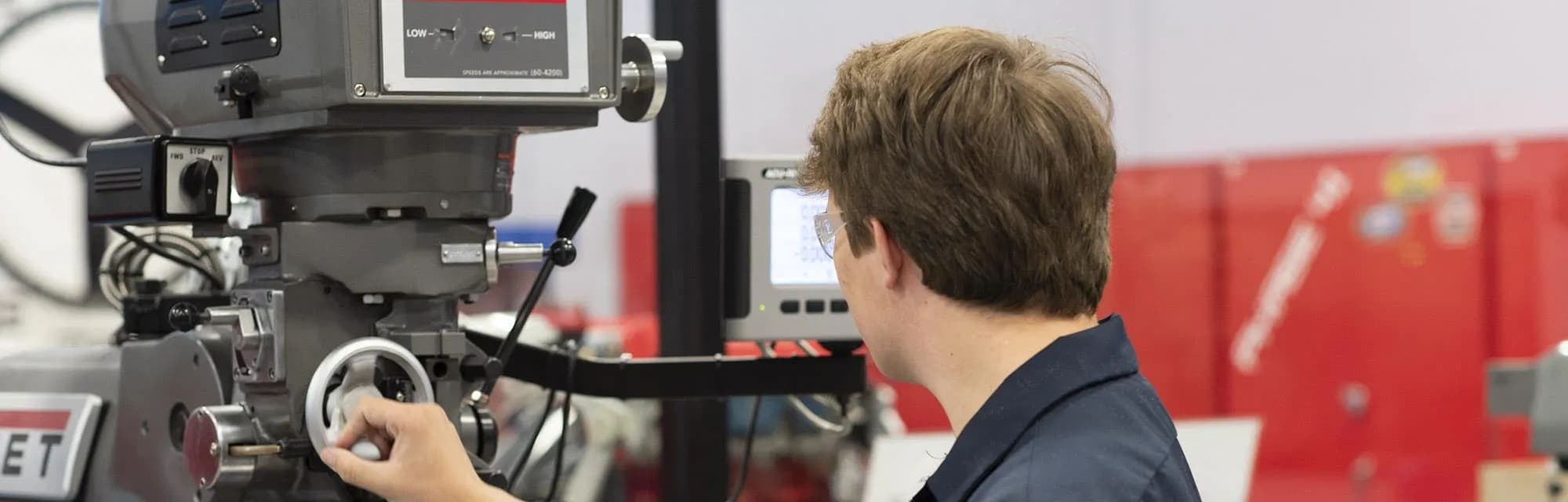
UTI’s CNC Machining Technology program helps students start building the hands-on skills used in modern manufacturing. In 36 weeks, students learn fundamentals like blueprint reading, machine setup, measurement and CNC basics through a mix of classroom learning and lab time.
This guide covers what CNC machinists do, the skills and work environments involved, career paths and salary outlook, and how CNC machining training can help prepare you for entry-level roles in the field.1
Key Points
CNC machining stands for Computer Numerical Control machining. It’s a manufacturing process that uses computer-controlled machines, such as mills and lathes, to cut, shape and finish parts from materials like metal, plastic and composites.
A CNC machinist works with these machines to produce parts that meet exact specifications. Using digital files or blueprints, machinists help ensure each component is accurate, consistent and ready for use in larger assemblies or products.
Common CNC machinist responsibilities include:
The role blends technical knowledge with hands-on work, making it appealing to people who prefer active, skills-based careers.
CNC machinists rely on a mix of technical and soft skills to succeed on the job.
Key skills include the following:
CNC machinists typically work in environments such as manufacturing plants, machine shops, tool rooms and production facilities. These settings often involve standing for long periods, lifting materials and working around heavy machinery, so physical stamina and safety awareness are important.
Some positions may involve shift work, including evenings or weekends, depending on the employer and production schedule.
Entry-level CNC machining roles may include the following:
With additional experience or training, some professionals pursue advanced or specialized roles such as these:
CNC machining skills are used across a wide range of industries, including automotive and transportation, aerospace and aviation, medical device manufacturing, energy and power generation and motorsports and performance manufacturing. Because these skills are transferable, CNC machinists may have opportunities to move between industries over time as their interests and experience grow.
According to the Bureau of Labor Statistics (BLS), the median annual salary for computer numerically controlled tool operators in the United States was $49,970 in May 2024.34 This means half of CNC machinists earned more and half earned less. Keep in mind that salary depends on several factors, including experience, employer, demand and cost of living in the area.
Precision machining continues to play a critical role in modern manufacturing. As technology advances and industries demand tighter tolerances and higher production efficiency, skilled CNC machinists remain an important part of the workforce.
CNC machining training focuses on building the core skills used in modern manufacturing. In UTI’s CNC Machining Technology program, students learn how to read blueprints, perform shop math, follow safety procedures and work with precision measurement tools. Early training introduces manual machining concepts to help students understand how materials, tooling and machines work together.
As the program progresses, students move into CNC-specific training, learning how to set up and operate CNC lathes and mills, load and adjust programs, and monitor machining processes. Coursework also introduces basic CNC programming concepts, tooling selection and quality control methods used to inspect finished parts.
Training combines classroom instruction with hands-on lab time, giving students opportunities to work with CNC machines and equipment in a structured learning environment. For a closer look at what students study throughout the program, explore the CNC Machining Technology courses.
UTI’s CNC Machining Technology program focuses on skills aligned with entry-level CNC machining roles. Training emphasizes hands-on learning to help students become familiar with industry-relevant tools and equipment.
Some UTI CNC graduates have pursued opportunities in areas such as motorsports, aerospace, medical manufacturing, tool and die and materials testing. UTI also offers career services support to help graduates explore entry-level roles after completing their training.1
Interested in becoming a CNC machinist? Start by exploring whether CNC machining fits your strengths, then review program details and connect with an Admissions Representative to talk through your options. When you’re ready to move forward, take the next step and fill out an application today!
Universal Technical Institute of Illinois, Inc. is approved by the Division of Private Business and Vocational Schools of the Illinois Board of Higher Education.