
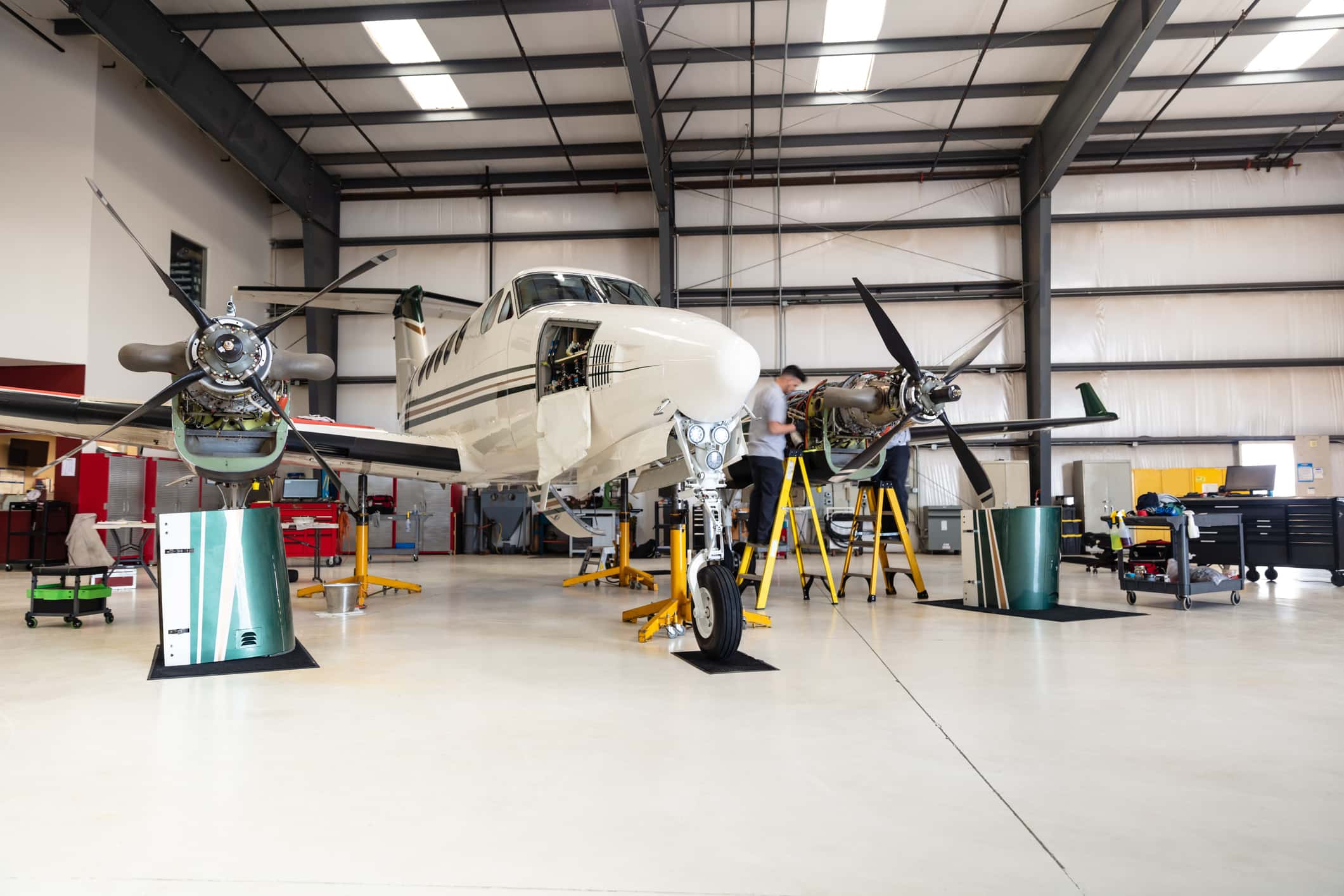
FAA-Approved A&P School vs. On-the-Job Training: Timeline and Key Differences
Aircraft safety depends on technicians who understand how planes are built, powered and maintained. Every inspection and repair plays a role in keeping people and cargo moving.
If you want to become an aviation maintenance technician, you have an important choice to make early on. Should you attend an FAA-approved A&P school or learn on the job? The answer affects how quickly you qualify for certification exams, how prepared you feel and how soon you can enter the field.
This guide compares FAA-approved A&P school vs. on-the-job training, breaking down timelines and job readiness — including how Airframe & Powerplant training at Universal Technical Institute (UTI) in two years or less can help you qualify for entry-level roles and start working as a trained professional.79
What Is A&P Mechanic Certification?

Airframe and Powerplant are two ratings of the Aviation Mechanic certificate issued by the Federal Aviation Administration (FAA). Receiving both is referred to as the A&P Certificate. It allows aviation maintenance technicians to inspect, maintain and repair aircraft systems under FAA requirements.
To earn A&P mechanic certification, candidates must meet eligibility standards and pass written, oral and practical exams. There are two main ways to qualify: graduating from an FAA-approved school or completing documented on-the-job experience.
Read: A&P Certification Roadmap: Know Your Career Milestones
FAA-Approved A&P School vs. On-the-Job Training: How They Compare
Both training paths can lead to certification, but they differ in structure, pace and support. Understanding those differences helps set realistic expectations before you begin.
On-the-job training
On-the-job training builds experience through real maintenance work under supervision. Candidates must document qualifying hours across airframe and powerplant systems to meet FAA requirements.
This path often takes several years to complete. Timelines vary based on job access, task variety and recordkeeping, which can delay eligibility for certification exams.
It can be difficult to secure an entry-level role without proof of foundational skills. Many employers prefer candidates who can show readiness before gaining on-the-job experience.
FAA-approved A&P school

An FAA-approved Airframe & Powerplant program provides a structured path that meets federal training standards for certification preparation. Coursework and lab training are designed to cover required systems in a controlled learning environment.
At Universal Technical Institute, hands-on airplane mechanic training can be completed in two years or less. This offers a quicker, more focused alternative to on-the-job training — an opportunity that’d be more difficult to get without any training since technical aviation worksites prefer hiring entry-level technicians who are already qualified to get started from Day 1.79
Approved programs include hands-on labs covering airframe and powerplant systems. Graduates complete required training with documentation that supports exam eligibility and job readiness.
Read: The Guide to Airframe and Powerplant (A&P) Licenses
Timeline to Certification
Time is often the biggest factor when comparing FAA-approved A&P school vs. on-the-job training.
A&P school programs at UTI take 18-24 months to complete, depending on location. Graduates can pursue certification exams soon after finishing required coursework and labs.79,128
On-the-job training timelines vary widely. Candidates must accumulate and document enough qualifying experience, which can take up to 30 months or longer depending on access and task exposure.
Because many employers look for demonstrated technical knowledge, it can be difficult to enter an aviation maintenance technician role without relevant credentials. This often makes formal training or documented experience an important first step.
Job Readiness and Skill Development

FAA-approved schools emphasize broad system knowledge and repeatable procedures. Students can practice inspections, troubleshooting and documentation that reflect real maintenance environments.
On-the-job training offers hands-on exposure in live operations. However, experience may be limited to certain aircraft types or tasks, requiring additional self-study for certification exams.
Both paths require mastering FAA requirements, but structured training can help ensure consistent exposure to required systems.
Career Outlook for Aviation Maintenance Technicians
The aviation industry continues to need trained maintenance technicians across the U.S. According to the U.S. Bureau of Labor Statistics, aircraft mechanics and service technicians are projected to see an annual average of about 11,300 job openings per year nationwide between 2024 and 2034, driven by both workforce turnover and ongoing operational needs.65
This aviation maintenance technician outlook reflects steady demand rather than short-term hiring cycles. Airlines, cargo carriers, private operators and maintenance facilities all depend on trained technicians to keep aircraft ready for service.
Read: Aviation Maintenance Career Outlook: Salary Trends
FAA-Approved A&P School vs. On-the-Job Training FAQs
What is the difference between FAA-approved A&P school vs. on-the-job training?
FAA-approved A&P school provides structured classroom and lab training that meets federal standards for certification preparation. On-the-job training builds skills through supervised work but can take longer and varies based on access to qualifying tasks.
How long does it take to earn A&P mechanic certification?
A&P school programs can typically be completed in 18–24 months, depending on location and schedule. On-the-job training may take up to 30 months or longer to meet FAA experience requirements.
Is it hard to get an aviation maintenance technician job without training?
It can be challenging to enter an aviation maintenance technician role without proof of foundational skills. Many employers prefer candidates who can demonstrate readiness through formal training or documented experience.
Does FAA-approved training help with job readiness?
FAA-approved programs emphasize system knowledge, inspections and documentation used in real maintenance environments. This structured approach helps prepare students to start working as trained professionals rather than true beginners.
Can both training paths lead to the same certification?
Yes, both FAA-approved school and on-the-job training can lead to A&P mechanic certification if eligibility requirements are met. All candidates must pass the same written, oral and practical exams administered under FAA standards.

Start Training for A&P Mechanic Certification
Aviation maintenance offers hands-on work and long-term career demand. With the right Airframe & Powerplant training, you can skip debating between FAA-approved A&P school vs. on-the-job training, work toward industry certification and prepare for entry-level roles in the field in two years or less.
To learn how A&P training at Universal Technical Institute can fit your goals, speak with an Admissions Representative today.1 Click the “request info” button below or call 1-800-834-7308 to get program details, campus locations and next steps.
Ready to move forward? Apply now.
Universal Technical Institute of Illinois, Inc. is approved by the Division of Private Business and Vocational Schools of the Illinois Board of Higher Education.