
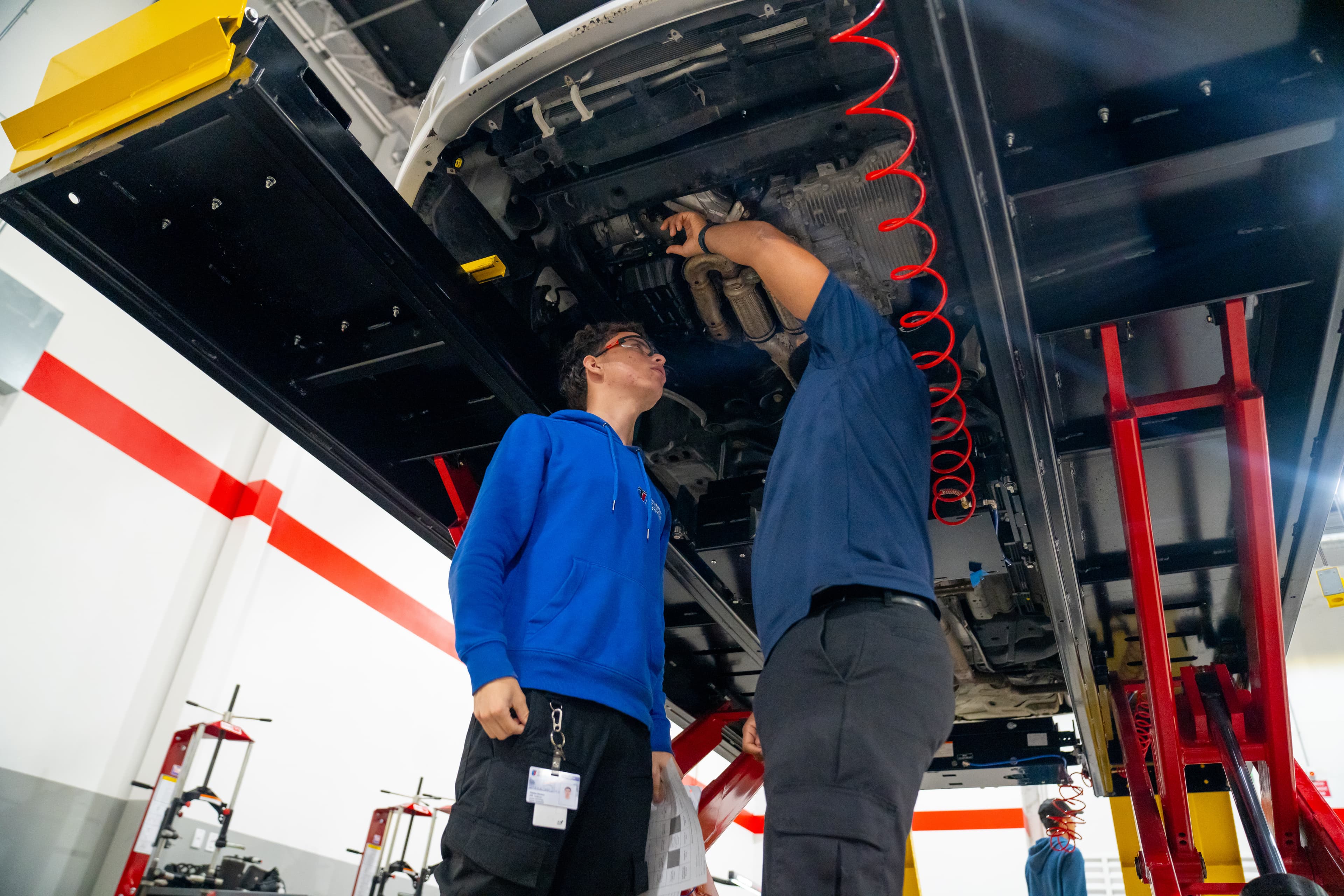
Cars aren’t getting simpler. They’re getting smarter.
From diagnostics to electrical systems, modern vehicles rely on technology just as much as mechanical components, which changes how repairs are performed.
If you’re interested in hands-on work and problem-solving, becoming an automotive technician can be a path worth exploring.
This guide breaks down what technicians do, the skills they use, how training — including Universal Technical Institute’s Automotive & EV Technology program — works and what career paths can look like once you’re in the field.1
What Is an Automotive Technician?
An automotive technician is a trained professional who inspects, diagnoses and repairs vehicles. They work on a wide range of systems, including engines, brakes and electrical components, to keep vehicles operating safely and efficiently. Their role combines hands-on mechanical work with the use of modern diagnostic tools.
Difference between mechanic vs. technician
While the terms are often used interchangeably, technicians typically work with more advanced systems and tools. They are trained to interpret diagnostic data and handle modern vehicle technology, while mechanics may focus more on basic repairs. In practice, many professionals perform both roles depending on their training and experience.
Read: Aaron Hernandez: From Childhood Curiosity to Career Confidence
What Does an Automotive Technician Do?
Daily responsibilities
Automotive technicians inspect vehicles, perform routine maintenance and complete repairs. Their work may include checking systems, replacing worn components and ensuring vehicles meet safety standards. Each day can involve working on different vehicles with different issues.
Diagnostics, repair and maintenance
Technicians use diagnostic tools and testing equipment to identify problems within vehicle systems. Once the issue is identified, they repair or replace parts and verify that the fix resolves the problem. This process often requires careful testing and step-by-step troubleshooting.
Working with modern vehicle systems
Modern vehicles include computer-controlled systems that require specialized knowledge. Technicians often use digital tools to read system data, interpret error codes and make precise adjustments. This makes electrical and software-related skills increasingly important in the field.
Read: Not Made for a Desk | Auto Graduate Jennifer Carbajal’s Story
What Skills Do Automotive Technicians Need?
Mechanical skills
Technicians need a strong understanding of how vehicle systems function, including engines, transmissions and braking systems. This knowledge helps them perform repairs accurately and safely. Hands-on experience plays a key role in building these skills over time.
Electrical and diagnostic knowledge
Because many vehicle systems are electronically controlled, technicians must understand how to work with wiring, sensors and onboard computers. They need to interpret diagnostic results and connect that information to real-world repairs. This skill set is essential for working on modern vehicles.
Problem-solving and troubleshooting
Identifying the cause of a problem is often more complex than fixing it. Technicians must think critically, test different possibilities and narrow down the issue. Strong troubleshooting skills help them find efficient and accurate solutions.
Communication and teamwork
Technicians often explain repairs to customers or coordinate with coworkers to complete jobs. Clear communication helps ensure that everyone involved understands the work being done. Teamwork is especially important in busy auto shop environments.
Read: John Perez Looks To Hire the Technicians of Tomorrow
What Training Is Required to Become an Automotive Technician?
High school diploma or GED certificate
Most automotive training programs and employers require a high school diploma or GED certificate. This provides a foundation in basic math, reading and problem-solving skills. As a foundational credential, this is typically the first step in a journey toward a career.
Hands-on technical training
Automotive technician training focuses on building real-world skills through hands-on practice. Students learn how to diagnose problems, perform repairs and work with modern vehicle systems.
This type of training helps bridge the gap between theory and actual shop work. At a trade school like UTI, auto training can take less than one year.7,18
Structured programs vs. self-learning
While some people try to learn independently, structured programs offer guided instruction and access to proper equipment. They also provide a more organized, focused way to build skills step by step. This can make it easier to prepare for entry-level roles.
How Long Does Automotive Technician Training Take?
Technical school programs
Many technical school programs are designed to be completed in about a year. During this time, students build foundational skills in diagnostics, repair and maintenance. The structured format helps keep training focused and efficient.
Manufacturer-specific training
Some technicians continue their education with manufacturer-specific programs. These programs focus on particular brands and systems, providing deeper technical knowledge. They can help technicians develop specialized skills.
On-the-job experience
Experience plays an important role in skill development, but getting started can be challenging without prior training. Employers often look for candidates who can contribute quickly in a shop environment. Hands-on training can help prepare students to meet those expectations.
Read: What Service Director Mark Malizzi Seeks in a New Automotive Tech Hire
What Certifications Do Automotive Technicians Need?
ASE certification overview
Automotive Service Excellence (ASE) certification is a widely recognized credential in the industry. It demonstrates that a technician has met certain knowledge and skill standards. Many employers value ASE certification when evaluating candidates.
Key ASE certification areas
Engine Repair
This certification focuses on diagnosing and repairing engine-related issues. It includes understanding internal components and performance problems. Technicians use this knowledge to maintain engine efficiency.
Brakes
Brake certification covers inspection, repair and replacement of braking systems. It ensures technicians can maintain vehicle safety and performance. This area is critical for preventing accidents.
Suspension and Steering
This certification focuses on systems that affect vehicle handling and stability. Technicians learn how to diagnose issues and restore proper control. It plays a key role in ride quality and safety.
Electrical Systems
Electrical certification covers diagnosing and repairing wiring, sensors and electronic components. Technicians must understand how systems communicate and function together. This is increasingly important as vehicles become more advanced.
How Do You Become a Master Technician?
Becoming a master technician typically involves earning multiple ASE certifications across different areas. Technicians also need hands-on experience to develop deeper skills and confidence. Over time, they may specialize in certain systems or types of vehicles.77
What Specialized Career Paths Can Automotive Technicians Pursue?
Diagnostics and electrical systems
Technicians may specialize in diagnosing complex issues and working with advanced electronics, often in roles like diagnostic technicians. This path often involves deeper knowledge of computer-controlled systems. It is increasingly important as vehicle technology evolves.
Performance and engine work
Some technicians focus on engine performance and customization, often working in roles like performance technicians or engine technicians. This can include tuning, rebuilding engines or modifying vehicles for specific uses. It often requires advanced mechanical knowledge.
Diesel and heavy equipment
Technicians may transition into working on diesel engines or heavy equipment, including roles like heavy line technicians. These positions focus on larger, more complex systems such as engines, drivetrains and power components. They can offer different work environments and more advanced technical challenges.
Fleet and commercial vehicle maintenance
Fleet technicians maintain multiple vehicles for businesses or organizations. Their work focuses on keeping vehicles reliable and minimizing downtime. This often involves consistent maintenance schedules and repairs.
Read: Trade School vs. 4-Year College After High School: Which Path Makes Sense?
What Are Some Career Opportunities for Automotive Technicians?
Dealerships
Technicians at dealerships often work on specific vehicle brands. They handle maintenance, diagnostics and warranty repairs. This environment can provide consistent work with familiar systems.
Independent shops
Independent shops work on a wide range of vehicles. Technicians may encounter different makes, models and issues on a daily basis. This can lead to a more varied work experience.
Specialized repair roles
Some technicians focus on specific areas such as diagnostics, restoration or performance. These roles require deeper expertise in a particular field. They can offer opportunities for specialization and growth.
Our auto mechanic training graduates are prepared to pursue entry-level roles. As with any industry, over time, technicians may be able to advance in their careers with experience and hard work.77
Read: Automotive Specialized Training Programs
How Automotive Technology Training Helps Students Get Career-Ready
Hands-on training at Universal Technical Institute (UTI) gives students the opportunity to work with real tools and vehicle systems in lab environments that reflect actual shop settings.18 This helps build familiarity with the kinds of inspections, diagnostics and repairs automotive technicians perform every day, while reinforcing problem-solving skills through repetition.
UTI’s Automotive & EV Technology training also includes training on current vehicle technology, from engine systems to modern diagnostic technology that can be found in the industry. In addition, Career Services support is available to help students network with potential employers and prepare for entry-level opportunities in the field.1
Read: EJ Maltezo Learns the Confidence To Be a Toyota Technician
Automotive Technician Careers FAQs
What does an automotive technician do?
An automotive technician inspects, diagnoses and repairs vehicles to keep them running safely and efficiently. Their work includes routine maintenance, troubleshooting issues and working with modern vehicle systems using diagnostic tools.
How do you become an automotive technician?
To become an automotive technician, most people start with a high school diploma or GED certificate, then complete hands-on training. Automotive technician training programs help students build practical skills and prepare for entry-level roles in the field.
How long does automotive technician training take?
Training timelines can vary, but many automotive technician training programs can be completed in about a year. This allows students to build foundational skills in diagnostics, repair and maintenance in a structured environment.
What tools do automotive technicians use?
Automotive technicians use a combination of hand tools, power tools and automotive diagnostic tools. These include wrenches, lifts, OBD-II scanners and software used to identify and fix vehicle issues.
Do automotive technicians need certifications?
Certifications like Automotive Service Excellence (ASE) can help demonstrate a technician’s knowledge and skills to employers. While not always required to start, they can support career growth and specialization potential over time.
Start Training for an In-Demand Auto Technician Career
Build real skills fast. Starting toward an automotive technician career means training in diagnostics, repair and current vehicle systems. UTI’s automotive technician training helps students gain hands-on experience and prepare for entry-level opportunities.1,18
If you’re ready to take the next step, you can speak with an Admissions Representative at 1-800-834-7308 or request information online to explore your options.
Universal Technical Institute of Illinois, Inc. is approved by the Division of Private Business and Vocational Schools of the Illinois Board of Higher Education.