
Automotive
Local Auto Mechanic Training: Financial Aid & Training
Cars, not lecture halls. Find an auto mechanic school near you with financing like scholarships and grants for hands-on career training.
In This Article
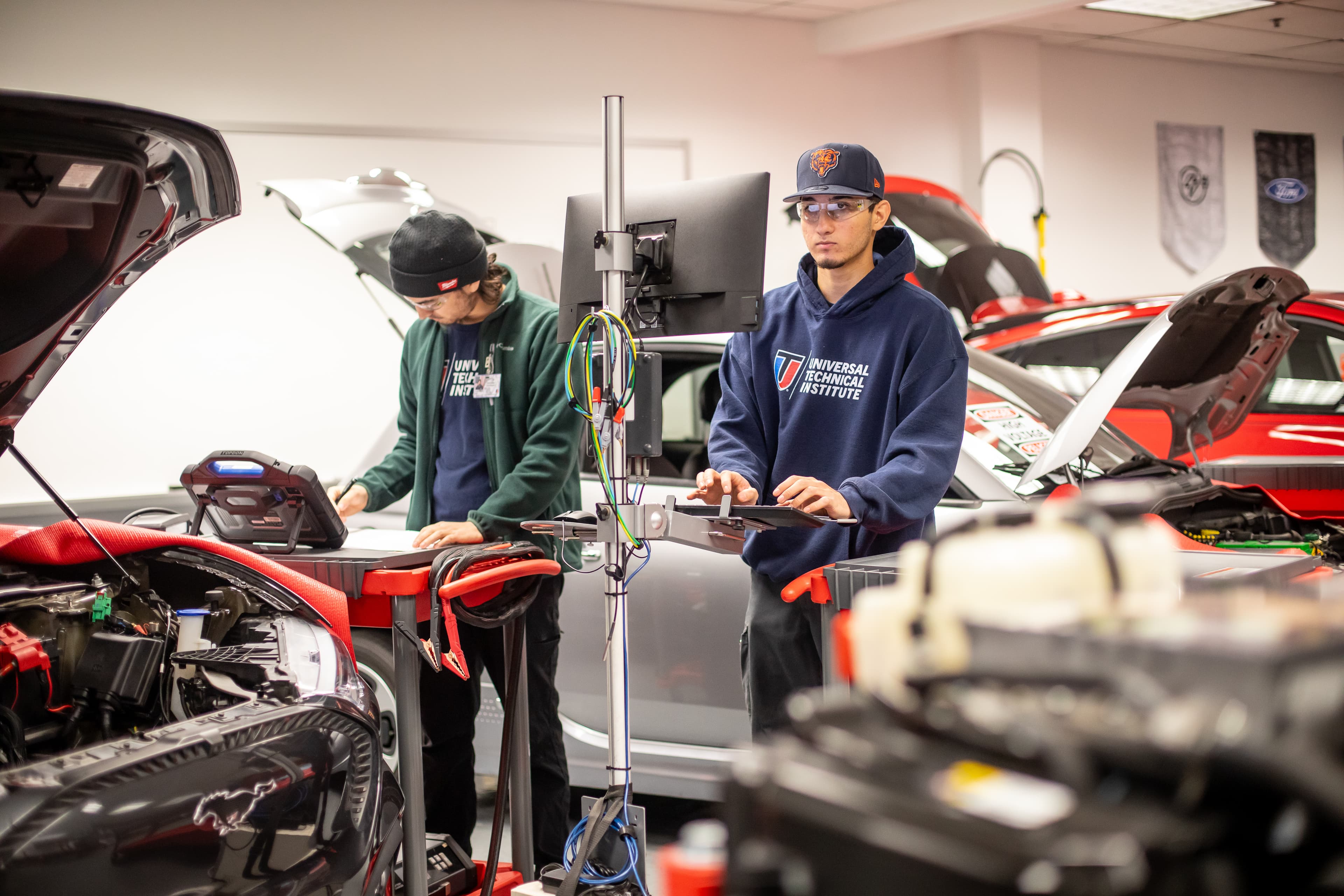
You want to work on cars.
The bigger question? How to make training happen without walking into the process while clueless.
Maybe you’re comparing local automotive schools. Maybe you’re helping your child choose a path after high school. Or maybe you’re ready to leave a job that feels stalled and start building skills for something more hands-on.
Financial aid for automotive training can include several types of support, depending on eligibility. Since cost of attendance can vary by program, campus, state and other factors, students should review their specific options before making a plan — like scholarships, grants, loans and select post-training employment opportunities that may offer tuition reimbursement or other employer-paid incentives.
Keep reading to understand the financial aid options, scholarships, grants, FAFSA help, military-specific benefits and other resources that may help eligible students plan for auto training, like Universal Technical Institute’s (UTI) Automotive Technology program.10,20 If you’re searching for a local auto mechanic school with financing or scholarships, this guide can help you compare the training path with the payment path before taking the next step.
Automotive Training Financial Aid

Financial aid for automotive training can include several types of support, depending on eligibility. Since tuition and education-related costs can vary by program, campus, state and other factors, students should review their specific options before making a plan.
At UTI, students may be able to explore scholarships, grants and loans as they determine how to pay for school. Financial aid, scholarships and grants are available to those who qualify, and awards vary due to specific conditions, criteria and state.
How do scholarships work?
Scholarships are financial awards that typically do not need to be repaid. They may be based on factors like academic achievement, financial need, career interest, location, leadership or other eligibility requirements.
Some scholarships are offered through schools, foundations, professional organizations or industry groups. Others may require may require students to complete the Free Application for Federal Student Aid (FAFSA) before eligibility can be determined.
UTI offers a variety of scholarship opportunities for eligible students. Some are available across multiple campuses, while others may be tied to a state, school district, career interest or start date. A Financial Aid Advisor can help students review available options and understand which opportunities they’re suited for.
What about grants?
Grants are another form of financial aid that typically does not need to be repaid if students meet the required conditions. Many grants are need-based or connected to specific circumstances, such as commuting distance, relocation, natural disasters or academic background. Like scholarships, some grants may require completion of a FAFSA.
UTI offers grant programs that may help eligible students reduce certain education-related costs. These can include institutional grants, commuter grants, relocation grants and other options depending on the student’s situation. Because eligibility rules vary, students should review current grant details and speak with a Financial Aid Advisor before applying.
Will loans help?
Loans are borrowed funds that can help cover education costs and must be repaid later, usually with interest. Federal student loans generally begin with the FAFSA, which helps determine what types of federal aid a student may qualify for. Unlike scholarships and grants, loans should be reviewed carefully because repayment terms matter.
At UTI, students can complete the FAFSA to see what aid options may be available to them. Financial Aid Advisors can help explain offers, loan types and next steps so students understand what they are accepting. This can be especially useful for students comparing local auto mechanic school options and trying to make a clear financial plan before enrolling.
Read: The Ultimate Guide to Paying for Trade School: Financial Aid, Grants and Loans
Military and Veteran Education Benefits for Auto Mechanic Training

Military students, veterans, eligible dependents and service members may qualify for VA education benefits, military-specific grants or other forms of funding assistance.20,22 Benefits can vary based on service history, eligibility, campus and program. UTI’s Military Admissions team and Military Support Center can help students navigate the process.
GI Bill® and VA Education Benefits
GI Bill® and VA education benefits can help eligible veterans, service members and dependents pay for approved education or training programs.21 The Post-9/11 GI Bill®, also known as Chapter 33, may apply to school or job training for those who served on active duty after September 10, 2001. Other VA benefit programs, such as Chapter 31 Veteran Readiness and Employment or Chapter 35 Survivors’ and Dependents’ Educational Assistance, may also apply in certain situations.
Most UTI campuses are approved for VA education benefits, although VA benefits may not be available at all locations. UTI’s Military Admissions team can help veterans and service members review eligibility requirements, complete paperwork and understand what documents may be needed.
Read: How the GI Bill® Supports Veterans Pursuing Trade School
Military Scholarships and Financial Assistance
Military students may be able to explore veteran-focused grants, VA education benefits and scholarship resources in addition to standard financial aid options. This is not a complete list of everything that may be available, but these are a few opportunities and resources worth reviewing:
- Paralyzed Veterans of America: This organization offers scholarship opportunities that may support eligible members, spouses and unmarried children who are pursuing postsecondary education. Students should review current eligibility requirements directly with the organization.
- TechForce Foundation: TechForce Foundation offers scholarship resources for students pursuing technician training. UTI lists TechForce Foundation as a scholarship resource for aspiring technicians.
- Military Officers Association of America: MOAA offers scholarship and education assistance resources for eligible military families. Students should review current MOAA eligibility details and application requirements before applying.
Support for Transitioning Into Civilian Careers
The move from military service to civilian work can feel like a second career decision, not just a school decision. Veterans may be sorting through benefits, paperwork, family logistics and the pressure of choosing a path that makes sense after service. Career training can help create structure by turning existing discipline, problem-solving and technical experience into hands-on skills for civilian industries.1
UTI provides veteran-focused support through resources like Military Admissions, the Military Support Center and veteran-specific financial aid guidance. Students may also be able to access campus resources such as military-only orientations, veteran lounge areas and Career Services support. The goal is to help service members and veterans understand their options and take the next step with more confidence.
Scholarships and Grants

Scholarships and grants can help eligible students manage school costs without taking on as much loan debt. In 2025, UTI awarded over $27 million in scholarships and grants.10 These opportunities vary by program, campus, state, start date and eligibility criteria, so students should always review the most current requirements.
Scholarships
UTI offers several scholarship opportunities for eligible students, and the list below is not a complete list of everything that may be available. Students should review current scholarship details and apply before applicable deadlines:
- Industry’s Choice Scholarship: This $1,000 scholarship helps qualified students decrease their overall cost of tuition. Eligibility requirements may include enrollment at an eligible UTI campus, a scheduled start date within the listed award year, a completed FAFSA and other criteria.
- Work Ethic Scholarship Program – mikeroweWORKS Foundation: UTI teams up with the mikeroweWORKS Foundation to offer scholarships to eligible students enrolled to attend UTI. This scholarship is connected to students pursuing skilled trades training and demonstrating work ethic.
- UTI State Career Scholarships: UTI offers state-specific career scholarships in certain areas, such as Texas, Missouri and Ohio. These scholarships may support eligible high school seniors or recent graduates from specific states who are interested in enrolling at UTI.
Grants
UTI also offers grant programs for eligible students, and this is not a complete list of every grant opportunity. Because grant eligibility can depend on need, commute distance, relocation, start date and other factors, students should review the details with a Financial Aid Advisor:
- Relocation Grant: This grant helps eligible students with significant financial need who commute 50+ miles one way or relocate for UTI by subsidizing costs related to housing, moving or long commutes.
- Institutional Grant: The Institutional Grant program helps eligible students with significant financial need who relocate or commute 50+ miles to attend a UTI program by reducing their overall tuition.
- Commuter Grant: The Commuter Grant helps eligible students with the greatest financial need who commute less than 50 miles one way daily by subsidizing costs related to travel.
Read: Employer Testimonial: John Perez Looks to Hire the Technicians of Tomorrow
How To Complete FAFSA for Auto Mechanic School
The FAFSA is one of the most important first steps for students exploring financial aid for auto mechanic school. It can help determine eligibility for federal grants, loans and certain school-based or state aid options.
Step 1: Create your FSA ID
Start by creating your Federal Student Aid (FSA) ID at StudentAid.gov. This username and password allow you to log in securely, sign your FAFSA electronically and access your federal aid information.
Students and required contributors, such as a parent or legal guardian for dependent students, may each need their own FSA ID. Set this up before starting the form so the application process moves more smoothly.
Step 2: Gather your documents
Before filling out the FAFSA, collect the information you may need. This can include:
- Social Security number or Alien Registration number, if applicable
- Driver’s license or state ID
- Federal tax returns, W-2s or income information from the previous year
- Bank statements and investment records
- School codes for the institutions you want to receive your FAFSA information
If you are considered a dependent student, your parent or legal guardian will also need to provide financial information.
Step 3: Complete the FAFSA online
Visit StudentAid.gov to complete the FAFSA form online. Enter your personal and financial information carefully, then list the schools you want to receive your FAFSA results, including UTI if you plan to apply.
You can save your progress and return later if needed. This is helpful if you need to gather additional information or coordinate with a parent, guardian or spouse.
Step 4: Review your financial aid offers
After your FAFSA is processed, you’ll receive information summarizing what you submitted. Schools that receive your FAFSA can then use it to create a financial aid offer if you are eligible.
At UTI, students can meet with a Financial Aid Advisor who can help explain their offers. This can include reviewing grants, loans and other potential aid options so students understand the difference between funds that must be repaid and funds that typically do not.
Step 5: Apply for scholarships and grants
FAFSA is not the only step. Students should also review scholarships and grants they may qualify for through UTI, outside organizations or other resources.
Apply early when possible. Some opportunities may have limited funding, deadlines or requirements that take time to complete.
Tuition Reimbursement Incentive Program (TRIP)
UTI’s Tuition Reimbursement Incentive Program (TRIP) connects eligible automotive and diesel trade school graduates with employers who may offer incentives.14 TRIP incentives vary by employer but may include student loan repayment assistance, hiring incentive packages, tool purchase assistance or sign-on bonuses. These programs are employer-dependent, so students should ask Career Services or potential employers what opportunities may be available in their area.
Read: Attend Night Classes for Diesel Mechanic & Auto Mechanic Training
Auto Mechanic Schools Near You
UTI offers Automotive Technician training at campuses across the country. If you are searching for a local auto mechanic school, location can matter for commute time, housing, VA benefits availability and local support. Automotive Technology training is offered at the following campuses:
VA benefits may not be available at all locations, so military and veteran students should confirm details with UTI before enrolling. Students should also review program availability, start dates and campus-specific details when comparing nearby options.
Read: Not Made for a Desk | Auto Graduate Jennifer Carbajal’s Story
FAQs on Financial Aid at Local Auto Mechanic Schools
How much does UTI’s Automotive & EV Technology program cost?
Cost of attendance for UTI’s Automotive & EV Technology program can vary by campus, state, start date and other factors. Students should review current program details and speak with a Financial Aid Advisor to understand tuition, fees and the financial aid options that may be available to those who qualify.
Can I get financial aid for automotive training?
Students may be able to explore several types of financial aid for automotive training, including scholarships, grants and loans. Financial aid, scholarships and grants are available to those who qualify, and awards vary due to specific conditions, criteria and state.
Does UTI offer scholarships or grants?
Yes, UTI offers a variety of scholarships and grants for eligible students. Some opportunities may be based on financial need, location, campus, start date, program or other criteria, so students should review current requirements before applying.
Does FAFSA apply to auto mechanic school?
FAFSA can help determine whether a student qualifies for federal financial aid, including certain grants and loans. Students interested in UTI’s Automotive Technology program can complete the FAFSA and work with a Financial Aid Advisor to understand their aid options.
Are there tuition reimbursement options after training?
Select post-training employment opportunities may offer tuition reimbursement or other employer-paid incentives. These programs are employer-dependent, may vary by location and are not guaranteed, so students should ask Career Services or potential employers what may be available in their area.14

Get Career-Ready. Find an Auto Mechanic School Near You.
Local auto mechanic training starts with the right program and a supported payment path.1 UTI’s Automotive & EV Technology program can help students build hands-on diagnostics, maintenance and repair skills while exploring financial aid options that may be available to those who qualify.
Have questions? Request information online or call 1-800-834-7308 to get connected with an Admissions Representative. If you’re ready to get started, you can apply for auto mechanic training now.
Ready to get started? Apply now.
Universal Technical Institute of Illinois, Inc. is approved by the Division of Private Business and Vocational Schools of the Illinois Board of Higher Education.


Train for the Future
Imagine waking up each day excited to work in a career you’re passionate about – one where your hands-on skills make a real impact. UTI’s vocational trade school can help you gain the skills and confidence to pursue what you love.
