
Robotics & Automation
What Is Industrial Networking in Manufacturing?
Explore how industrial networking enables communication in robotics and automation systems.
In This Article
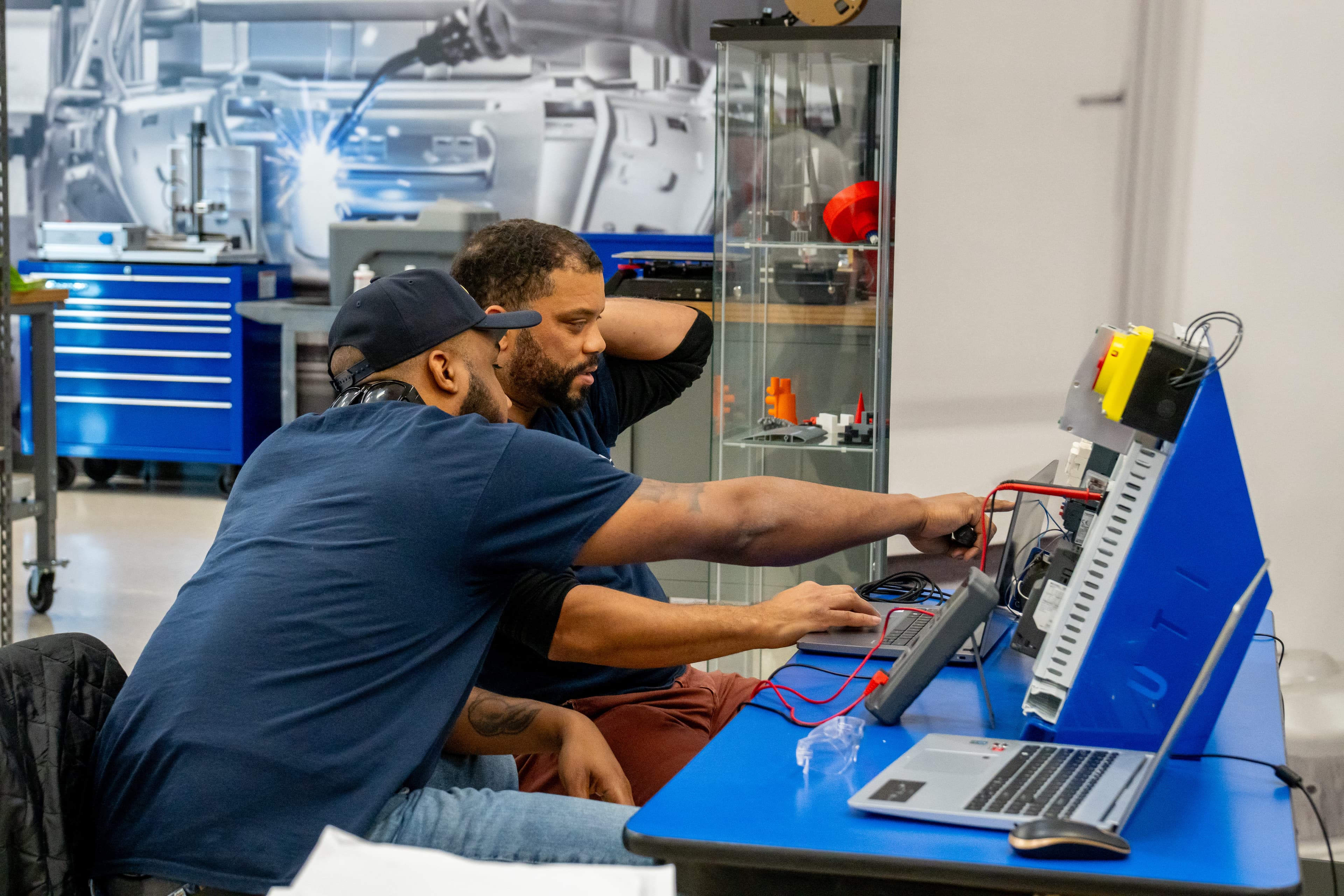
Automation is changing how factories work — and it’s not just about robots.
Behind every robotic arm and conveyor belt is a system that keeps it all connected and running. These are called industrial control systems, and they’re at the center of how modern manufacturing gets done.
If you’re drawn to tech, enjoy working with your hands and want to prepare for a skilled career, this might be the focused path for you. Hands-on training can also teach you how to work with the systems that power today’s production lines, including industrial networking technologies.1
Keep reading to learn what these systems are, how they work and how to pursue a career as an automation technician.

Key Components of Industrial Control Systems
A factory can’t run on guesswork. Industrial control systems help machines talk to each other and respond to changes in real time.
Read: What Is a Programmable Logic Controller?
Sensors and field instruments
Sensors are used to detect what’s happening on the floor. They track temperature, speed, position and other details that machines need to keep things running smoothly. Field instruments help collect and send that data back to the system.
Without this data, automation wouldn’t work. Sensors are often placed in critical points to help keep everything safe and on track.

Actuators and final control devices
Once the industrial networking system knows what’s going on, actuators make changes. For example, they may slow a motor, move a robotic arm or adjust a valve. Final control devices are the parts that make this possible.
In most automated systems, process control systems use both sensors and actuators to make decisions and take action quickly.
How Industrial Networking Improves Production
Modern factories rely on automation to keep up with demand. But it’s not just about speed. It’s about getting things right — again and again.
Real-time monitoring and process feedback
Industrial control systems allow machines to constantly check their own work. If a temperature goes too high or a part is out of place, the system notices and adjusts. Real-time feedback helps reduce downtime and stop problems before they spread.
Read: The 4 Main Types of Automation Explained
System optimization and product consistency
Systems also track patterns over time. That means companies can find small ways to run faster or use fewer materials.
In the long run, it saves money and helps deliver the same high-quality product every time. That’s the power of manufacturing automation.
Common Uses of Industrial Networking in Manufacturing
These systems show up in nearly every industry — especially where safety, timing and accuracy matter.
Read: Application of Robotics: When, Where and How They’re Used
Flow, pressure and temperature control
In a chemical plant or food facility, flow and temperature must stay within tight limits. Control systems manage pumps, valves and heat exchangers to keep things stable. If something starts to go wrong, the system can often do repairs without human help.
Examples of applications in batch and continuous processing
In batch processing, everything happens in steps — like mixing, heating or cooling. In continuous processing, everything runs non-stop. In both cases, systems have to adjust as conditions change. Industrial control systems help coordinate that across multiple machines at once.
Read: Types of Industrial Robots and How They're Used
Industrial Networking Training

Want to work on robotics network systems as a qualified professional? Get hands-on career automation training. Learn by doing so you can prepare for a career in advanced manufacturing.
The Robotics & Automation programs at Universal Technical Institute teach core skills currently needed and used in the field.1 Students also have access to real tools and real robotics network systems and can finish the program in 12-18 months — less than two years, without years of sitting in lectures.
Learn to program control systems
Students get introduced to basic logic, ladder diagrams and human-machine interfaces (HMIs). These skills help them understand how systems are built — and how to spot issues when things go wrong.
They also learn how process control systems fit into larger networks that drive industrial technology.
Read: Your Guide to National Robotics & Automation Certifications
Practice in hands-on labs
Our labs are equipped with industry-aligned tools and technology. From wiring circuits to working with sensors and motors, students can practice their skills on the same technology used in the industry today.
Instructors with years of field experience teach automation classes, where students can build their skills and confidence from the ground up.
Learn Professional Industrial Networking Skills
Want to build things, solve problems and work with automation systems that keep factories running, including industrial networking systems? This could be your next step. Hands-on Robotics & Automation training can be completed in less than two years and helps students pursue entry-level roles as qualified automation technicians.1
Enroll now. If you want more information, call an Admissions Representative at 1-800-834-7308 or request info online.
Universal Technical Institute of Illinois, Inc. is approved by the Division of Private Business and Vocational Schools of the Illinois Board of Higher Education.
Train for the Future
Imagine waking up each day excited to work in a career you’re passionate about – one where your hands-on skills make a real impact. UTI’s vocational trade school can help you gain the skills and confidence to pursue what you love.
