Robotics & Automation
Industrial Control Systems in Manufacturing
Discover how industrial control systems automate manufacturing.
In This Article
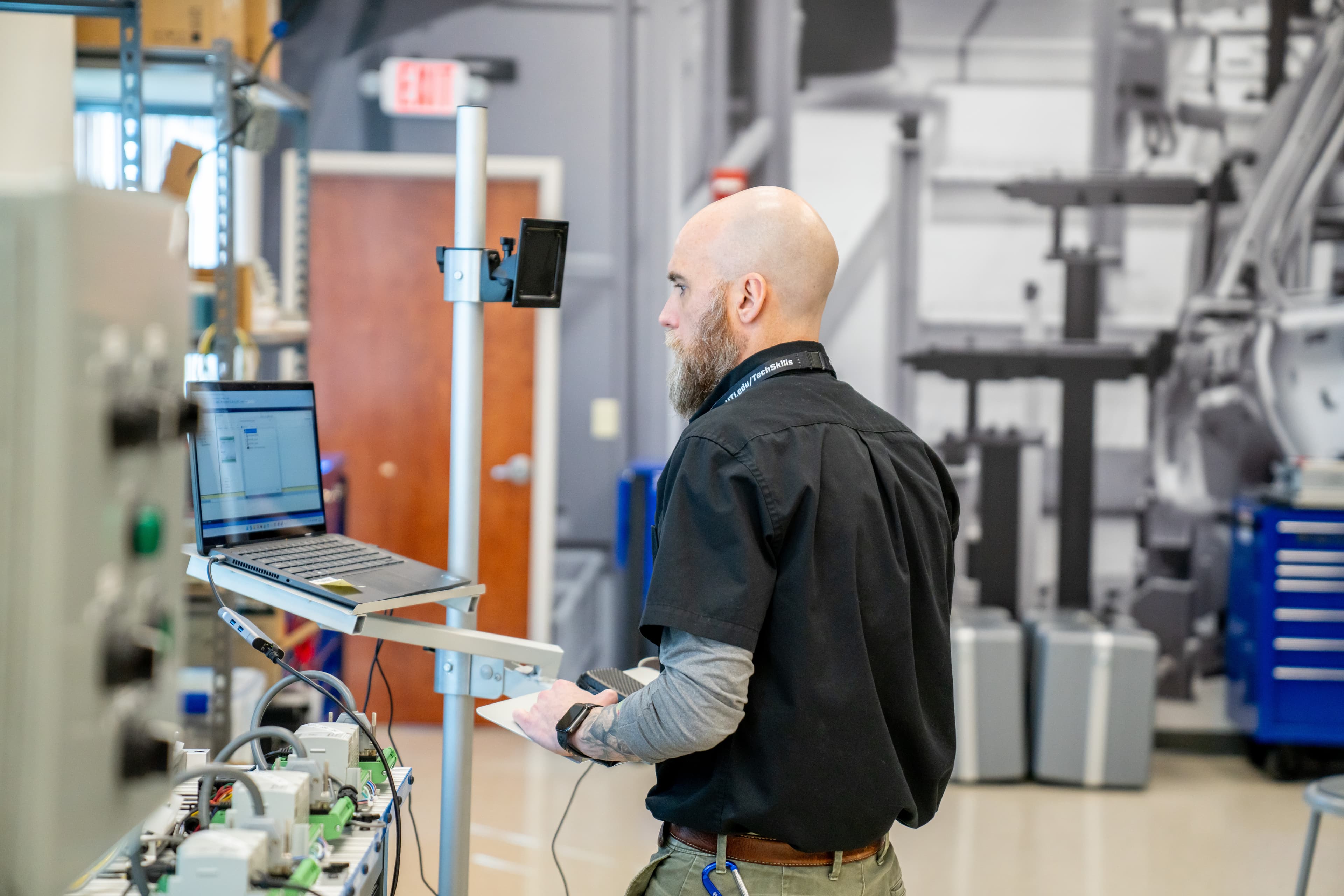
Manufacturing plants today don’t just rely on people to get the job done.
They run on systems — automated, fast and designed to make things work smoothly behind the scenes. That’s where industrial control systems come in.
From robotics to smart sensors, these automated manufacturing systems help keep factories moving with speed and accuracy. Hands-on technical training can help aspiring pros learn the right skills to program automation technology that powers large-scale manufacturing.
In this post, we’ll look at how control systems work, why they’re essential and how you can start learning the skills to join the industry.

Key Components of Industrial Control Systems
Industrial control systems are the brains behind modern manufacturing. They collect data, make decisions and send instructions to equipment — all within milliseconds.
Sensors and field instruments
Sensors track things like temperature, pressure or how fast something is moving. These devices send constant signals to the system so it knows what’s happening on the factory floor.
You can find sensors built into robots, machines and production lines. Without them, the system has no way to respond or adjust.
Actuators and final control devices
Actuators are the muscles. Once a system decides to act, actuators make it happen — opening a valve, stopping a motor or switching a conveyor belt.
These devices work closely with process control systems to make sure every step in production goes as planned.
Read: What Is a Programmable Logic Controller?
How Industrial Control Systems Improve Production
Modern plants rely on these systems to make smart, real-time decisions that improve safety, speed and output.
Real-time monitoring and process feedback
One of the biggest advantages of industrial control systems is that they don’t guess — they know. They monitor equipment 24/7 and send alerts when something’s off. This helps avoid mistakes or breakdowns before they happen.
System optimization and product consistency
Automation means fewer errors and more consistent quality. Manufacturing automation powered by control systems keeps production running at the right pace, with the right results.
Over time, teams can also fine-tune these systems to boost efficiency, reduce waste and cut down on downtime.
Common Uses of Control Systems in Manufacturing

These systems work across a wide range of industries — including automotive, food production, energy and more.
Flow, pressure and temperature control
In most factories, liquids or gases need to be moved safely. Systems control how fast things flow, what pressure they’re under and how hot or cold they get. That’s crucial for safety and product quality.
Real-world applications in batch and continuous processing
Control systems are used for both batch and continuous processes. For example:
- Batch processing: Making a set number of shampoo bottles with exact ingredients.
- Continuous processing: Running a nonstop chemical reaction where flow and pressure must stay stable every second.
In both cases, industrial control systems help keep operations smooth.
Read: Application of Robotics: When, Where and How They’re Used
Industrial Control Systems Training

There’s a demand for skilled techs who can install, program and fix control systems. The 12-18 month Robotics & Automation training at Universal Technical Institute is built to teach core automation skills that align with current industry demand.1
Control systems programming
While enrolled, students can get a foundation in PLC programming, logic gates, ladder diagrams and other control system basics. The program is structured to teach skills that matter in the field.
Read: Types of Industrial Robots and How They're Used
Hands-on labs with real industrial hardware
This isn’t just theory. Hands-on learning gives students the chance to work with real equipment — motors, sensors, relays and programmable logic controllers. The tools you can train with are the same ones used by automation techs in real plants.
Students also explore how process control systems and manufacturing automation come together in smart systems that power today’s industrial operations.

Learn Industrial Control Systems for a Career
Robotics & Automation training can teach industrial control systems servicing skills, which can help you pursue a career working with real technology and help drive production in high-tech industries.1
Enroll now. Still have questions? You can request info online or give an Admissions Representative a call at 1-800-834-7308.
Universal Technical Institute of Illinois, Inc. is approved by the Division of Private Business and Vocational Schools of the Illinois Board of Higher Education.
Train for the Future
Imagine waking up each day excited to work in a career you’re passionate about – one where your hands-on skills make a real impact. UTI’s vocational trade school can help you gain the skills and confidence to pursue what you love.
