Overcurrent protection is one of the most important parts of electrical safety.
Without it, wiring can overheat, equipment can fail, and fires can start. Two of the most common devices used to stop this from happening are fuses and circuit breakers.
Knowing the difference in fuse vs. circuit breaker protection is key for aspiring electrical professionals. Universal Technical Institute provides four programs to help you develop in-demand skills for this field.130
Keep reading to uncover what makes these systems different and how you can build career-ready electrical skills with hands-on training.
What Is a Fuse?

A fuse is a simple device designed to protect electrical circuits from too much current. It contains a thin metal wire or strip that melts when the current goes beyond safe levels.
Once the fuse blows, it breaks the flow of electricity and stops damage to wiring or connected equipment. Because it’s a one-time device, the fuse must be replaced before the circuit can be used again.
Fast-blow, slow-blow and common ratings
Fast-blow fuses react quickly, protecting sensitive electronics from sudden surges. Slow-blow fuses are built to handle short spikes, making them useful for motors that draw high current at startup. Common ratings measure the maximum current a fuse can handle before it fails.
Pros and cons
Pros:
- Simple design that’s inexpensive to manufacture and replace.
- Quick response to sudden overcurrent events.
- Effective protection for sensitive electronics.
- Wide range of types and ratings available.
Cons:
- Must be replaced after each fault, which takes time.
- Can be harder to identify the correct replacement if ratings are unclear.
- Less convenient for frequent faults or testing.
- Not reusable, adding long-term costs in high-fault systems.
Typical Applications
Fuses are often found in low-voltage circuits, electronics and appliances where quick reaction times are critical. They’re also common in vehicles to protect lighting, audio systems, and control modules.
In residential and light commercial systems, fuses may still be used in older panels or specific equipment. Their cost-effectiveness and reliability make them useful, even as circuit breakers have become more standard.
Read: GFCI vs. AFCI: Differences and Uses
What Is a Circuit Breaker?
A circuit breaker is a switch-like device that automatically shuts off electrical flow when it detects too much current. Inside, it uses a mechanical mechanism and either a thermal or magnetic trigger to trip when limits are exceeded.
Unlike fuses, circuit breakers don’t need to be replaced after tripping. They can be reset manually or automatically, making them more convenient for modern systems.
Common circuit breaker types
- Standard breakers: Protect basic lighting and outlet circuits.
- GFCI breakers: Detect ground faults to prevent shock.
- AFCI breakers: Detect arc faults that could cause fires.
- Dual-function breakers: Combine GFCI and AFCI protection in one device.
- Industrial breakers: Larger designs for factories and heavy equipment.
Trip curves
Trip curves show how quickly a breaker reacts at different current levels. Some trip almost instantly, while others allow short surges before opening. Understanding these curves helps technicians choose the right breaker for each application.
Pros and cons
Pros:
- Resettable design saves time and money.
- Covers a wide range of current ratings and applications.
- Advanced types offer protection against multiple hazards.
- Easier to identify and reset after tripping.
Cons:
- Higher upfront cost than fuses.
- More complex design means more parts can fail.
- Larger physical size compared to small fuses.
- May allow short surges that could affect sensitive electronics.
Typical Applications
Circuit breakers are the standard for residential and commercial electrical panels. They protect entire circuits powering outlets, lights, HVAC systems and major appliances.
In industrial settings, breakers are used for motors, pumps and large machinery. Their ability to be reset makes them ideal for environments where uptime matters.
Read: How Electrical Safety Systems Protect Modern Technicians
Fuse vs. Circuit Breaker Systems: Side-by-Side Comparison
So what’s the difference between fuse and circuit breaker in practice?
Advantages
Fuses
- Inexpensive and widely available.
- Extremely fast response to sudden surges.
- Simple design with no moving parts.
- Reliable in sensitive, low-voltage circuits.
Circuit breakers
- Can be reset after tripping instead of replaced.
- Easier to identify and restore after a fault.
- Advanced models offer GFCI or AFCI protection.
- Scalable for residential, commercial or industrial use.
Drawbacks

Fuses
- Must be replaced every time they blow.
- Harder to source exact ratings in the field.
- Can create downtime during replacement.
- Less practical for large-scale or high-fault systems.
Circuit breakers
- Higher upfront cost compared to fuses.
- More complex design with moving parts.
- May allow short surges before tripping.
- Larger size compared to compact fuses.
Common Uses
Fuses
- Residential: Found in older service panels or appliances.
- Commercial: Used in electronics, HVAC controls or backup systems.
- Industrial: Protecting motors, small control circuits or machinery with frequent surges.
Circuit breakers
- Residential: Standard in modern panels for outlets, lights and appliances.
- Commercial: Power distribution for offices, retail and schools.
- Industrial: Heavy equipment, manufacturing systems and large motors.
Read: How To Use a Digital Multimeter
Testing and Troubleshooting
Safe testing and troubleshooting skills are essential for anyone working with electrical systems. Whether it’s fuses or breakers, knowing how to isolate power, test circuits and size protection correctly helps prevent hazards and reduces downtime.
Safe isolation
Fuses
Before removing or testing a fuse, the circuit must be completely de-energized. This prevents accidental contact with live parts and ensures the fuse can be handled safely.
Circuit breakers
Isolation is done by switching the breaker to the “off” position and confirming with a tester. In commercial or industrial environments, a lockout-tagout procedure may be required to keep workers safe.
Inspections
Fuses
A blown fuse may show visible signs such as a broken element, discoloration or burn marks. Visual inspection is often the first step to confirm a suspected failure.
Circuit breakers
Breakers may show wear at the terminals, loose connections or heat damage on the casing. A close inspection helps identify early signs of failure before full replacement is needed.
Continuity checks
Fuses
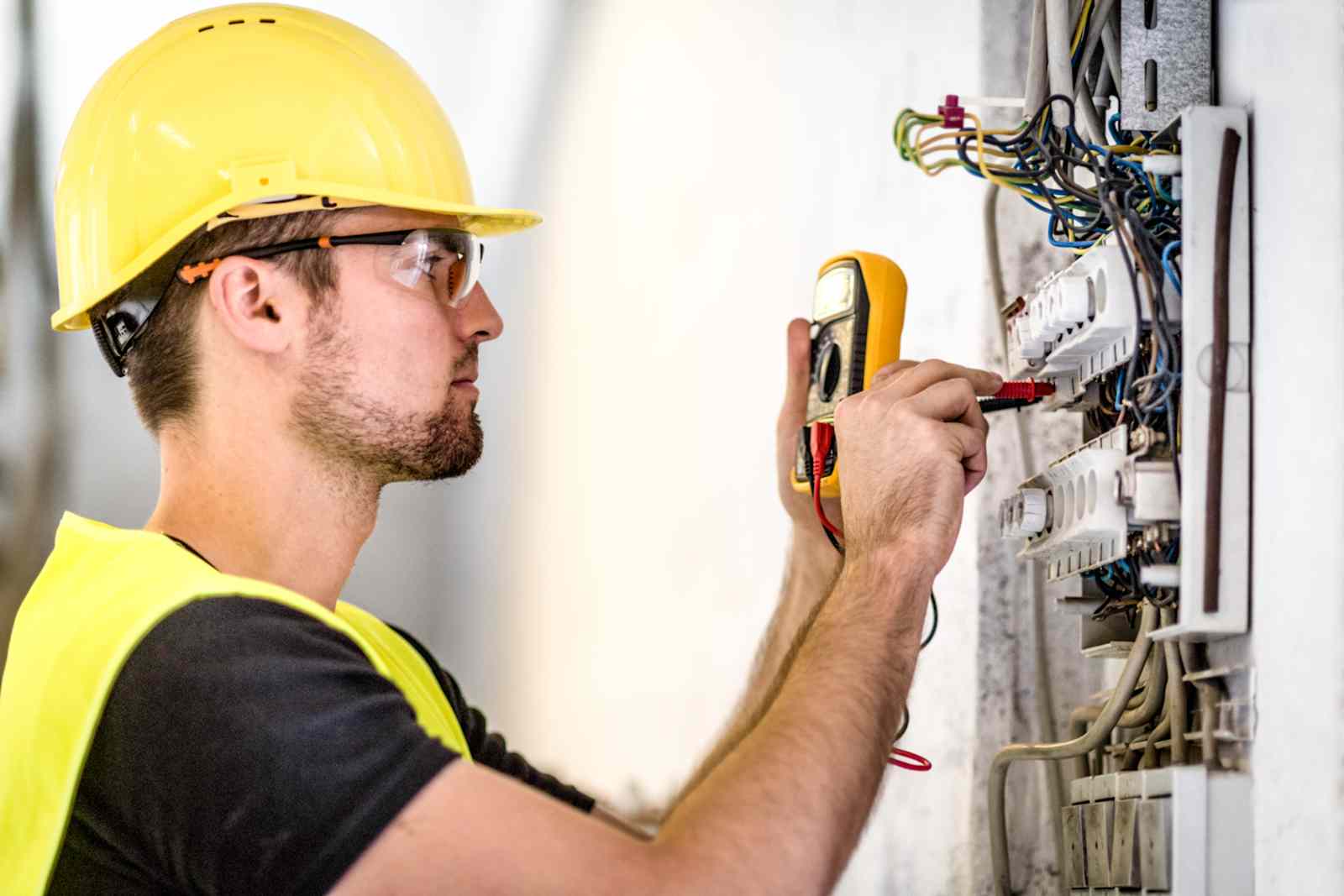
A multimeter set to continuity mode can quickly confirm if a fuse is intact. If the meter shows an open circuit, the fuse has blown and must be replaced.
Circuit breakers
Testing continuity across a breaker verifies whether it is conducting properly when in the “on” position. A failed breaker will show no continuity even when reset.
Nuisance trips
Fuses
Frequent fuse blowouts can point to overloaded circuits, short circuits or the wrong fuse rating being installed. Identifying the cause prevents repeated failures.
Circuit breakers
Breakers that trip often may indicate undersized protection, wiring faults or failing equipment. Recognizing patterns helps narrow down the root problem.
Sizing protection
Fuses
Choosing the right amp rating is critical. A fuse that’s too small will blow under normal operation, while one that’s too large may not protect the circuit in time.
Circuit breakers
Breakers must be sized to handle both the load current and the fault current expected in the system. Correct sizing ensures protection without unnecessary tripping.
Read: Single vs. Three-Phase Power: Differences and Uses
Code Basics Pros Need To Know
Code requirements guide how these devices must be installed and maintained.
NEC guidance, labeling and enclosure requirements
The National Electrical Code (NEC) sets rules for breaker panels, labeling and enclosures. Following these ensures safety and compliance.
When to upgrade or replace
Old fuse boxes are often replaced with modern breaker panels for safety, capacity and convenience. Knowing when to upgrade is key for electrical professionals.
Read: Electrician Technician: 15 Essential Electrician Tools to Have
Learning About Fuse vs. Circuit Breaker Systems
At Universal Technical Institute, you can get hands-on practice with fuses and breakers from any of the four training options — wind energy, robotics and automation, industrial maintenance or electronics — in our electrical training suite. Students wire and test protection devices, learning how they trip and how to troubleshoot them in real time.
Hands-on lab training
At Universal Technical Institute, students train in labs designed to simulate real-world electrical systems. You can get hands-on directly with panels, meters and protection devices so you can apply classroom knowledge in a practical setting.
Building real diagnostic skills
Training goes beyond memorization by teaching you how to diagnose and solve issues under real conditions. These skills help prepare you for entry-level roles where troubleshooting is part of everyday work.130

Read: What’s the Difference Between AC vs. DC?
Train To Learn About Fuse vs. Circuit Breaker Systems!
Wind turbines, industrial technology, electronics, robotics and automation — you’ve got choices for hands-on electrical training, where you can learn a lot more than just the basics of fuse vs. circuit breaker systems.
Want to see how training can fit your career goals? Call an Admissions Representative at 1-800-834-7308 or click the button below. If you’re ready to get started, enroll now.
Universal Technical Institute of Illinois, Inc. is approved by the Division of Private Business and Vocational Schools of the Illinois Board of Higher Education.