
Automotive
OBD2 Codes: A Beginner’s Guide
Learn how to read OBD2 codes with a scanner and what common codes mean. Gain real-world skills through hands-on auto mechanic training.
In This Article
Your car’s check engine light codes don’t have to feel like a mystery.
Today’s vehicles store data that tells you what triggered that warning. Learning how to read OBD2 codes is a core skill for technicians, helping them spot issues quickly and make accurate repairs.
For anyone training to be an auto mechanic, this knowledge is more than convenience — it’s job-critical. Shops expect new hires to handle diagnostics with confidence, not guesswork.
Keep reading to learn what OBD2 is, how to connect a scanner and how automotive training can give you a head start in understanding these codes and developing other key hands-on career skills.
What Is OBD2 and Why It Exists

OBD stands for On-Board Diagnostics. OBD2, the second generation, has been standard on cars and light trucks sold in the U.S. since 1996.
The system was introduced in response to EPA rules. Regulators needed a consistent way to monitor emissions. Automakers responded by designing vehicles with self-checking computers.
That means every OBD2-equipped car can report problems in the same format. Whether you drive a sedan, SUV or pickup, a scanner can read stored OBD2 codes to help technicians diagnose issues.
Read: Wheel Alignment vs. Balancing: What’s the Difference? When Are They Used?
Where To Find the Port and How To Connect
The OBD2 port, called the Data Link Connector (DLC), is usually under the dashboard on the driver’s side. It looks like a trapezoid-shaped plug.
Step 1: Locate the DLC. It may sit near the steering column or behind a small cover panel.
Step 2: Turn the ignition key to the “on” position, but don’t start the engine. This powers the vehicle’s computer.
Step 3: Plug in your OBD2 scanner. Most handheld units or Bluetooth adapters fit directly into the port.
Step 4: Follow the scanner prompts. Some devices automatically connect while others need you to press “Read Codes.”
Step 5: Record the codes shown on the screen. Each will start with a letter followed by numbers.
Read: How Do Supercharger and Turbocharger Engines Differ?
Reading Codes the Right Way
When pulling codes, you may see three types: Stored, pending and history.
- Stored codes are active problems confirmed by the computer and will almost always keep the light on until the issue is fixed.
- Pending codes are potential issues detected once but not yet verified, and may not turn on the check engine light yet.
- History codes are past faults that were cleared but remain in memory, and provide context.
If a vehicle had misfire problems weeks ago, seeing those codes helps technicians piece together the bigger story.
Freeze-frame data and why it helps
Many scanners display “freeze-frame” data. This is a snapshot of conditions — speed, load, temperature — at the moment a code set.
Freeze-frame data helps narrow down why a problem occurred. It gives technicians real-world context, not just fault numbers.
Read: CVT vs. Automatic Transmission: What’s the Difference?
What OBD2 Codes Mean
Codes follow a set structure: A letter plus four digits.
- P-codes: Powertrain (engine and transmission)
- B-codes: Body systems (airbags, climate control)
- C-codes: Chassis (brakes, suspension)
- U-codes: Network communication between modules
Together, these cover most vehicle systems. Knowing the code family helps you know where to start looking.
Generic P0xxx vs. manufacturer-specific P1xxx
Not all codes mean the same thing across brands. Generic codes (P0xxx) follow a universal definition, so a P0300 misfire will mean the same thing on most vehicles.
Manufacturer-specific codes (P1xxx) vary. One brand may use P1234 for a fuel sensor issue while another uses it for ignition timing.
That’s why training emphasizes not just memorizing codes but understanding how to confirm the problem through testing.
Read: How Long Do Car Brakes Last?
Common Code Examples and First Checks
Some codes appear more often than others, including:
- P0300 (Random misfire): May point to worn spark plugs or ignition coils.
- P0171 (System too lean): Often caused by vacuum leaks or dirty mass airflow sensors.
- P0420 (Catalyst efficiency below threshold): Can mean a failing catalytic converter or faulty oxygen sensor.
These don’t always mean parts need replacing right away.
Practical sanity checks before parts replacement
For P0300, checking plug wires and coils first may save unnecessary replacement.
For P0171, spraying carb cleaner around suspected leak points can help confirm vacuum issues.
For P0420, verifying oxygen sensor operation with a scope is smart before replacing an expensive converter.
Systematic testing is the difference between guessing and solving the root cause.
Don’t Just Clear the Light
Many scanners let you erase codes. However, clearing them without repair doesn’t fix the problem.
In some states, a car will fail emissions inspection if codes have recently been cleared. Inspectors know when systems have been reset.
More importantly, clearing codes can hide valuable diagnostic information. Technicians lose freeze-frame data that could point directly to the issue.
Read: What Types of Hands-On Training Do Auto Mechanics Need?
Learn To Read OBD2 Codes Like a Pro

Hands-on labs with scan tools and real drivability cases
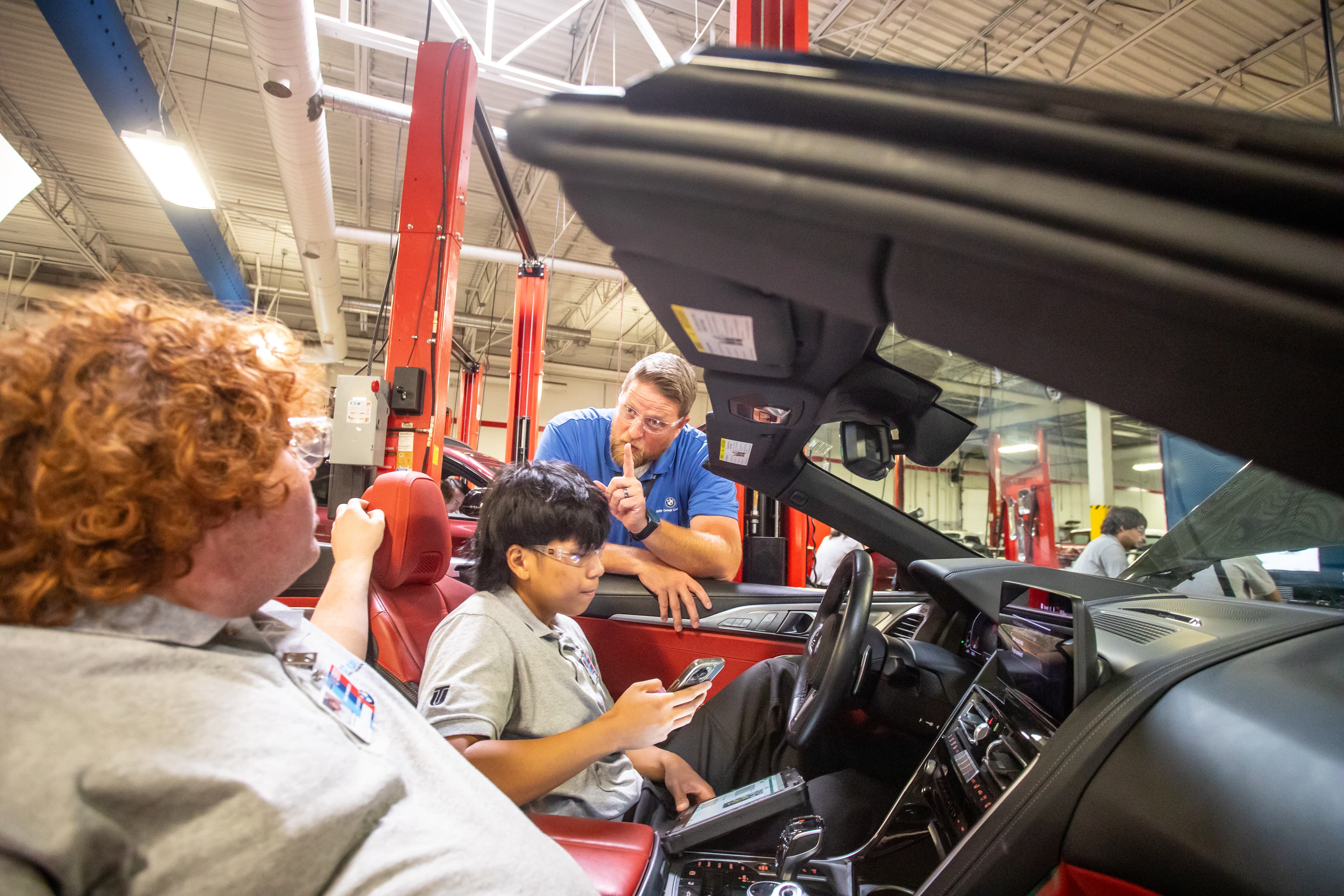
At Universal Technical Institute (UTI), Automotive Technology students train with the same diagnostic tools used in real shops and dealerships. Instructors walk them through real drivability problems so they learn to pull, interpret and confirm codes.
Hands-on labs simulate workplace challenges.18 Instead of reading about problems in a book, students practice finding and fixing them on actual vehicles. This prepares them for the variety of issues they can face on the job, and can help them pursue entry-level roles as auto mechanics with confidence after graduation.1
Learning systematic testing beyond code reading
Code reading is only the start. UTI emphasizes full diagnostic processes, from electrical testing to fuel system analysis. Students learn to combine scan data with hands-on checks, ensuring repairs are accurate and cost-effective.

Learn How To Read OBD2 Codes With Hands-On Training!
Learning how to read OBD2 codes is just one piece of becoming a skilled technician. Gain the practical skills and industry knowledge employers expect from the pros they hire.
If you’re ready to take the first step, talk to an Admissions Representative today at 1-800-834-7308 or click the button below. Enroll now to get started ASAP.
Universal Technical Institute of Illinois, Inc. is approved by the Division of Private Business and Vocational Schools of the Illinois Board of Higher Education.
Train for the Future
Imagine waking up each day excited to work in a career you’re passionate about – one where your hands-on skills make a real impact. UTI’s vocational trade school can help you gain the skills and confidence to pursue what you love.
