For technicians, trust is everything. Customers want proof that the person working on their vehicle has the skills to get the job done right.
That’s where an Automotive Service Excellence (ASE) certification comes in. This credential shows that an auto mechanic has been tested on real-world knowledge and is qualified to diagnose, service and repair cars, SUVs and light-duty trucks up to Class 3.
Earning it sets you apart from those without formal training. It builds confidence, shows commitment to the trade and helps open the door to more career opportunities.
Keep reading to learn the eight areas covered by ASE’s core automotive certification and how you can prepare for testing through Universal Technical Institute’s 51-week Automotive Technology program.1,7
Engine Repair

General engine diagnosis
ASE tests confirm that mechanics can identify engine problems quickly. This includes checking for noises, vibrations or power loss and knowing how to trace the cause with proper tools.
Cylinder head and valve trains
Mechanics must understand how heads, valves and timing components work together. Diagnosis includes checking for leaks, bent valves or damaged lifters that impact performance.
Engine blocks
This section covers repair or replacement of blocks, pistons and crankshafts. Diagnosing cracks, worn bearings or compression loss is critical.
Lubrication
Engines rely on clean, pressurized oil. Mechanics are tested on diagnosing oil leaks, pump failures and clogged passages.
Cooling systems
Cooling protects engines from overheating. Technicians are tested on diagnosing thermostat issues, radiator leaks and failed water pumps.
Fuel, ignition, electrical and exhaust system checkups
Engine repair certification also covers the supporting systems that keep engines running, including:
- Fuel systems: Diagnosing delivery problems, clogged injectors or pump failures.
- Ignition systems: Testing spark plugs, coils and timing signals for accuracy.
- Electrical systems: Verifying wiring, sensors and circuits for proper voltage and continuity.
- Exhaust systems: Identifying leaks, clogged converters or damaged pipes.
Together, these skills ensure a mechanic can assess and repair the full engine system.
Read: How Do Supercharger and Turbocharger Engines Differ?
Automatic Transmission/Transaxle
General transmission/transaxle
This section covers identifying gear-shifting problems, fluid leaks and electrical faults in modern automatic systems.
Upkeep of in-vehicle transmission/transaxle
Technicians must know how to service transmissions still mounted in the vehicle, including fluid service, solenoid checks and valve body testing.
Off-vehicle transmission/transaxle repair
More advanced tasks include rebuilding units removed from the vehicle. Mechanics must handle disassembly, inspection and reassembly to spec.
Read: CVT vs. Automatic Transmission: What’s the Difference?
Manual Drive Train & Axles
Clutch
Testing includes diagnosing slipping, dragging or noise issues, then performing repairs like replacement or adjustment.
Transmission
Mechanics are expected to find and fix grinding, gear slipping or bearing wear.
Transaxle
ASE testing covers the diagnosis of noises, leaks or worn gears specific to front-wheel-drive vehicles.
Drive shaft/half-shaft
Tests include identifying vibration or clicking noises caused by worn joints or shafts.
Four-wheel drive
Mechanics must diagnose transfer case issues and ensure proper function of 4WD systems.
All-wheel drive
This includes diagnosing couplings, viscous units or differentials unique to AWD designs.
Read: What Types of Hands-On Training Do Auto Mechanics Need?
Suspension & Steering

Suspension and related components
Tests cover diagnosing worn shocks, struts or bushings that cause poor handling or noise.
Steering services
Mechanics are expected to identify problems in racks, pumps and linkages, including leaks or excessive play.
Wheel alignment
Technicians are tested on adjusting camber, caster and toe. Skills ensure straight tracking and even tire wear.
Read: What to Expect From Auto Mechanic School
Brakes

ASE certification includes diagnosing hydraulic, power assist and parking brake systems.
It also covers the service of drum, disc and electronic brake systems. This includes identifying leaks, worn pads or electronic module issues, then completing the repair safely.
Read: How Long Do Car Brakes Last?
Electrical/Electronic Systems
Diagnosis
General electrical/electronic systems
Technicians must trace issues in wiring, fuses, relays and control modules.
Repair
Battery
Covers testing, charging and replacement when batteries fail to hold power.
Starting systems
Tests include diagnosing starter motor failures or wiring faults that prevent cranking.
Charging systems
Mechanics confirm alternator function and check for voltage drops.
Lighting systems
This includes diagnosing headlights, taillights and signals for wiring or bulb issues.
Instrument cluster & driver information systems
Mechanics learn to test gauges and displays for accuracy and proper communication with modules.
Body electrical systems
This includes diagnosing power windows, locks and accessory circuits.
Read: Common Car Electrical Problems
Heating & Air Conditioning
ASE certification includes diagnosing refrigerant leaks, compressor issues or electrical faults. Mechanics must also understand cabin airflow, blend doors and electronic climate controls. Repair skills include evacuating and recharging systems, replacing faulty parts and verifying pressure balance.
Read: OBD2 Codes: A Beginner’s Guide
Engine Performance

Ignition
Technicians diagnose weak spark, incorrect timing or module failures.
Fuel
This covers fuel pressure, injector operation and diagnosing lean or rich conditions.
Air
Mechanics test airflow sensors, intake leaks and filters.
Induction and exhaust systems
Tests include diagnosing clogged catalytic converters, exhaust leaks or intake restrictions.
Emissions control systems
Mechanics confirm the operation of EGR valves, oxygen sensors and evaporative controls.
Computerized engine controls
This section covers scan tool diagnosis of sensors, actuators and control modules.
Read: Does a Car Air Conditioner Burn More Fuel
Get ASE Certification Prep With Hands-On Training
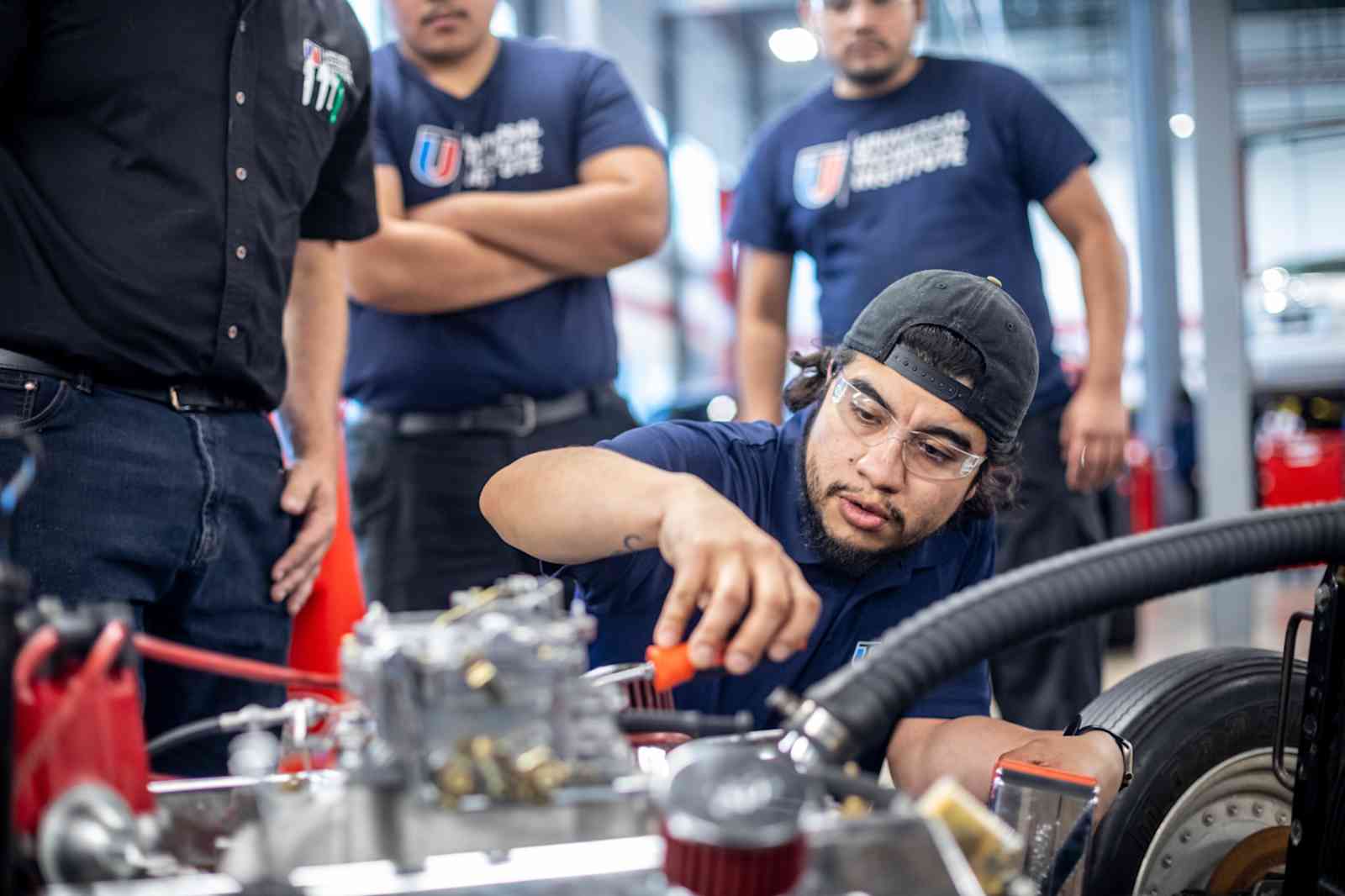
Preparing for ASE certification requires more than reading a book. Hands-on training at Universal Technical Institute helps you build the skills that employers expect and prepares graduates for certification exams.18
If you’re ready to start, connect with an Admissions Representative at 1-800-834-7308 or click the button below. Or enroll now to start training ASAP.
Universal Technical Institute of Illinois, Inc. is approved by the Division of Private Business and Vocational Schools of the Illinois Board of Higher Education.