
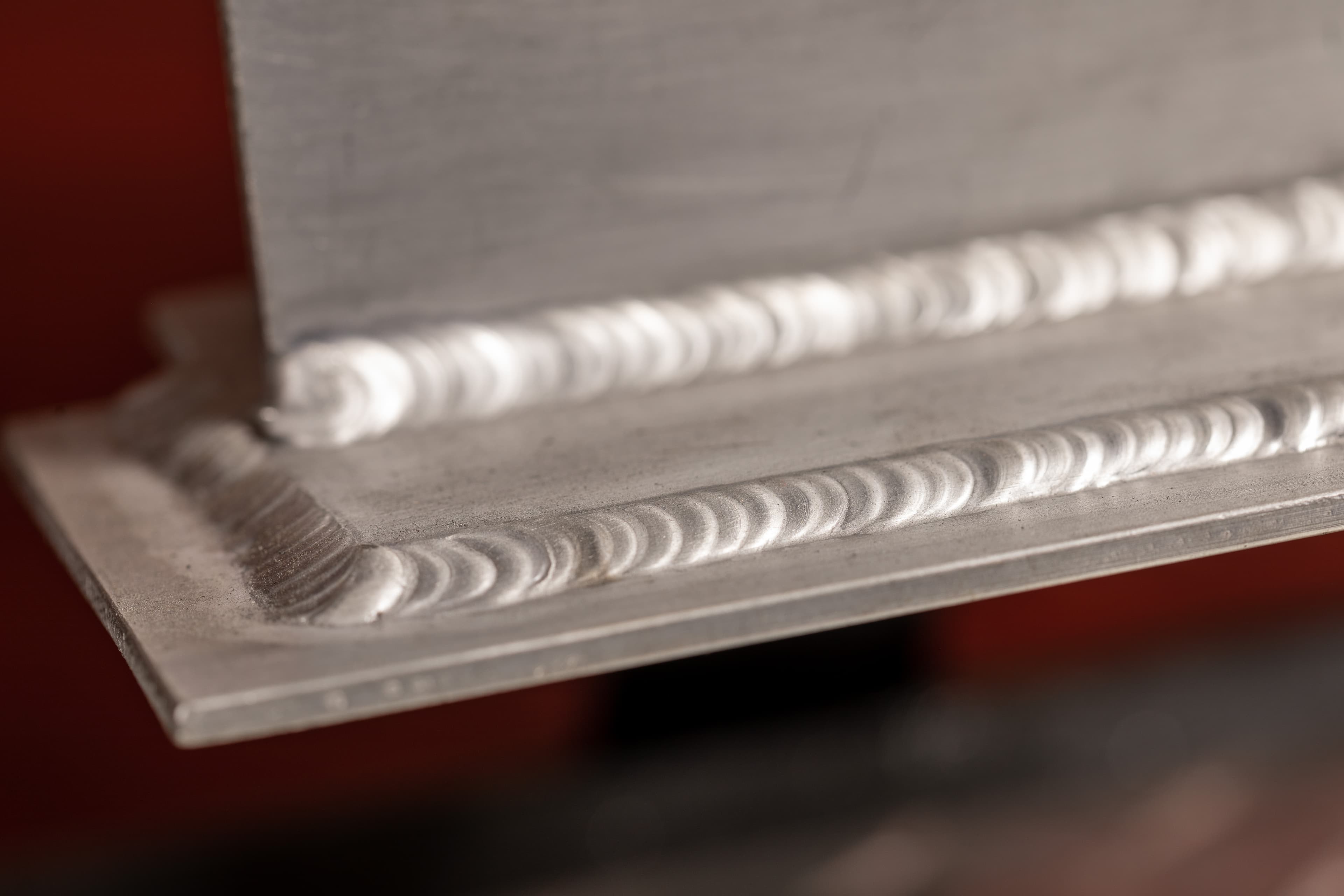
Metallurgy might sound like a complex science, but for welders, it’s an essential foundation. Understanding how metals behave under heat and stress can help you create stronger, more reliable welds — and avoid costly mistakes.
Have you ever seen a weld crack or warp after cooling? That’s metallurgy at work. By learning why metals react the way they do, welders can prevent defects, improve quality and build welds that hold up under real-world demands.
Whether you’re a high school student, a military veteran exploring a civilian career or someone looking to change careers, learning the basics of welding metallurgy can give you an edge as you begin training. In this guide, we’ll cover the key concepts, alloys and techniques every beginner welder should know.
Thinking about welding school? UTI’s Welding Technology program offers hands-on training designed to help you prepare for a career in the industry.1
What is Metallurgy in Welding?
Metallurgy is the science of metals — studying their properties, structures and reactions to heat and stress. In welding, metallurgy helps explain how different metals respond when fused together.
From preventing cracks to controlling distortion, metallurgical knowledge gives welders the ability to anticipate challenges and adjust techniques for cleaner, safer welds.
7 Important Welding Metallurgy Terms to Know
Base metal
The primary material being welded. Its composition influences everything from heat requirements to filler material selection.
Fusion zone (FZ)
The area where the base metal melts and fuses with filler material, forming the actual weld.
Heat-affected zone (HAZ)
The portion of the base metal near the weld doesn’t fully melt but undergoes structural changes due to heat exposure.
Grain structure
The microscopic arrangement of crystals in metal. Grain size can influence strength, toughness and ductility. Ductility is a material’s ability to stretch, bend or deform under stress without breaking.
Phase transformation
Changes in a metal’s crystal structure when it’s heated or cooled — critical for predicting hardness and brittleness.
Microstructures
The fine details of grain and phase arrangements are visible under a microscope. These reveal how a weld will perform under stress.
Recrystallization
The process where new grains form in a heated metal, often relieving internal stresses caused by welding.
Metal Microstructures: Predicting Metal Behavior
Welders don’t need to be scientists, but knowing how metals behave at the microscopic level is valuable. Grains, phases and crystal structures all determine how a weld will hold up.
Grains
Small, crystalline regions that make up metal. Fine grains generally increase strength, while coarse grains may reduce toughness.
Phases
Distinct forms metals can take depending on temperature or composition. For example, steel changes phases as it heats and cools, which impacts hardness.
Crystal structures
The geometric arrangement of atoms inside metal. Structures like body-centered cubic (BCC) or face-centered cubic (FCC) explain why some metals are more ductile or resistant to cracking.
4 Common Welding Alloys
Different alloys have unique properties that affect welding techniques and outcomes.
Steel
Strong, versatile and widely used. Steel is weldable but prone to distortion and cracking if not preheated or cooled properly.
Stainless steel
Corrosion-resistant with a clean finish. However, it has high thermal expansion, making it prone to warping during welding.
Copper
Excellent thermal and electrical conductivity. Copper requires higher heat input, and rapid cooling can make it prone to cracking.
Aluminum
Lightweight with high conductivity. Heats and cools quickly, making it easy to distort but also ideal for projects needing low weight.
Common Metallurgical Weld Defects
Even skilled welders can run into metallurgical defects if they don’t account for metal behavior.
Cracks
Caused by excessive stress or poor cooling rates. Can weaken weld integrity.
Distortion
Occurs when uneven heating and cooling cause warping in the base metal.
Porosity
Gas pockets form in the weld, often from contamination or improper shielding.
Oxidation
Surface contamination caused by exposure to oxygen at high temperatures, leading to weaker welds.
Insufficient penetration
When the weld doesn’t reach deep enough into the base metal, reducing strength.
Welding Techniques and Their Effects on Metallurgy
Different welding processes influence metals in unique ways.
TIG welding
Uses low heat input and offers precise control — ideal for thin metals and reducing distortion.
MIG welding
Provides high deposition rates with more heat input, which can increase distortion but allows faster production.
Shielded metal arc welding (SMAW)
Common and versatile. Produces strong welds but requires careful technique to avoid defects like porosity or cracking.
Flux-cored arc welding (FCAW)
Similar to MIG but uses a tubular wire filled with flux. It’s efficient for thicker materials and outdoor environments, though it can produce more spatter.
If you’re thinking about welding as a career, it helps to do more than just study the process — you’ll want real practice. At UTI, you don’t just learn about TIG, MIG, SMAW and FCAW, you actually run the torch.1 The welding courses walk you through how heat affects metal and how to keep your welds strong, clean and ready for real jobs.
Heat Up Your Welding Skills with UTI
Understanding metallurgy is just one part of becoming a skilled welder. With training, practice and guidance from experienced instructors, you can turn this knowledge into real-world career skills.
Employers value welders who understand metallurgy because that knowledge can be used to ensure weld quality, safety and compliance with industry codes. In fact, concepts like heat-affected zones and weld defects often come up in certification testing through organizations like the American Welding Society (AWS).
At Universal Technical Institute, you’ll get hands-on training in industry-standard labs, learning how metals respond under different conditions and how to adjust your technique for quality results.
Ready to get started? Fill out an application today and begin building your future in welding.
Sources
Universal Technical Institute of Illinois, Inc. is approved by the Division of Private Business and Vocational Schools of the Illinois Board of Higher Education.