
Welding
How To Choose a Welding School: 8 Key Factors
Compare welding trade school programs, including UTI, by hands-on training, welding processes, equipment, credentials, cost, financial aid and career support.
In This Article
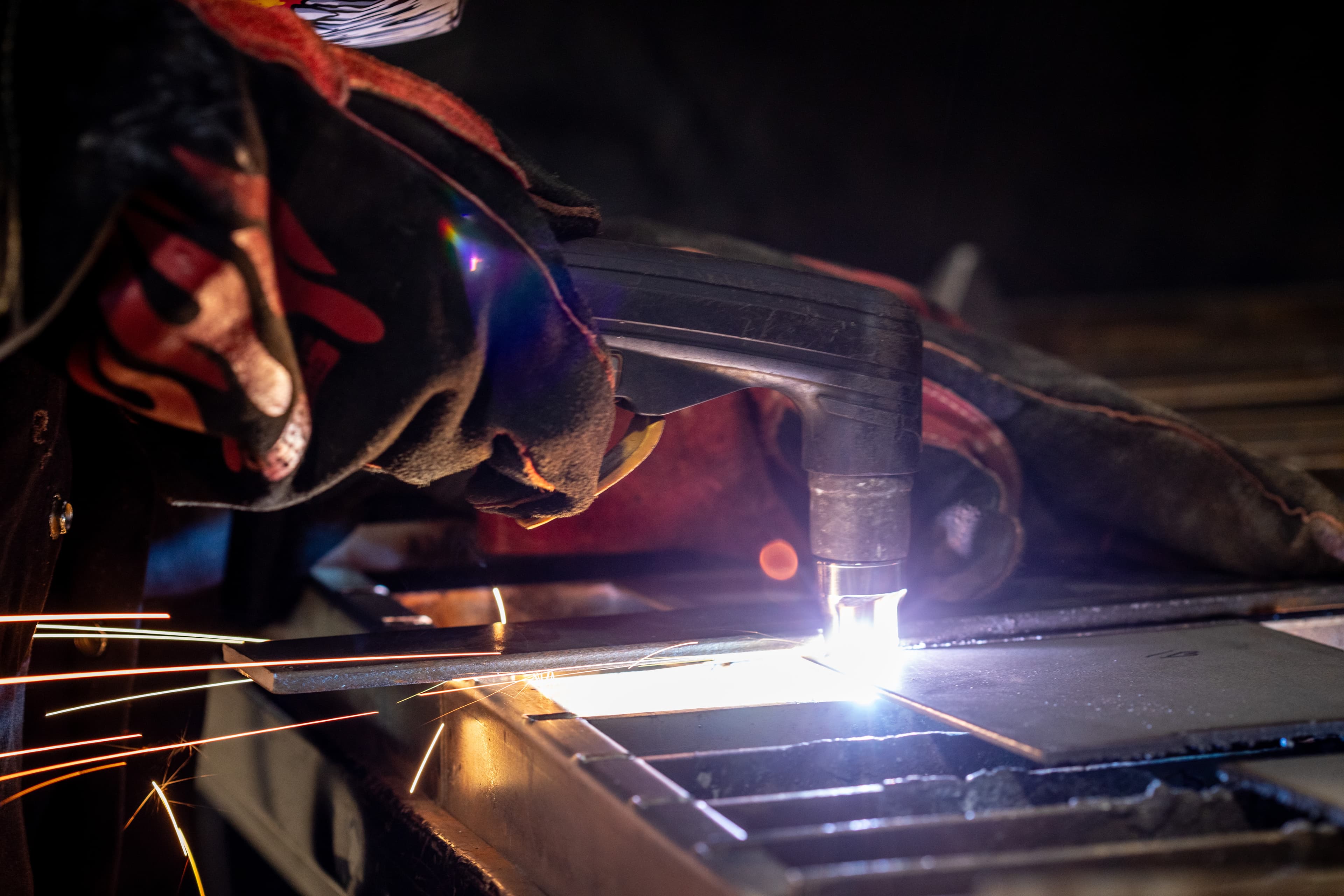
When comparing welding trade school programs, look past the price tag.
Check the details that shape the training: Academic credentials offered, certification preparation, welding processes covered, hands-on lab time, equipment and safety practices, schedule, total cost, campus availability, and student and career support. The best program is the one whose verified details match your training goals, budget and circumstances — not necessarily the school making the biggest claims.
Universal Technical Institute (UTI) offers a Welding Technology program that prospective students can evaluate using those same criteria. A consistent framework makes it easier to see what each program teaches, what it may cost and which support services come with it.
Explore the eight factors below to compare welding schools through one consistent framework.
1. School Accreditation, Authorization and Certification Preparation
School accreditation, state authorization and individual welding certification describe different things. Institutional accreditation applies to the school and indicates that an accrediting organization has evaluated it.
State authorization or licensing concerns whether the institution may operate in a particular jurisdiction. Institutional accreditation and state authorization are not interchangeable, so prospective students should verify the exact institution, campus and credential each one covers.
Individual welding certification answers a different question: Can the welder produce a weld that meets a particular procedure, code or standard? The American Welding Society (AWS) Certified Welder program is performance-based. It has no formal education prerequisite, and candidates must pass the applicable welding test through an AWS Accredited Test Facility (ATF).
Training program completion is not welding certification. Before enrolling in a welding school, ask which qualification or certification tests the curriculum prepares students to pursue after graduating, whether the testing itself is included and which organization issues the credential.
Read: Welding Certifications Explained: What’s Needed and When
2. Welding Processes Covered in the Program
Review which welding processes students learn and practice, how much training each process receives, and which materials and welding positions are covered.
Four processes commonly found in welding training are:
- Gas metal arc welding (GMAW), also called metal inert gas (MIG) welding.
- Shielded metal arc welding (SMAW), commonly called stick welding.
- Flux-cored arc welding (FCAW).
- Gas tungsten arc welding (GTAW), also called tungsten inert gas (TIG) welding.
Related welding coursework matters too. A curriculum may cover safety, blueprint reading, welding symbols, measurement, fabrication and thermal cutting. Ask how those subjects connect to the training students complete in the lab.
More process names are not automatically better. A focused curriculum can make sense when it matches a student’s intended application.
Broader training may fit someone who has not chosen a specialization. Curriculum relevance matters more than the total number of processes listed.
3. Hands-On Welding Practice
Published classroom and lab hours provide a concrete starting point for evaluating hands-on training. Ask how students use that lab time.
Find out how welding booths are assigned, how often instructors provide feedback, which joints and positions students practice, and whether additional lab time is available. Booth access and equipment sharing can shape the experience even when two programs publish similar totals.
Total lab hours matter, but they do not describe the complete training experience. No single lab-hour total identifies the right program, so compare both the amount and structure of the practice.
Read: 6 Common Welding Mistakes Every Welding Student Should Avoid
4. Equipment, Facilities and Safety Practices
During a campus tour, focus on the equipment and facilities students regularly use.
Check the condition and availability of welding machines, booths, cutting tools, fabrication equipment and material-preparation areas. Depending on the program, the lab may also include pipe stations, plasma cutters or virtual welding systems. Ask which equipment is used regularly in class and whether students share access.
Safety should be just as important as the equipment. Ask how the curriculum addresses ventilation, fire prevention, electrical hazards and personal protective equipment (PPE). The school should also explain which protective items and consumable materials it supplies and which ones students must purchase.
Compare what you see and hear with current Occupational Safety and Health Administration (OSHA) guidance for welding, cutting and brazing. The school should be able to explain its safety instruction, procedures and equipment clearly.
Read: Welding PPE: 10 Essential Items Every Welder Needs
5. Program Length and Scheduling Options
Program length should be considered alongside the weekly class and lab schedule. The time commitment determines whether the program can work for you in real life.
Compare the total weeks or months, class and lab hours per week, day or evening options, start dates, and attendance policies. Ask whether breaks, holidays or campus-specific schedules affect the stated timeline.
A shorter program is not automatically better. Concentrated training may work well for one student and conflict with work, transportation or family responsibilities for another. Verify that the advertised duration applies to the campus and schedule you are considering.
6. Program Cost and Financial Aid
Tuition is the headline number. It is not the whole welding-school budget.
A complete estimate may need to include:
- Registration, lab or technology fees.
- Books and course materials.
- Welding tools and PPE.
- Consumable materials.
- Certification or qualification testing.
- Transportation, housing and other living expenses.
Request a current, itemized estimate and ask which costs are already included. Then compare scholarships, grants, federal student loans, employer programs, military education benefits or payment options that you may qualify for.
Eligibility and award amounts vary, so calculate the remaining balance using confirmed financial aid qualified for rather than possible awards.10
7. Campus Availability, Location and Transportation
A nearby campus only helps if it offers the program and schedule you need.
Verify the welding program, academic credential earned, class times and start dates available at the specific location before comparing commutes or relocation options. A general program page may not reflect every campus difference.
Transportation, parking and housing can also help decide whether a schedule is realistic. Students considering a move should ask whether housing assistance is available and whether courses, equipment or start dates vary by location. Use current campus information, not distance alone.
Explore: UTI’s Housing Assistance
8. Career Services, Student Support and Outcome Disclosures
Career services can strengthen a job search. They cannot guarantee the result.
Compare academic tutoring, instructor access, résumé assistance, interview preparation, employer events, job-search resources and any services available during school and after graduation. Ask when support begins, what it includes and how long graduates may use it.
Employer relationships deserve the same close consideration. Find out what the school actually provides and where it publishes completion or employment information. Distinguishing career assistance from employment outcomes helps evaluate the available support accurately.
Explore: UTI’s Career Services
Welding School Comparison Checklist
Use the same comparison criteria for every school and record the source and date of each answer. This keeps an appealing claim from one program from outweighing missing information elsewhere.
Factor | What to compare | Question to ask |
School accreditation, authorization and certification preparation | Accreditation, authorization, program academic credential offered and testing preparation | What credential will I receive upon completion, and which certification or qualification tests does the program prepare students to pursue? |
Welding processes | Processes, materials, positions and related coursework | Which welding processes will I personally learn? |
Hands-on training | Published lab hours, booth access and instructor feedback | How much of the program is spent in the lab, and how is that time structured? |
Equipment and safety | Machines, booths, cutting tools, PPE and safety instruction | Which equipment will I use, and what must I provide? |
Length and schedule | Duration, weekly commitment, class times and start dates | Which schedule options are currently available at this campus? |
Cost and financial aid | Tuition, fees, supplies, testing and possible assistance for those who qualify | What is the estimated total cost beyond tuition? |
Campus availability, location and transportation | Program availability, commute, housing and campus access | Is the complete program offered at this location? |
Career services, student support and outcome disclosures | Academic help, job-search services and outcome information | What support is available during training and after graduation? |
The checklist is not designed to produce one universal winner. It determines which program lines up most closely with the priorities you established before the search began.
Read: From UTI Grad to Welding Pro: Dagan Carpenter’s Journey
Questions To Ask Before Enrolling in Welding School
A catalog can answer many initial questions, while a campus tour or conversation with school representatives can clarify campus-specific details.
Ask questions that may require campus-specific confirmation, such as:
- How are welding booths assigned, and how much time does each student typically spend welding during a lab session?
- Is open or additional lab time available, and under what conditions?
- Which days, times and start dates are currently offered at this campus?
- Are certification or qualification testing fees included? If not, who arranges the test and what does it cost?
- Which tools, consumable materials and personal protective equipment must students purchase?
- May prospective students observe an active lab, and which safety requirements apply during a tour?
- When does career services support begin, what does it include and how long may graduates use it?
- Which curriculum, equipment or scheduling details vary by location?
Bring the comparison checklist and record each answer. Request current curriculum, schedule and cost documents while on campus. If a detail affects the timeline or budget, get it in writing before making an enrollment decision.
Welding Training at Universal Technical Institute (UTI)
UTI’s Welding Technology program lasts 36 weeks and is made up of 900 total hours, including 501 classroom hours and 399 lab hours.
Developed with Lincoln Electric, the curriculum covers gas metal arc welding (GMAW), shielded metal arc welding (SMAW), flux-cored arc welding (FCAW) and gas tungsten arc welding (GTAW). Students also train in areas such as safety, engineering and fabrication, pipe welding, and welding applications. Program length, exact courses and availability may vary by campus.
The program is designed to prepare students for entry-level welding roles after graduation.1 It also helps students prepare for relevant industry welding tests or American Welding Society certifications. UTI is institutionally accredited by the Accrediting Commission of Career Schools and Colleges (ACCSC), which is recognized by the U.S. Department of Education as an institutional accrediting agency. Before deciding on attending, review the current Welding Technology catalog, UTI accreditation and licensing information, welding school locations and the UTI Cost of Attendance tool for the location you are considering.
Financial aid, scholarships and grants are available to those who qualify.10 UTI also provides career services support, including help with résumés, interview preparation and job searches, although employment cannot be guaranteed.
Explore: UTI’s Scholarships & Grants
FAQ on How To Choose a Welding School
Does welding school include certification testing?
Not always. Preparation, testing and certification are separate steps. While graduates of Universal Technical Institute’s (UTI) Welding Technology program have the skills and knowledge needed for relevant industry welding tests or American Welding Society (AWS) certifications, program completion does not automatically make a graduate an AWS Certified Welder.1 Confirm which tests a program’s curriculum addresses, where testing occurs and whether registration or testing fees are included.
What if a program does not teach every welding process?
More processes do not automatically make a stronger program. Focus on whether the curriculum covers the processes, materials and positions that match your career goals.
UTI’s Welding Technology curriculum covers gas metal arc welding (GMAW), shielded metal arc welding (SMAW), flux-cored arc welding (FCAW), gas tungsten arc welding (GTAW), along with areas such as safety, fabrication, pipe welding and welding applications. Exact courses, equipment and program availability may vary by campus.
How can I verify a school’s accreditation?
Start with the institution’s current information, then verify the accreditor. UTI is accredited by the Accrediting Commission of Career Schools and Colleges (ACCSC). Prospective students can review UTI accreditation and licensing information and confirm the accreditor through the U.S. Department of Education’s accreditation database. Institutional accreditation is separate from individual welding certification.
How long is UTI’s Welding Technology program?
UTI’s Welding Technology program lasts 36 weeks and 900 total hours, including 501 classroom hours and 399 lab hours. Program length, courses, schedule and availability may vary by location. Verify the current timeline and start dates for the campus you are considering.
What career services does UTI offer welding students and graduates?
UTI’s career services support includes help with résumés, interview preparation and job searches. Employment is not guaranteed. To learn more, ask which specific services are available, when support begins and how long graduates may continue using them.
Get Welding Career Skills at UTI
A welding program has to work in the lab and in your life. The curriculum, hands-on hours, schedule, campus, cost and support all need to hold up when you compare the details.
Get the campus-specific facts. Request information about the current availability, pricing, and next steps for the UTI Welding Technology program online or by calling 1-800-834-7308.
Ready to move forward? Apply now.
Universal Technical Institute of Illinois, Inc. is approved by the Division of Private Business and Vocational Schools of the Illinois Board of Higher Education.
Train for the Future
Imagine waking up each day excited to work in a career you’re passionate about – one where your hands-on skills make a real impact. UTI’s vocational trade school can help you gain the skills and confidence to pursue what you love.
