
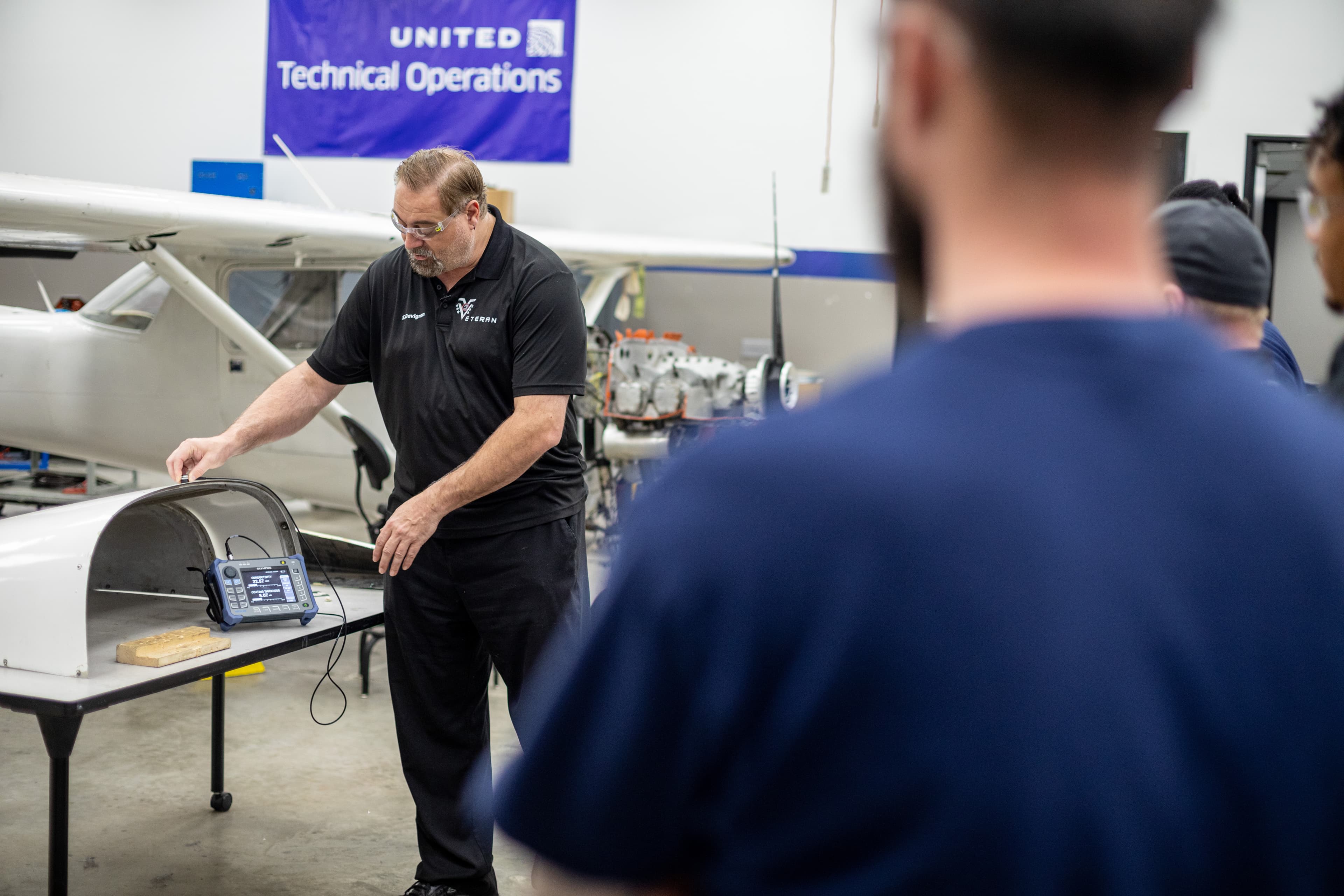
Non-destructive testing (NDT) helps keep critical systems safe by finding problems before they turn into failures. NDT technicians inspect pipelines, power plants, aircraft and bridges to identify cracks, corrosion and other issues that aren’t visible on the surface.
If you’re exploring NDT training, it’s important to understand how this education can prepare you for high-risk environments where accuracy, safety and accountability matter every day.
Programs like the non-destructive testing training offered at Universal Technical Institute (UTI) introduce students to industry-relevant inspection methods, safety practices and documentation standards used in real-world settings.1
Below, we break down how non-destructive testing training helps build the technical skills, safety awareness and confidence needed to work in high-risk industries after graduation.
Key Points:
- NDT technicians play a critical safety role in industries where equipment failure can impact lives, infrastructure and the environment.
- NDT training emphasizes safety culture, including hazard awareness, PPE, documentation and strict procedures.
- Non-destructive testing training covers multiple inspection methods, each used in high-risk environments like energy, aerospace and construction.
- Hands-on training helps students adapt inspection methods to real-world materials, job sites and conditions.
- Communication, teamwork and attention to detail are essential skills developed during NDT training.
- Employers in high-risk industries value formal NDT training because of its focus on accuracy, consistency and regulatory awareness.
Why High-Risk Industries Rely on NDT
High-risk industries such as oil and gas, power generation, aerospace, rail, marine and heavy construction depend on equipment and structures that must perform safely under extreme conditions. Failures in these sectors can lead to serious safety hazards, environmental damage and major economic impact.
Non-destructive testing allows inspections to be performed without damaging components, helping organizations detect issues like cracks, corrosion, weld defects or material inconsistencies early. By identifying problems before they escalate, NDT technicians support:
- Worker and public safety.
- Asset reliability and longevity.
- Compliance with regulatory and industry standards.
Because of this responsibility, employers often look for technicians who have completed focused NDT training and understand both inspection techniques and the environments in which they’re applied.
Safety Culture and Standards You Learn in NDT Training
A strong safety culture is foundational to non-destructive testing training. Students are introduced to many of the same safety practices used in high-risk workplaces, including:
- Personal protective equipment (PPE) requirements.
- Hazard recognition and job-site awareness.
- Lockout/tagout concepts and safe work zones.
- Working around heavy equipment, elevated structures and hazardous materials.
NDT training also emphasizes the importance of codes, standards and written procedures. Inspections in regulated industries must follow precise steps and documentation requirements, leaving little room for error or interpretation.
By learning how to follow procedures, document findings accurately and work within established standards, students can develop habits that translate directly to real-world inspection sites such as refineries, manufacturing plants and large construction projects.
How NDT Methods Apply to High-Risk Environments
Non-destructive testing training typically covers a range of inspection methods, each used in different high-risk applications:
- Visual testing (VT): Identifying surface-level issues in structures, welds and components.
- Liquid penetrant testing (PT): Detecting surface cracks in metals and non-porous materials.
- Magnetic particle testing (MT): Finding surface and near-surface defects in ferromagnetic materials.
- Ultrasonic testing (UT): Locating internal flaws in pipelines, pressure vessels and structural components.
- Radiographic testing (RT): Using X-ray or gamma ray methods to inspect welds and internal structures.
In training, students learn both the theory behind each method and how to operate inspection equipment in hands-on lab settings. This combination helps aspiring technicians understand how inspection techniques adapt to different materials, environments and safety requirements they would encounter on the job.
For those interested in training in Texas, explore UTI’s NDT training in Houston.
Building Confidence To Work in Demanding Environments
High-risk industries often involve challenging conditions — working at heights, in confined spaces, outdoors in changing weather, or on rotating shifts. NDT training helps students prepare for these realities by reinforcing discipline, situational awareness and adherence to safety protocols.
Beyond technical skills, students can also develop professional competencies that matter on job sites, such as:
- Clear communication with supervisors and team members.
- Attention to detail when recording inspection results.
- Following the chain of command and site-specific rules.
- Working as part of coordinated inspection and maintenance teams.
This blend of technical knowledge, safety awareness and soft skills can help new technicians feel more prepared to take on responsibility and contribute effectively in critical inspection roles.
Start Building Your Future as an NDT Technician With UTI
NDT training at UTI focuses on building inspection skills, safety awareness and documentation habits used in high-risk industries. The program emphasizes hands-on learning and real-world application to help students prepare for the field.
If you’re considering non-destructive testing, whether you’re starting out, changing careers or transitioning from the military, an Admissions Representative can help you explore next steps, including financial aid and military benefits for those who qualify.10, 20
Take the next step toward training for an NDT career and enroll today!
Sources
Universal Technical Institute of Illinois, Inc. is approved by the Division of Private Business and Vocational Schools of the Illinois Board of Higher Education.