
NDT
A Day in the Life of an NDT Technician
Explore a day in the life of an NDT technician, from safety briefings to inspections and reporting, and see if NDT training is right for you.
In This Article
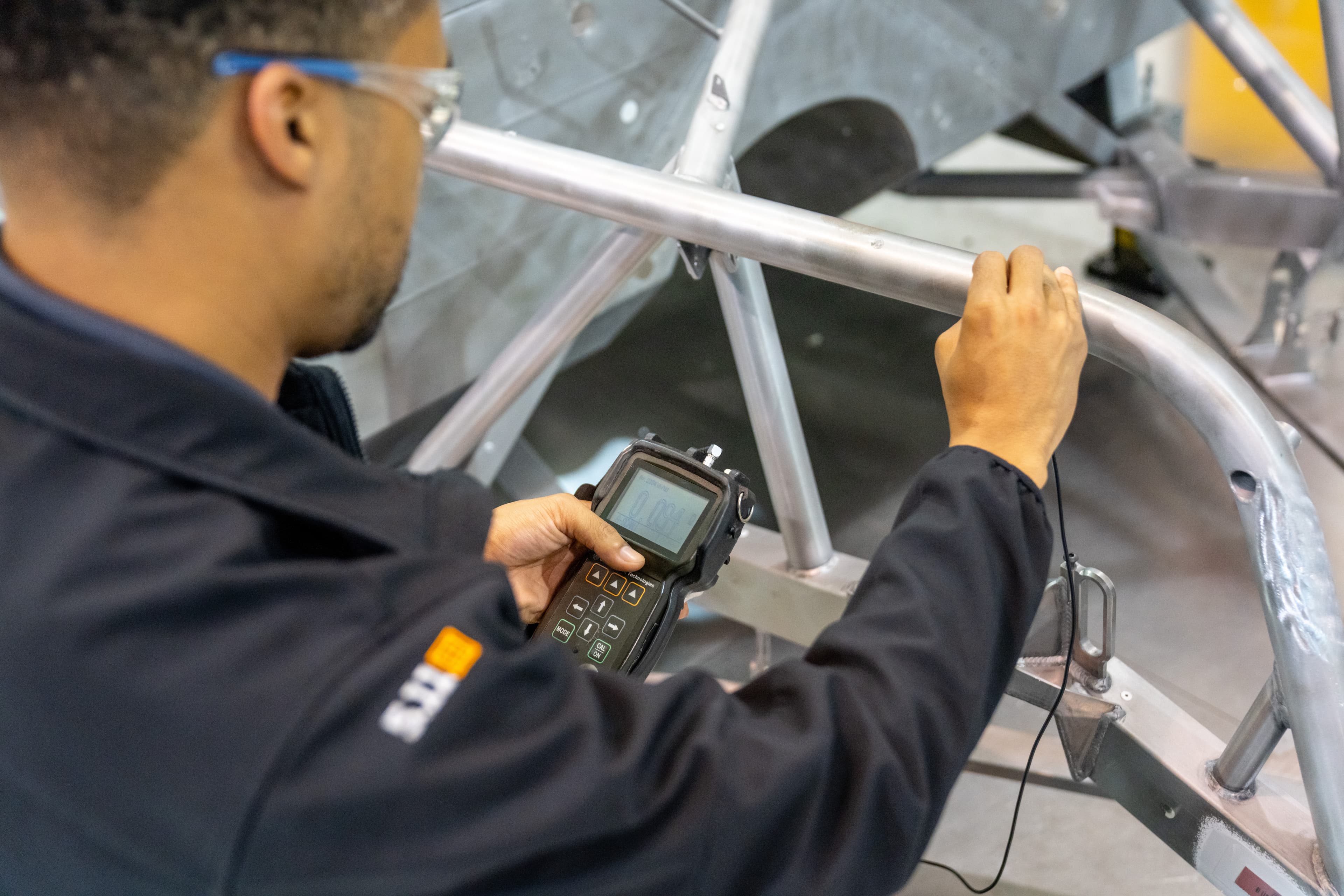
Non-destructive testing (NDT) technicians inspect materials and structures to identify hidden flaws without damaging them. Exploring a typical workday can help you decide whether this hands-on inspection career is a good fit.
Universal Technical Institute (UTI) offers non-destructive testing training that introduces students to inspection methods, safety procedures and industry reporting practices. This type of training helps build skills used in inspection-focused roles across many industries.1
NDT technicians work in industries such as manufacturing, energy, aerospace and construction. Below is a breakdown of a typical workday. Keep reading to learn more about what NDT technicians do throughout the workday, including safety planning, inspection methods and reporting responsibilities.
Key points:
- The role centers on inspection, not repair, with technicians evaluating materials, welds and components without causing damage.
- Safety and planning start the day, including toolbox talks, PPE checks, reviewing procedures and confirming inspection methods.
- Most of the workday is hands-on, using visual, ultrasonic, magnetic particle, liquid penetrant or radiographic testing methods to identify discontinuities.
- Work environments vary by job, ranging from shops and plants to outdoor sites, sometimes involving heights or confined spaces.
- Accurate documentation is essential, as inspection reports directly support engineering decisions, approvals and compliance requirements.
- Strong technical skills and reliability can support career growth, including advanced certifications and potential lead or supervisory roles over time.
What NDT Technicians Actually Do
Rather than repairing parts, NDT technicians focus on inspection and quality verification. They evaluate materials, welds and components using specialized testing methods to identify hidden flaws without causing damage to the objects they are inspecting.
Day-to-day responsibilities typically include:
- Following written procedures and safety requirements.
- Setting up and operating inspection equipment.
- Interpreting test indications and measurements.
- Documenting results clearly for engineers, supervisors and clients.
These inspection results are used to confirm whether components meet codes, standards and customer requirements, supporting safety and reliability across industries.
Morning: Safety Briefings, Planning and Setup
Many days begin with a safety meeting or toolbox talk. During this time, NDT technicians review job hazards, site rules and required personal protective equipment (PPE). Safety is a constant priority, especially when inspections involve heavy equipment, heights or radiation-based methods.
After the briefing, technicians typically:
- Review work orders, drawings and inspection procedures.
- Confirm which NDT method will be used.
- Gather, inspect and calibrate equipment.
- Travel to the inspection area or jobsite.
This planning phase is essential. Proper setup helps ensure accurate results and protects both the technician and the assets being inspected. Attention to detail early in the day can prevent delays and rework later on.
Midday: Performing Inspections in the Field or Shop
The bulk of an NDT technician’s day is often spent performing inspections. Tasks may vary depending on the job, industry and inspection method, but commonly include:
- Preparing surfaces by cleaning or positioning components.
- Setting up test equipment and verifying settings.
- Conducting inspections using methods such as:
- Visual testing (VT).
- Liquid penetrant testing (PT).
- Magnetic particle testing (MT).
- Ultrasonic testing (UT).
- Radiographic testing (RT).
- Recording indications, measurements or scan data.
Technicians follow written procedures closely and often communicate findings in real time with supervisors, engineers or quality control teams. They may work alongside welders, fabricators, plant operators or construction crews to coordinate inspections without slowing production.
Work environments can vary widely. Some inspections take place in controlled shop settings, while others may involve outdoor conditions, confined spaces or elevated work areas. Flexibility and focus are important parts of the role.
Afternoon: Reporting, Follow-Up and Preparing for the Next Job
As inspections wrap up, the focus often shifts to documentation and follow-up. NDT technicians review collected data, compare results against acceptance criteria, and determine whether components pass or fail inspection.
End-of-day responsibilities may include:
- Writing detailed inspection reports.
- Attaching photos, scans or radiographic images.
- Submitting documentation to supervisors or clients.
- Reviewing upcoming jobs and preparing equipment.
Accurate reporting is critical. Engineers, project managers and inspectors rely on NDT results to approve work, plan repairs or make structural decisions. Strong documentation, communication and reliability can help technicians build trust and advance into higher-level certifications, lead roles or supervisory positions over time along with experience and hard work.
Train for a Career as a Non-Destructive Testing Technician With UTI
If hands-on, inspection-focused work fits your interests, NDT training can help you get started on the path. UTI’s non-destructive testing training introduces inspection methods, safety standards and documentation used across industries.
Ready to prepare for what’s next? Enroll now to get started with non-destructive testing training.
Sources
Universal Technical Institute of Illinois, Inc. is approved by the Division of Private Business and Vocational Schools of the Illinois Board of Higher Education.
Train for the Future
Imagine waking up each day excited to work in a career you’re passionate about – one where your hands-on skills make a real impact. UTI’s vocational trade school can help you gain the skills and confidence to pursue what you love.
