
Motorcycle
What Motorcycle Technicians Actually Do All Day
Wrenches. Diagnostics. Repairs. Real shop work. See what motorcycle technicians actually do all day and how hands-on training can help you get started.
In This Article
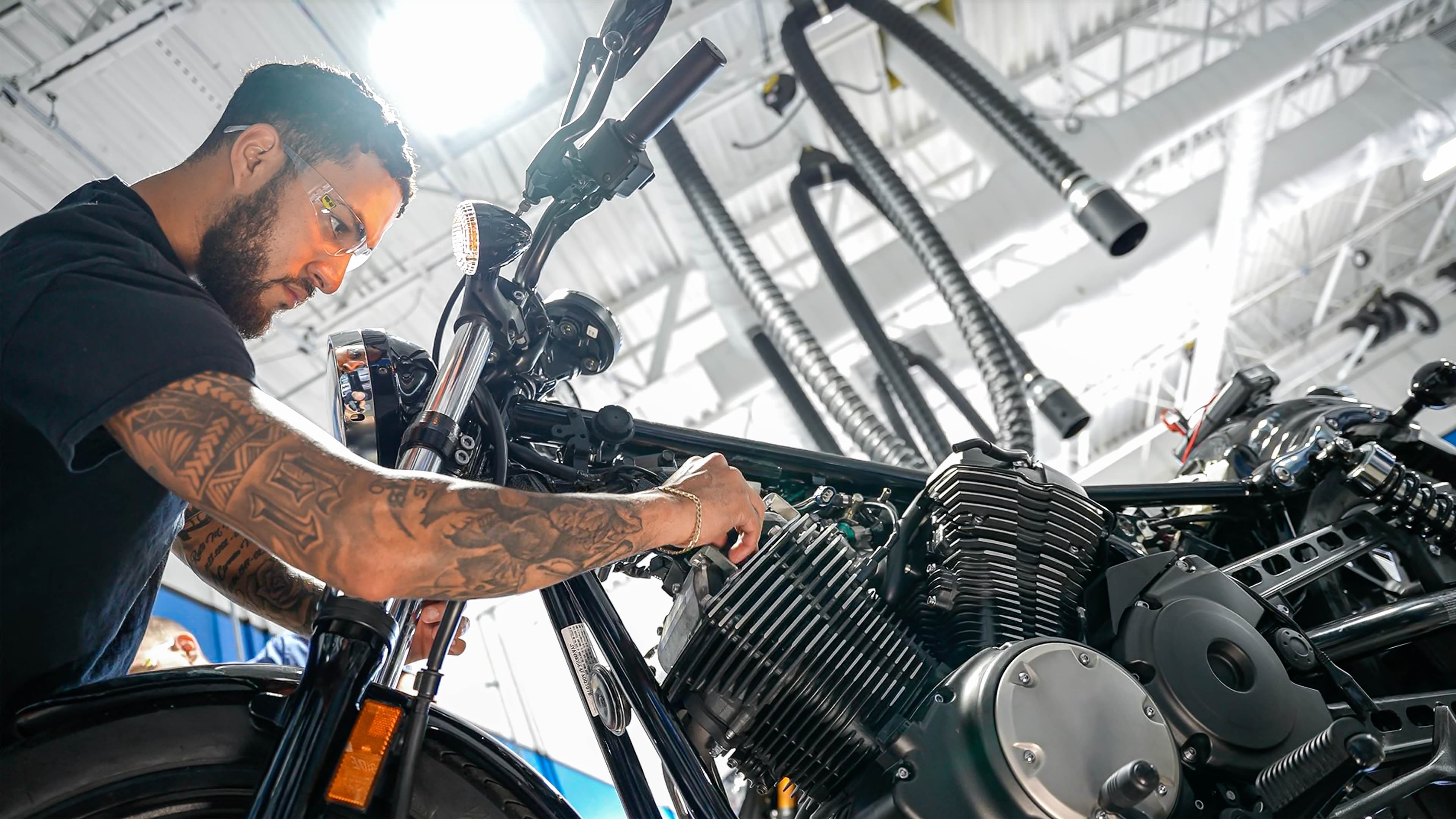
Wrenches, diagnostics and repairs are only part of the job.
The day-to-day work combines inspections, troubleshooting and hands-on repairs in real shop environments. A closer look at what a motorcycle technician does shows how they keep bikes running safely by diagnosing issues and working through a range of problems throughout the day.
From tracking performance issues to fine-tuning repairs, the work is hands-on and skill-driven. At Universal Technical Institute (UTI), motorcycle mechanic training lasts under one year and gives students the opportunity to learn these skills through practical application that reflects real entry-level shop work.7,18
Here’s a clear look at what a typical day involves and how training helps build the skills needed to do it.1
What Does a Motorcycle Technician Do? Quick Breakdown
Motorcycle technicians inspect, diagnose and repair motorcycles to keep them running safely and efficiently.
They typically:
- Inspect motorcycles for wear or damage.
- Diagnose mechanical and electrical issues.
- Perform repairs and replace parts.
- Complete routine maintenance.
- Communicate with team members or customers.
A Typical Day for a Motorcycle Technician
A day in the life of a motorcycle technician follows a general flow, but the work can vary depending on the shop and the bikes coming in.
Morning: Inspections and setup
Technicians usually start their day by reviewing work orders and inspecting incoming motorcycles. They look for visible issues, test basic systems and begin identifying what needs attention. This sets the direction for the rest of the day.
Midday: Diagnostics and repairs
Most of the hands-on work happens here. Technicians use tools and diagnostic equipment to troubleshoot problems, then complete repairs or replace parts. This stage often requires careful testing and problem-solving.
Afternoon: Testing and final adjustments
After repairs are completed, technicians test their work through system checks or short rides. They make final adjustments and ensure everything is functioning properly before the motorcycle is returned.
Core Motorcycle Technician Duties Explained
Motorcycle technician duties go beyond simple repairs — they also involve diagnosing problems, maintaining systems and keeping bikes operating safely.
Inspection and maintenance
Technicians regularly inspect motorcycles for wear, leaks or performance issues. Routine maintenance like oil changes, tire checks and brake inspections helps prevent larger problems.
Diagnostics and troubleshooting
When something isn’t working correctly, technicians identify the root cause using tools and testing methods. This requires analyzing symptoms and narrowing down possible issues step by step.
Repair and part replacement
Once the problem is identified, technicians repair or replace components. This can involve anything from minor fixes to more complex mechanical or electrical work.
Customer and team communication
Technicians often explain issues, recommend repairs or coordinate with coworkers. Clear communication helps ensure work is completed efficiently and accurately.
Where Motorcycle Technicians Work
Motorcycle technicians can work in different environments, each with their own pace and focus.
Dealerships
Technicians at dealerships often work on specific brands and newer motorcycle models. This allows them to become familiar with manufacturer systems, tools and service procedures over time. The work typically follows structured processes tied to that brand’s standards.
Daily tasks can include routine maintenance, diagnostics and warranty repairs. Because dealerships often handle newer bikes, technicians may spend more time working with updated technology and manufacturer-specific equipment. This environment can provide consistency and a more predictable workflow.
Independent repair shops
Independent repair shops handle a wide range of motorcycles, from older models to newer bikes across multiple brands. Technicians in these environments are exposed to a variety of systems, conditions and repair needs. This can make the work more varied from one job to the next.
The day-to-day work often involves switching between different types of repairs and maintenance tasks. Technicians may diagnose unfamiliar issues, work on different makes and models, and adapt to changing priorities. This environment can help build versatility and problem-solving skills.
Specialty/performance shops
Specialty or performance shops focus on customization, upgrades and high-performance builds. Technicians working in these environments may handle more advanced modifications and detailed mechanical work. The focus is often on improving performance, appearance or both.
Work in these shops can include engine modifications, tuning and installing aftermarket components. Technicians may also collaborate closely with customers to meet specific goals. This type of work often requires precision and a deeper understanding of performance systems.
Powersports environments
Powersports environments expand beyond motorcycles to include vehicles like ATVs, dirt bikes and side-by-sides. Technicians in these settings work on a broader range of equipment with different designs and uses. This adds variety to the type of work performed.
The work may involve maintenance, diagnostics and repairs across multiple types of vehicles. Technicians need to adapt their approach depending on the equipment they’re working on. This environment can provide a wider range of hands-on experience.
What Skills Do Motorcycle Technicians Use Every Day
The job requires a mix of technical skills and hands-on ability. It also depends on key technician traits like attention to detail, problem-solving and the ability to stay focused while working through complex issues.
Mechanical aptitude
Technicians need to understand how motorcycle systems function in order to perform repairs accurately. This knowledge supports everything from basic maintenance to complex fixes.
Problem-solving
Diagnosing issues requires identifying patterns and testing possible causes across different systems. Technicians use diagnostic tools, inspect components and run tests to narrow down the source of a problem. They rely on logic, data, and experience to determine the most accurate and efficient solution.
Attention to detail
Small issues can lead to bigger problems if missed. Technicians must carefully inspect parts, check measurements, and verify system performance during and after repairs. Paying close attention to details helps ensure the motorcycle is safe and functioning properly.
Hands-on dexterity
Working with tools and components requires precision and coordination. Technicians often handle small parts and fasteners in tight spaces where accuracy matters. Steady hands and control help ensure repairs are completed correctly in a timely manner.
Communication
Technicians may explain repairs, document work or collaborate with coworkers. They often must translate technical issues into clear explanations, so others understand what needs to be done. Strong communication helps keep jobs organized and the shop running efficiently.
Read: 7 Traits of a Successful Motorcycle Technician
What Surprises People About the Job
The reality of the job is often different from what people expect. Many assume it’s just basic repair work, but the role involves more technical skill and problem-solving.
It’s not just wrenching
While tools are a big part of the job, technicians spend just as much time diagnosing problems. Before turning a wrench, they often need to understand how different systems interact and where a failure might be happening.
This means reading data, running tests and thinking through possible causes. Understanding systems is just as important as fixing them, especially on modern motorcycles with electrical and computerized components.
Diagnostics matter a lot
Finding the problem is often the most time-consuming part of the job. Technicians rely on diagnostic tools, testing methods and system knowledge to narrow down issues before making repairs.
Instead of guessing, they follow a process to confirm what’s actually wrong. This helps avoid unnecessary repairs and ensures the right solution is applied the first time.
Every bike and problem is different
No two jobs are exactly the same, even if the symptoms seem similar. Different makes, models and conditions can all affect how a problem shows up and how it should be fixed.
Technicians constantly adapt by applying what they know to new situations. This keeps the work dynamic and requires ongoing learning as new technology and systems are introduced.
Teamwork is important
Many shops rely on technicians working together to complete jobs efficiently. More complex repairs may involve sharing knowledge or getting input from others in the shop.
Communication helps keep the workflow organized and ensures repairs are done correctly. Working as a team also helps technicians learn from each other and improve over time.
Do You Need Experience To Become a Motorcycle Technician?
No. Many people start with little to no experience.
If you’re wondering how to become a motorcycle mechanic with no experience, training is often the starting point. Skills are built through hands-on practice, repetition and learning how to diagnose and repair systems step by step.
How Hands-On Training Can Prepare You for the Job
Motorcycle mechanic training from UTI is designed to help students build the skills used in real shop environments.
Learning with real tools on real technology
At UTI, students learn using the types of tools technicians rely on every day.18 This helps build familiarity and confidence with equipment. They can also train on a range of powersports vehicles, including motorcycles, ATVs, side-by-sides and personal watercraft.
Brand-specific training
Training at UTI includes learning about specific manufacturers and systems. This helps students understand how different motorcycles are designed and serviced.
Training includes getting hands-on with manufacturer-specific systems from brands like Harley-Davidson®, BMW Motorrad, Honda, Yamaha, Kawasaki and Suzuki, helping students learn on different brands of motorcycles in real shop environments.
Practicing diagnostics
Students learn how to identify problems using tools and testing methods. This is a key part of modern motorcycle repair. Coursework may include engine diagnostics, electrical troubleshooting, fuel delivery systems and service procedures.
Getting career-ready fast
UTI’s structured hands-on training programs are designed to help students build skills efficiently through guided instruction and real-world application. Students can learn how to perform inspections, run diagnostics and complete repairs using the same types of tools found in professional shops. This helps prepare them to step into entry-level roles after graduating with practical, job-ready skills.
Read: Trade School vs. Traditional Classroom: Which Offers More Hands-On Training?
Learning maintenance procedures
Our students practice routine maintenance tasks like inspections and system checks. These are core responsibilities in the field. Training also covers service procedures like oil changes, brake system maintenance, chain and belt adjustments, and fluid checks across key motorcycle systems.
Building confidence through repetition
Repeated hands-on application helps reinforce skills and turn basic knowledge into real ability. In a focused training environment, students spend consistent time practicing diagnostics, maintenance and repair procedures. Over time, this repetition helps build confidence in diagnosing and repairing motorcycles.
Read: How To Become a Certified Motorcycle Technician: A Step-by-Step Guide
Motorcycle Technician FAQs
What does a motorcycle technician do all day?
Motorcycle technicians inspect, diagnose and repair motorcycles throughout the day in shop environments. Their work includes routine maintenance, troubleshooting issues, and making repairs to ensure systems are working properly. No two days are exactly the same, as technicians often work on different bikes and problems.
Is being a motorcycle technician hard?
The job can be challenging at first, especially when learning diagnostics and how different systems work together. With consistent hands-on practice and experience, tasks become more familiar and are accomplished more efficiently over time. Strong problem-solving skills also help technicians work through more complex issues.
How long does it take to become a motorcycle technician?
Training timelines can vary, but many motorcycle technician programs are designed to be completed in under a year. This allows students to build foundational skills in diagnostics, maintenance and repair relatively quickly. Additional experience in the field helps continue developing those skills.
Do motorcycle technicians only work on one type of bike?
Not always. Some technicians specialize in specific brands, while others work on a wide range of motorcycles and powersports vehicles. This can include ATVs, side-by-sides and other equipment, depending on the shop.
Start Training for a Motorcycle Technician Career
Now that you know what a motorcycle technician does day-to-day, the next step is building the skills to do it yourself.
UTI’s motorcycle training provides hands-on learning with tools, diagnostics and repairs in structured environments. To learn more, you can speak with an Admissions Representative at 1-800-834-7308 and explore your options for getting started.
Universal Technical Institute of Illinois, Inc. is approved by the Division of Private Business and Vocational Schools of the Illinois Board of Higher Education.
Train for the Future
Imagine waking up each day excited to work in a career you’re passionate about – one where your hands-on skills make a real impact. UTI’s vocational trade school can help you gain the skills and confidence to pursue what you love.
