Preparing for an interview as an aspiring industrial maintenance technician can feel overwhelming, but with the right preparation, you can walk in with confidence. Employers want candidates who understand essential maintenance concepts, follow safety protocols and can solve problems under pressure.
This guide breaks down the most common industrial maintenance technician interview questions and answers, along with tips to help you stand out. You’ll also learn how hands-on training, like the kind offered in the Industrial Maintenance Technician program at Universal Technical Institute (UTI), can help you interview like a pro.1
What to Expect in an Industrial Maintenance Interview
Industrial maintenance interviews often combine technical, behavioral and sometimes hands-on assessments. Hiring managers typically look for:
- Technical knowledge: your familiarity with mechanical systems, electrical systems, hydraulics, pneumatics, automation and more.
- Safety awareness: your ability to follow OSHA standards and company-specific safety requirements.
- Problem-solving skills: your ability to troubleshoot equipment issues efficiently and accurately.
- Communication: your ability to explain your process, coordinate with production and document work.
Some employers also include practical assessments, like diagnosing a simulated equipment fault to observe how you apply your training in real time.
These interviews are designed to assess whether you’re ready to work in a fast-growing field with strong employment opportunities. You can explore more about job demand, salary expectations and long-term pathways in industrial maintenance here: Industrial Maintenance Career Outlook.
Common Industrial Maintenance Interview Questions and How to Answer Them
“Can you explain preventive vs. predictive maintenance?”
What employers want: understanding of maintenance strategies and why they matter.
Strong answer example:
Preventive maintenance like lubrication, inspections and part replacements is scheduled at regular intervals to keep equipment in good working condition before failures occur. Predictive maintenance relies on data and condition-monitoring tools, such as vibration analysis or thermal imaging, to determine when maintenance is needed. Preventive is time-based; predictive is data-based. Both help reduce downtime and improve equipment reliability.
“What safety procedures do you follow during equipment repairs?”
What employers want: commitment to safety protocols and situational awareness.
Strong answer example:
I start every job with lockout/tagout to ensure all energy sources are isolated. I wear proper PPE and follow OSHA safety standards, including hazard communication. I inspect tools before use, maintain a clean work area, and communicate with operators about machine status. Safety comes first, then troubleshooting.
“Tell me about a time you diagnosed and fixed an equipment issue.”
What employers want: problem-solving, logic and communication.
Strong answer example:
During training, I worked on a conveyor system showing intermittent stops. I reviewed the schematic, checked sensors and found inconsistent voltage from a proximity sensor. After testing, I replaced the faulty sensor, recalibrated it and verified consistent operation. I documented the process and explained the root cause to the team.
“How familiar are you with PLCs and automation systems?”
What employers want: exposure to modern automation technology.
Strong answer example:
I have hands-on knowledge of PLC basics, including reading ladder logic, identifying input/output faults and resetting systems safely. I understand how PLCs integrate with motors, sensors and safety circuits. I’m comfortable using HMIs and following troubleshooting procedures for automated equipment.
“How do you prioritize multiple maintenance requests?”
What employers want: ability to think critically and manage workload.
Strong answer example:
I prioritize based on safety first, followed by production impact. I address issues that could cause injury or major downtime, then evaluate equipment criticality and repair time. I also communicate with supervisors, so production schedules remain aligned with maintenance needs.
“What tools and diagnostic equipment do you use most often?”
What employers want: knowledge of industry-standard tools.
Strong answer example:
I regularly use multimeters, torque wrenches, thermal imagers, vibration testers, calipers and electrical test equipment. For mechanical systems, I rely on hand tools, alignment tools and pneumatic tools. I document all readings to support accurate diagnosis.
“Why do you want to work in industrial maintenance?”
What employers want: motivation, long-term interest and reliability.
Strong answer example:
I enjoy hands-on work and solving technical challenges. Industrial maintenance allows me to work with mechanical, electrical and automated systems while contributing to plant efficiency and safety. I’m motivated by continuous learning and I know this field offers opportunities to grow and specialize.
How UTI Training Helps You Stand Out in the Interview Process
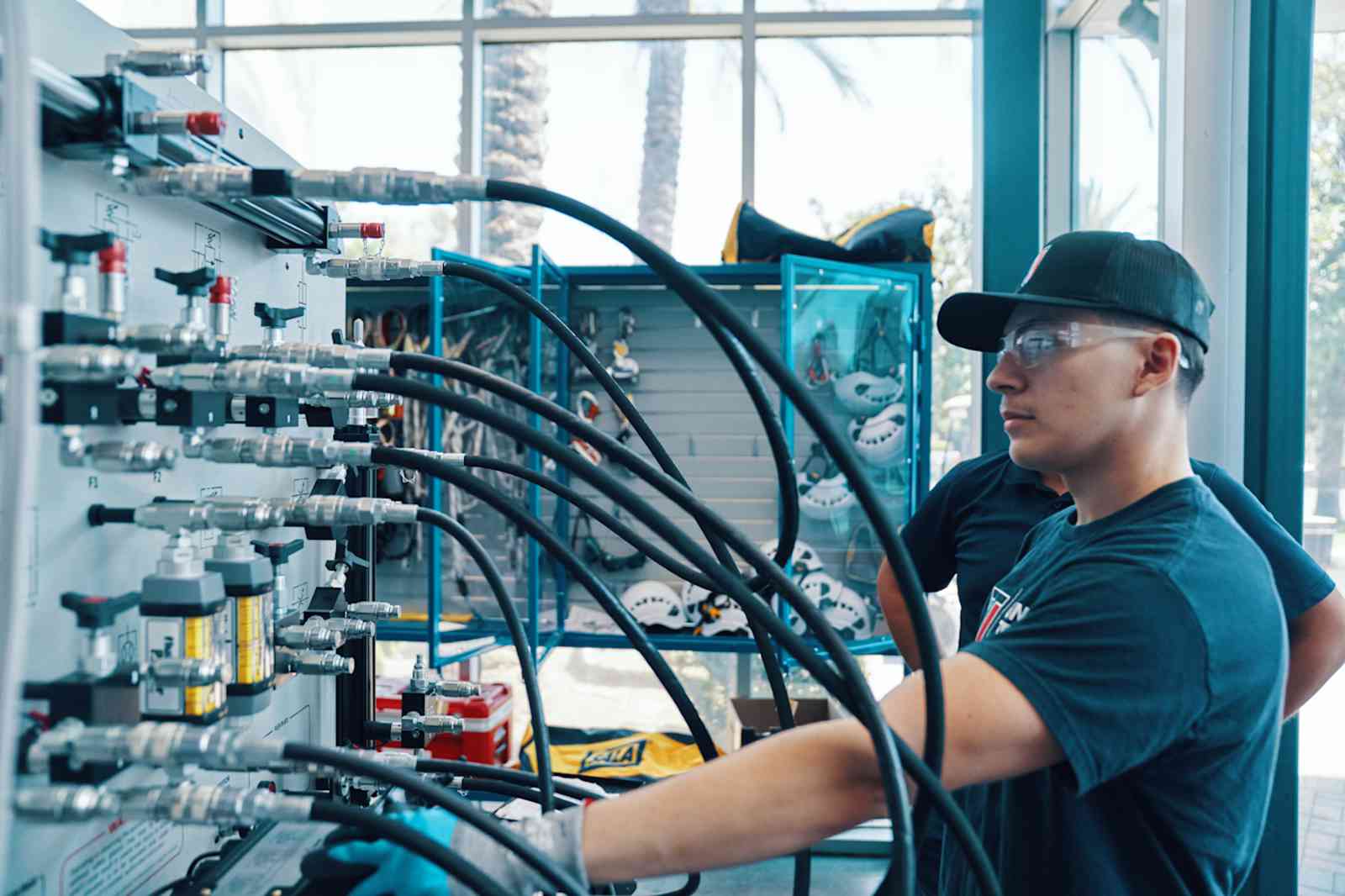
The Industrial Maintenance Technician program at UTI gives students a strong foundation in mechanical, electrical, hydraulic and automation systems. Through hands-on learning, students practice real-world maintenance tasks, review safety protocols and build confidence in troubleshooting.
This training helps graduates enter interviews prepared to:
- Demonstrate technical knowledge.
- Explain troubleshooting steps clearly.
- Showcase hands-on knowledge from labs and projects.
- Speak confidently about safety procedures.
- Highlight readiness to work on modern industrial equipment.
If you're ready to start training for a career in industrial maintenance, take the next step today by filling out an application.1
Sources
- https://www.osha.gov/control-hazardous-energy
- https://www.osha.gov/etools/lockout-tagout/tutorial
- https://upkeep.com/learning/preventive-predictive
- https://www.netsuite.com/portal/resource/articles/erp/predictive-maintenance.shtml
- https://www.myplctraining.com/blog/beginners-free-plc-training-part-1
- https://basicplc.com/beginners/
- https://www.bls.gov/ooh/installation-maintenance-and-repair/industrial-machinery-mechanics-and-maintenance-workers-and-millwrights.htm
Universal Technical Institute of Illinois, Inc. is approved by the Division of Private Business and Vocational Schools of the Illinois Board of Higher Education.