
When the heat hits San Antonio, HVAC stops feeling optional fast.
Homes need cooling. Businesses need working systems. Property managers need repairs handled before a small issue turns into a bigger one.
That steady real-world need is a big reason people start looking into San Antonio HVAC careers in the first place. San Antonio’s population reached about 1.53 million in 2024, up 6.4% from the 2020 base, which adds more homes, more businesses and more systems that need service. If you want a hands-on path that blends mechanical skills, troubleshooting and real-world service work, HVACR can be worth a serious look.
Find out why HVAC technicians are needed in San Antonio, what HVAC technician salary data can tell you, and how hands-on training at Universal Technical Institute’s (UTI) HVACR Technician training program, including at the San Antonio campus, can help you prepare for entry-level opportunities in the field after graduating.1
Why HVAC Technicians Are Needed in San Antonio
Hot Texas climate and year-round cooling needs
San Antonio heat is not a small factor. It shapes daily life, building comfort and system wear.
Monthly normals for San Antonio show average high temperatures of 91.2 degrees Fahrenheit in June, 94.8 degrees in July, 95.8 degrees in August and 90.4 degrees in September. In a place where cooling systems do serious work for months at a time, HVACR service matters.
That does not just mean emergency summer calls. It also means inspections, tune-ups, airflow checks and preventive maintenance before systems fail under pressure. For someone exploring HVAC work in San Antonio, that local climate context helps explain why the field stays relevant.
Residential and commercial demand
HVACR work is not limited to one type of building.
Heating and cooling technicians work in homes, schools, hospitals and other buildings, and they may travel to several service locations in a single day. That matters in a city like San Antonio, where residential neighborhoods, retail, healthcare, education and hospitality all rely on climate control and refrigeration systems.
That variety can make the work feel broader than people expect. One role may lean more residential. Another may focus on commercial systems. Some technicians move toward refrigeration or larger building systems over time. Some technicians specialize in areas such as commercial refrigeration, radiant heating, or testing and balancing.
Read: How To Become an HVAC Technician
Population growth and new construction
More people usually means more buildings, more equipment and more ongoing service needs.
Career growth for San Antonio HVAC careers does not guarantee the same hiring pace in every neighborhood or company, but it does help explain why infrastructure and building services stay important in a metropolis this size.
Commercial and residential building construction is expected to help drive national employment growth for HVACR technicians. Increasingly sophisticated climate-control systems are expected to increase the need for qualified technicians.
Maintenance and repair needs for existing systems
Not every HVACR call is tied to a brand-new install.
A huge share of the work is keeping existing systems running well. The Bureau of Labor Statistics (BLS) says HVAC technicians typically install, maintain and repair systems; inspect and test components; repair or replace worn parts; recommend maintenance; and keep records of work performed.
That matters because even without new construction, older systems still need service. Filters clog. Electrical components fail. Refrigerant-related issues show up. Controls need testing. Airflow problems affect comfort and efficiency.
In other words, the field is not built only on new demand. A lot of it comes from systems that already exist and still need skilled hands.
Read: The 2025 Guide to HVACR Certifications
How Much HVAC Technicians in San Antonio Make
Salary
According to the BLS, the median annual salary for HVACR technicians in the United States was $59,810 in May 2024.58 This means half earned more and half earned less. Keep in mind that salary depends on several factors, including experience, employer, demand and cost of living in the area.
Factors affecting pay
A few things can shape HVAC technician salary potential over time:
- Experience in the field.
- The complexity of the systems serviced.
- Certifications or licensing requirements.
- Residential vs. commercial focus.
- Local labor market conditions.
- Employer compensation structure.
HVAC technicians may need a license or certification, depending on the work, and they may specialize in installation, maintenance, repair or areas like commercial refrigeration. More technical depth can open the door to different kinds of roles.
Long-term earning potential
Long-term earning potential is about more than a first job. It is about what happens after a technician builds skills, stacks experience and moves into more complex work.
Some technicians stay focused on residential service. Others move into commercial systems, refrigeration, controls or supervisory paths. UTI’s HVACR training grads are prepared to pursue entry-level roles such as HVACR technician, installation technician or refrigeration technician.77
UTI’s Career Services department also provides job search support, interview preparation and employer connections, available to both students and graduates. That can help separate “first opportunity” from the longer arc of career movement.
Read: 5 Key Reasons Trade School Is a Smart Investment in 2026
HVAC Career Benefits
We need HVAC techs right now
HVACR is tied to the operation of buildings people use every day. Homes, schools, hospitals, stores and workplaces all depend on heating, cooling, ventilation or refrigeration systems.
That does not mean every local market behaves the same way or that jobs are automatic. It does, however, mean the occupation is connected to ongoing building needs rather than a short-term trend.
Opportunities for advancement and specialization
HVACR does not have to be one narrow lane forever.
Some technicians specialize in installation, while others focus more on maintenance and repair. Some move toward commercial refrigeration, radiant heating systems, or testing and balancing. That built-in range can make the field appealing to people who want room to grow instead of doing the exact same task forever.
Hands-on work environment
For people who want to solve visible problems and work with real systems, HVACR can feel more tangible than desk-heavy roles.
The BLS says technicians install wiring and electrical components, inspect and test systems, discuss malfunctions with customers, replace parts, and keep records of completed work. The environment can be physically active and varied, with work indoors and outdoors depending on the job.
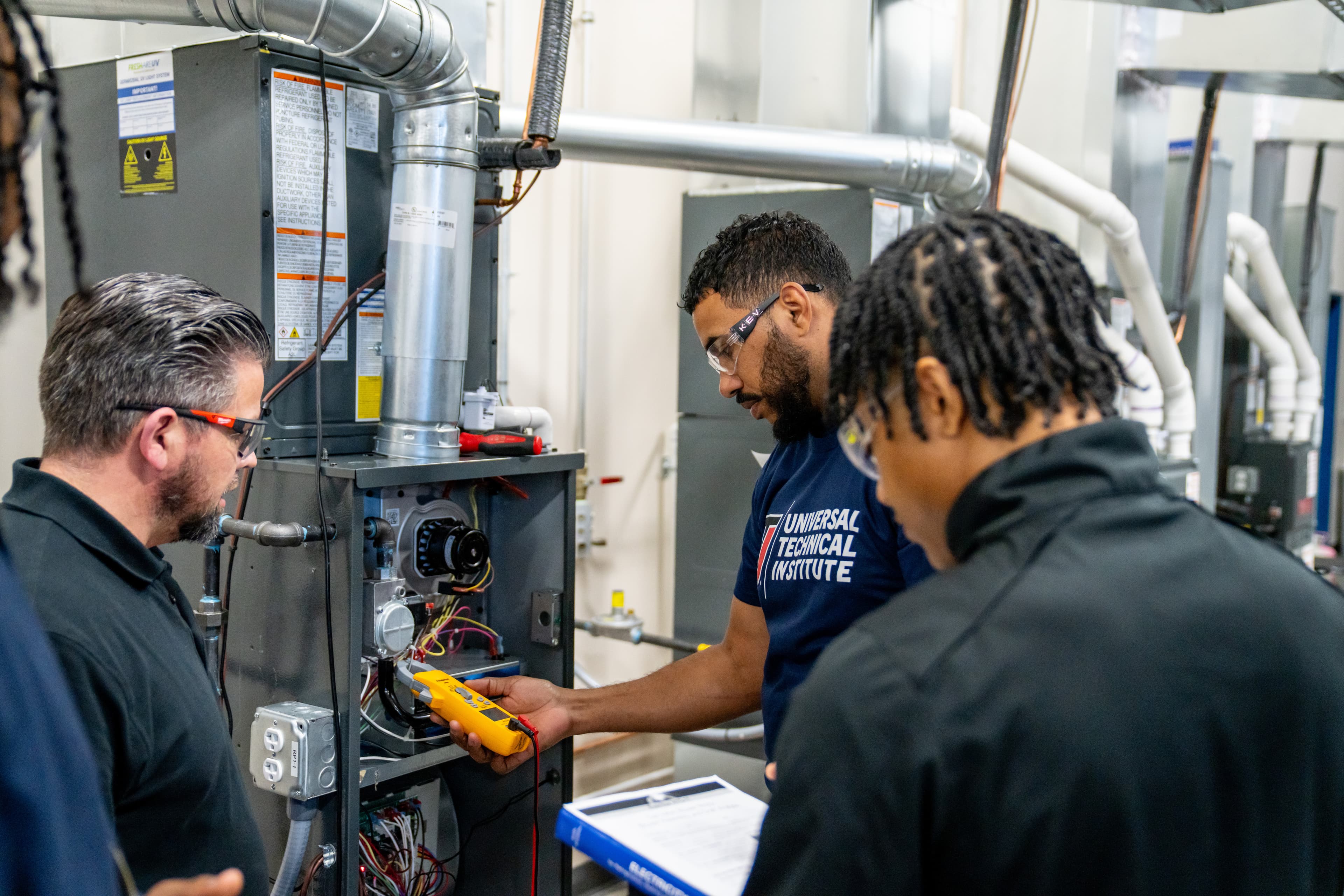
That is one reason hands-on learners often look at this path. UTI’s HVACR courses frame the training around practical systems knowledge, including electrical systems, refrigeration fundamentals, airflow, controls and safety practices.
Potential for long-term job stability
This is where stability differs from earnings.
Long-term job stability is about whether the field continues to matter over time. HVACR has that advantage because building systems do not disappear once installed. They need maintenance, troubleshooting, repairs, upgrades and replacement support.
So, while earnings can rise with experience, stability comes from the field’s ongoing role in how buildings function. In San Antonio, especially, where heat pushes cooling systems hard for much of the year, that practical role stays easy to understand.
Read: Guide to Selecting Trade Schools Linked With Top Employers
HVAC Careers in San Antonio, Texas, FAQs
1. Is HVAC a good career in San Antonio, Texas?
HVAC can be a fulfilling career path for people who want hands-on technical work tied to real building needs. In San Antonio, long hot seasons, population growth and the need to maintain existing systems all help explain why HVAC careers in San Antonio are a practical field to explore.
2. Why are HVAC technicians needed in San Antonio?
HVAC technicians are needed in San Antonio because homes, businesses and other buildings rely heavily on cooling and ventilation systems for much of the year. The work also goes beyond emergency repairs, including inspections, tune-ups, maintenance and system troubleshooting.
3. What affects HVAC technician salary over time?
HVAC technician salary can vary based on experience, certifications, specialization, employer and whether the work is more residential or commercial. Over time, building greater technical skills can help technicians qualify for more advanced roles and different types of systems work.
4. What kinds of jobs can HVACR training lead to?
UTI’s HVACR training can help prepare students for entry-level roles after graduation, such as HVACR technician, installation technician and refrigeration technician. As technicians gain experience over time, some move into commercial systems, controls or supervisory paths.
5. What makes HVACR appealing for hands-on learners?
HVACR appeals to many hands-on learners because the work involves troubleshooting, repairs, system testing and practical service work instead of sitting behind a desk all day. It also offers a mix of mechanical skills, system knowledge and real-world problem-solving.
Read: How To Land an HVAC Technician Position After Trade School
Train for a Local HVACR Career in San Antonio
For anyone exploring HVAC careers in San Antonio, hands-on training can turn potential into real job-ready skills. Our HVACR Technician program in San Antonio, Texas, lasts just nine months, and helps prepare students for entry-level roles post-graduation by teaching core systems, troubleshooting and the practical skills that keep San Antonio cooling systems running.
Ready to take the next step? Connect with an Admissions Representative to learn more about UTI’s HVACR training, the HVACR career outlook and what training could look like for you in San Antonio. Call 1-800-834-7308 or request info.
Universal Technical Institute of Illinois, Inc. is approved by the Division of Private Business and Vocational Schools of the Illinois Board of Higher Education.