Want to work with your hands and build real skills for a career you can pursue in under a year? HVACR might be the path you’re looking for.
Whether you’re new to the field or just exploring your options, learning about the tools of the trade is a smart way to begin.
HVAC and refrigeration work isn’t just about fixing things — it’s about precision, safety and using the right equipment for the job.
According to the U.S. Bureau of Labor Statistics (BLS), HVAC technicians work with heating, cooling and refrigeration systems that require a range of specialized tools and diagnostic equipment.
Below is a breakdown of the most common HVACR tools used by technicians — and how hands-on career training at Universal Technical Institute (UTI) can help you learn to use them.1

Basic Hand Tools and Their Functions
Wrenches, screwdrivers and pliers
Every HVACR technician starts with a solid set of hand tools. Adjustable wrenches, Phillips and flathead screwdrivers, and needle-nose pliers are go-to items for most service calls. These tools help with tightening, loosening or holding parts in place — and they’re used constantly in day-to-day work. Many of these fall under what you’ll often see on a general HVAC tool list.
Measuring and cutting tools
Tape measures, tubing cutters and wire strippers are also part of the job. Measuring correctly helps avoid mistakes during installation, and cutting tools are used to modify copper lines, wires or sheet metal. Precision matters and these tools are where accuracy begins.
Read: HVAC vs. HVACR: Key Differences Explained
Diagnostic and Testing Tools
Tools used for refrigerant handling must align with safety and environmental standards outlined by organizations such as the EPA, which is why technicians rely on equipment such as manifold gauge sets, recovery machines and vacuum pumps when working with refrigerants.
Multimeters and electrical testers
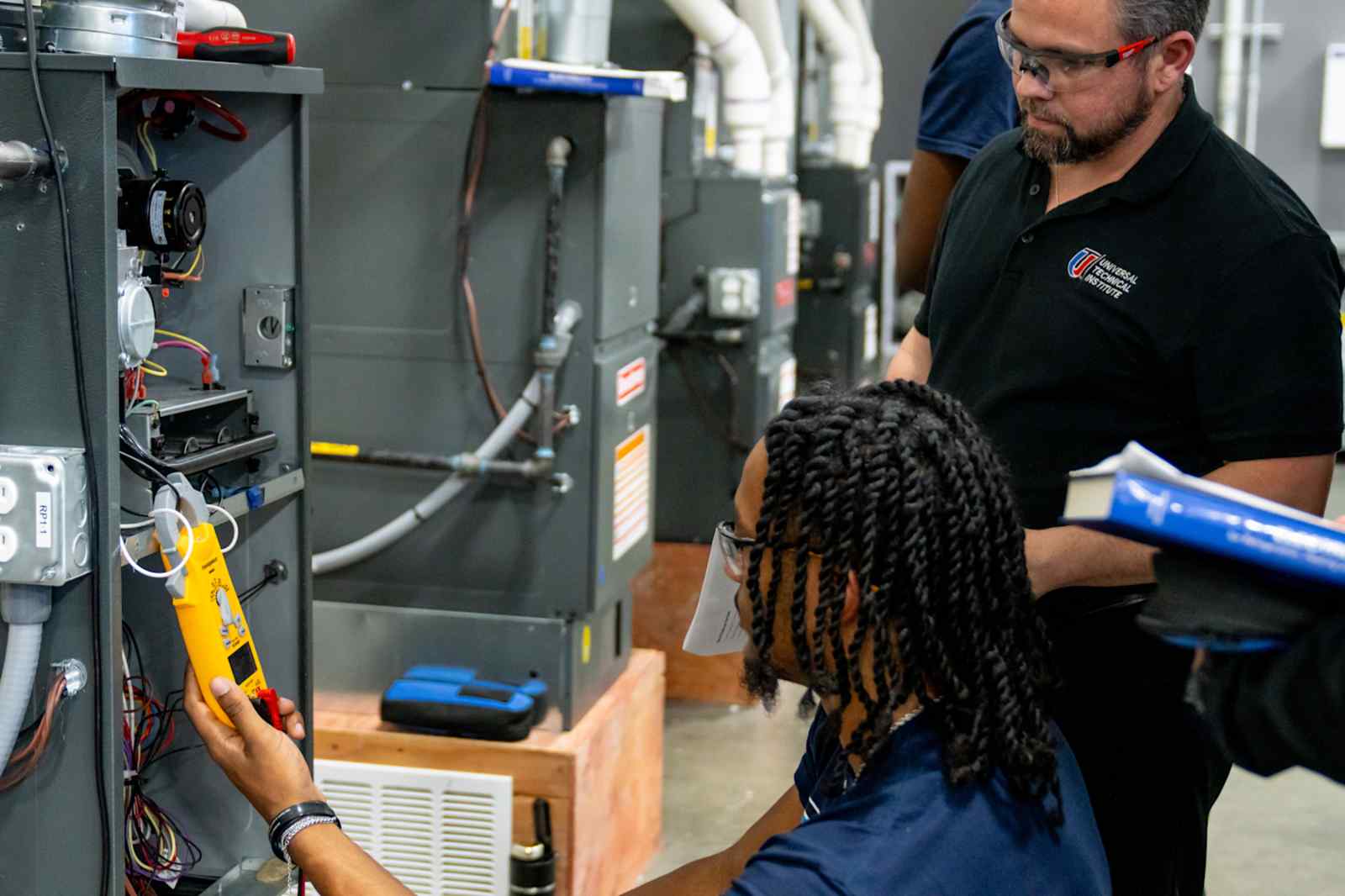
Electricity runs through almost every HVACR system. Technicians use multimeters and voltage testers to check for live wires, inspect circuits and verify that systems are safe to work on. These are among the most important HVAC technician tools for diagnosing problems before and after a repair.
Manifold gauges and pressure testers
These tools help read refrigerant pressure levels, which is critical in both AC and refrigeration systems. Manifold gauges connect to service ports and tell you whether the system is overcharged, undercharged or working correctly. These tools are used during regular maintenance and troubleshooting.
Read: HVACR Troubleshooting: Common Issues & Solutions
Safety Gear and Accessories
Personal protective equipment (PPE)
Safety always comes first. HVACR technicians wear gear like gloves, safety glasses and sometimes respirators, depending on the job. Proper PPE protects against burns, refrigerant exposure, sharp objects and electrical hazards.
Lockout/tagout and safety signage
When working on electrical components, lockout/tagout kits are used to cut power and make sure it stays off. This is a standard safety step that keeps the work area secure. Labels and signage are also part of proper procedures when systems are being serviced.
Train Hands-On With Real HVACR Tools
Real-world tool use in simulated environments
UTI’s 9-10 month HVACR program gives students access to industry-standard tools in lab environments that mirror real job sites. You can train with the same tools used in the field — so when it’s time to work with a customer, you already know what to do.
Developing confidence and competence with industry tools
As you build up your tool knowledge and skills using them, you can also learn how to think critically, follow safety protocols and stay efficient under pressure. Our instructors guide students step-by-step, helping them turn lab learning into real-world skills.
Want to dig deeper into the industry certifications tied to these tools? Check out this guide.
Read: How To Get an HVACR Certification
Want HVACR Career Training?
When you're trained to use the right tools, you're ready to pursue real work. Our HVACR program helps you get there, providing the labs and technology needed for you to build the right skill set. The program is designed to be completed in under a year.
To learn more, call an Admissions Representative at 1-800-834-7308 or get started online today.
Universal Technical Institute of Illinois, Inc. is approved by the Division of Private Business and Vocational Schools of the Illinois Board of Higher Education.