
Starting an electrical training program is a big step toward a hands-on career that powers homes, businesses and industries. If you’re considering hands-on electrical training — whether you just graduated high school, want a career change or are transitioning from military service — it helps to know what your first year of training may look like.
Most programs are designed to build skills in layers. You start with foundational knowledge, then move into hands-on lab work and real-world applications. By the end of your first year, many students have developed technical abilities, safety awareness and workplace habits that align with entry-level electrical roles.
If you’re exploring structured electrical training, you can review program details at the start of your journey through UTI’s Electrical & Electronics programs.130
Building the Foundation: Electrical Theory and Safety
Your first year in an electrical training program usually starts with the fundamentals — the core knowledge and safety skills that everything else builds on. Before installing systems or troubleshooting circuits, students learn how electricity works, how equipment functions and how to work safely in real environments.
Many electrical training programs — including those at UTI — introduce foundational knowledge through structured coursework designed to build understanding step by step.
Basic electrical principles
UTI’s hands-on electrical training focuses on the science and structure behind electrical systems. Students typically begin with courses designed to help them understand how electrical components operate and interact.
Examples of foundational coursework may include:
- Introduction to Technical Trades — introduces basic electrical and electronic concepts, tools and industry practices.
- Applied Math and Measuring Tools — builds the math and precision measurement skills used in electrical work.
- DC Electrical Theory — explains direct current circuits, schematics and power storage functions.
- AC Electrical Theory — covers alternating current systems and how electrical power is distributed.
These courses help students understand circuit behavior, electrical flow and system design — knowledge that supports nearly every electrical task performed in the field.
Students also begin learning how electrical wiring systems function in residential and commercial environments. Training may include working with lighting fixtures, circuit breakers and motor control components to understand how power moves through real structures.
Across UTI’s electrical programs, foundational training is designed to build knowledge from the ground up.
Industry safety standards
Safety is one of the most important parts of electrical training. Working with electrical systems carries real risk, so programs emphasize procedures that help protect workers and equipment.
Students often learn about:
- Lockout/tagout procedures.
- Personal protective equipment (PPE).
- Electrical hazard recognition.
- National Electrical Code (NEC) awareness.
- OSHA safety practices.
Safety training aligns with workplace standards used across the industry. The Occupational Safety and Health Administration (OSHA) requires employers to protect workers from electrical hazards through training, proper equipment and safe work practices.
Understanding tools and equipment
First-year training usually introduces the tools electricians rely on daily, such as:
- Multimeters and testing devices.
- Wire strippers and conduit tools.
- Voltage testers.
- Hand and power tools used in installations.
Learning how to select and use tools properly helps build confidence before moving into more complex work.
Hands-On Labs and Real-World Skill Development
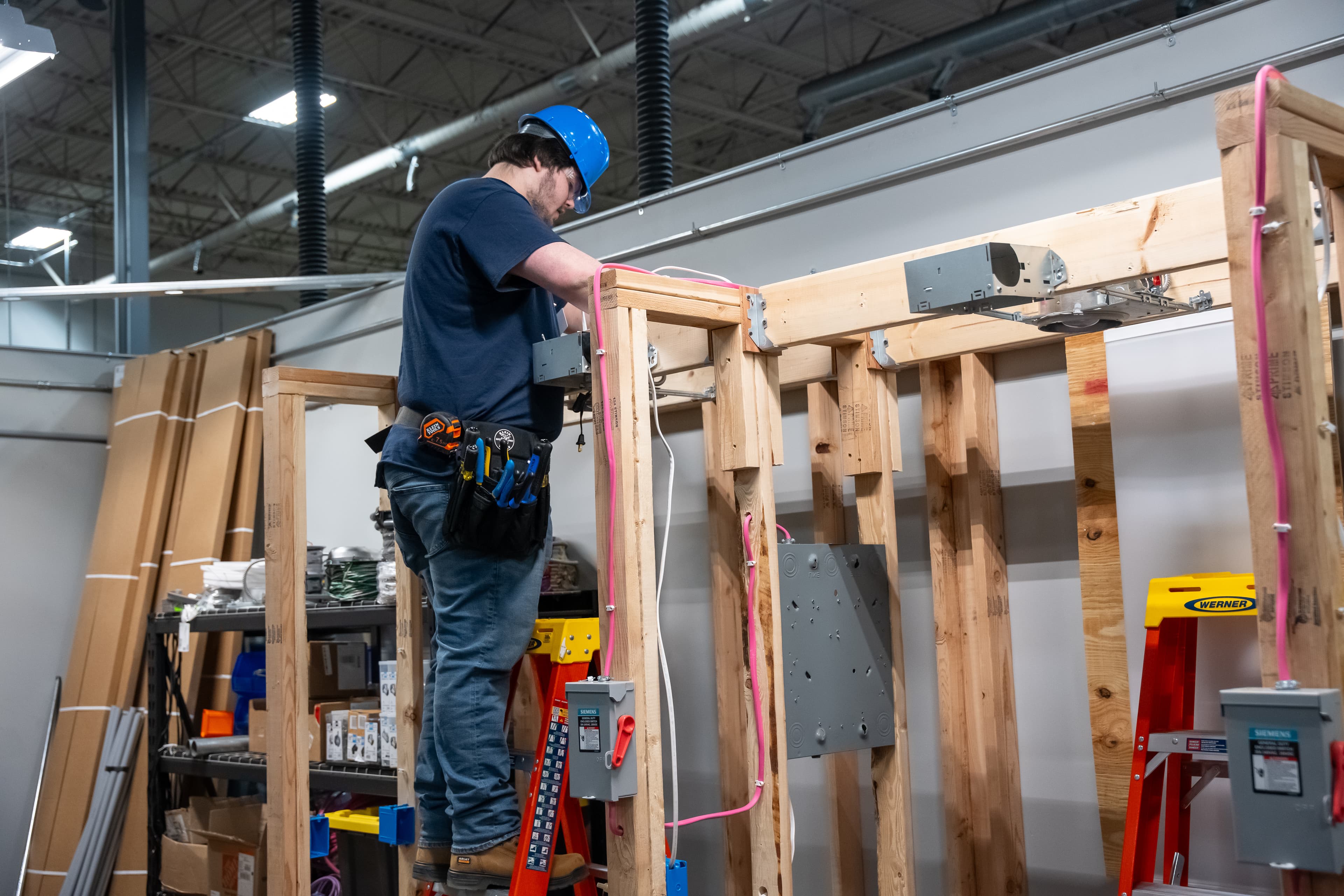
Once foundational knowledge is in place, training shifts heavily into hands-on lab work. This is where concepts move from theory into practice. Many electrical training programs emphasize structured lab environments designed to simulate real job conditions.
Students often practice installing and routing electrical wiring using industry-standard materials while learning how entire systems function together. This may include running conduit, pulling and terminating wires, installing outlets and switches and connecting electrical panels.
As training progresses, students also learn that electrical systems don’t always work as expected — and part of the job is understanding why. Lab activities may involve installing lighting and control systems, testing circuits for faults and diagnosing common electrical problems before replacing or repairing components.
Alongside hands-on installation and troubleshooting, students learn how to interpret the diagrams that guide real electrical work. First-year training typically includes reading electrical schematics, wiring diagrams and construction blueprints.
Together, these skills help students build coordination, precision and familiarity with real components while developing logical thinking and systematic testing habits, abilities that support safe, accurate work in entry-level electrical roles.
Developing Technical and Workplace Skills
Electrical training isn’t only about tools and systems. Many programs also focus on professional habits that support potentially long-term career growth.
Problem-solving
Electrical work often requires analyzing situations, identifying issues and applying solutions safely. Training environments provide structured scenarios that help students practice critical thinking under supervision.
Attention to detail
Small mistakes in electrical work can have serious consequences. Students learn to follow procedures carefully, double-check connections and maintain accuracy in measurements and installations.
Working independently and in teams
Professionals in the electrical industry may work alone or collaborate with contractors, technicians and supervisors. Training environments often include both individual tasks and group projects to reflect real workplace dynamics.
Many students also use campus resources designed to support academic and professional development. UTI offers a range of student support services that may include tutoring, career guidance and academic assistance.1
Financial planning is also part of preparing for training. Information about grants, scholarships and other funding options is available through UTI’s financial aid resources.10
Preparing for Entry-Level Electrical Roles
As the first year of an electrical training program progresses, training begins to connect directly to job responsibilities.
Entry-level professionals commonly assist with installations, maintenance and repairs under supervision. First-year training helps build the skills needed to:
- Install wiring and electrical devices.
- Follow safety procedures on job sites.
- Use testing equipment to verify system performance.
- Interpret technical diagrams.
This practical preparation reflects real industry expectations. The National Electrical Contractors Association notes that electrical workers must understand codes, safety procedures and technical systems to perform effectively in professional environments.
An electrical training program may also help students prepare for the transition into the workforce. UTI’s programs offer career support services such as resume development, interview preparation and employer networking opportunities to help students take the next step after training.1
Depending on the program, students may work toward an electrical certificate or begin preparing for licensing requirements that vary by state. Certification pathways typically involve continued training, hands-on field experience and examinations that verify technical knowledge and safety competency.
Industry standards play an important role in this process. The National Fire Protection Association (NFPA), which publishes the National Electrical Code, establishes widely recognized safety guidelines used across the electrical industry. Learning these standards early helps students understand professional expectations and supports long-term career advancement efforts.
Take the First Step Toward an Electrical Career
Your first year in an electrical training program is where everything starts to click. You move from learning how electricity works to building, wiring and troubleshooting real systems to help develop job-ready skills and confidence.
Every lab, every lesson and every hands-on challenge is designed to move you closer to the work professionals in the electrical industry do every day — installing systems, solving problems and helping keep homes, businesses and entire communities running.
If you’re ready to start building skills that power real careers, you can take the next step by enrolling today!
Sources
Universal Technical Institute of Illinois, Inc. is approved by the Division of Private Business and Vocational Schools of the Illinois Board of Higher Education.