
Education
A Day in the Life of a UTI Welding Student
Curious about welding school? Discover what a typical day looks like for a UTI welding student — from hands-on training to career-focused learning.
In This Article
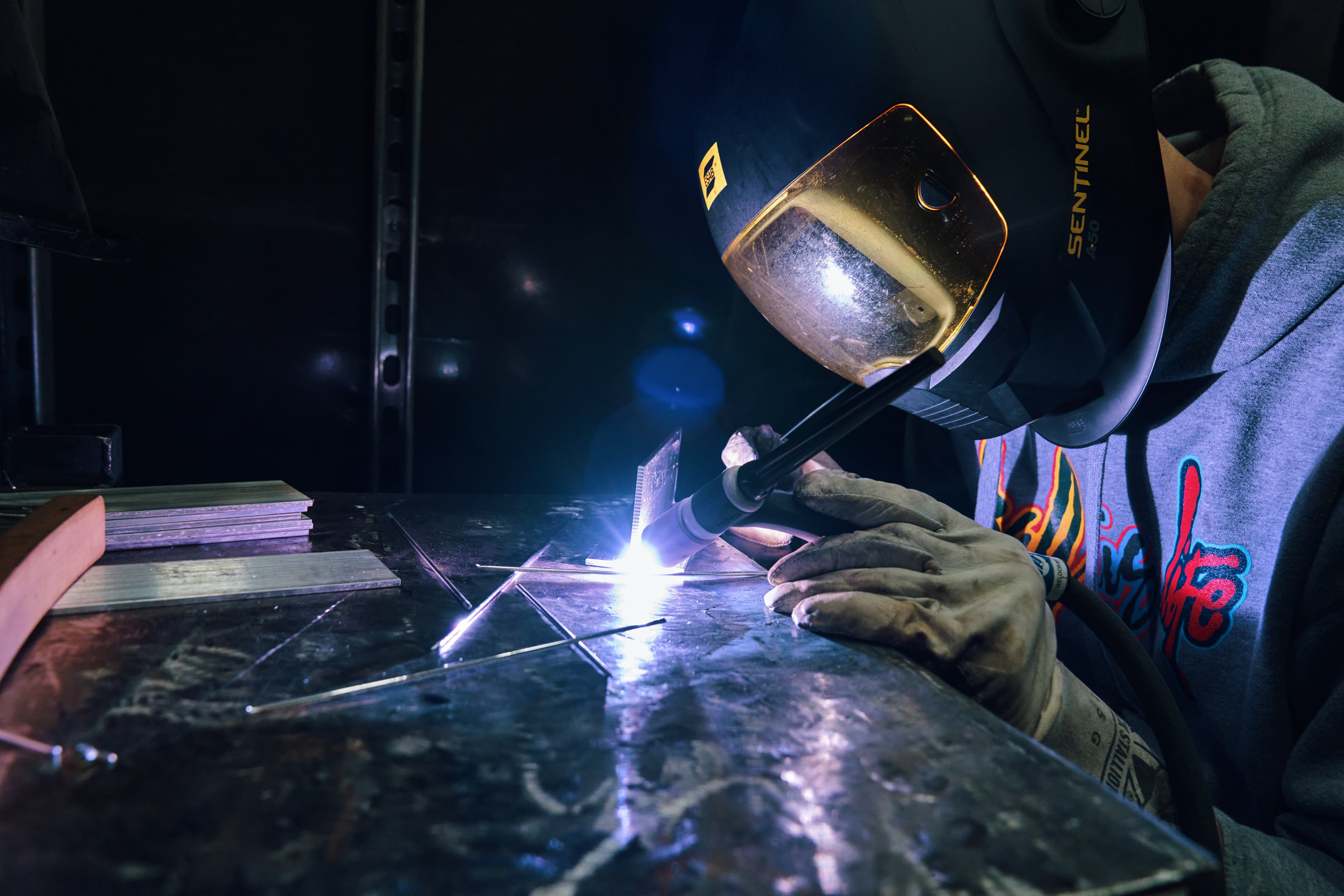
Curious about what it’s like to study welding at Universal Technical Institute (UTI)? Whether you’re fresh out of high school, making a career change or transitioning out of the military, welding training can set you on a path toward a hands-on career.1 Welding is more than just melting metal together, it’s about precision, focus and skill that’s valued across industries from construction to manufacturing.
If you’ve been wondering “what does a welder do?” and what training looks like, we will walk you through a typical day in the life of a UTI welding student. Keep reading to learn more about UTI’s Welding Technology program.
Starting Strong: Gearing Up for the Day
Most welding students arrive on campus early, ready to suit up for a full day of training. Before they even strike their first arc, they get into the right protective gear: welding helmet, gloves, steel-toe boots and fire-resistant clothing. This personal protective equipment (PPE) is essential because welding involves heat, sparks and molten metal.
Once geared up, students typically meet with instructors for a quick rundown of the day’s lessons. This can include safety protocols, going over the welding procedure specifications for the weld they will be performing, and walking through the lab schedule. Safety is emphasized at every step since welding requires precision and awareness in environments where hot metal and heavy equipment are involved.
The first part of the school day often focuses on preparation: setting up workstations, checking tools and welding machines, and ensuring everything is in proper working order. Students also learn the importance of inspecting their PPE and equipment to avoid accidents before training starts.
Just as important as the physical prep is the mental one. Welding isn’t just about technical skills; it’s about focus, patience and problem-solving. Students are encouraged to get into the right mindset, whether that’s by reviewing their notes, visualizing proper technique, or reminding themselves to stay calm and steady in the booth. By the time the first sparks fly, they’re mentally and physically ready to take on the challenges of the day.
Learning by Doing: Inside the Welding Lab
Once students are suited up and ready, most of their day is spent inside the welding lab — where the real learning happens. While classroom lessons or digital coursework cover theory, safety standards and terminology, the lab is where students can turn knowledge into skill.18
Each student has the opportunity to practice a range of welding processes, including:
- MIG (gas metal arc welding): Often used in manufacturing and automotive industries for its speed and versatility.
- TIG (gas tungsten arc welding): Known for its precision, it is often used on thinner metals like aluminum and stainless steel.
- Stick welding (shielded metal arc welding): Common in construction and repair work, ideal for outdoor conditions.
- Flux-cored arc welding: Useful for heavy-duty projects that require deep penetration and high productivity.
In the lab, students rotate between welding booths, fabrication stations and testing areas to simulate real-world jobsite conditions. One day, they may be welding flat plates; the next, they might tackle vertical joints, pipes or structural steel components. This variety ensures that students gain practice in multiple positions and scenarios they could encounter on the job.
Beyond welding arcs, students also learn how to set up and maintain their equipment properly. They get comfortable using grinders, clamps, torches and measuring tools, developing the attention to detail that employers value. Instructors provide live feedback as students work, pointing out how to improve bead consistency, penetration or weld appearance.
The lab environment is designed to feel like a workplace. Students are encouraged to stay on schedule, keep their areas organized and practice welding under conditions that mimic what they would see in the field. This mix of repetition, variety and real-world simulation is designed to build both technical ability and professional discipline.
By the end of a typical lab session, students can walk away with not just improved welds but also a deeper understanding of what it means to work as a welder in today’s industries. Learn more about UTI’s welding courses here.
Support Between Sparks: Breaks, Resources and Community
Welding can be physically demanding, with long hours spent in booths surrounded by heat, sparks and the steady hum of equipment. That’s why breaks throughout the day are a key part of keeping students energized and focused. Some students use this time to grab a quick meal or hydrate, while others take a few minutes to stretch and reset before heading back into the lab.
But breaks aren’t just about recharging physically, they’re also moments to regroup mentally and connect with others. Many students chat with classmates about challenges they’re facing in the booth, swapping tips or sharing what’s worked for them. This peer-to-peer exchange creates a sense of community, where students support each other’s progress and celebrate small wins along the way.
Instructors are another important part of this rhythm. During downtime, they’re often available for quick check-ins, whether that’s reviewing a weld, helping troubleshoot equipment setup or giving advice on technique. Their feedback can make a big difference, helping students correct mistakes early and build confidence faster.
UTI also offers resources beyond the lab that students can lean on during their day. Academic support staff, tutoring services and other campus resources are available for students who want extra help understanding concepts like blueprint reading or welding math. Career Services is also just down the hall, where students can stop in to learn more about resume writing, interview prep or upcoming industry visits.
These moments between lab sessions remind students that they’re not navigating their welding training alone. Whether it’s an instructor’s encouragement, a peer’s advice or a quick chat over lunch, the support systems built into the UTI campus play a big role in helping students succeed.
More Than Welding: Building a Career, Not Just a Skill
A UTI education goes beyond striking an arc. While much of the day is spent in the lab, UTI’s welding program is designed to prepare students for more than just technical ability; it’s about building a foundation for pursuing a career after graduating. That means students don’t just learn how to weld; they are also taught the professional standards and industry expectations that go along with it.
Welding students also learn critical career-focused skills, such as:
- Blueprint reading: Understanding technical drawings to prepare accurate welds.
- Inspection standards: Learning how welds are tested and evaluated for strength and quality.
- Safety codes: Gaining familiarity with the Occupational Safety and Health Administration (OSHA) and industry regulations that protect workers.
Instructors consistently connect lab practice to the realities of the workplace. They explain how techniques students learn today could be applied on a construction site tomorrow, or how certain safety codes must be followed no matter the industry. This career-focused approach helps students think like professionals while they’re still in training.
UTI also integrates career preparation into the student experience. Through our Career Services department, students can gain access to resume-building workshops, interview practice and networking opportunities. Guest speakers and industry recruiters also visit campus, giving students a chance to hear directly from professionals about what employers look for in entry-level welders.
This combination of technical training and career support can help students prepare to transition from school to the workplace with greater confidence. By the time graduation approaches, they’ve not only developed welding skills but also learned how to present themselves as job-ready professionals.
Ignite Your Welding Career With UTI
A typical day as a UTI welding student blends safety, practice, mentorship and career preparation. From gearing up in the morning to refining techniques in the lab and preparing for the future with Career Services, students can build a foundation for entry-level opportunities in the welding industry after graduation.
If you’re ready to take the next step, UTI offers a Welding Technology program designed to help you prepare to turn your interest in welding into a career path. Apply today to start building your future.
Universal Technical Institute of Illinois, Inc. is approved by the Division of Private Business and Vocational Schools of the Illinois Board of Higher Education.
Train for the Future
Imagine waking up each day excited to work in a career you’re passionate about – one where your hands-on skills make a real impact. UTI’s vocational trade school can help you gain the skills and confidence to pursue what you love.
