
Education
Trade School vs. Traditional Classroom: Which Offers More Hands-On Training?
Want an education with hands-on training, but not sure where to start? Read more about trade schools vs. traditional classrooms!
In This Article
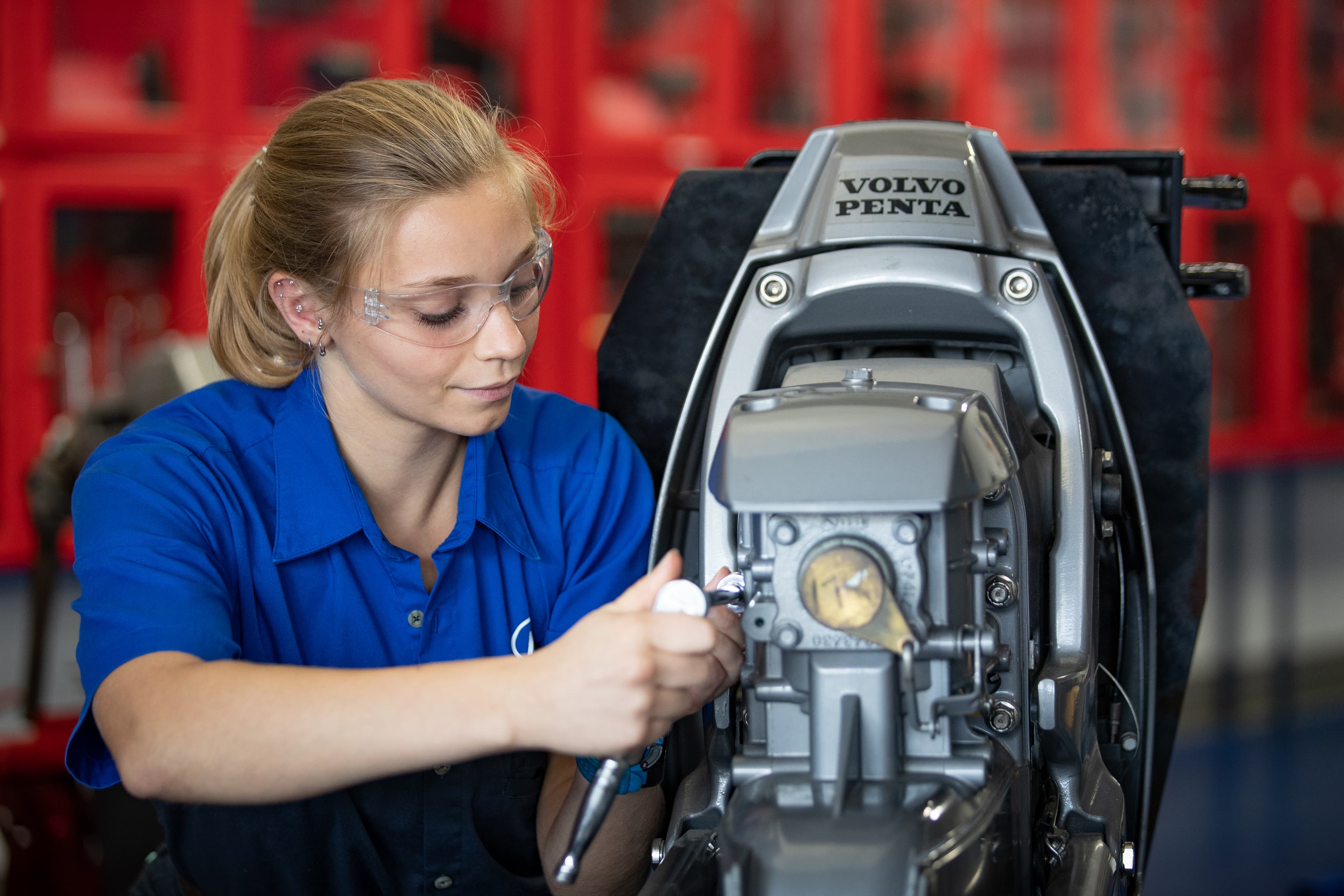
When exploring your options after high school, one of the biggest questions you might ask is: Where will I get the most real-world training?
Comparing trade school and a traditional classroom-based college can help you decide which path aligns best with your goals, especially if hands-on learning matters to you.
If you’re someone who prefers doing over just listening, understanding the difference between these two education models is key.
What Is a Traditional Classroom Experience?
Traditional four-year colleges and universities often focus heavily on lectures, textbooks and theory-based instruction. Students typically spend time:
- Sitting in large lecture halls.
- Completing reading assignments and research papers.
- Studying broad general education subjects.
- Learning foundational theories before applying them.
While many universities do offer labs, internships and group projects, hands-on opportunities may not begin until later in a program. Much of the early coursework is centered on academic foundations rather than job-specific skills.
For students pursuing careers that require advanced degrees, such as law, medicine or research, this structure makes sense. However, for those who want to enter the workforce quickly with job-ready skills, the experience can feel less directly connected to a specific career path.
What Is a Trade School Learning Environment?
Trade schools, also known for offering vocational training, are designed to focus on skill development for specific industries. Instead of spending years studying general subjects, students in trade school hands-on programs often begin learning with tools, equipment and simulations early in their training.
In many programs, you can expect:
- Lab-based learning environments.
- Industry-standard tools and equipment.
- Career-focused curriculum.
- Instructors with field experience.
- Smaller class sizes.
This structure emphasizes practical training from day one. Rather than primarily learning through lectures, students often practice the exact skills they would use in their chosen careers.
At Universal Technical Institute (UTI), one of the key focuses of our learning model is to have students gain knowledge and skills training in hands-on labs.18 The goal is to build confidence and technical ability before entering the workforce, and to learn the same way as professionals do in the field.1
Read: What Is a Trade School & Is It Right for You?
Comparing Hands-On Training: Side-by-Side
Here’s how trade schools and traditional colleges often differ when it comes to experiential learning:
- When hands-on training begins: When you enroll in a trade school program, you’ll be jumping into practical training with hands-on lab learning early in the program. A traditional college doesn’t have a hands-on focus, so it would likely happen later in the program (if at all).
- Focus of curriculum: A traditional college is going to have a focus on a broader academic experience, while trade school is focused on career-specific skill development.
- Learning style: Trade schools will have skill-based, interactive training. While trade school programs often do have lecture components, they’re balanced with a good amount of hands-on training. The lectures themselves are streamlined to train students the same way techs are trained in the field. Traditional colleges tend to be lecture-heavy with an emphasis on theory, and they may not be tailored to your particular field of interest.
- Program length: A traditional college experience is typically going to last four years, which is more than double the length of most trade school programs. At UTI, all our programs can be completed in two years or less, with many programs that can be completed in less than a year.
Why hands-on training matters
Hands-on learning can help students:
- Build muscle memory and technical confidence.
- Understand how classroom concepts apply to real tasks.
- Develop problem-solving skills in realistic environments.
- Prepare for entry-level roles faster.
For many careers in the skilled trades, employers look for candidates who can step into a role and contribute. Programs that prioritize career preparation through applied skill-building may help bridge the gap between graduation and employment.
Read: The Difference Between College, Trade School and Universal Technical Institute
Is One Better Than the Other?
There isn’t a one-size-fits-all answer.
A traditional degree may be ideal if:
- You’re pursuing a field that requires a bachelor’s or advanced degree.
- You enjoy academic research and theoretical study.
- You want a broader liberal arts education.
A trade school may be ideal if:
- You prefer learning by doing.
- You want targeted vocational training.
- You’re interested in entering the workforce in a shorter timeframe.
- You value structured practical training aligned with specific industries.
The right path depends on your learning style, career goals and timeline.
Choosing the Path That Fits You
If getting hands-on training is a top priority, exploring trade school hands-on programs can be a strong starting point. These programs are built around applied learning, helping students develop industry-relevant skills while focusing on direct career preparation.
Before making a decision, consider:
- How do you learn best — by listening or doing?
- How soon do you want to enter the workforce?
- Does your desired career require a four-year degree?
- Are you looking for specialized vocational training or a broad academic experience?
By answering these questions, you can better determine which educational model offers the type of learning that aligns with your future goals.
Train for a Hands-On Career at Universal Technical Institute
Both traditional colleges and trade schools provide valuable educational pathways. The key difference often lies in how learning happens. For students who thrive in environments centered around practical training and applied skills, trade schools may offer a more immersive, hands-on approach.
Ultimately, the best choice is the one that supports your strengths, fits your goals and prepares you for the career you want to build.
If you’re interested in pursuing a hands-on career, training at UTI may be a great fit for you. Talk to one of our Admissions Advisors about the process and get your questions answered.
Ready to jump in? Enroll today.
Universal Technical Institute of Illinois, Inc. is approved by the Division of Private Business and Vocational Schools of the Illinois Board of Higher Education.
Train for the Future
Imagine waking up each day excited to work in a career you’re passionate about – one where your hands-on skills make a real impact. UTI’s vocational trade school can help you gain the skills and confidence to pursue what you love.
