
Education
Steps to Choosing the Right Trade Program for You
Interested in trade school but not sure what program would be a good fit? Read our tips for choosing a program here.
In This Article
Choosing a trade school education can be an exciting step toward training for a hands-on career doing something you’re interested in. But with so many options available, you may be wondering how to choose a trade specialty that truly fits your goals.
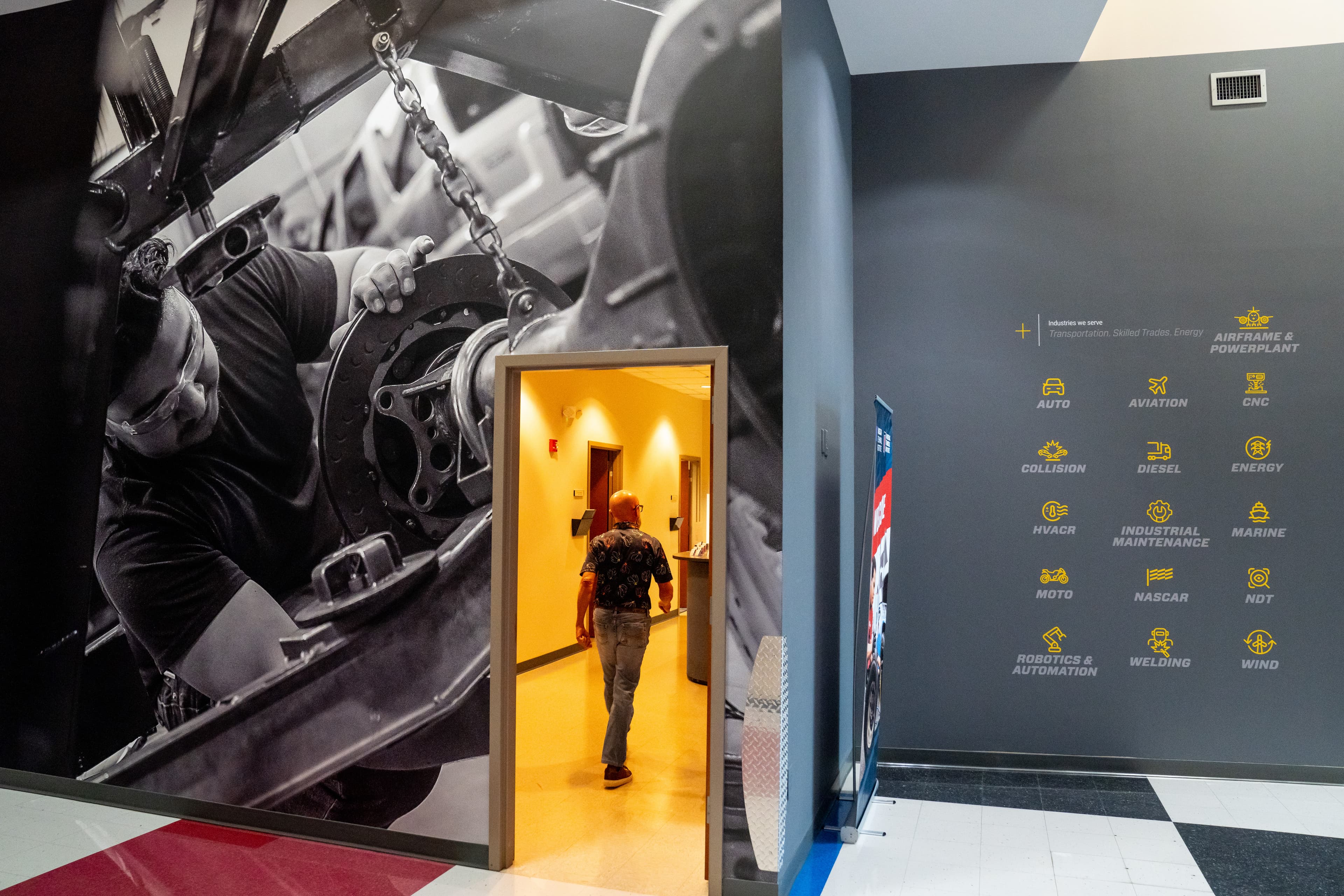
There’s a wide range of opportunities to choose from when it comes to the trades. At Universal Technical Institute (UTI), we offer training programs for the transportation, skilled trades and energy fields — the variety can help students find something they’re truly passionate about!1
The key is finding a trade program that aligns with your interests, strengths and long-term vision. Keep reading our guide for some tips that can help you make a confident decision.
1. Start With Self-Assessment
Before comparing schools or programs, take time to reflect on yourself.
Ask questions like:
- Do I enjoy working with my hands?
- Do I want a career that involves travel?
- Do I like troubleshooting and problem-solving?
- Do I enjoy working independently or as part of a team?
- Am I comfortable in physically active environments?
- Am I okay working outdoors, or would I prefer an indoor environment?
Understanding your interests and work style is the foundation for learning how to choose a trade specialty that feels right long-term.
You can take our career quiz in less than three minutes to see what trade program aligns with your goals!
2. Research Different Trade Specialties
There are many trades, each offering unique responsibilities and environments. At UTI, they fall into different buckets: Transportation, energy and skilled trades.
- Automotive technology
- Diesel technology
- Welding and fabrication
- Electrical130
- HVACR
- Robotics and automation
- Motorcycle technician
- Marine technician
- Airframe and powerplant
- Industrial maintenance
- Collision repair
- Wind turbine technician
- Energy technology
- Non-destructive testing
These trade specialties connect to different industries and career paths. For example:
- An automotive technician may work in a shop environment or fleet mechanic setting.
- Welders may find work in manufacturing, construction or industrial settings.
- Electrical technicians may support facilities, plants or production systems.
- HVACR technicians work on heating, cooling, ventilation and refrigeration systems in both residential and commercial settings.
Research daily job duties, typical work environments and potential advancement opportunities to see which field excites you most.
Quick tip: Our blog can be a great resource to find out more about a specialty you’re interested in — use the “categories” list on the right-hand side to find articles about each of our program focuses!
3. Identify Potential Career Paths
When evaluating a trade program, look beyond entry-level roles. Consider where the training could lead over time.
Questions to ask:
- What entry-level roles does this program prepare students for post-graduation?
- Are there advanced roles available over time with experience?
- Does the industry offer long-term growth?
- Can I specialize further down the road?
Many skilled trades offer numerous potential entry-level career paths. There may also be opportunities to advance into higher roles with time, experience and hard work. Choosing a trade that allows room for advancement can help you build a long-term plan, not just secure your first job.
4. Evaluate the Program’s Hands-On Training
One of the biggest advantages of a trade school is applied learning. When comparing programs, look closely at:
- If hands-on lab time is a focus of the curriculum.
- The type of equipment and tools used.
- What experience instructors bring to the table.
- If the curriculum is designed with industry input.
A strong trade program should focus heavily on skill development and practical application. The more you practice in training, the more confident you may feel entering the workforce.
At UTI, we have hands-on labs that are a core part of our learning model.18 We teach students using the same methods as the industry and with state-of-the-industry tools and tech. Instructors bring a wealth of real-world experience, and curricula are designed with input from leading employers and manufacturers.
5. Consider Program Length and Schedule
Different programs vary in duration. Some may take several months, while others may run longer depending on the specialty.
Think about things like how soon you want to be ready to enter the workforce and what kind of schedule works for you. Some trade programs have various schedules and times for their programs that can accommodate students.
Understanding the time commitment helps narrow down the right trade program for your lifestyle and goals.
A great thing about UTI’s programs is that all can be completed in two years or less, with many that can be finished in less than a year. The goal is to help you spend less time at school and more time in the field that you’ve trained for.
6. Think Long-Term: Lifestyle and Work Environment
Every trade has its own pace and environment — no two are exactly the same. Doing research about what you’re interested in can ensure you’re prepared for what’s to come after you graduate.
For example:
- Some roles may involve outdoor work, while others take place in climate-controlled shops or industrial facilities.
- Some careers may require travel, while others follow a more predictable schedule.
- Some are more demanding physically than others.
As you evaluate how to choose a trade specialty, consider not only the technical skills involved but also the lifestyle that comes with the job.
7. Visit a Campus or Speak With Admissions
Sometimes the best way to decide is to see it for yourself.
Touring a campus or connecting with an Admissions Advisor can give you extra information to work with when making your decision.
You’ll be able to ask detailed questions about curriculum, understand day-to-day student life, learn about potential career paths in more detail and compare trade specialties side-by-side.
Seeing labs and classrooms in person on a campus tour can help you picture yourself in the environment and make your search feel even more “real!” Plus, you’ll get a chance to talk to instructors and ask them specific questions.
All of UTI’s campuses offer campus tours at various times and days throughout the week, so don’t hesitate to book a time to come down!
Get Skilled Trades Training To Prepare for a Career
Learning how to choose a trade specialty doesn’t have to feel overwhelming. By doing research, evaluating available trade programs and exploring potential career paths, you can narrow your options and move forward with confidence.
The right trade program is one that supports your strengths, fits your lifestyle and prepares you with the practical skills needed to pursue a meaningful career.
Taking the time to evaluate your options now can help set the foundation for your future.
Speak with an Admissions Rep to ask questions and get more information on our programs. We’re here to help!
Universal Technical Institute of Illinois, Inc. is approved by the Division of Private Business and Vocational Schools of the Illinois Board of Higher Education.
Train for the Future
Imagine waking up each day excited to work in a career you’re passionate about – one where your hands-on skills make a real impact. UTI’s vocational trade school can help you gain the skills and confidence to pursue what you love.
