
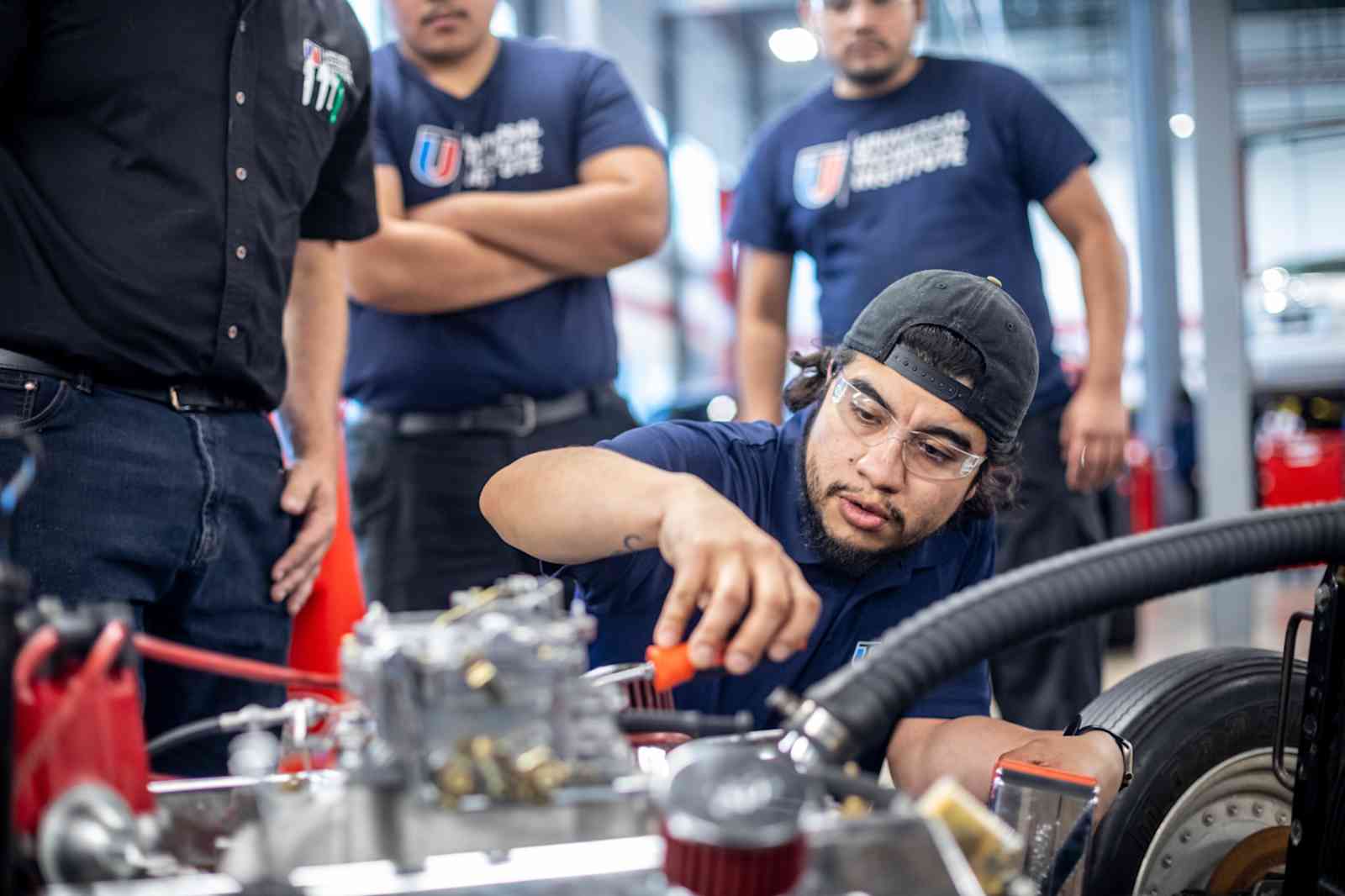
Want a career that keeps you moving, not stuck at a desk? Hands-on careers can be a strong fit if you like building, fixing, testing or troubleshooting real systems.
Trade school careers also tend to follow a faster path. With focused training, many students can build job-ready skills in two years or less and start aiming for entry-level technician jobs sooner than a traditional four-year route.1
This guide walks through trade school programs you can finish in under two years and how Universal Technical Institute's (UTI) programs support students with hands-on training and career services.18
Benefits of Hands-On Career Paths

Hands-on careers involve jobs where you learn by doing. You work with tools, equipment and real systems to solve problems and get results you can see.
For students who want a faster path than traditional college, training for trade school careers can feel more direct. You learn specific skills tied to real roles, so you spend less time on unrelated courses and more time building the basics employers look for in technician jobs.
Train in 1 Year or Less
Many trade school careers can be trained for with programs that take less than a year. No program of ours lasts longer than two years, and several can be completed in less than one year.
Advanced Non-Destructive Testing

- Program Length: 9 months
Catch problems before they turn into big failures. You can train to inspect aircraft, pipelines and critical parts using testing methods that do not damage what you are checking. Students practice techniques like magnetic particle, ultrasonic and radiographic testing so they can help protect people, equipment and systems.
CNC Machining
- Program Length: 9 months
Make precise parts that help power modern industries. CNC machinists use computer-guided machines to shape metal and other materials into exact components. In this program, students can learn how to program and operate CNC equipment so they can help produce parts used in engines, aerospace and manufacturing.
Collision Repair & Refinish Technology
- Program Length: 9–13 months*
*Dependent on program
Fix what a crash breaks. You can train to repair damage, prep surfaces and refinish vehicles using tools and methods used in real body shops. This program is built for students who like hands-on work and want to see clear before-and-after results from their effort.
Diesel Technology
Exact program title varies by campus.

- Program Length: 11–12 months*
*Dependent on location
Train on the engines that keep work moving.18 You can learn how to diagnose, service and repair diesel systems used in trucks, equipment and power units. In less than a year, you can build skills employers need and prepare to test for ASE certification.7
HVACR Technician
- Program Length: 9–10 months*
*Dependent on location
Learn to keep indoor spaces comfortable and safe. Training covers heating, cooling, ventilation and refrigeration systems in hands-on labs that reflect real job sites. Students also learn basics like electrical components, diagnostics and safety standards used in the field.
Industrial Maintenance Technician
Some campuses offer an upgraded version of this program that includes additional electrical and electronics training.
- Program Length: 7–10 months*
*Dependent on location
Learn how to keep machines running. You can train to maintain, troubleshoot and repair the equipment used in places like manufacturing and energy facilities. This path could be a strong fit if you like figuring out how systems work and fixing problems fast.
Welding Technology
Exact program title varies by campus.

- Program Length: 9–10 months*
*Dependent on location
Train in the core welding processes used across industries. Students practice in individual booths and get guidance from instructors while building real techniques. You can learn skills used in construction, fabrication, shipbuilding and more.
Wind Turbine Technician
Some campuses offer an upgraded version of this program that includes additional electrical and electronics training. Exact program title varies by campus.
- Program Length: 7–10 months*
*Dependent on location
Train for work that is physical, technical and high-impact. Students can learn to service wind turbines and build skills tied to safety, electrical basics and repair.130 Coursework also includes climb and rescue training, which matters in this field.
Train in 1-2 Years
Some trade school careers need more time to prepare for because the systems are more complex. Even then, many students can still train in two years or less and build strong entry-level skills for technician jobs.
Automotive & EV Technology
Exact program title varies by campus.

- Program Length: 12 months7
From gas engines to EV basics, this training helps students learn how to inspect, diagnose and repair modern vehicles. It is built to support hands-on learning and ASE certification prep.18 You can train on key systems that show up in real shops, so you can step toward entry-level work with more confidence after graduating.
Motorcycle Technician School
- Program Length: 12-14 months*
*Dependent on program
Train for powersports work that is detailed and fast-paced. Students can learn how to diagnose engines, test performance and repair key systems found in motorcycles, ATVs and more. This could be a strong fit if you want hands-on training tied to performance and real brand standards.
Airframe & Powerplant Technician
- Program Length: 18-20 months*
*Dependent on location
Train to inspect, maintain and repair aircraft systems from nose to tail. This FAA-aligned program covers topics like airframe electrical, engines, hydraulics and troubleshooting. It can put you on a path toward a high-skill career.79
Robotics & Automation Technician
Some campuses offer an upgraded version of this program that includes additional electrical and electronics training.

- Program Length: 12-19 months*
*Dependent on location
Train for work where machines and software meet. Students practice skills like programming basics, troubleshooting and working with control systems in hands-on labs. This training is designed to support entry-level roles in automation-heavy workplaces.
Electrical, Electronics, & Industrial Technology
Exact program name varies by campus.
- Program Length: 12-19 months*
*Dependent on location
Build a foundation in electrical systems and electronics used in homes, buildings and industrial settings.131 Students practice wiring, troubleshooting and working with modern equipment. This path can support careers tied to growing tech-based infrastructure.
Marine Technician Specialist
- Program Length: 12-14 months*
*Dependent on program
Train to service marine engines and systems used on boats. Students learn basics like fuel systems, electrical systems and rigging. This is a strong fit if you want hands-on work tied to life on the water and marine brands.
Aviation Maintenance Technology

- Program Length: 18-24 months*
*Dependent on location
Earn an associate degree while training hands-on in aviation maintenance. Students train on systems like airframe electrical, turbine and reciprocating engines, hydraulics and more. This path is built to help students prepare for aviation maintenance technician work and A&P testing knowledge.79
Trade School Careers FAQs
1. What are trade school careers?
Trade school careers are jobs that use hands-on skills, like repair, installation, testing or maintenance. Training is focused on the skills needed for entry-level technician jobs, not broad academic study.
2. Can you prepare for hands-on careers in two years or less?
Yes. Many trade school programs are designed to be completed in two years or less. Some can take under one year, depending on the program and campus.
3. What kinds of technician jobs can trade school prepare you for?
It depends on the program, but training may support entry-level roles in automotive, diesel, welding, HVACR, robotics, aviation, electrical and more. These are hands-on careers where daily work is tied to real equipment and systems.
5. How do you choose the right trade school career path?
Start by picking the type of work you can see yourself doing each day, like fixing engines, wiring systems or working on aircraft. Then compare program length, campus availability and the kind of hands-on training you will get.

Train for Trade School Careers!
Universal Technical Institute offers trade school training built for students who want to be ready to start working faster instead of spending four years in lecture halls. Our programs can be completed in two years or less and combine online learning with hands-on lab time, so students can build job-ready skills and practice them on real industry equipment.
Want to explore programs, campuses and steps to get started? Speak with an Admissions Representative by calling 1-800-834-7308 or requesting information online, ask about schedules and discuss financial aid, scholarships and grants for those who qualify.
Ready to get started? Apply now for hands-on training.
Universal Technical Institute of Illinois, Inc. is approved by the Division of Private Business and Vocational Schools of the Illinois Board of Higher Education.