
If you’re considering an electrical career, you’ll quickly find two main paths: becoming an apprentice or attending an electrical trade school. Both can help you prepare to enter the field, but they differ in structure, timeline, cost and the kinds of opportunities they can open up.
Before comparing, it’s important to understand the distinction between an entry-level electrical or electronics technician and a licensed electrician. Trade school programs, like the Electrical, Electronics, and Industrial Technology program at Universal Technical Institute (UTI), train students for entry-level roles after graduation.130 UTI’s electrical programs do not prepare graduates for employment as electricians, and graduates will not be eligible for certification as an electrician without additional training and meeting state licensing requirements. Becoming a licensed electrician usually requires completing additional state-specific steps, including apprenticeship hours and exams.
Keep reading to see how trade school and apprenticeships compare in training, cost and career opportunities.
What You Learn in Trade School vs. Apprenticeships
Trade school
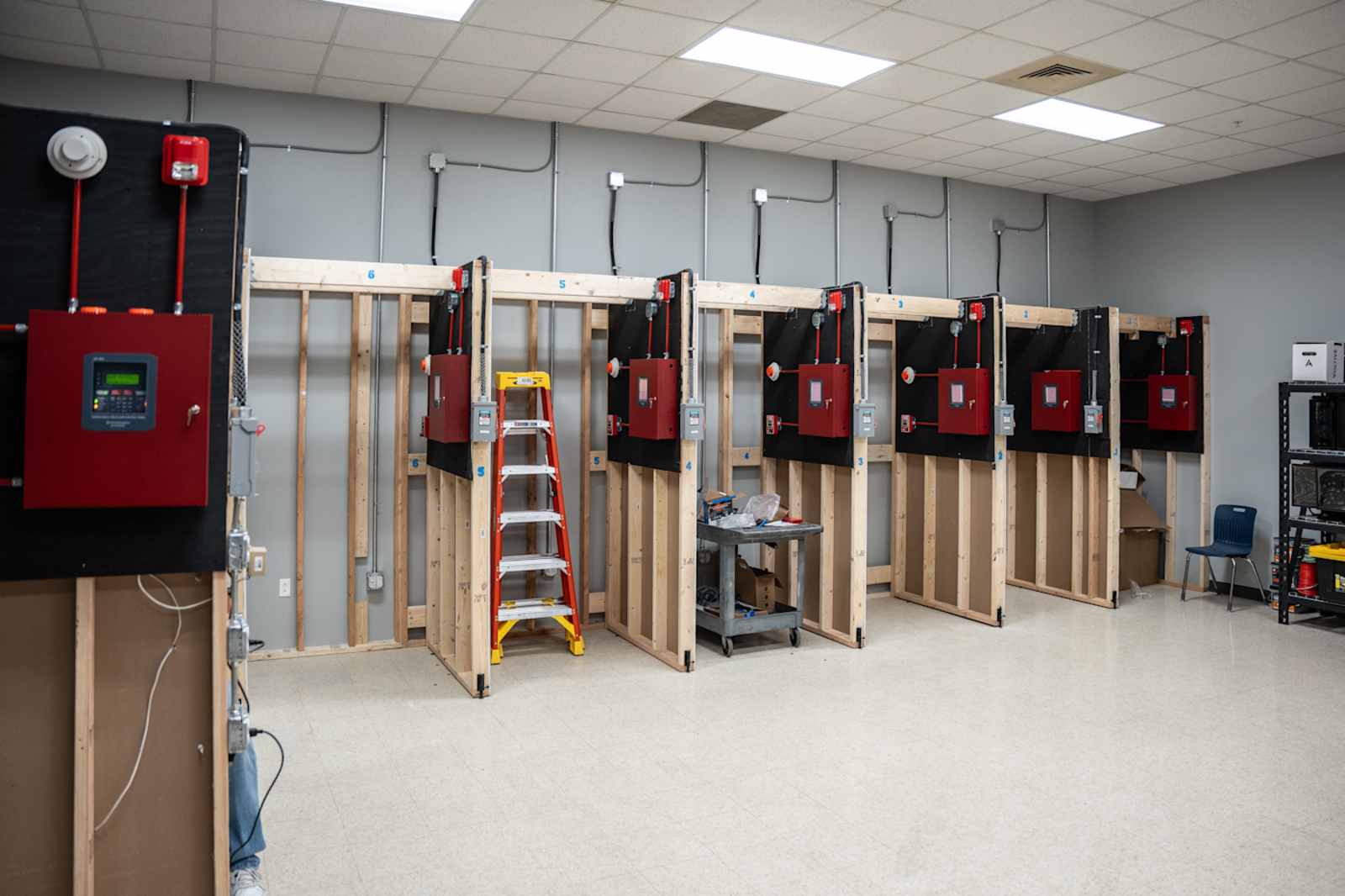
At an electrical trade school, students follow a structured curriculum that blends classroom instruction with labs. This type of learning environment ensures that every student covers the fundamentals before moving into more advanced topics. Typical subjects include:
- Electrical safety and how to handle equipment properly.
- National Electric Code (NEC) basics and compliance standards.
- Wiring and circuit installation for residential and commercial spaces.
- Troubleshooting techniques for electrical systems.
- Hands-on practice with industry-standard tools and testing devices.
The benefit of trade school is that every student gets access to industry-aligned labs and trained instructors, providing a reliable and repeatable learning experience.
Apprenticeships
Apprenticeships, on the other hand, focus heavily on on-the-job training. Apprentices work alongside licensed electricians and gain experience by assisting with actual projects, from installing wiring in new construction to troubleshooting systems in homes or businesses. Many programs also include classroom instruction, but the hours vary depending on the state, union or employer. While this pathway gives learners a chance to earn while they train, the experience can be less predictable since it depends on the projects available at the time.
Training Time and Speed To Pursuing Employment
Apprenticeship
Most electrician apprenticeships last four to five years, with apprentices working while they learn. While the wage-earning element is appealing, the long timeline means you may wait years before qualifying for licensing exams. In addition, securing an apprenticeship slot can take time, as many programs have limited openings.
Trade school
Trade school offers a faster route. UTI’s program, for example, can be completed in 12 months. Graduates are ready to pursue entry-level technician jobs sooner, giving them the chance to earn, gain experience and prepare for future steps like applying for apprenticeships or licensing exams. For someone eager to enter the workforce quickly, trade school provides a more predictable schedule and finish date.1
Cost, Earnings and ROI
Trade school
Enrolling in an electrical trade school typically involves tuition, lab fees and tools. The upside is access to state-of-the-industry facilities, current equipment and instructors with real-world knowledge. Students may also be eligible for financial aid, scholarships or grants, depending on their situation.10 While this path requires an upfront investment, graduates benefit from structured preparation that can help them qualify for entry-level technician positions after finishing.
Apprenticeship
One of the main appeals of an apprenticeship is that you earn wages while you learn. Apprentices usually start at a percentage of a licensed electrician’s pay and see their wages rise as they gain experience. However, many apprenticeships also involve union dues or classroom costs, and finding a sponsor can delay your start. The trade-off is that you’re already in the workforce while training.
Credentials, Licensing and State Requirements
Trade school
Completing a trade school program doesn’t make you a licensed electrician. Instead, it prepares you with foundational skills for entry-level work in the field. Graduates can pursue roles such as an electrician’s assistant or electrical technician in residential, commercial or industrial environments.77 Importantly, having this training on your resume may strengthen your future applications for apprenticeships or union programs in competitive areas.
Apprenticeship
Licensing requirements vary by state, but most involve passing an exam and completing thousands of documented apprenticeship hours. Apprenticeships provide this required pathway, often making them the traditional route to licensure. However, completing trade school first can give you an edge when competing for apprenticeship slots or preparing for licensing exams later on.
Why Trade School Can Be the Faster, More Predictable Start
Trade school offers advantages that appeal to students who want a straightforward, reliable start.
Easier to start: Clear admissions vs. sponsor selection
Admissions are based on meeting school requirements rather than competing for a sponsor slot.
Fixed schedule and graduation date
Students know their graduation date from the start. Programs typically run on a fixed timeline, so you know exactly when you’ll graduate.
Guaranteed lab access and modern equipment
Labs, current diagnostic equipment and training facilities are available throughout the program. Students train with industry-standard tools and diagnostic systems, similar to what they would see in the field.
Can be completed in 12 months
Programs like UTI’s program can be completed in about a year.
May strengthen future apprenticeship or union applications, depending on local rules
Completing a trade program may make it easier to secure a competitive apprenticeship or union opportunity later.
Which Path Fits Your Goals?
The best path depends on your personal goals and circumstances.
Learning style, timeline, local market, long-term plans
Do you thrive in structured classrooms and labs, or do you prefer learning by doing on real job sites? Do you want to get trained and career-ready within about a year, or are you prepared to commit to several years of apprenticeship training? Some regions may have more apprenticeship openings, while others value school-trained technicians.
Using a trade program to position for future licensure
For many students, a trade school program can serve as a stepping stone toward future licensure, providing the foundational knowledge needed to succeed in apprenticeships and beyond.6
How UTI’s Electrical & Electronics Program Helps Graduates Prepare Faster
Hands-on labs with real equipment and diagnostics
UTI’s Electrical, Electronics, and Industrial Technology program is designed for students who want to get career-ready quickly. In a year, students train on electrical systems, cabling and electronics while learning with the same kinds of diagnostic tools and equipment used in the industry. The program emphasizes hands-on lab application and provides career support to connect graduates with employers looking for entry-level technicians.
Career support and employer connections for entry-level roles
This combination of practical training and career resources enables students to be ready to enter the workforce sooner while also preparing them for additional steps down the road, such as apprenticeships or state licensing, depending on their career goals.
Take the Next Steps
Whether you choose trade school or an apprenticeship, both can help you prepare to build a rewarding electrical career. If you want a faster start with a structured program, UTI’s program could be a great fit. Want to explore things further? Request more information to learn more about the program. If you’re ready to take the first step, fill out an application today!
Universal Technical Institute of Illinois, Inc. is approved by the Division of Private Business and Vocational Schools of the Illinois Board of Higher Education.