
Diesel
Diesel Technician Career Paths: From Entry-Level to Leadership
Learn how diesel technicians can progress from entry-level roles to advanced positions, and how training can help support each step.
In This Article
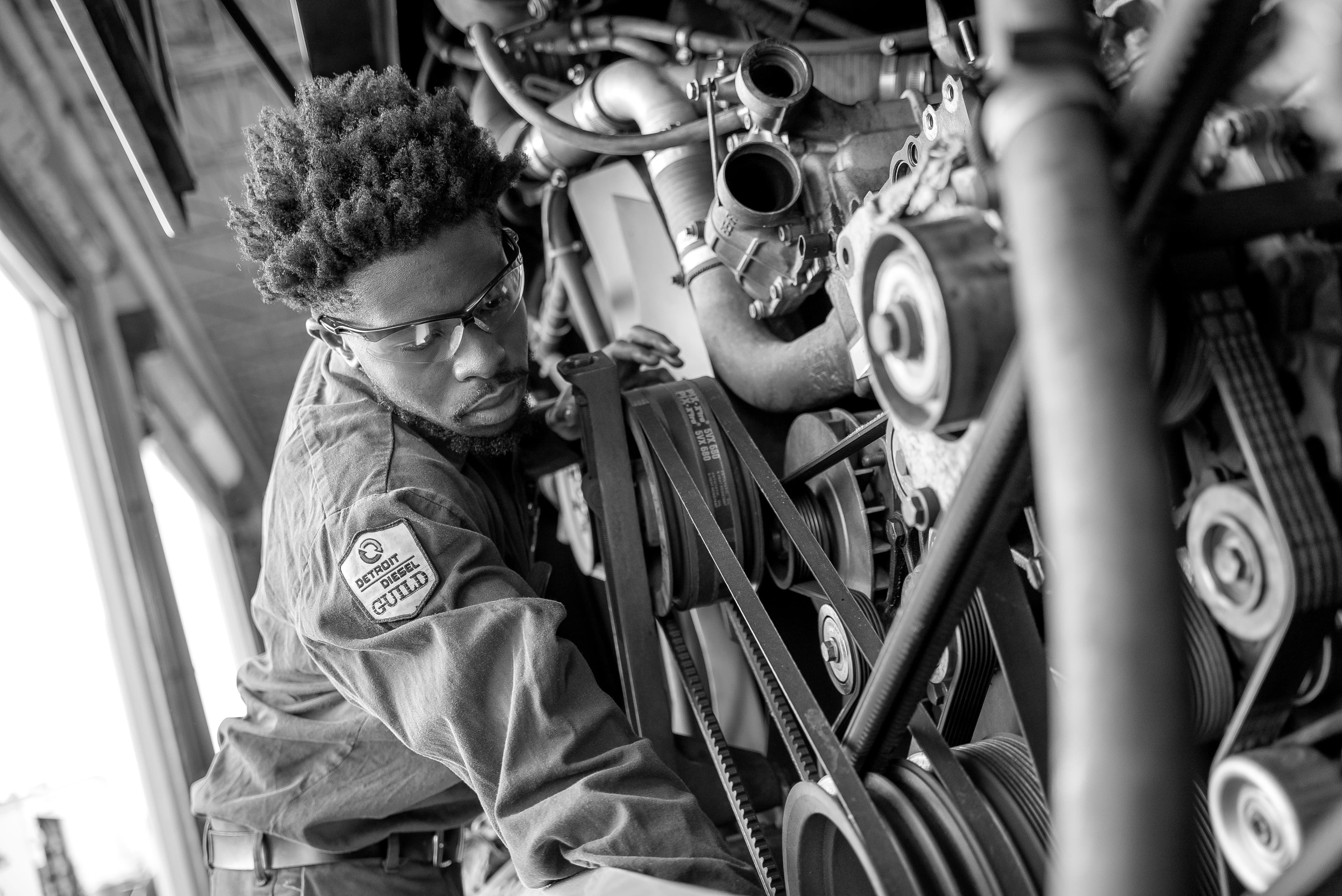
A career as a diesel technician can offer far more than an entry-level role in a repair shop. Across transportation, construction and equipment industries, diesel-powered systems remain essential, which creates a range of diesel mechanic opportunities for technicians who want to grow their skills, increase responsibility and move into leadership roles over time.
Whether you’re just starting out or thinking ahead to where a diesel career can take you, understanding the types of career paths -- including those that involve our Diesel Technology program -- that are possible can help you plan your next move.1
Why Diesel Is a Long-Term Career Choice
Demand for skilled diesel professionals continues to support diesel mechanic opportunities nationwide. Employment of diesel service technicians and mechanics is driven by freight transportation, public transit systems and construction projects that rely on diesel-powered vehicles and equipment.
Beyond steady demand, diesel technology itself is evolving. Modern trucks, buses and heavy equipment increasingly rely on advanced diagnostics, electronic controls and emissions systems. This evolution creates ongoing demand not just for entry-level hiring, but for diesel technicians who can advance into more skilled, higher-responsibility roles.
For individuals willing to keep learning, diesel technician careers can support long-term growth rather than a single job title.
Entry-Level Diesel Technician Roles and Responsibilities
Most diesel technician careers begin in entry-level roles that focus on building core skills and shop experience.
Attending a trade school like Universal Technical Institute (UTI) can help you learn techniques and skills needed to pursue entry-level diesel roles.1 Our 45-week Diesel Technology program focuses on teaching students how to diagnose, repair and maintain different vehicles and diesel-powered equipment.7
Common starting positions after graduation include diesel technician, heavy equipment repair technician, power generation technician or agricultural technician.77
Diesel technician
A diesel technician supports inspections, preventive maintenance and basic repairs on diesel trucks, buses and commercial vehicles. This role helps technicians build foundational diesel engine knowledge, learn shop procedures and develop hands-on skills under experienced professionals.
Heavy equipment repair technician
Heavy equipment repair technicians assist with maintaining and repairing large diesel-powered machinery used in construction and industrial settings. Entry-level roles focus on preventive maintenance and basic troubleshooting of mechanical, hydraulic and electrical systems found in heavy equipment.
Power generation technician
Power generation technicians help service and maintain diesel generators used for backup and primary power in critical facilities. Entry-level positions build experience with diesel engines, control systems and routine generator maintenance, emphasizing reliability and system performance.
Agricultural technician
Agricultural technicians work on diesel-powered farm equipment such as tractors and harvesters. Entry-level roles involve routine service and repairs while developing skills in diesel engines, hydraulics and electrical systems used in modern agricultural machinery.
Read: Diesel Mechanic Skills: What You Will Learn in Diesel School
Advancing to Mid-Level and Senior Technician Positions
UTI grads are prepared to pursue entry-level roles. As with any industry, over time, technicians may be able to advance in their careers with experience and hard work.
These roles typically involve diagnosing more complex mechanical and electrical issues, performing major repairs and working more independently on advanced systems.
Some examples of advanced diesel roles can include mobile diesel mechanic, fleet manager, shop foreman or shop manager.6
Mobile diesel mechanic
A mobile diesel mechanic travels to customer locations or job sites to diagnose and repair diesel trucks, equipment and machinery. This diesel technician role often requires strong troubleshooting skills, independence and experience performing repairs outside of a traditional shop environment.
Fleet manager
Fleet managers oversee the maintenance and operation of diesel vehicle fleets, such as delivery trucks, buses or service vehicles. This role blends diesel technician experience with planning, scheduling, compliance and cost management to help keep fleets running efficiently.
Shop foreman
A shop foreman is an experienced diesel technician who supervises daily shop operations and supports other technicians. Responsibilities often include assigning repair work, assisting with complex diagnostics, and helping maintain quality, safety and productivity standards in a diesel repair facility.
Shop manager
Shop managers oversee the business and operational side of a diesel repair shop or service department. Drawing on advanced diesel experience, this role may involve managing staff, coordinating workflow, handling customer communication and ensuring overall shop performance.
Read: The Ultimate Guide to In-Demand Diesel Mechanic Careers
Drive Your Diesel Technician Career Prep Forward With UTI
UTI’s Diesel program is designed to help students prepare for entry-level diesel mechanic opportunities after graduation and build a foundation for potential long-term career growth. Training helps students develop hands-on skills needed to work with modern diesel systems.
We also support students and graduates through employer relationships, career services and optional manufacturer-focused training opportunities. We’re here to help you prepare for your future!
Ready to take the next step? Connect with a rep for more info or enroll now to get started.
Universal Technical Institute of Illinois, Inc. is approved by the Division of Private Business and Vocational Schools of the Illinois Board of Higher Education.
Train for the Future
Imagine waking up each day excited to work in a career you’re passionate about – one where your hands-on skills make a real impact. UTI’s vocational trade school can help you gain the skills and confidence to pursue what you love.
