If you’re considering a career as a collision repair technician, now is a great time to jump in. New technology is changing how vehicles are built, damaged and repaired, which means shops need technicians who can work with both tools and tech.
At Universal Technical Institute (UTI), the Collision Repair & Refinish Technology (CRRT) program is built for this new era. The curriculum was developed with input from industry leaders and teaches students how to work with the materials, equipment and repair methods used in today’s shops.
Below, you’ll learn how modern innovation is reshaping the field and how training at a collision repair school like UTI can prepare graduates for tomorrow’s technician roles.1
The Collision Repair Industry Is Evolving Rapidly
Advanced technology is transforming every stage of the collision repair process — from how damage is assessed to how vehicles are restored back to pre-accident conditions. Today’s shops rely on a blend of digital tools, new materials and modern repair techniques that shape the way technicians work.
Shops now commonly use tools and systems such as:
- 3D imaging systems, which create precise digital scans of damage and help technicians plan repairs with greater accuracy.
- AI-supported diagnostics, which identify hidden damage and assist in estimating the parts and time required for repairs.
- Cloud-based platforms, which give technicians quick access to repair data, OEM procedures and job files to improve workflow and communication.
These technologies support more efficient, consistent repairs that align with manufacturer recommendations and modern safety standards.
The materials used in vehicle construction are also changing, requiring technicians to learn new methods and handling procedures. Repair environments are increasingly working with:
- 3D-printed parts, which allow for quicker replacement and improved customization.
- Advanced adhesives and bonding materials that support strong, precise repairs without traditional welding.
- Aluminum, carbon fiber, high-strength steel and hybrid materials, each of which require specific tools and techniques during the repair process.
Technicians trained in these evolving technologies and materials can perform accurate, high-quality repairs and adapt to the expectations found across today’s collision repair shops.
Essential Skills for the Modern Collision Repair Technician
As technology evolves, so do the skills needed to succeed in the field. Training at a collision repair school can help students build both the hands-on and digital skills needed to work with modern vehicles.
Collision repair technicians must be:
- Adaptable to new tools and repair methods.
- Detail-oriented, especially when working with sensors, electronics and advanced finishes.
- Comfortable using software, from imaging programs to scan tools.
- Skilled with hand tools and equipment for structural, mechanical and refinishing work.
Modern repair work requires a balance of physical skill and digital capability, a combination that is becoming more important in today’s shops.
The collision repair courses at UTI help students build these essential skills through hands-on training with the tools and systems used in today’s shops. One course that supports this is Structural Damage Analysis, where students learn to use computerized measuring systems to identify misalignment, interpret body-dimension specifications and develop repair plans aligned with industry procedures. This course introduces students to the digital processes and diagnostic tools that are increasingly part of collision repair work, helping prepare them for real-world shop expectations.
How UTI Prepares Graduates for Tomorrow’s Careers
UTI’s Collision Repair & Refinishing Technology program is designed to reflect where the industry is headed, blending hands-on training with exposure to the tools, materials and processes used in modern collision repair facilities.
Students train with technology and techniques that mirror real shop environments, including:
- Digital imaging and measuring systems.
- Hybrid materials and advanced structural components.
- Computer-integrated repair processes.
- Up-to-date refinishing systems and color-matching technology.
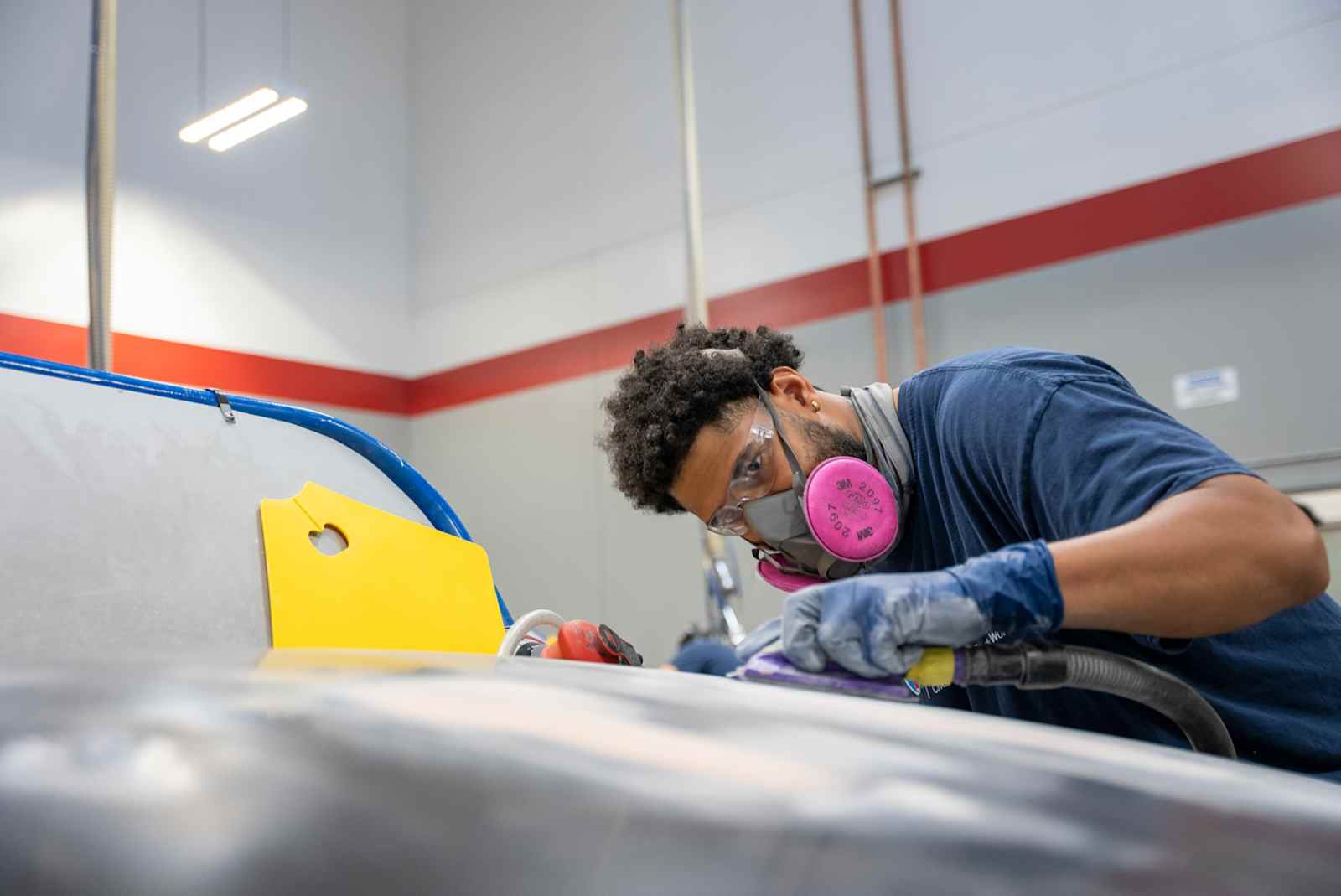
Throughout the program, students train directly on real vehicles and components, gaining familiarity with structural repair, panel replacement, dent removal, sanding, priming and refinishing, as well as estimating and repair planning.
By practicing these tasks in a controlled lab setting, students can begin developing the confidence needed for entry-level roles in collision repair shops, insurance companies and dealership service centers.
UTI also collaborates with leaders in the collision repair field to help keep its training aligned with industry expectations. These collaborations support an up-to-date curriculum that evolves as new tools, materials and vehicle technologies emerge, helping students prepare for the changes happening across the industry.
Accelerate Your Collision Repair Journey at UTI
Students at UTI have access to a range of resources that support their training and help them prepare for their next steps.
UTI’s curriculum is built with I-CAR standards in mind, offering training aligned with many of the skills included in the I-CAR Professional Development Program. This helps students progress toward industry-recognized credentials that may support their career path after graduation.
Whether you’re a recent high school graduate, exploring a career change or transitioning out of the military, UTI offers support through:
- Guidance on financial aid for those who qualify.10
- Flexible scheduling options.
- Access to student services and career support teams.
- Resources for veterans and active-duty service members using military benefits.20
If you're ready to start training for a hands-on, technology-driven career, now is a great time to begin. Enroll today to take the first step toward preparing to become a collision repair technician.
Sources
Universal Technical Institute of Illinois, Inc. is approved by the Division of Private Business and Vocational Schools of the Illinois Board of Higher Education.