
Automotive
Hands-On Training for Auto Mechanics: Skills, Tools and Real-World Instruction
Learn what hands-on training auto mechanics need, including key skills and tools required to start an automotive career.
In This Article
Curious about what it takes to become an auto mechanic?
If you’re always tinkering with engines, watching car builds online and love fiddling under the hood, consider a career as an automotive pro — someone qualified to diagnose, maintain and repair vehicles at dealerships, shops or even the racetrack.
To get there, you need the right skills. To learn the right skills, you need hands-on training.
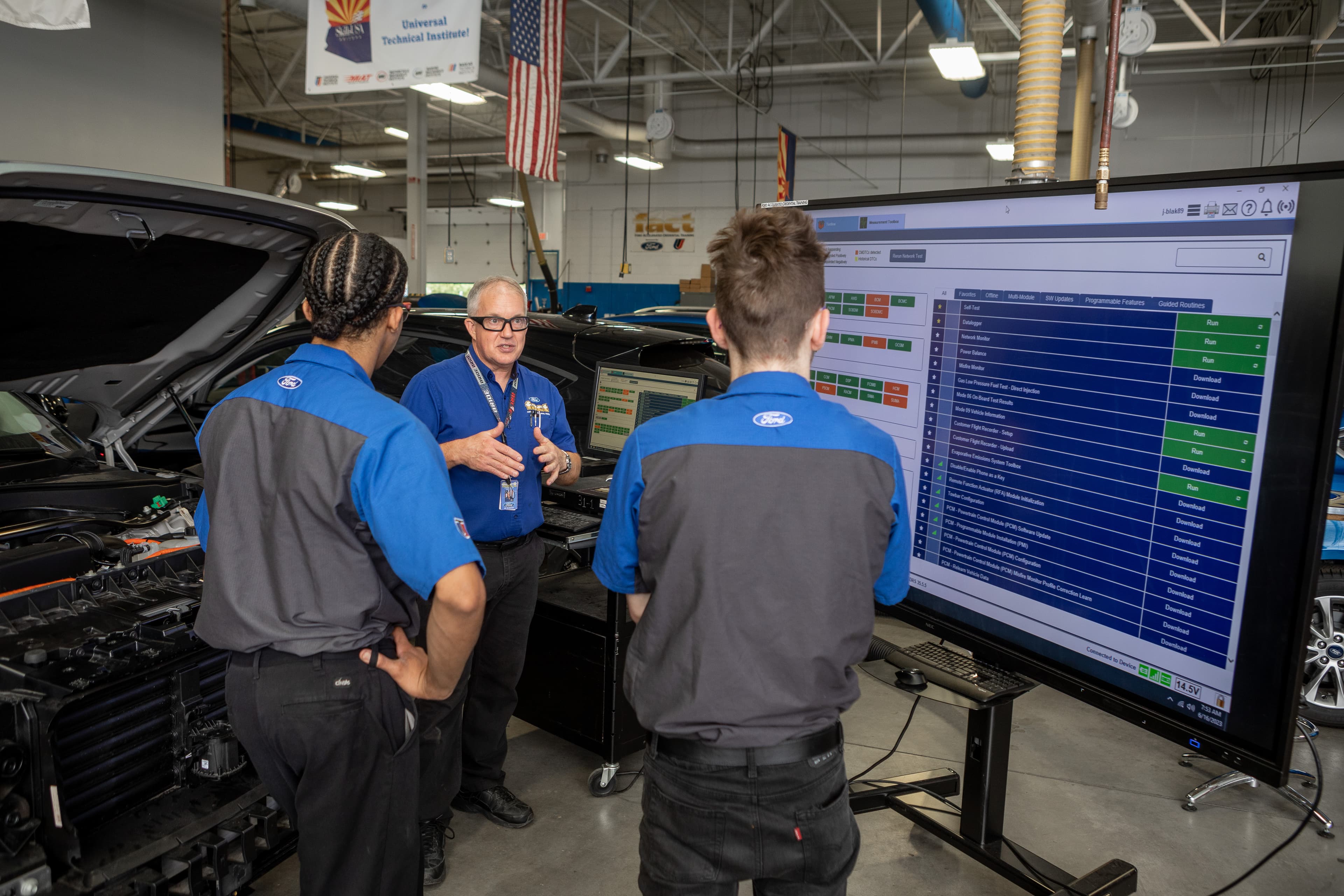
Universal Technical Institute’s Automotive & EV Technology program lasts 51 weeks and trains students from the ground up, preparing them to pursue entry-level roles after graduation.1,7 While enrolled, students practice and hone their automotive technician skills using industry-aligned tools in hands-on labs that mimic actual auto shops.18
Let’s break down why hands-on auto mechanic classes matter if you want to become an auto mechanic.
Why Is Hands-On Training Important for Automotive Technicians?
Books can’t teach you everything
Textbooks can explain theory, but they can’t teach you how a wrench feels in your hand when a bolt is stuck. Auto mechanic training in a lab gives students the chance to build real muscle memory and technical know-how, which is something no screen or diagram can replace.
Employers want real skills

Many shops and dealerships want techs who already know how to handle tools, diagnose problems and move through a repair without needing to be micromanaged. That starts with practice, and the more, the better.
Practice builds confidence
When you’ve taken an engine apart and put it back together more than once, you stop second-guessing yourself. That kind of confidence is what helps you handle pressure and work efficiently in the field.
Auto technology is constantly evolving

Out in the field, problems don’t come with answer keys. They’re also becoming more complex as technologies in the industry evolve. Hands-on training gives students a chance to troubleshoot in real time — learning how to think and learn industry-relevant skills, not just follow steps. That’s what turns you into a true technician.
What Skills Do Auto Mechanics Learn Through Hands-On Training?
Aspiring auto technicians learn a range of skills throughout their training programs. Some of the course topics covered in a UTI’s Auto program, for example, include:
Engine build

Students learn to assemble and disassemble entire engines. They get to work with valve trains, gaskets, oil systems and more. There are also opportunities to explore how compression ratios affect things like horsepower and torque.
Manual and automatic transmissions
From automatic to manual systems, training includes diagnosing and repairing transmissions, driveshafts, U-joints, axle assemblies and differentials — all using tools found in actual repair shops.
Read: Automotive Technician Salary in the U.S.
Steering and suspension systems
Expect to run wheel alignments, learn how suspension parts interact and get a feel for how even the smallest issue can throw off tire wear and vehicle handling.
Brake systems

In hands-on labs, students practice taking apart and rebuilding brake systems — including the master cylinder, calipers and drum assemblies. They can also learn the correct way to bleed brakes.
Electrical applications
Students learn about electrical and electronic devices that support various electrical systems within a vehicle. They also become familiar with test equipment like digital multimeters, oscilloscopes and diagnostics scan tools.
Read: What to Expect From Auto Mechanic School
How Does Hands-On Training Prepare You for an Automotive Career?
Hands-on training plays a critical role in preparing students for success in the automotive industry. While classroom instruction builds foundational knowledge, it’s real-world application that helps turn that knowledge into practical, job-ready skills. Employers aren’t just looking for what you know - they want to see what you can do.
The auto mechanic training experience at UTI is built around a blended-learning model — meaning you can learn theory online and then apply it in person in the lab while being mentored by experienced instructors. This mirrors what happens in the field today, where many manufacturers use digital platforms for continued skills training.
This kind of training helps build familiarity with shop workflows, safety procedures and diagnostic processes so when it’s time to enter the workforce, you’re not starting from scratch.
Hands-on training also makes the transition into your first automotive job smoother. Instead of needing extensive on-the-job training, you’ll already have a baseline understanding of:
- Common repair and maintenance tasks.
- How to approach diagnostics.
- How to work in a fast-paced shop environment.
This can make you a more attractive candidate and help you adapt more quickly once you’re hired.
Learn Real-World Automotive Skills with UTI
If you’re serious about becoming an auto mechanic, consider UTI’s hands-on training. The Automotive & EV Technology program was designed to help students build real skills so they can pursue a career working on cars as a qualified pro after graduating.
To speak with an Admissions Representative and learn more, request info today.
Ready to jump in? Enroll now.
Common Questions About Hands-On Training for Auto Mechanics
What hands-on skills do auto mechanics need most?
Auto mechanics rely on a mix of technical and problem-solving skills to diagnose and repair vehicles. This can include anything from engine repair to preventative maintenance like oil changes, inspections and fluid checks.
Do you need hands-on training to become a mechanic?
While it’s possible to learn some basics independently, many employers prefer candidates who have completed automotive training at a trade school. Practical experience helps you understand how systems work in real-world conditions and prepares you for the pace and expectations of a professional shop.
How long does it take to learn automotive repair skills?
The timeline can vary depending on the program and your career goals, but many automotive training programs can be completed in about a year or less, including UTI’s Auto program.7
What tools do students learn to use in training?
Students use the same tools that professional technicians use. These include hand tools like wrenches, power tools like drills, diagnostic tools and scan equipment, and lifts and other shop equipment.
Is hands-on training better than classroom learning?
Hands-on training and classroom learning work best together. Classroom instruction helps you understand the theory behind automotive systems, while hands-on training allows you to apply that knowledge in real scenarios.
For most students, a blended approach to auto mechanic training provides the strongest foundation, combining knowledge with practical experience so you’re better prepared for real-world work in the automotive industry.
Universal Technical Institute of Illinois, Inc. is approved by the Division of Private Business and Vocational Schools of the Illinois Board of Higher Education.
Train for the Future
Imagine waking up each day excited to work in a career you’re passionate about – one where your hands-on skills make a real impact. UTI’s vocational trade school can help you gain the skills and confidence to pursue what you love.
