
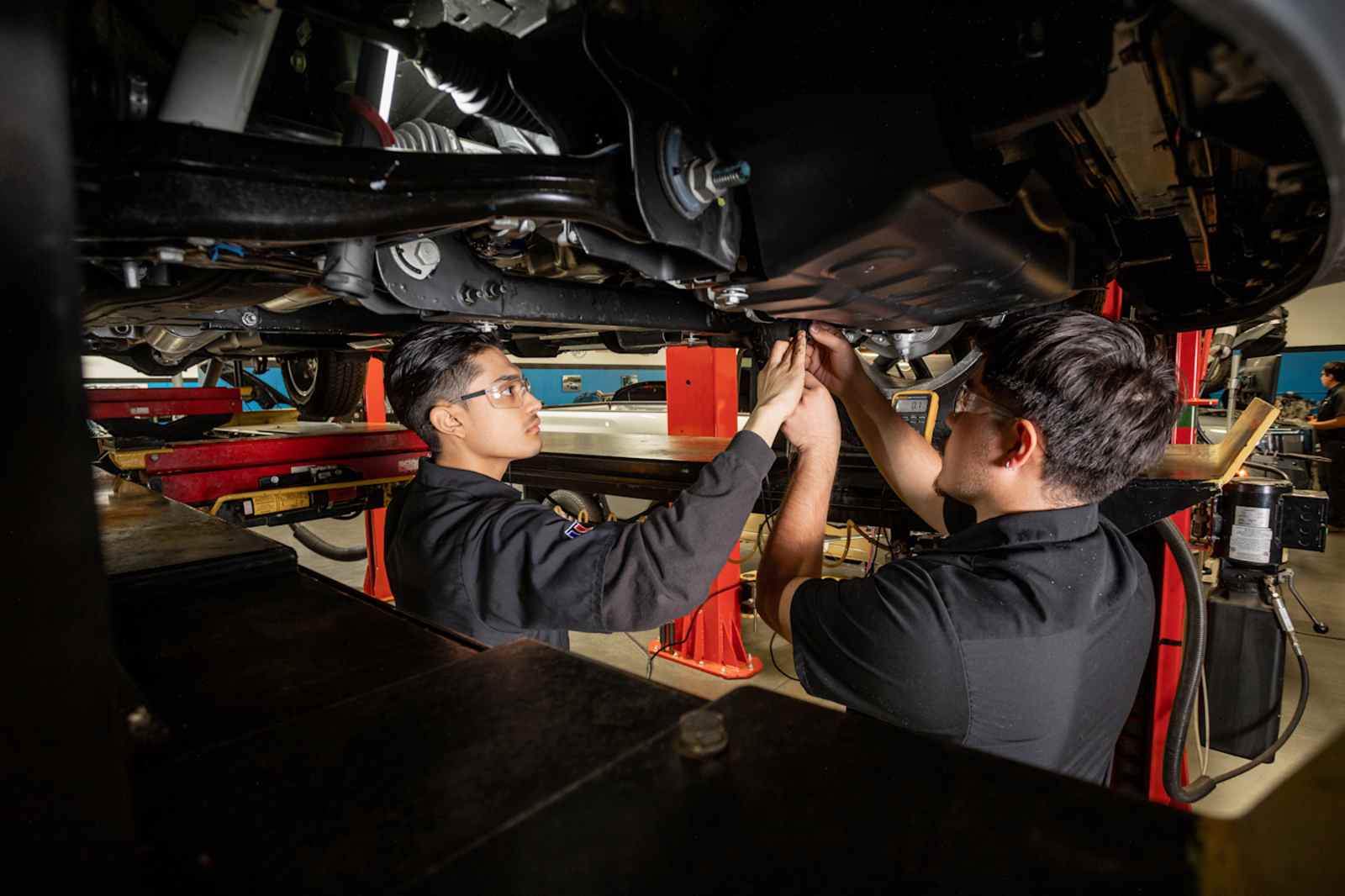
Driving in Dallas, Texas, comes with unique challenges that can take a toll on a vehicle. From intense summer heat to heavy traffic and long daily commutes, these conditions often lead to car problems that require skilled diagnosis and repair.
For automotive technicians, understanding how local driving environments affect vehicle performance is key to identifying and fixing common car problems efficiently. Whether it’s an overheating engine, failing battery or worn brake system, diagnosing car issues in Dallas requires both technical knowledge and hands-on skills.
Universal Technical Institute’s Automotive & EV Technology program can be a great way to learn how to diagnose and repair common car problems. With a campus located in the Dallas/Fort Worth area, you can prepare to pursue a career as an automotive tech post-graduation in Dallas.1
Why Driving Conditions in Dallas Impact Vehicle Performance
Dallas drivers experience a mix of environmental and road conditions that directly contribute to vehicle wear and tear. These factors play a role in the frequency and type of car problems seen in the area.
High temperatures and heat-related wear
Texas heat can be relentless, especially during the summer months. Extreme temperatures can accelerate battery corrosion and fluid evaporation, increase the risk of engine overheating, and put added strain on cooling systems and belts.
Over time, this heat exposure contributes to some of the most common car problems technicians diagnose.
Heavy traffic and stop-and-go driving
Dallas is known for its congested highways and city streets. Constant braking and accelerating can wear brake pads down faster, reduce fuel efficiency and increase engine strain, which can lead to recurring car issues within these systems.
Long commutes and high mileage
Many Dallas residents commute long distances to work, adding significant mileage to their vehicles. High mileage can increase engine wear, lead to more frequent maintenance needs or contribute to component fatigue.
Common Car Problems Mechanics See in Dallas
Due to these driving conditions, certain car issues can appear more frequently in Dallas than in milder climates.
- Battery failure due to heat: Heat is one of the leading causes of battery failure. High temperatures can cause battery fluid to evaporate, weakening its ability to hold a charge. This is one of the most common car problems seen in Texas.
- Engine overheating: Overheating engines are a frequent concern, especially during the summer. Causes include low coolant levels, faulty thermostats, or radiator and cooling fan issues.
- Worn brakes from traffic: Stop-and-go traffic accelerates brake wear. Technicians often see thin brake pads, warped rotors and reduced performance.
- Air conditioning system issues: In a hot climate like Dallas, a functioning AC system isn’t optional; it’s essential. Common problems can include refrigerant leaks, compressor failures or weak airflow.
How Automotive Technicians Diagnose These Problems
Fixing car problems isn’t just about replacing parts — it’s about accurate diagnosis. Automotive technicians use a combination of tools, testing and experience to pinpoint the root cause of these issues. Students in UTI’s Auto program learn how to diagnose issues throughout courses that build their skills week to week.
Using OBD-II scanners and diagnostic tools
Modern vehicles are equipped with onboard diagnostics systems. Technicians use OBD-II scanners to:
- Retrieve error codes.
- Monitor engine performance data.
- Identify system malfunctions.
Interpreting diagnostic trouble codes
Once codes are retrieved, technicians must interpret what they mean. A single code doesn’t always point directly to the problem. It often requires deeper analysis to connect symptoms with underlying causes.
Performing visual inspections and tests
Hands-on inspections remain a critical part of diagnosing common car problems. Technicians may:
- Check fluid levels and leaks.
- Inspect belts, hoses and components.
- Test electrical systems and battery performance.
Combining technical knowledge with troubleshooting
Effective diagnosis requires tools along with critical thinking. Skilled technicians combine:
- Knowledge of vehicle systems.
- Experience with similar car problems.
- Logical troubleshooting processes.
This approach ensures accurate repairs and helps prevent recurring issues.
Build Real-World Diagnostic Skills With UTI
If you’re interested in learning how to diagnose and repair common car problems, training at a trade school can be a great place to start.
At UTI, students undergo hands-on training with real vehicles and industry-standard diagnostic tools.18 Our automotive training is designed to help students build the skills needed to identify and fix a wide range of car issues, whether they’re from electrical systems or related to engine performance.
With a blend of online instructor-led lessons and practical lab sessions, aspiring technicians can develop the diagnostic thinking employers look for in today’s automotive industry.
Learn more about automotive training at UTI and take the first step toward building skills that can help you diagnose and repair real-world car problems. Enroll today to get started.
Universal Technical Institute of Illinois, Inc. is approved by the Division of Private Business and Vocational Schools of the Illinois Board of Higher Education.