
Education
How To Choose the Right Trade School Program in Utah
Explore trade school programs for Utah students, including automotive, welding, HVACR, electrical, diesel and other hands-on fields.
In This Article
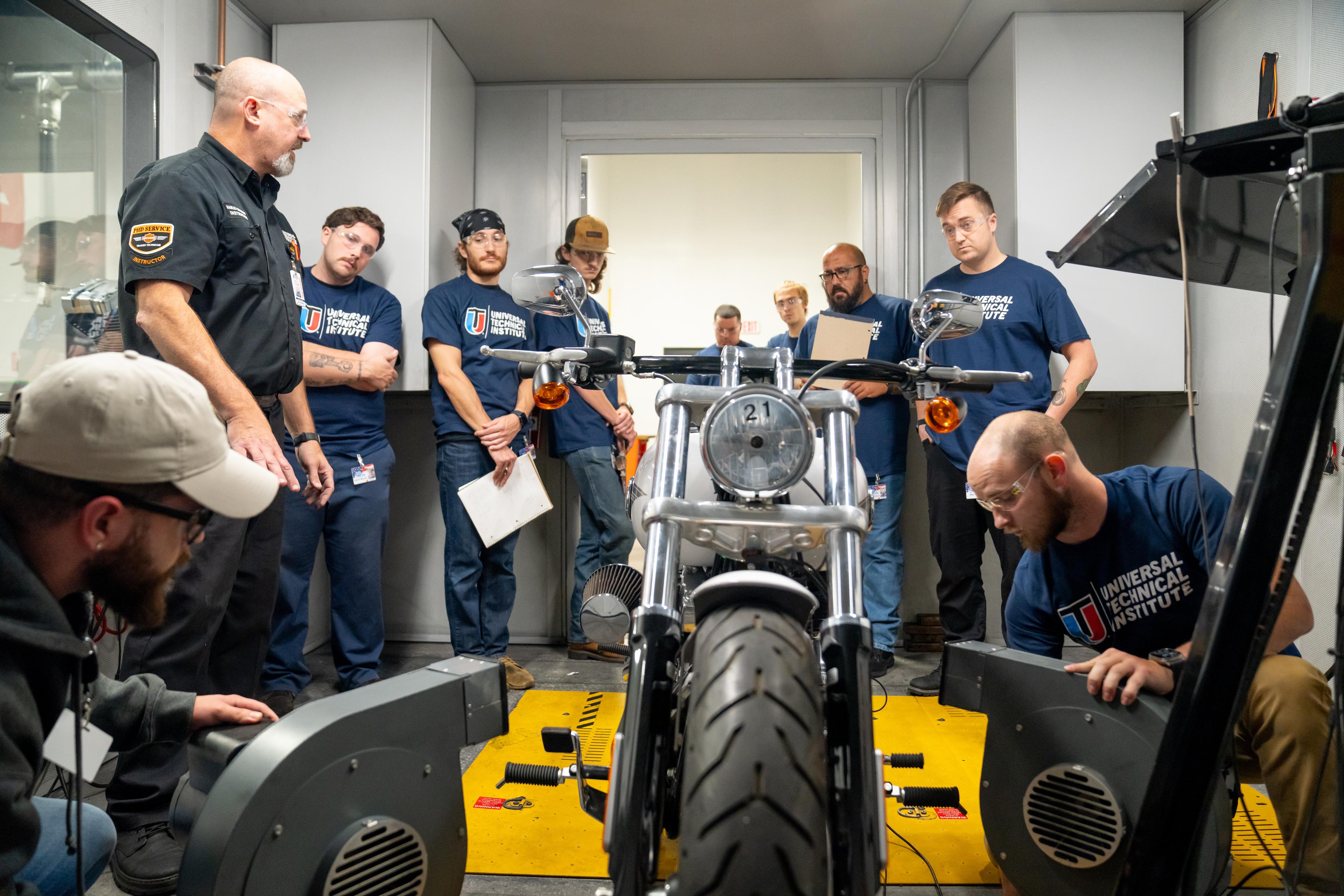
Trade schools are becoming increasingly popular for people who want to enter in-demand career fields. According to a report by Validate Insights, trade school enrollment increased 4.9% from 2020 to 2023, while university enrollment declined 0.6% during the same period.
Trade school programs are attracting students because of their shorter time-to-graduate, their focus on teaching relevant skills, and the hands-on instruction and lab experience students can get to prepare for the field. When you’re searching for the best trade school programs for students in Utah for yourself or a loved one, consider the following fields and tips for selecting a suitable program.
Key Takeaways
- When considering trade school, research industry-informed curricula and how they align with a chosen career field. Evaluate factors such as career services assistance, instructor experience, graduate testimonials, industry reputation, time-to-graduate, credentials offered and financial aid.
- Different trade school programs will have different time-to-graduate schedules and offer various credentials awarded upon graduation. Research entry-level jobs you’re interested in to see if the trade school you’re considering meets those requirements.
- If you need help deciding on a trade, talk with advisors at a trade school to learn about the curriculum and career pathways available for each type of trade school program offered. Research graduate testimonials and employer work environments to decide on a trade school path that fits your interests and long-term career goals.
Why Consider Trade School in Utah?
Trade school in Salt Lake City, Utah, can be a good choice for people who enjoy hands-on work and who don’t want to be stuck at a desk, having to navigate the corporate ladder. UTI Salt Lake City’s trade school programs can be completed in as little as nine months to less than 2 years, and prepare graduates for entry-level work that would enable them to begin careers in their chosen field.1
Note: VA benefits are not currently available at this campus.
The best trade schools will offer a path to relevant certifications in a field. Some trade schools offer brand-specific programs, which can help prepare graduates to pursue employment more readily working with the brand of their choice.
Trade School Programs Utah Students Can Consider
At UTI Salt Lake City, there are programs including Automotive & EV Technology; Diesel Technician; Welding Technology; HVACR Technician; Aviation Maintenance Technology*; Electrical, Robotics & Automation Technology; Electrical, Electronics, & Industrial Technology; and Electrical & Industrial Maintenance Technology. Consider competitive trades like these when figuring out how to know if trade school is right for you.
*Program coming to UTI Salt Lake City pending FAA approval.
Automotive & Diesel
In UTI’s Salt Lake City automotive technician program, you’ll learn how to carry out diagnostics, repair and maintenance on a range of vehicles, including electric and hybrid. In just 12 months, you can prepare to test for Automotive Service Excellence (ASE) certification and learn skills like:7
- Automotive physical science
- Manual and automatic transmissions
- Electrical applications
- Engine performance
- Advanced technology
In a hands-on lab, you’ll train with the same tools and technology you would use in the field.18
If you’re interested in working with big trucks and/or diesel machinery, diesel technician training in Salt Lake City can give you the skills needed to work with vehicles that transport essential goods across North America and machinery that powers diverse industries. In less than a year, you’ll prep for ASE certification exams, learning skills like:7
- Engine design and function
- Fuel systems and accessories
- Steering and suspension systems
- Advanced electrical diagnosis
Both of these programs at UTI Salt Lake City reward graduates with an associate of occupational studies (AOS) degree.
Both automotive technician and diesel service technician jobs are in demand. According to the Bureau of Labor Statistics (BLS), there are 66,000+ estimated average annual automotive technician job openings in the U.S.,41 and 24,000+ estimated average diesel technicain job openings.43
Welding
UTI’s Salt Lake City Welding program prepares students for entry-level welding roles in industries like construction, manufacturing and other specialty trades. Our welding trade school can be completed in just nine months, with a curriculum developed with leading brands like Lincoln Electric. Welding students learn skills like:
- Gas metal arc welding (GMAW)
- Shielded metal arc welding (SMAW)
- Engineering and fabrication
- Flux-cored arc welding (FCAW)
- Gas tungsten arc welding (GTAW)
A welding program that’s guided by American Welding Society (AWS) certification standards helps prepare students to pursue fulfilling careers in the welding workforce.
HVACR
There are lots of career opportunities for heating, air conditioning and refrigeration mechanics and installers. According to the BLS, there are 40,000+ estimated average annual HVACR technician job openings in the U.S.66
In UTI’s HVACR technician training in Salt Lake City, which includes training for ventilation professionals, students learn skills like:
- Electricity and motors
- Refrigeration, air conditioning and heating systems
- Indoor air fundamentals
- Duct fabrication
- Construction codes
The nine-month diploma program with hands-on labs prepares graduates for entry-level work in the HVACR field and to test for industry-recognized certifications such as EPA 608, OSHA 10, R410A and the NATE Core Exam.
Aviation, Industrial Maintenance & Robotics
Aviation, industrial maintenance and robotics trade schools can also prepare students for in-demand careers.
In the 18-month AOS degree program for aviation training at UTI Salt Lake City, students train in a curriculum that aligns with Federal Aviation Administration (FAA) standards.79 Topics include:
- Airframe electrical systems
- Propellers
- Navigation and communication systems
- Turbine engine design and operation
Students are prepared to pursue common aviation certifications and credentials, such as the FAA Airframe and Powerplant (A&P) certification. This can provide a pathway for careers including aviation maintenance technician and powerplant technician.77
There are two different electrical, robotics and automation trade school programs offered at UTI Salt Lake City. The 12-month diploma program includes hands-on lab training, and students can earn up to three National Center for Construction Education and Research (NCCER) credentials. UTI’s 19-month program offers an AOS degree, with expanded coursework. In our electrical, robotics and automation trade school, students learn skills including:
- Electrical wiring, theory and applications131
- Programmable logic controllers
- Industrial robotics
Graduates can pursue roles such as robotics and automation technician, control systems technician or field service technician.77
Students at UTI’s industrial maintenance technician trade school can prepare for entry-level opportunities during the 10-month diploma program, which teaches skills including:
- Computers and networking
- Instrumentation and controls
- Mechanical systems and maintenance
Graduates can pursue entry-level roles like plant technician, industrial maintenance technician and field service technician.77
How To Match a Program To Your Interests
Most trade school programs will feature hands-on labs that allow students to learn with real industry equipment in a safe and supportive environment, guided by expert instruction. When choosing a trade school path like one of the above options, ask the following questions.
- What type of equipment do I want to work with? If you have an interest in vehicles like cars, big trucks or aircraft, you may want to pursue trade school in one of those fields. If you’re more interested in shaping how machinery functions, a career like that of a welder may be of interest. If you want to work in places like homes and buildings, HVACR may be a fit.
- What skills interest me? Some trades will focus heavily on diagnosing and fixing problems, using skills like mathematical, computer and/or electrical knowledge. Others will require working hand-in-hand with technology (like robots) to get work done. Some trade careers, like welding, are hands-on-intensive, requiring you to use your body and dexterity to shape how things function. Check out the courses of each type of trade school program to see if the curriculum you’ll be learning interests you.
- Who do I want to work for? Do you have a dream employer or work environment? Do you envision yourself moving between job sites each week, or starting your own business? Do you like a garage environment where you have a level of autonomy? Research employers in different types of trade school programs to compare what types of work environments you could expect. As an HVACR professional, for example, you could visit several buildings a day. If you worked for an automotive dealership, you might be able to grow your career with a specific brand.
- What do I want long-term from a career? Financial and job outlook projections may also impact your chosen trade school path. Think about the geographical location you want to work in, and research job opportunities in various fields there. Some programs will work with leading brands in the field and/or offer paths to apprenticeships. Consider the job outlook climate for long-term career stability and growth opportunities.
It’s also helpful to talk with industry professionals to learn about what a day in the life of their career is like. You can do research online, or visit a trade school expo or job fair to learn more about various trades and the opportunities they offer. UTI also has a Career Services team that can help you identify roles you might be interested in.
Factors To Consider When Choosing a Program
The right trade school program will offer hands-on learning with expert instructors, using industry-leading equipment that’s found in the field. Trade schools should also offer job search assistance, whether that’s helping students connect with employers while in school or helping graduates find job opportunities after graduation.
When researching trade schools, consider factors like:
- Time-to-graduate: Your time is valuable. Consider a program that teaches you in-demand skills in a timeframe that works for you.
- Graduation credentials: Some programs will offer a certificate or diploma, while others will offer a more advanced credential, like an associate’s degree. Research what your desired entry-level career path requires, and find a program that offers a matching credential. That includes preparation for industry certifications.
- Career services: What kind of support will you get to find employment upon graduation? The best trade school will have a dedicated career services department to work with students and graduates to connect with relevant employers.
- Reputation: What do top employers think of the school? Look for trade schools that collaborate with manufacturers of leading industry brands to develop curricula and offer career pathways upon graduation. Look for graduate testimonials that provide insight.
- Financial aid: Are there financial aid services available to those who qualify that can help with tuition costs or living expenses?10 Are there scholarships or work-study opportunities available?
Trade school, even in a program that can be completed in as few as nine months, is a big decision. It requires your time, dedication and financial investment. The payoff can lead to a meaningful, long-term career, but you want to choose the right trade school that can help you succeed.
Ask trade schools you’re considering about topics like those above. Look for graduate testimonials and curricula that align with your interests to make the best decision for you.
Trade School in Salt Lake City, Utah, FAQs
What trade school programs are available to students in Utah?
In Utah, UTI’s trade school programs cover a range of sectors across industries like transportation, energy and skilled trades. These could include automotive, diesel, HVAC, welding, electrical and more.131
What skilled trades are popular in Utah?
In Utah, in-demand skilled trades include construction technicians and welders, automotive and diesel technicians, manufacturing technicians, electricians, utilities technicians, warehousing technicians, mechanic and repair technology technicians, and aircraft technicians.
How do I choose the right trade school program in Utah?
Think about what skills you want to learn, what type of job environment you want to work in, and what type of work you want to do. Look for a trade school program that teaches a curriculum aligned with your desired career pathway, that offers career services, that provides the credential you want in the timeframe you’re willing to go to school, and that has a positive reputation among industry brands and graduates.
What programs are offered at UTI Salt Lake City?
UTI Salt Lake City offers trade school programs in diesel, HVACR, automotive, welding, electrical and electronics, robotics, and industrial maintenance, with an aviation program coming pending FAA approval.
Can Utah students attend trade school right after high school?
Yes. There’s no experience necessary to attend trade school. High school graduates can enter trade school right after high school.
Explore UTI's Trade Programs in Utah
Interested in a hands-on education?152 Want to graduate school in two years or less ready to start earning a salary? Consider our trade school in Utah to prepare you for meaningful work in in-demand careers.1
Universal Technical Institute of Illinois, Inc. is approved by the Division of Private Business and Vocational Schools of the Illinois Board of Higher Education.
Train for the Future
Imagine waking up each day excited to work in a career you’re passionate about – one where your hands-on skills make a real impact. UTI’s vocational trade school can help you gain the skills and confidence to pursue what you love.
