
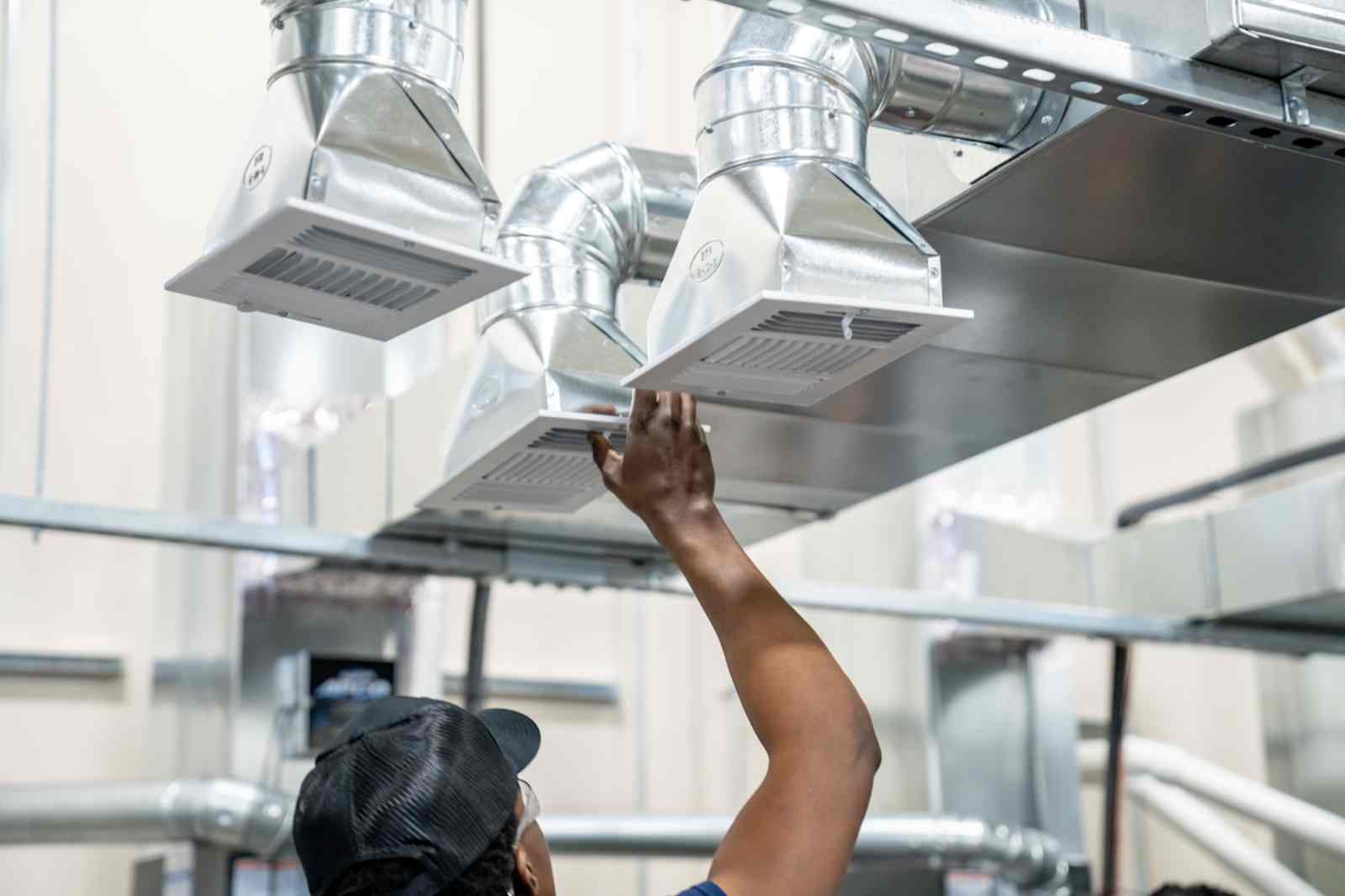
What Is an HVACR Technician?
An HVACR technician is a skilled professional who installs, maintains and repairs heating, ventilation, air conditioning and refrigeration systems. These systems help regulate temperature and air quality in residential, commercial and industrial buildings. HVACR technicians utilize a mix of technical knowledge and hands-on skills to ensure these systems operate efficiently and safely. This career path is ideal for individuals who enjoy problem-solving, working with their hands, and providing essential services that impact everyday comfort and safety.
HVACR Training & Certification Paths
If you’re interested in becoming an HVAC technician, formal training can help you build foundational technical skills used in the field.
HVACR training at Universal Technical Institute
UTI offers an HVACR Technician program designed to prepare students for entry-level roles in heating, ventilation, air conditioning and refrigeration after graduating.1 The program can be completed in 9–10 months, allowing students to train in less than a year.
Students learn skills related to:
- HVAC system installation and maintenance.
- Electrical fundamentals and controls.
- Refrigeration systems.
- Heating and cooling diagnostics.
- Airflow and duct systems.
- Safety procedures and industry tools.
HVAC certifications
Many technicians pursue industry certifications to demonstrate technical knowledge, including:
- NATE (North American Technician Excellence).
- EPA Section 608 Certification (required for refrigerant handling).
- Optional credentials such as HVAC Excellence or R-410A.
Certifications may help technicians stay competitive, depending on employer and location requirements.
Average HVACR Technician Salary
So, how much do HVAC technicians make? According to the Bureau of Labor Statistics (BLS), the median annual salary for HVACR technicians in the U.S. was $61,010 in May 2025.58 Keep in mind that these salaries are not entry-level and depend on several factors, including experience, employer, demand and cost of living in the area.
What Impacts an HVACR Technician's Salary
Level of experience and certifications
HVAC technician salary tends to increase with more years in the field. Entry-level technicians may start on the lower end of the pay scale, but those with advanced certifications, such as EPA Section 608 or NATE, often qualify for higher-paying roles.
Geographic location
Wages for HVACR technicians can vary significantly by region. Areas with higher costs of living or high demand for HVAC services often offer higher average salaries than more rural locations.
Type of employer or industry
HVACR techs working for government agencies, large construction firms or specialty trade contractors may earn more than those working for smaller local businesses. Roles in manufacturing or large commercial facilities also tend to offer competitive wages.
Specializations and advanced skills
Specializing in areas such as commercial refrigeration, smart HVAC systems or geothermal systems can help increase earning potential. Employers often pay more for technicians who have advanced skills or niche expertise.
Overtime and on-call availability
Many HVACR technicians earn additional income through overtime work or being available on-call for emergency repairs. These opportunities can significantly boost annual earnings.
Licensing and continuing education
Technicians who stay up to date with the latest technologies, codes and safety standards and who complete continuing education courses may have a competitive edge when it comes to pay.
HVACR Technician Responsibilities
Installing HVACR systems and components
HVACR technicians are responsible for installing heating, air conditioning and refrigeration units in homes and commercial buildings. This includes setting up wiring, ducts, thermostats and other system components.
Performing routine maintenance and system checks
Preventive maintenance is a major part of HVAC technician duties. Technicians check system performance, clean components and replace worn parts to prevent breakdowns.
Diagnosing and repairing system issues
Troubleshooting is one of the core HVAC technician responsibilities. Techs use diagnostic tools and their knowledge to identify issues and perform necessary repairs to restore function.
Reading blueprints, schematics and technical manuals
HVACR techs must be able to interpret complex documents to install and repair systems correctly. Understanding these materials is key to safe and effective work.
Communicating with customers and explaining repairs
Technicians often interact with homeowners and facility managers, so communication skills are important. Explaining repairs in a clear, professional way is part of building trust and delivering quality service.
Documenting work and completing service reports
Maintaining accurate records of work performed is an important duty. Service documentation helps employers, clients and regulatory bodies track system history and technician performance.
Ensuring workplace and equipment safety
Safety is always a priority. HVACR technicians must follow strict safety protocols to protect themselves, their coworkers and their customers during installation and repair work.
How To Train for a Career in HVACR
Choose a hands-on training program
Hands-on HVACR training, like the program offered at UTI, helps students build practical skills using currrent industry tools and equipment.
Earn key certifications
To legally handle refrigerants, technicians must obtain EPA Section 608 certification. Additional certifications, like NATE or Occupational Safety and Health Administration (OSHA), can further boost their resume and pay potential.
Build both technical and soft skills
While mechanical knowledge is crucial, so are soft skills like communication, time management and teamwork. Many training programs help students strengthen these areas.
Gain real-world experience
Training in a lab setting is valuable, but real-world experience helps students build confidence. Internships, externships or lab simulations are great ways to apply what you've learned.
UTI’s career service support
At UTI, HVACR students have access to career services, which include job search support, interview preparation and connections with employers nationwide. These services help students pursue career opportunities with confidence after graduating.