
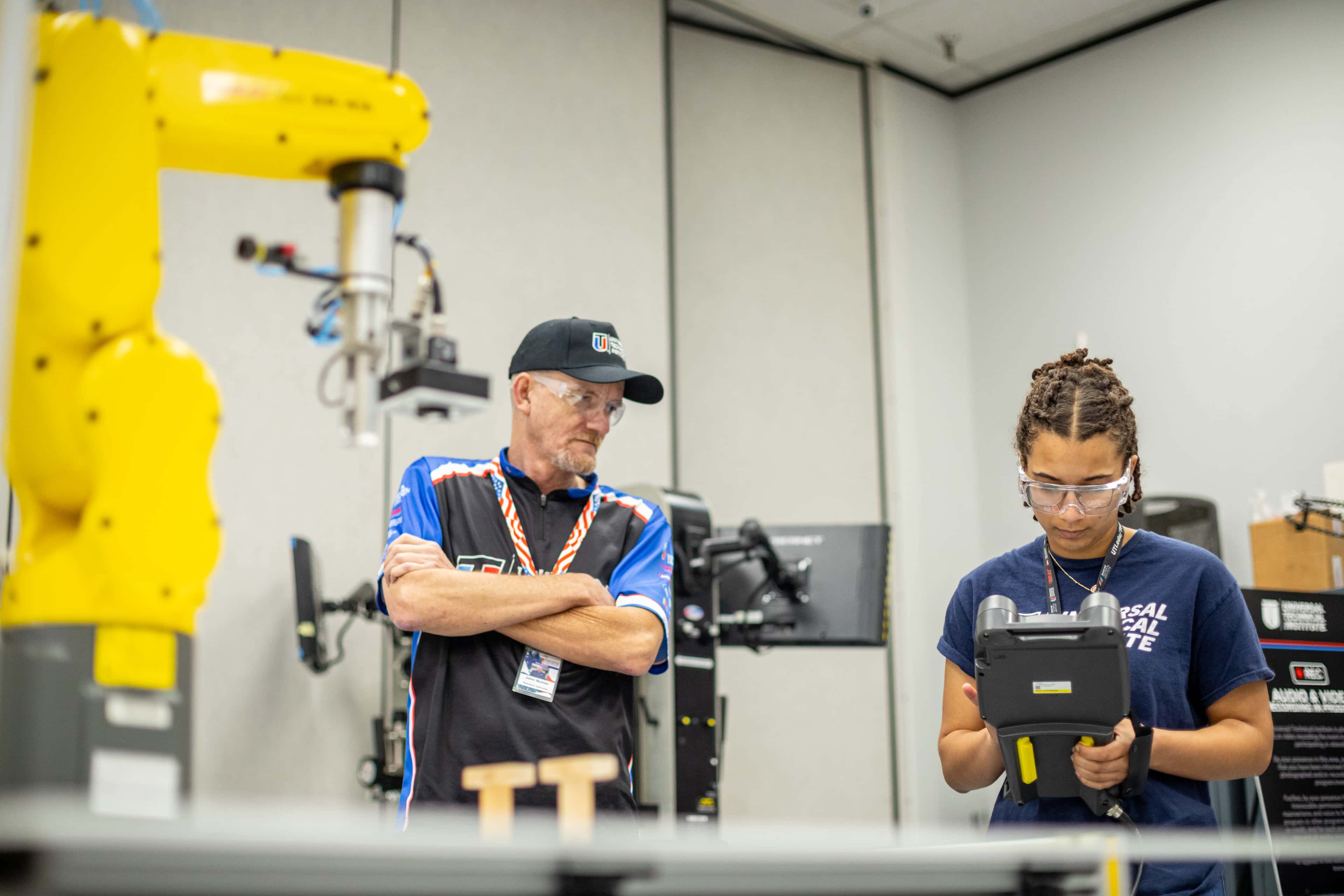
Training Program Overview
The Electrical, Robotics & Automation Technology program coming to UTI San Antonio starts with a foundation in construction-related electrical training, including residential wiring, circuits and safety practices, before expanding into advanced robotics and automation. You’ll learn how to install, maintain and repair automated electrical systems so you can prepare for the workforce as a skilled technician.
VA benefits are not currently available for this program.
Build the real skills needed to succeed in today’s high-tech environments.
What To Expect From San Antonio Electrical Robotics and Automation Technician School
- Complete the program in just 12 months
- Job search assistance during and after you train
- Opportunity to earn up to 3 NCCER credentials
- Experienced instructors
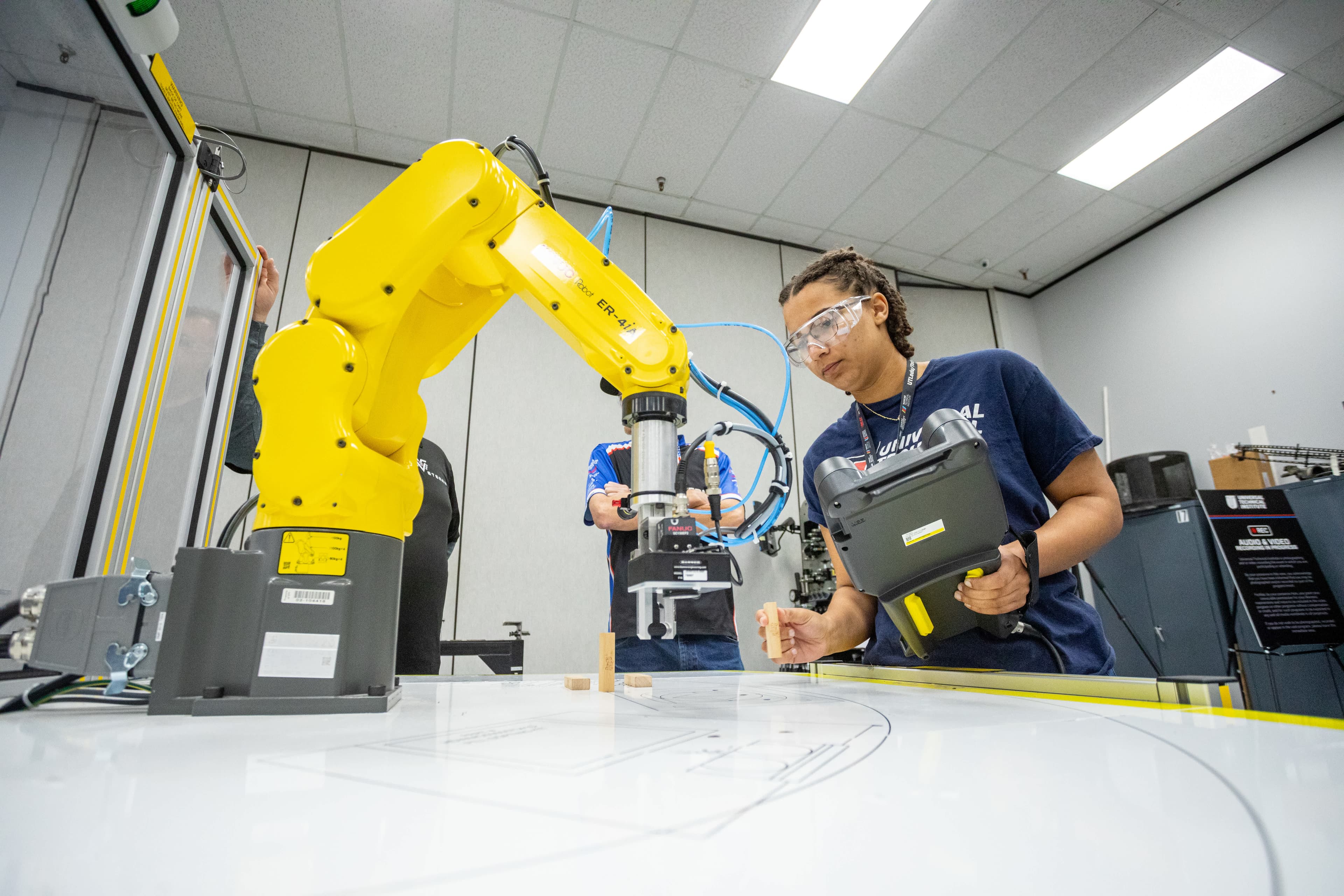
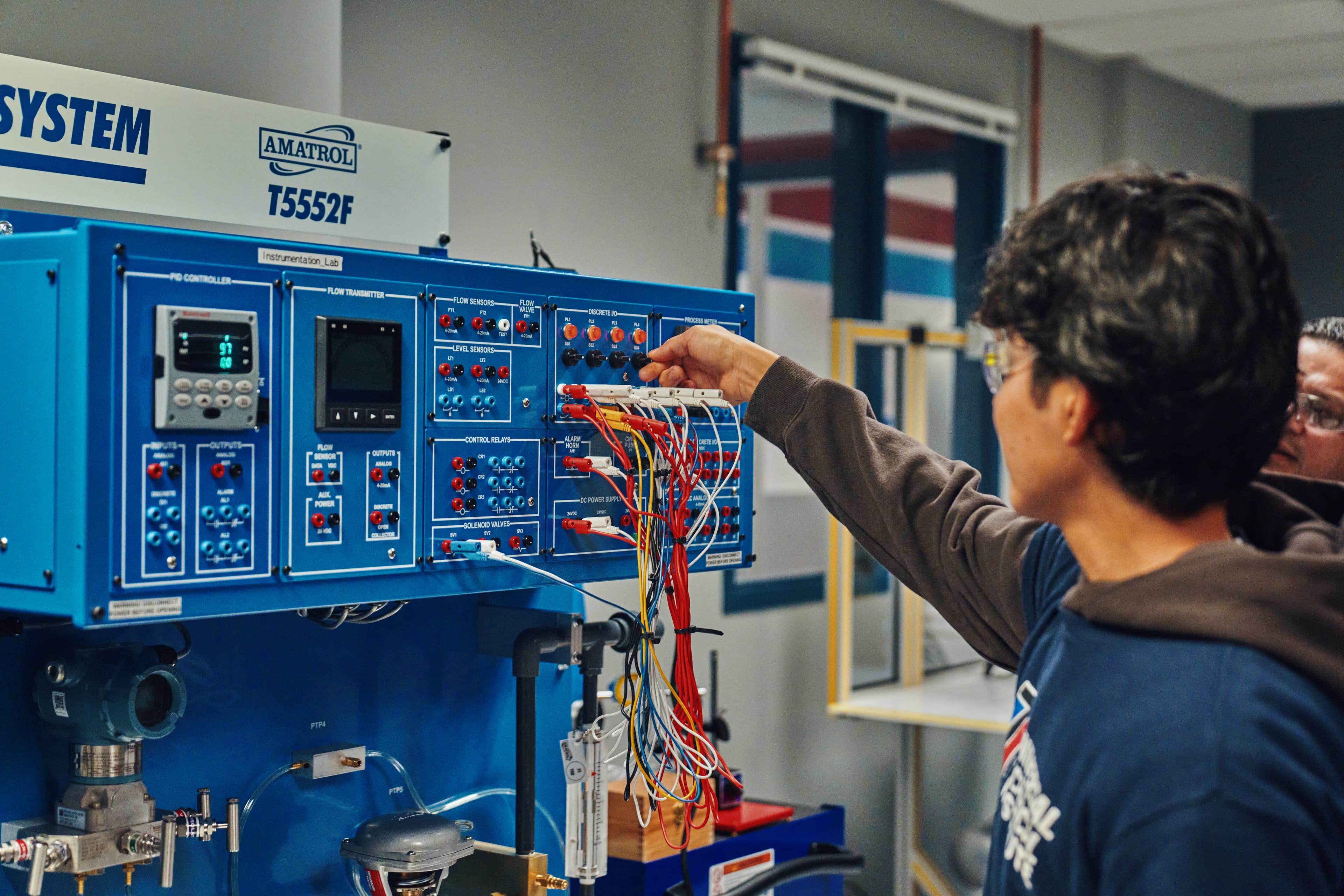
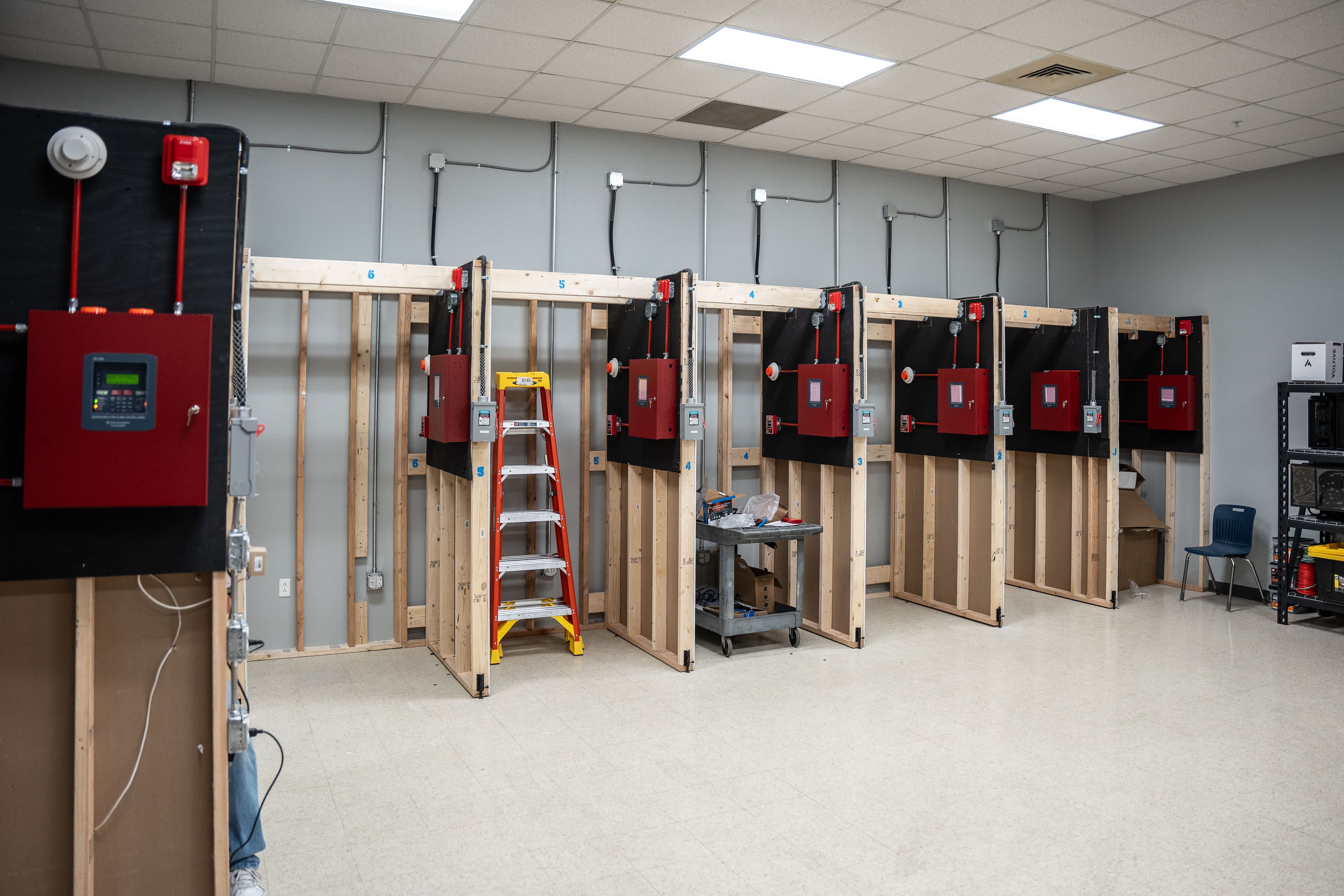
- Hands-on lab training that prepares you for the field
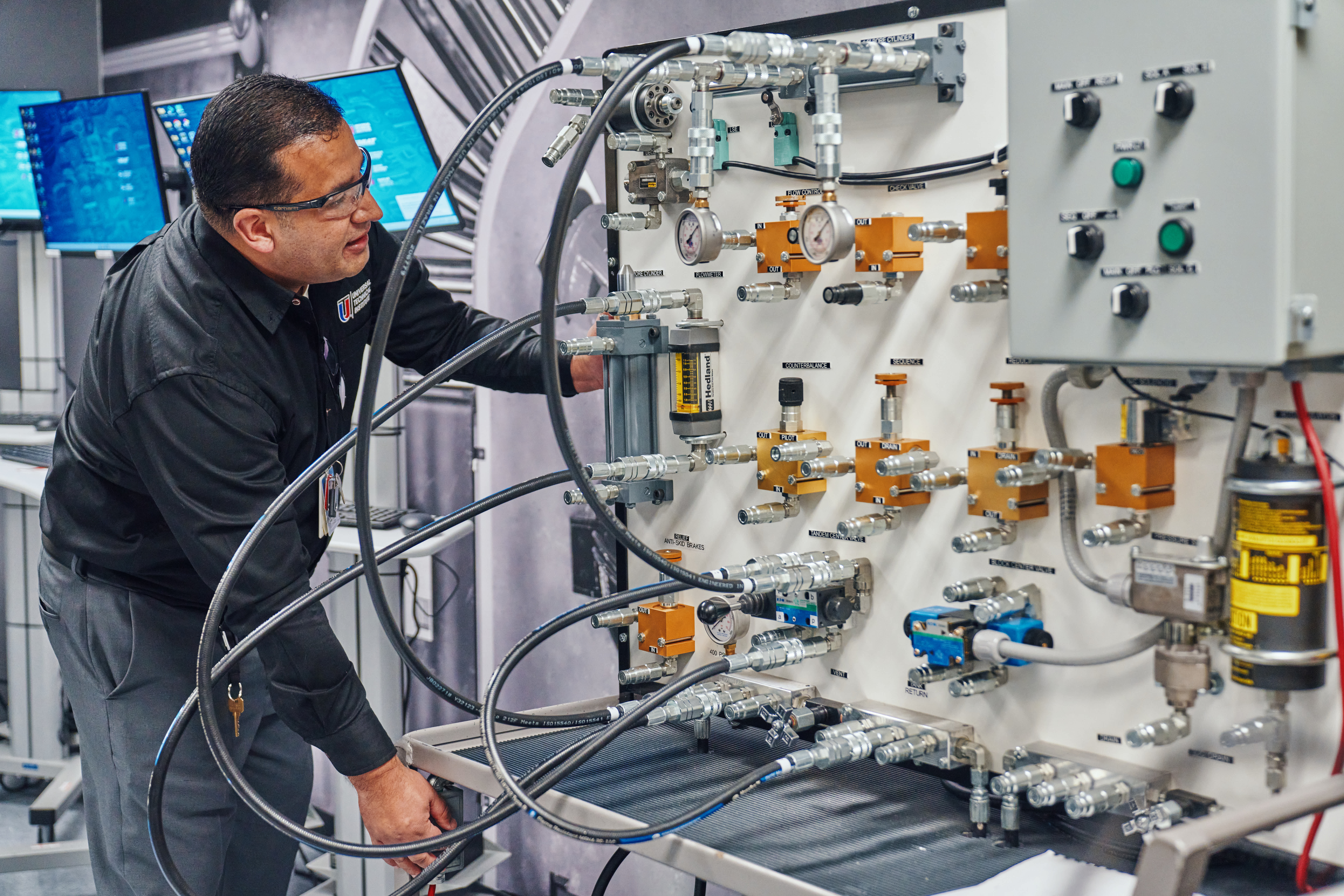
Photo from UTI Rancho Cucamonga campus.
What Will I Learn in the Electrical, Robotics & Automation Technology Program?
You'll learn how to diagnose and repair the electrical and automated systems that drive today’s industries. Each course will teach you something specific to the field. Meaning, you won’t have to take unrelated general education courses. The topics you’ll cover include:
- Introduction to Technical Trades
- Electrical Wiring
- Electrical Applications
- DC Electrical Theory
- AC Electrical Theory
- Advanced Electrical and Controls
- Computer Aided Design
- Instrumentation and Control
- Industrial Robotics
- Mechanical Systems & Maintenance
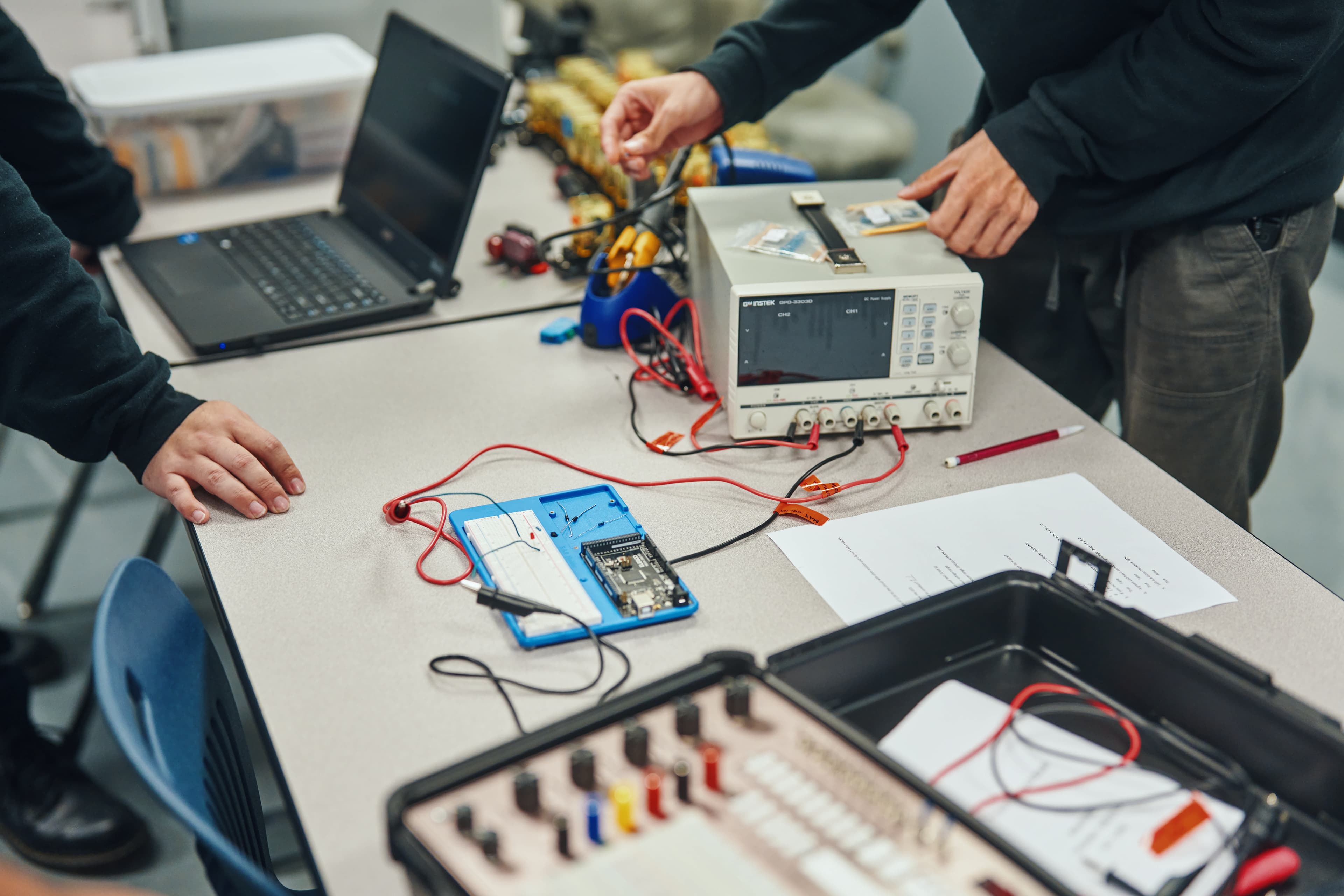
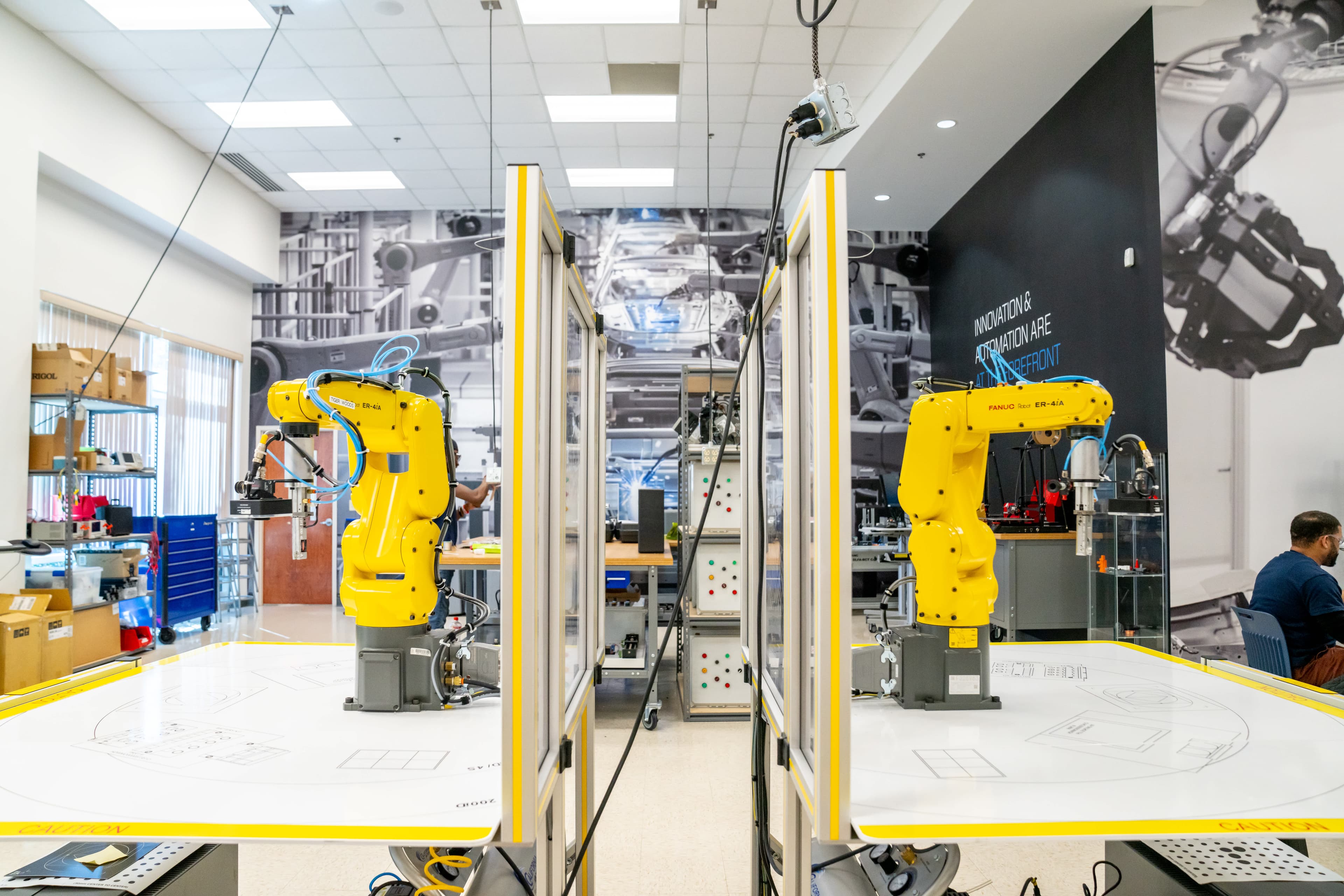
Electrical Robotics & Automation Technician Career Paths in San Antonio
San Antonio is home to a manufacturing and technology sector, making it an ideal place to train for a career in robotics and automation. Graduates of UTI’s San Antonio electrical robotics and automation technician training can pursue roles like: 77
- Robotics & automation technician
- Control systems technician
- Machine specialist
As with any industry, over time, technicians may be able to advance in their careers with experience and hard work. Advanced robotics roles include:
- Instrumentation and controls technician
- Senior maintenance technician
- Process control tech
Availability of these roles in San Antonio depends on local industry needs. UTI’s Career Services team can help graduates connect with local employers.
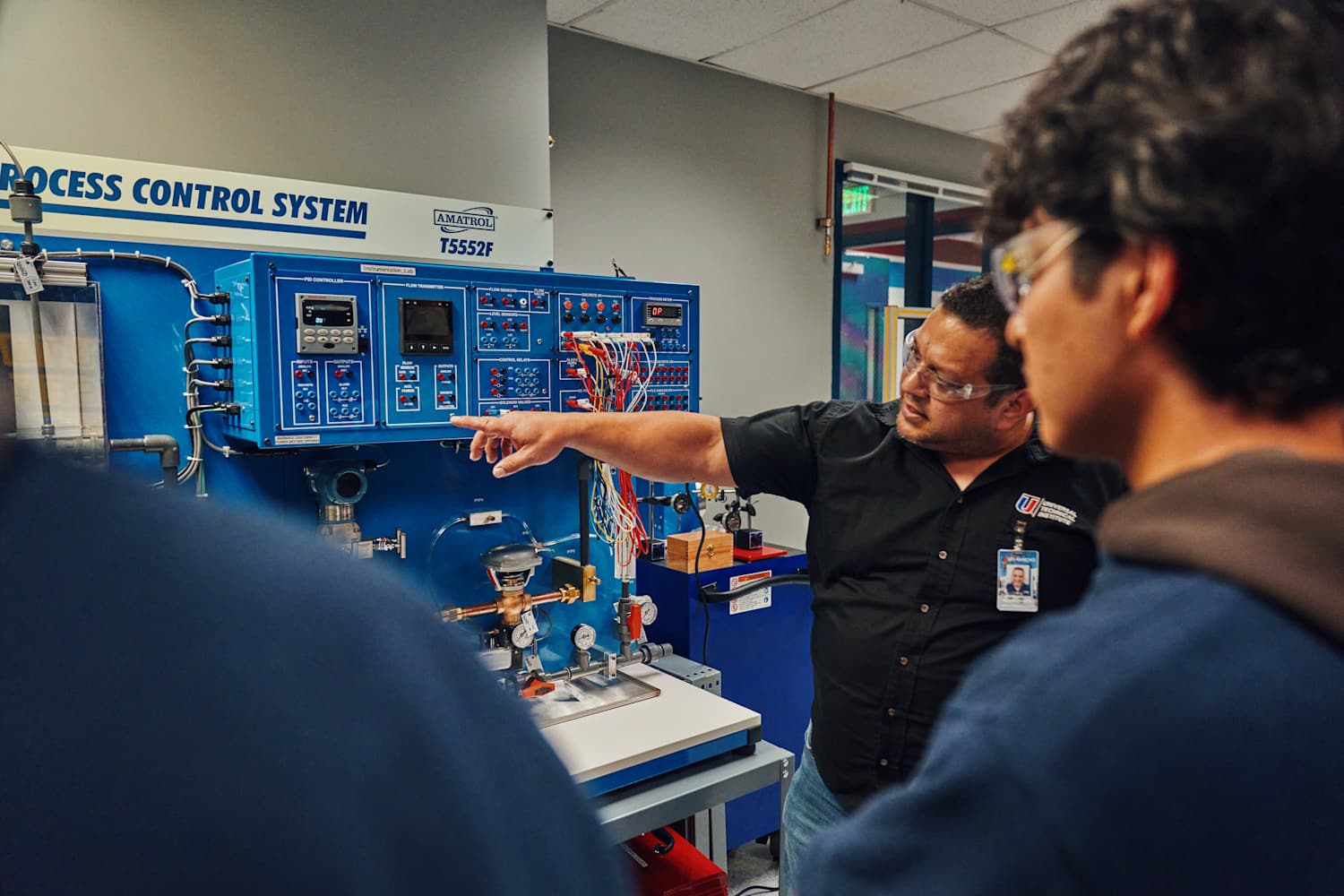
Photo from UTI Rancho Cucamonga campus.
Where Is the Electrical Robotics and Automation Technician School in San Antonio?
UTI’s San Antonio Electrical Robotics & Automation Technician School is located at our new campus in the northwest region of the city. The campus is accessible from several major highways across the city.
CAMPUS LOCATION
5776 Stemmons Drive
San Antonio, Texas 78238
* If you wish to post a job please click here.
FREQUENTLY ASKED QUESTIONS
UTI's program can be completed in just 12 months, so you can pursue a rewarding career faster than the traditional route allows!
No prior experience is required to attend UTI’s Electrical, Robotics & Automation Technology program. It is designed to teach you what you need to know from the ground up.
Any industry that uses automation to streamline their processes may hire electrical robotics and automation technicians. This can include manufacturing, consumer goods, aerospace and automotive!
A degree is not required to start a career in this field. Many break into the field by attending a trade school where they can learn technical skills. While no degree is required, some employers prefer technicians with industry-standard credentials like those offered by the National Center for Construction Education & Research (NCCER). UTI students get the chance to test for three NCCER certifications during their training!
Yes. The Electrical, Robotics & Automation Technology program begins with a strong foundation in construction-related electrical skills. In your first set of core courses, you’ll learn residential and commercial wiring, circuits, safety practices, and other electrical applications commonly used in the construction and technical trades.
This foundation prepares you for real-world work in construction and technical environments, while also setting you up to expand into advanced areas like robotics, automation, and industrial systems. Graduates leave with skills that apply both to the construction industry and to modern automated technologies.