
Wind Turbine
How To Choose a Wind Turbine Technician Program
Learn what to look for in a wind turbine technician program, including safety certifications, tower-climb preparation, hands-on labs and welding training.
In This Article
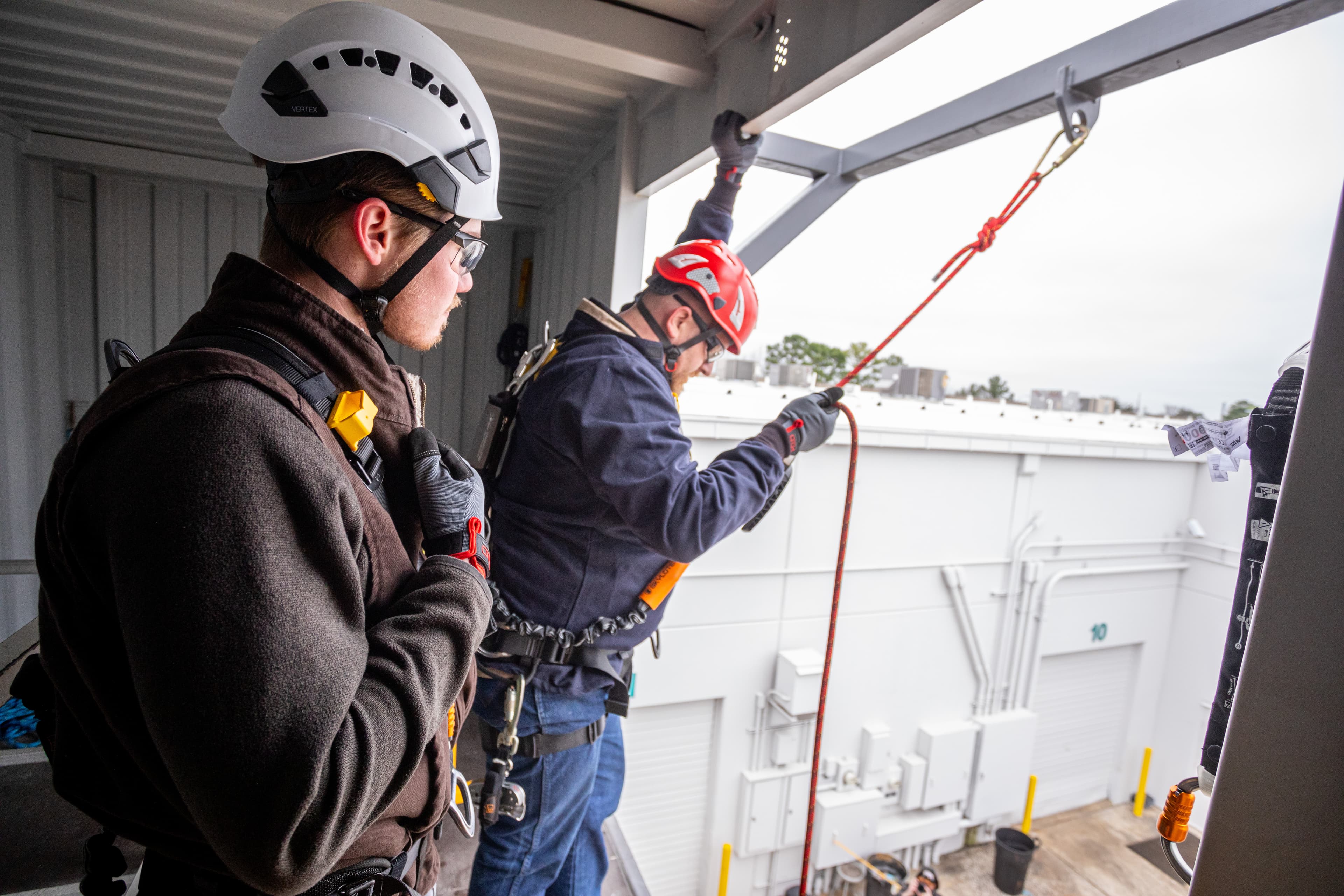
A wind turbine technician program should teach common duties of a wind tech and give students time and resources to practice it.
To choose the best program for you, compare program-specific coursework, supervised labs, climbing and safety preparation, credentials and total cost. Then check whether the location, schedule and support make completing that training realistic.
A program can meet those basics and still be the wrong fit. Broader electrical coursework may suit one student’s goals, while another wants a more focused curriculum. Start by deciding what the training needs to prepare you to do, then look for evidence that students actually practice those skills. Universal Technical Institute (UTI) offers several wind technician training options, with different curricula and campus availability.1
Comparing those differences is part of choosing training that fits the work a student wants to pursue. Keep reading for a practical way to evaluate programs, ask specific questions and narrow the options before enrolling.
How To Compare Wind Turbine Technician Programs
A wind turbine technician program should combine turbine-specific technical instruction, supervised lab time and relevant safety preparation. To choose among programs, verify how students practice and demonstrate those skills, which credentials are included, and what attendance and completion will cost. Eliminate options that cannot document these basics, then compare the remaining schools against your personal career goals, location, schedule and budget.
A wind turbine technician program is career-focused postsecondary training for entry-level turbine inspection, maintenance and troubleshooting. It's different from an engineering degree focused on design or a broad renewable energy program that may or may not devote time to servicing turbines.
Use the following comparison to separate training requirements from personal preferences.
Evaluation Factor | Decision Role | Evidence To Request | How To Use it |
Technical and hands-on training | Training type fit | Curriculum, lab activities, equipment and assessment methods | Remove programs that cannot explain how students practice and demonstrate skills in a way that fits your goals. |
Safety and credentials | Industry relevance | Exact modules, provider, fees and completion records | Compare with possible employer and worksite expectations. |
Format, location and schedule | Personal fit | Class schedule, required campus attendance and start dates | Decide whether regular attendance is manageable. |
Accreditation and disclosures | Credibility check | Accreditor, catalog and current outcome disclosures | Verify claims and understand what reported results measure. |
Total cost | Financial fit | Tuition, fees, tools, credential expenses, transportation and housing | Compare the full expense, not tuition alone. |
Career support | Supporting consideration | Specific services, graduate access and documented results | Evaluate the help available without assuming a job is guaranteed. |
Not every difference should carry equal weight. Convenient class times cannot make up for poor training, but they may help decide between two programs that otherwise meet the same standards.
Finish the comparison in three passes:
- Eliminate unsupported options.
- Compare viable programs against personal priorities.
- Validate the details in current catalogs, disclosures and written enrollment information. A campus visit can help connect those documents to the labs and instruction students will encounter.
Confirm That the Career Fits Your Goals
Before choosing a school, make sure a career as a wind turbine technician is the best fit for you. Technicians may climb towers more than 200 feet tall, carry tools while wearing fall protection and work outdoors in extreme temperatures.
They also service equipment inside the nacelle, the housing around generating equipment near the top of a turbine. Travel and evening or weekend on-call work may be part of the role.
The job involves more than responding to breakdowns. Routine inspections and maintenance sit alongside troubleshooting and repair. Prospective students should consider whether they enjoy careful, physical work that combines tools, measurements and systematic problem-solving.
Wind turbine technicians typically need a postsecondary nondegree award and may receive additional employer-provided training after being hired. Trade school can help build a foundation, while workplace training addresses the specific turbines and procedures used by that employer.
BLS projects 50% employment growth for wind turbine service technicians from 2024 to 2034, with 2,000+ projected openings annually, on average.63,69 The occupation remains one of the fastest-growing occupations nationally. Those openings include opportunities arising from workers leaving the occupation, and projections don't guarantee individual employment. Review job postings in the regions where working or relocating would be realistic.
For a more complete look at the day-to-day realities and the full path to becoming a wind turbine technician, read more about whether a wind turbine technician career is a good fit before choosing a program.
Check the Technical and Hands-On Training
Technical coursework should explain how turbine systems work and give students opportunities to apply that knowledge. Course descriptions and lab activities reveal more than titles alone.
Electrical, mechanical, hydraulic and turbine systems
Wind turbines combine several systems, so the curriculum should show how they work together. Look for electrical fundamentals, including direct current (DC), alternating current (AC), circuits, controls and test equipment. Schematics are diagrams showing electrical connections, and students should learn how to interpret them.
Mechanical coursework may address rotating components, drivetrains, generators, brakes and bolted connections. Hydraulics introduces systems that use pressurized fluid to transmit force. Turbine-specific instruction should connect those foundations to component inspection, maintenance and troubleshooting.
Control-system instruction can add another layer. For example, programmable logic controllers (PLCs) are industrial computers used to control equipment. Knowing how controls interact with sensors and mechanical components helps students understand why a symptom doesn't always identify its cause.
Ask how the subjects connect. A curriculum should give students practice using diagrams, equipment manuals and measurements together, not simply move through unrelated introductions to electricity and renewable energy. Related subjects are useful when they support the tasks the program is designed to teach.
Get a deeper breakdown of the in-demand skills wind turbine technicians need.
Troubleshooting, maintenance, labs and equipment access
Hands-on training means students practice the work, not just watch an instructor demonstrate it. Relevant activities may include inspecting components, using electrical meters, following maintenance instructions and tightening fasteners to the manufacturer’s specified torque, a measure of twisting force.
These questions can help clarify what practical training involves.
- Which tools, trainers and turbine components does each student use?
- How much scheduled time involves performing tasks rather than observing demonstrations?
- Are skills assessed individually?
- Can students repeat a procedure after feedback?
For example, a troubleshooting exercise might have students review a schematic, select appropriate tests, interpret results and explain the next step under instructor supervision. A maintenance exercise might involve inspecting a component against the manufacturer’s criteria and documenting findings.
Both develop useful habits. Ask how students progress from guided exercises to assessments that require them to explain their decisions. Equipment access, instructor feedback and practice opportunities help give lab-hour totals meaning.
Want a more in-depth on what maintenance tasks actually involve in the field? See how wind turbine maintenance work is actually performed.
Verify Safety, Climbing and Credential Preparation
Safety preparation should cover both practical skills and the limits of the training. Programs may include their own safety coursework or modules based on Global Wind Organisation (GWO) standards. In either case, students should know what they'll practice and what completion demonstrates.
Practical safety, climbing, fall protection and rescue
Climbing instruction should explain more than how to reach the top. Ask whether students inspect harnesses and connectors, practice using fall-protection systems and perform supervised climbing and rescue exercises. Confirm where those activities take place and how instructors assess them.
The Occupational Safety and Health Administration (OSHA) identifies several wind-energy hazards, including falls, electrical hazards, fires and hazardous energy. Relevant coursework may address first aid, fire awareness, lifting and handling equipment, and lockout/tagout procedures used to control hazardous energy during servicing.
Confined-space instruction also needs context. Not every enclosed turbine area automatically falls under the same requirements. Classification depends on the space and its hazards, so ask whether the program explains how those decisions are made.
A completion certificate or diploma should identify the training received. It should not be interpreted as permission to perform every climbing, electrical or rescue task at every worksite.
GWO training and other credentials included
GWO training covers distinct subjects, not one universal package that every entry-level technician must hold. Three standards help illustrate the differences.
- Basic Safety Training (BST) includes modules addressing first aid, manual handling, fire awareness, working at height and sea survival.
- Basic Technical Training (BTT) develops foundational technical skills for further company-specific training. It doesn't by itself authorize unsupervised technical work.
- Advanced Rescue Training (ART) addresses rescue operations beyond the basic working-at-height training.
Confirm exact modules, provider certification, fees, completion records and refresher requirements. A GWO training record is not a government license.
GWO provides a framework for participating employers to recognize training, but the modules expected for a job depend on its responsibilities and worksite. A longer credential list is only helpful when the training is relevant to the work being pursued.
Take a closer look at wind energy certifications for an in-depth breakdown on how these credentials work.
Compare School Quality, Cost and Student Support
School quality also depends on the information, instruction and support behind the curriculum. A promising course list needs to be backed by clear institutional records and an attendance plan that works.
Accreditation, disclosures and outcomes
Institutional accreditation means a school is evaluated against an accreditor’s standards. Verify current status through the accreditor or the U.S. Department of Education’s accreditation resources.
Institutional accreditation concerns the school, while programmatic accreditation concerns a particular program. Accreditation doesn't guarantee credit transfer or employment.
Neither should be confused with GWO training-provider certification. A school’s institutional accreditation doesn't establish which GWO modules it's certified to deliver. Check those claims separately.
Outcome information deserves the same care. Review graduation and employment disclosures where available, including which students are counted and the reporting period. A placement figure is hard to evaluate without knowing how the school defines related employment.
Federal Student Aid recommends comparing net cost, graduation, debt and earnings information. Its guide on evaluating colleges and career schools explains how those measures can inform a decision without predicting any one student’s results.
Format, location, schedule and total cost
A workable schedule matters throughout the program, not just on the first day. Confirm class times, required campus attendance, start dates and how missed labs are handled. For online or hybrid coursework, find out where equipment-based training and physical assessments occur.
Then build a budget around the full program. Tuition may be only part of the expense. Ask about books, tools, personal protective equipment (PPE), lab fees and separate credential costs, along with transportation and housing needs.
Reduced work hours can affect affordability, too. Compare expenses over the same period and separate grants and scholarships from money that must be repaid.
Financial aid, scholarships and grants are available to those who qualify. Awards vary due to specific conditions, criteria and state.
An affordable program is one the student can reasonably finance and attend through completion. A lower advertised tuition may not offset relocation expenses or a schedule that conflicts with work.
Instructor experience and career search support
Instructors help turn a correct answer on paper into a repeatable process in the lab. Ask about relevant field experience, safety qualifications and how students receive help when they struggle with a procedure. Access and clear feedback matter alongside an instructor’s résumé.
Employer involvement is worth examining, too. Ask how industry advisers contribute to coursework and what their input has changed. A company logo on a webpage doesn't explain the relationship.
Career search support should be equally specific. Look for résumé assistance, interview practice, job-search resources and continued access after graduation. Ask whether advisers help students identify opportunities in the locations where they hope to work.
These services can support a search, but hiring remains an employer decision. Evaluate what the school actually provides rather than assuming employment assistance means a guaranteed position.
Compare UTI’s Wind Turbine Training Options
UTI’s Wind programs offer different balances of turbine-focused and broader electrical coursework. The current catalog and campus tuition charts document the following distinctions.
Program | Length and Credential | Curriculum Emphasis | Campus Availability |
Wind Turbine Technician | 30 weeks, 750 clock hours, diploma. Often presented publicly as seven months* | Electrical fundamentals, renewable energy, turbine components, operations, climbing and rescue | Lisle, Illinois |
Electrical & Wind Turbine Technology | 33 weeks, 825 clock hours, diploma. Presented publicly as eight months | Construction-related trades, electrical wiring and applications, controls and troubleshooting, followed by wind-specific coursework | Dallas/Fort Worth, Houston and San Antonio, Texas; Lisle, Illinois; Rancho Cucamonga, California |
*UTI’s Canton, Michigan, campus offers a separate Wind Power Technician certificate program with seven months and 720 clock hours of training.
For the two diploma programs, catalog descriptions identify four GWO BST modules within climbing and rescue coursework:
- Fire Awareness
- First Aid
- Manual Handling
- Working at Heights
UTI is institutionally accredited by the Accrediting Commission of Career Schools and Colleges (ACCSC).
Compare the wind turbine course descriptions against the electrical depth and turbine focus that fit your goals. UTI also offers Career Services assistance, while its Cost of Attendance tool provides program- and location-based estimates. Confirm availability, schedules and costs before enrolling.
Frequently Asked Questions
Can wind turbine technician training be completed online?
Some classroom content may be available online, but students should verify how practical skills are taught and assessed. Ask where they'll handle tools, inspect equipment and practice climbing or rescue procedures. An online component can offer flexibility without replacing the supervised physical training needed for those activities.
Do programs include tower-climbing training?
Some do, but practical climbing is not automatically included in every program. Confirm whether students climb under supervision and use fall-protection and rescue equipment. UTI’s Wind Turbine Operations, Climb & Rescue course, for example, documents practical instruction with a purpose-built training structure and related safety equipment. Students practice climbing skills on tower-like structures that simulate the field.
What safety credentials may be included?
Programs may include selected GWO modules, first aid credentials or school-issued completion certificates. These are not interchangeable, and requirements vary by employer and worksite. Confirm what each credential covers, how completion is recorded and whether training expires or needs refreshing. Don't assume that a general program certificate documents every industry module.
How long does wind turbine technician training take?
Some certificate and diploma programs take less than a year, while degree pathways may require additional study. Compare scheduled weeks, instructional clock hours and required coursework rather than calendar length alone. Also ask whether breaks, part-time attendance or separately completed safety training affect the timeline.
Do I need electrical or mechanical experience before enrolling?
Not necessarily. Introductory programs can teach electrical and mechanical fundamentals before turbine-specific coursework, but admissions requirements vary.
Ask about required education, any assessments and the starting level of math or tool knowledge. For students new to the trades, it's also worth checking what tutoring or extra practice is available.
Take the Next Step Toward Wind Turbine Technician Training
The right wind turbine technician program connects technical knowledge to work students can practice. Compare the labs, safety preparation, credentials and practical details that make completing training possible. UTI’s wind turbine training options differ slightly, but both offer training for the wind turbine industry. Research all options to determine the best fit for you.
Put the comparison to work. Request information online or by calling 1-800-834-7308 to discuss courses, campus schedules, included credentials and costs with Admissions. If the program fits and you’re ready to enroll, apply now.
Universal Technical Institute of Illinois, Inc. is approved by the Division of Private Business and Vocational Schools of the Illinois Board of Higher Education.

Train for the Future
Imagine waking up each day excited to work in a career you’re passionate about – one where your hands-on skills make a real impact. UTI’s vocational trade school can help you gain the skills and confidence to pursue what you love.
