Welding
Education Requirements for Welders
Learn about welder education requirements, hands-on training, certifications and technical skills that can help you prepare for a welding career.
In This Article
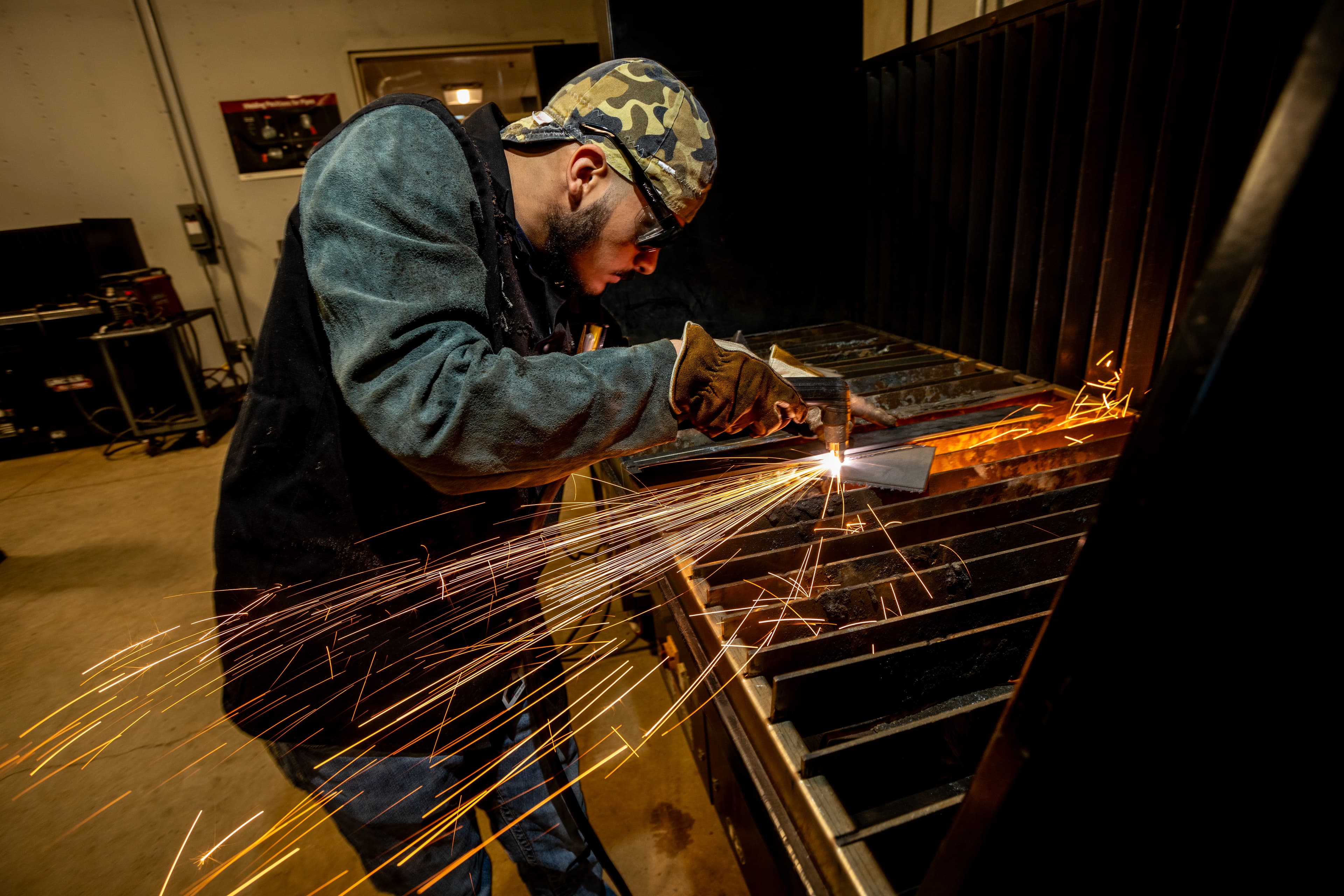
Welding is a skilled trade that combines technical knowledge, precision and hands-on ability. But what kind of education do you actually need to become a welder?
The education requirements for welders can vary depending on the employer, industry and type of welding work you want to pursue. While a four-year college degree typically isn't necessary, welders need technical training to learn welding processes, safety practices, blueprint reading and other skills used on the job.
Whether you're considering trade school, an apprenticeship or a specialized welding career, understanding the education and training involved can help you determine your next step.
Key Takeaways
- Welders typically don't need a four-year college degree, but individual employers may have specific education and training requirements.
- Welding education can be completed through technical or trade school programs, apprenticeships and other forms of hands-on training.
- Welding students can learn processes such as SMAW, GMAW/MIG, GTAW/TIG and FCAW along with safety, blueprint reading and metallurgy.
- Certification requirements vary by employer, industry and the type of work being performed.
- Specialized career paths, including oil rig and underwater welding, can require additional training, qualifications or experience beyond foundational welding education.
Do You Need a College Degree To Become a Welder?
Generally, no. A bachelor's or associate degree isn't typically one of the standard education requirements for welders. Welding is a skilled trade where technical knowledge, hands-on training and the ability to perform welding processes safely and accurately can be more relevant than a traditional college degree.
Instead of pursuing a four-year degree, aspiring welders may attend a welding trade school or technical program or pursue an apprenticeship. These pathways are designed to help students develop career-focused welding skills through a combination of classroom instruction and hands-on practice.
Individual employers can set their own hiring requirements, so it's important to research qualifications for the specific roles you're interested in.
Minimum Education Requirements for Welders
The minimum education requirements for welders depend on the training program, employer and position. Many aspiring welders begin their training after earning a high school diploma or equivalent, although admissions requirements vary by school.
Beyond general education, welders need technical knowledge and practical skills. Training may cover welding processes, equipment operation, workplace safety, blueprint reading, welding symbols, metallurgy and cutting techniques.
Some employers may also require or prefer industry certifications or demonstrated proficiency in specific welding processes.
Requirements can become more extensive for specialized roles. For example, the educational requirements for oil rig welders may include foundational welding training followed by industry-specific safety training, certifications and experience required by a particular employer or worksite.
Similarly, the educational requirements for underwater welders extend beyond conventional welding skills. Underwater welding typically combines commercial diving and welding knowledge, meaning workers need specialized training to safely perform work in underwater environments.
If you're still exploring whether the trade fits your strengths and interests, learn more about common welder traits.
Trade School vs. Apprenticeship Education Paths
Trade school and apprenticeships can both provide pathways into welding, but the learning experience differs.
Welding trade school typically provides structured instruction in a dedicated training environment. Students can learn several welding processes while practicing their skills in booths and labs under instructor supervision. Programs may also introduce students to the technical knowledge needed in the field, such as blueprint reading, welding symbols, safety and arc welding techniques.
An apprenticeship generally combines on-the-job training with classroom or technical instruction. Apprentices learn while working alongside experienced professionals, and programs can take several years to complete depending on their structure and requirements.
The right path depends on your goals, preferred learning environment and timeline. Trade school may appeal to students who want concentrated welding education before pursuing employment, while an apprenticeship can suit those looking for an earn-while-you-learn approach.
For a closer look at the steps involved in entering the field, read our guide on how to become a welder.
What's Included in a Welding Curriculum
A welding curriculum is designed to build technical knowledge and hands-on skills. Exact coursework varies by school, but students may learn everything from basic safety and how to read blueprints to how to perform multiple arc welding processes.
At UTI, students receive hands-on training designed to help them build foundational skills they can take into the welding industry.1
Welding safety procedures
Students are introduced to a variety of welding methods and equipment while learning essential safety practices and proper use of personal protective equipment. The course also covers plasma and oxyfuel thermal cutting techniques, along with an overview of potential welding career paths and industry certification.
Positions and welding symbols
Students are introduced to the different joints, positions and symbols used in welding, along with metal properties and classifications. The course also covers tools and techniques for preparing metal for welding, including welding coupon preparation through beveling, sawing and grinding.
Core welding processes (SMAW, GMAW/MIG, GTAW/TIG, FCAW)
UTI’s welding program focuses on helping students learn the four main arc welds. Learning multiple processes can help students build a broader technical foundation before entering the workforce.
Shielded metal arc welding (SMAW), commonly called stick welding, uses a consumable electrode coated in flux. Gas metal arc welding (GMAW), often called MIG welding, uses a continuously fed wire electrode. Gas tungsten arc welding (GTAW), commonly called TIG welding, uses a nonconsumable tungsten electrode and allows for precise control.
Flux-cored arc welding (FCAW) also uses a continuously fed electrode but relies on flux contained within the wire.
Engineering, fabrication and reading blueprints
Students learn the codes, standards and terminology used in welding documentation while developing applied math and measurement skills for project planning, preparation and fabrication. The course also covers how to interpret blueprints, technical drawings and welding symbols, as well as welding joint design and fabrication techniques and practices.
Hands-on booth and lab practice
Time in the lab allows students to apply what they've learned in the classroom. They can practice positioning, equipment setup, material preparation and different welding processes while receiving feedback from instructors.
Repeated practice can also help students develop consistency, precision and confidence with welding equipment.
AWS certification exam prep
Industry certifications can demonstrate a welder's ability to perform processes or meet specific standards. The American Welding Society (AWS) offers certifications that may be relevant to different welding career paths.
A welding education like the one offered at UTI can help students develop the foundational skills and knowledge needed to prepare for to test for certifications after graduation.
How Long Does Welder Education Take?
How long it takes to complete welding training depends on the pathway you choose. Some trade school programs can be completed in less than a year, while apprenticeships typically involve a longer combination of classroom and on-the-job training.
Specialized welding paths may require additional training, safety credentials, employer-specific qualifications or industry experience.
UTI's Welding Technology program is designed to be completed in 9-10 months depending on location.
When comparing programs, consider more than how quickly you can finish. Curriculum, hands-on training opportunities, facilities, instructor experience and career preparation can all play a role in choosing a program.
Frequently Asked Questions
What education do you need to become a welder?
The education requirements for welders vary by employer and career path. Many welders develop their skills through a trade or technical school, apprenticeship or on-the-job training. Education may include welding processes, safety, blueprint reading, metallurgy, shop math and cutting techniques.
Do welders need a college degree?
No, welders typically don't need a four-year college degree. Career-focused technical training or an apprenticeship can provide the hands-on education needed to develop welding skills. Individual employers may establish additional requirements for specific positions.
Is a high school diploma required to become a welder?
Requirements vary by employer and training program. Many welding schools require applicants to have a high school diploma or equivalent, while individual employers may set their own education requirements. It's important to check the admissions requirements of the school or apprenticeship you're considering.
How long is welding school?
Program length varies by school and curriculum. Some welding trade school programs can be completed in less than one year. UTI's Welding Technology program is designed to be completed in 36 weeks.
Do you need certification to work as a welder?
Certification requirements depend on the employer, industry and type of welding being performed. Some positions may require welders to pass specific qualification or certification tests, while others may provide testing through the employer.
Certifications can help demonstrate proficiency in specific processes or standards, but they aren't universally required for every welding job. Research the requirements for your desired industry and position to determine which credentials may be relevant.
Start Your Welding Education at UTI
Understanding the education requirements for welders is an important first step to deciding if the field is right for you.
UTI's Welding Technology program provides hands-on training designed to help students build foundational skills in the main welding processes used by professional welders.1 Students can complete their training in 9-10 months and graduate ready to pursue entry-level careers.
Ready to start building your welding skills? Explore UTI's welding trade school to learn more or take the first step and enroll today.
Universal Technical Institute of Illinois, Inc. is approved by the Division of Private Business and Vocational Schools of the Illinois Board of Higher Education.


Train for the Future
Imagine waking up each day excited to work in a career you’re passionate about – one where your hands-on skills make a real impact. UTI’s vocational trade school can help you gain the skills and confidence to pursue what you love.
